-01%201.svg)

Key takeaways
- Automate reconciliation to match purchase register entries against GSTR-2B with exact and fuzzy logic, tolerance rules, and bulk actions, reducing a multi day marathon to a few hours.
- Proactively identify missing invoices, tag root causes, predict next month appearances, and drive precise vendor follow ups with audit ready trails.
- Maximize ITC claims with section 16 and 17 checks, time limit alerts, simulations, and documented approvals, improving cash flow and compliance confidence.
- Use dashboards to quantify impact, monitor vendor compliance, and drill down from summary to invoice audit trails for faster month end closure.
- Ensure two way ERP sync, multi org controls, role based access, and security certifications for scale, accuracy, and governance.
Why GSTR-2B Reconciliation Matters Now
Compliance and Cash Flow Impact
GSTR-2B is a static, auto generated ITC statement that mirrors supplier filings, you can only claim what your vendors have actually reported. If your purchase register does not align with GSTR-2B, expect reversals, delayed credits, and notices. This scrutiny has intensified, see the GST notices automation workflow for context on how authorities evaluate mismatches.
Vendor Non-Compliance and Data Quality
Invoices arrive as PDFs, scans, and spreadsheets, with name variations, GSTIN format issues, and amendment gaps. These inconsistencies create false mismatches that block legitimate ITC. Manual matching across thousands of invoices invites fatigue, errors, and missed exceptions.
Month End Crunch
Every close cycle, teams scramble to match, chase vendors, and post clean entries before filings. Delayed reconciliation means delayed ITC, which strains working capital. Automation flips the script, you review a prioritized exception list instead of wrangling spreadsheets.
How GSTR-2B Reconciliation Works: Process Overview
Input Ingestion
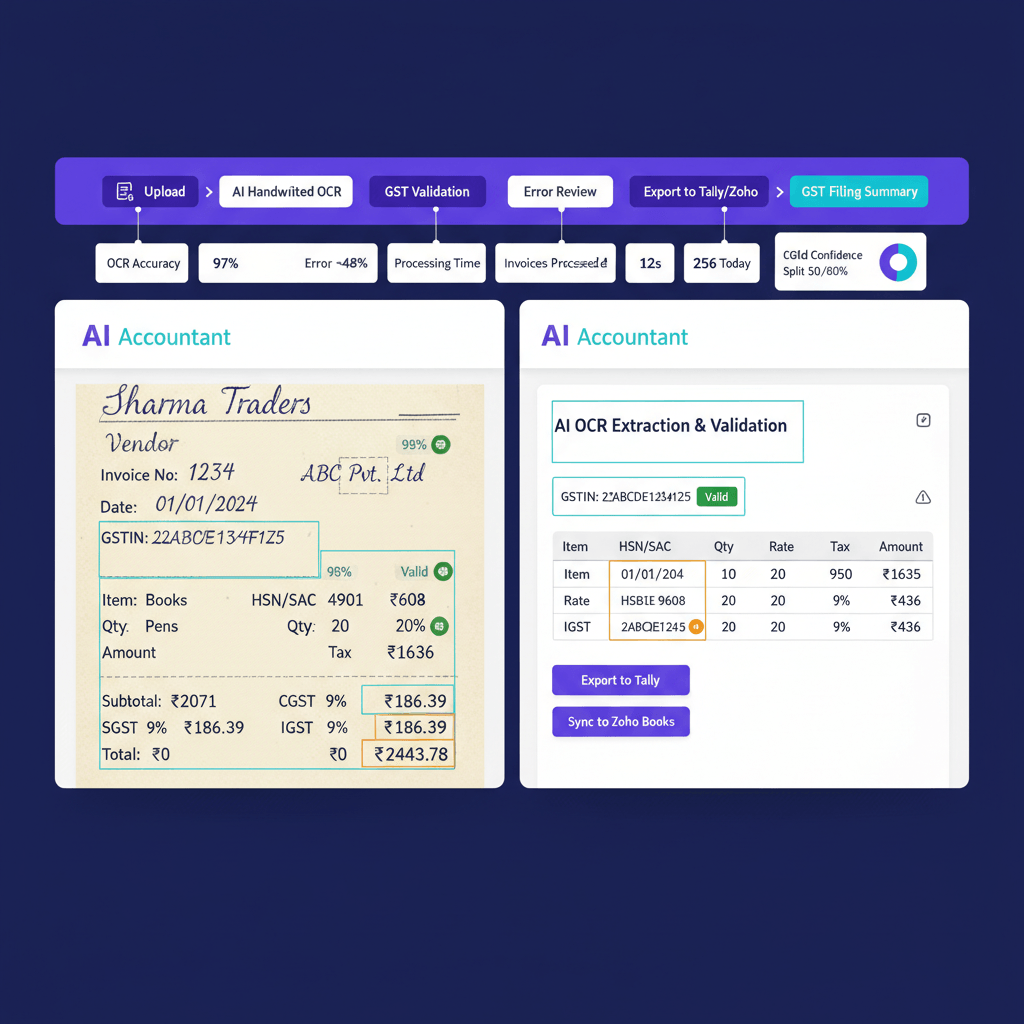
The engine ingests three inputs, your Purchase Register exports from ERP, supporting documents like JVs and credit or debit notes, and the GSTR-2B JSON from GSTN or API pull.
Data Standardization and Matching
Data is normalized for names, GSTIN, dates, and amounts, with deduplication and IRN tracking. A multi point matching engine then aligns invoice number, date, GSTIN, taxable value, tax breakup, and Place of Supply. Deterministic matches give certainty, while fuzzy logic recovers near matches with confidence scores.
Status Classification and Exception Handling
Each record receives a status, matched, unmatched, amendment pending, or credit note processed. Exceptions flow into action queues with suggested resolutions, as detailed in this GSTR-2B reconciliation tools overview and its companion GSTR-2B automation guide.
The goal is not perfect matching on day one, it is a reliable pipeline that standardizes data, classifies exceptions, and guides actions with audit ready evidence.
Essential Features to Evaluate
Match Purchase Register Capabilities
Look for engines that match at scale using multiple fields, with exact and fuzzy logic, tolerance rules for rounding, and support for one to many and many to one mappings. Clear statuses plus bulk actions are non negotiable, as highlighted in this deep dive on matching logic.
- Exact and fuzzy matching with confidence scores for triage, ninety five percent likely a typo, sixty percent needs review.
- Tolerance rules for minor value differences, rounding should not flood your exception queue.
- Complex invoice handling for split or consolidated billing.
- Bulk resolution to apply one fix across similar cases.
- Predictable performance at one lakh plus invoices per run.
Identify Missing Invoices
Beyond simple comparison, the tool should pinpoint vendor invoices absent in GSTR-2B and vice versa, then attach root cause tags, wrong GSTIN, period mismatch, or cancellation. Strong platforms even simulate next month appearances, see examples in this missing invoice explainer.
ITC Claim Optimization
Eligible versus ineligible logic, section 16 and 17 checks, and time limit alerts form the backbone. Simulate claims, deferrals, reversals, and reclaims before posting. For governance, every decision should have a logged rationale and approval trail, see input tax credit reversal automation and this ITC optimization guide.
Vendor Follow Up Automation
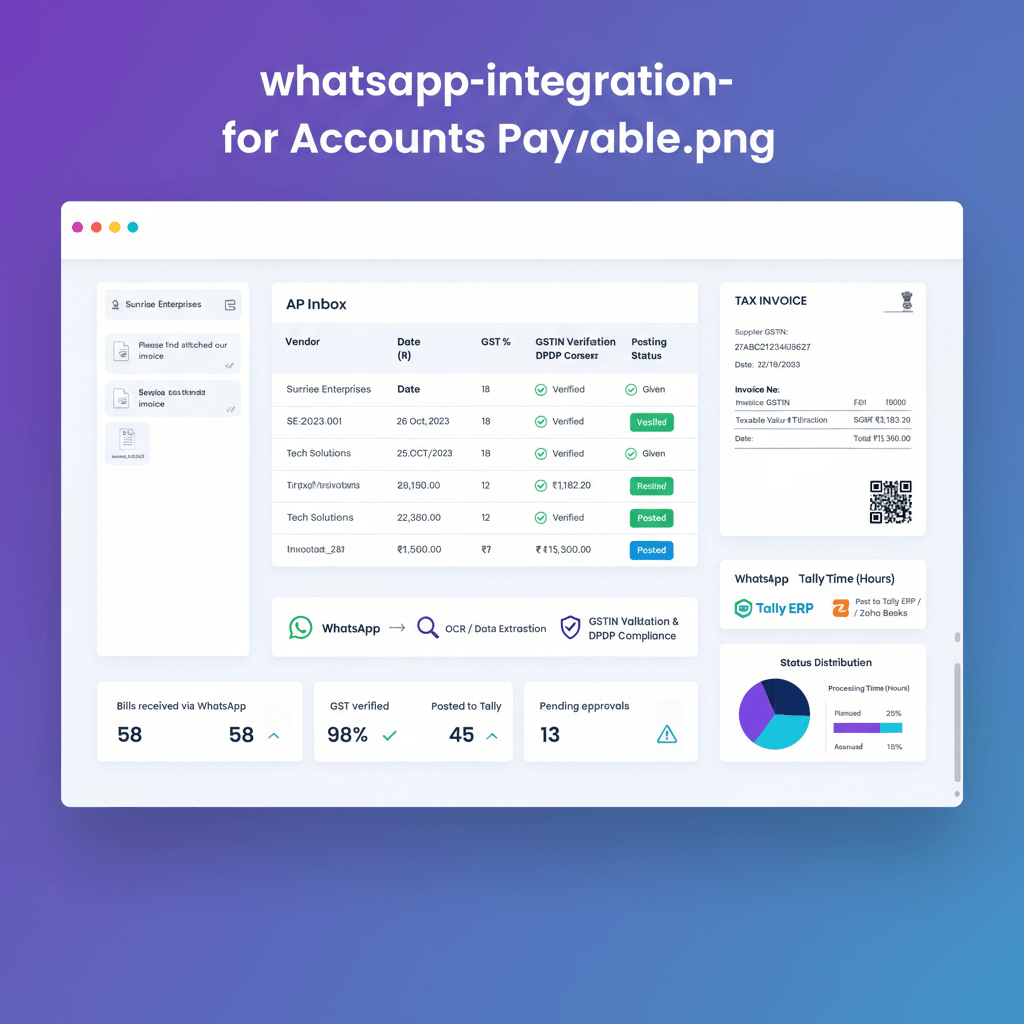
Automated, templatized reminders via email or WhatsApp improve response rates and reduce manual toil. Track SLAs, maintain vendor scorecards, and keep communication logs for proof, as summarized in this vendor automation overview and the follow up playbook.
- Templates and one click resend with updated invoice lists.
- SLA tracking and escalations for chronic late filers.
- Communication logs for audit defense.
Monthly Dashboard
Leaders need a crisp story, ITC available and claimed, unresolved mismatches, vendor follow ups, and risk hotspots. Drill down from summary to invoice, and show rupee impact immediately, aligned with this GST health check dashboard approach and the dashboard best practices plus this reporting checklist.
Integration and Workflow Fit
Native ERP Sync
Two way sync with Zoho Books and Tally is essential. Masters flow in automatically, and reconciled outcomes, bills, JVs, credit and debit notes, post back without copy paste. True integration respects your chart of accounts and referential integrity.
Multi-Organization Support
CA firms and multi entity businesses need smooth org switching, separate configurations, and role based access. Let juniors match, seniors approve, and auditors review, with clean ledgers posting back to ERP. See reference setups in this multi org walkthrough and this governance note.
Top GSTR-2B Reconciliation Tools for 2025
1. AI Accountant
AI Accountant treats reconciliation as an end to end workflow, ingestion, smart matching with clear statuses, automated vendor follow ups, precise ITC classification, and two way sync with Zoho Books and Tally. The platform has processed over 300 million transactions and maintains ISO 27001 and SOC 2 Type II certifications. Cash flow dashboards quantify impact instantly. Best for SMEs and CA firms seeking comprehensive automation with proven scale.
2. ClearTax
ClearTax offers high volume matching, intuitive reports, and strong support for Indian GST scenarios, a good fit if you value quick onboarding and clarity.
3. OctaGST
OctaGST provides supplier level views and capable dashboards. Amendment heavy cases may need extra validation, test before rollout if you manage frequent credit notes.
4. TallyPrime
For Tally shops, TallyPrime provides native reconciliation flows. For advanced exception handling or vendor automation, consider specialist add ons.
5. Zoho Books
Zoho Books covers basic GST reconciliation for teams in the Zoho ecosystem. For advanced automation, pair with add ons or third party tools.
Manual Excel Based Reconciliation
Excel gives control at low cost, but at scale it brings risk, weak audit trails, and time sinks. Use only for very small volumes. For a balanced view see this tooling overview.
Evaluation Checklist: Buyer's Lens
Core Matching and Missing Invoice Logic
Confirm ingestion of Purchase Register, JVs, credit or debit notes, and GSTR-2B. Evaluate exact and fuzzy matching, tolerance rules, and multi line consolidation. Insist on root cause tagging for missing invoices and confidence scores that drive bulk resolution.
ITC Claim Optimization Features
Check section 16 and 17 checks, time limit alerts, deferrals, reversals, reclaims, and simulations. Every decision should be logged for audit readiness, as in this reversal automation guide.
Vendor Follow Up Automation Quality
Look for email and WhatsApp channels, cadence control per vendor, template flexibility, SLA tracking, compliance scorecards, and one click resend with updated lists, supported by this automation primer.
Dashboard and Reporting Depth
Require ITC available versus claimed, mismatches and resolutions, vendor follow ups, vendor trends, leakage analysis, and drill down to invoice trails, following the GST health dashboard approach.
Integration and Data Flow
Verify bi directional ERP sync, multi org and multi GSTIN coverage, and entity specific configurations with learning patterns, as captured in this implementation guide.
Scale, Security and Compliance
Test performance at high volume, confirm deduplication accuracy, and ask for ISO 27001 and SOC 2 Type II. Ensure role based access, change logs, and exhaustive audit trails.
User Experience and Support
Measure bulk action speeds, exception flows, time to value, and support responsiveness. Pilot with a real month, not sample data.
ROI and Commercial Considerations
Time Savings Per Month End Cycle
Teams often recoup costs within one to two quarters. Convert current manual hours to cost, compare with pricing, then add the soft benefits of faster closure and fewer errors.
ITC Recovery Impact
Better matching and targeted vendor chasers unlock additional ITC. A two percent improvement can justify most subscriptions. Vendor scorecards help address systemic issues.
Audit Readiness and Risk Reduction
Detailed logs, change history, and compliance exports reduce notice risk. Documentation shortens audits from weeks to days.
Pricing Models to Expect
Expect pricing per organization, transaction, or user. Specialist platforms range from mid market to enterprise, ERP natives may bundle reconciliation. Evaluate total cost of ownership, including implementation and support, guided by this commercial overview.
Implementation Blueprint: How to Start Fast
Week 1: Connect and Sync Masters
Link Zoho Books or Tally, sync vendor and item masters, and standardize GSTIN formats. Set roles and access controls.
Week 2: Import and First Run
Load last month’s GSTR-2B JSON and purchase files, run reconciliation, and review match rates. Seventy to eighty percent auto matching is a solid first pass.
Week 3: Triage and Configure
Classify exceptions, tune tolerance and fuzzy rules, configure ITC policies, and enable vendor follow ups with email first, then WhatsApp for non responders. Use insights from the triage guide.
Week 4: Approve and Monitor
Post approved outcomes back to ERP, validate entries, and review the first dashboard. Schedule weekly or monthly runs, set alerts, and track vendor SLAs going forward, as outlined in this operating rhythm.
Risks and Pitfalls to Avoid
Over Reliance on Provisional ITC
If you claim provisional credits, document reasoning, track reversals and reclaims, and maintain a living audit file. Scrutiny is increasing, so governance must be airtight.
Poor Master Data Hygiene
Dirty masters create noise. Standardize names, validate GSTINs, and schedule periodic cleanups. Clean data reduces exceptions and accelerates closure.
Ignoring Vendor Communication Effectiveness
Monitor open and response rates. Adjust channels and cadences to vendor behavior, not your preference, and educate key vendors where needed.
FAQs
How frequently should a CA run GSTR-2B reconciliation for optimal ITC realization?
Run reconciliation monthly at a minimum to support ITC claims, many firms prefer weekly runs to surface mismatches early and spread vendor follow ups across the month. Tools like AI Accountant support continuous ingestion and weekly exception queues, which helps recover ITC sooner and keep working capital healthy.
What is the recommended matching hierarchy when invoice data is incomplete or noisy?
Prioritize GSTIN and invoice number, then date, taxable value, tax breakup, and Place of Supply. Use fuzzy matching for typographical variance with confidence thresholds, for example auto accept above ninety percent, manual review between sixty and ninety, and reject below sixty. AI Accountant implements these tiers with bulk actions to clear similar cases together.
How should a CA handle period mismatches where the vendor files the invoice in a different month than the purchase date?
Classify as a period shift, do not reject outright. Modern tools simulate likely next month appearances and suggest deferral of ITC where appropriate. AI Accountant tags these with predicted GSTR-2B month so you can decide to wait, claim with documentation, or initiate vendor follow up.
What controls are essential before posting reconciled outcomes back to Tally or Zoho Books?
Require a review and approval step, tolerance checks on value differences, and a final variance report. Ensure audit logs capture who approved, when, and why. AI Accountant posts only approved items, with links to the decision trail for auditors.
How do you treat amendments, credit notes, and IRN changes within the reconciliation engine?
Segregate them into dedicated queues, match amendments to original invoices by IRN, invoice number, and date, then reclassify ITC impact. Credit notes should drive partial reversals where applicable, with reclaim tracking in subsequent periods. AI Accountant maintains a timeline per invoice to visualize these events.
What SLA metrics should a CA track for vendor compliance health?
Track vendor response time to first reminder, time to filing correction, mismatch recurrence rate, and month over month compliance score. Escalate vendors with poor scores and adjust cadence or channels. AI Accountant’s vendor scorecards make this visible on the monthly dashboard.
Can we set different tolerance rules for different vendor categories or business units?
Yes, advanced tools allow rule scoping by vendor group, business unit, GSTIN, or document type. For instance, a one percent value tolerance for high volume utilities, and zero tolerance for capital assets. AI Accountant supports layered rules so you can apply granular governance.
What documentation should be retained to defend ITC positions during GST audits?
Keep the reconciled match report, exception list with resolutions, vendor communication logs, decision memos for provisional claims, and ERP posting references. Exportable audit packs from AI Accountant bundle these artifacts by period and GSTIN, simplifying audit responses.
How do we quantify the ROI of moving from Excel reconciliation to an automated tool?
Combine three levers, time saved per cycle multiplied by hourly cost, incremental ITC recovered from faster and more accurate matching, and reduced notice or penalty exposure. Many firms see payback within one to two quarters, with AI Accountant’s dashboards attributing rupee impact to each lever.
Is weekly reconciliation overkill for low volume clients managed by a CA firm?
Not necessarily, even for low volume clients, a weekly light run prevents month end pileups and improves vendor discipline. AI Accountant’s scheduler can run quick weekly passes, then a comprehensive month end run with approvals before filings.
How should a CA firm manage multi organization operations without constant logins and data confusion?
Use a platform with multi org workspaces, role based access, and org specific configurations. Maintain separate masters and rules per entity to prevent cross contamination. AI Accountant allows one login to switch entities while preserving controls and audit boundaries.
What is the best practice for handling chronic non compliant vendors that repeatedly cause ITC leakage?
Move from reminders to structured escalation, include aging of unresolved invoices, share compliance scorecards with procurement, and consider contractual penalties or prepayment holds. AI Accountant’s vendor analytics identify leakage hotspots so finance and procurement can act jointly.
Getting Started: Next Steps
Schedule a guided demo of AI Accountant to see purchase register matching, missing invoice detection, ITC optimization, and vendor follow up automation in action, with real world examples and timelines.
Request a free evaluation checklist covering match purchase register capabilities, identify missing invoices reporting, ITC claim optimization rules, vendor follow up automation quality, and monthly dashboard depth. Turn reconciliation from a compliance burden into a strategic advantage, claim more ITC, close faster, and stay audit ready every month.

Rohan Sinha is a fintech and growth leader building aiaccountant.com, focused on simplifying accounting and compliance for Indian businesses through automation. An IIT BHU alumnus, he brings hands-on experience across 0 to 1 product building, growth, and strategy in B2B SaaS and fintech.