-01%201.svg)
Key takeaways
- Stop manual matching and adopt modern GSTR 2B reconciliation tools to save time, recover more ITC, and reduce month end stress.
- Prioritize tools with strong data ingestion, fuzzy matching, exception workflows, and configurable ITC rules, including the 180 day payment rule.
- Use vendor collaboration features to automate reminders and track responses, while a smart monthly dashboard keeps leadership informed.
- Ensure native sync with Tally or Zoho Books, multi GSTIN and multi client support, and audit ready trails for clean compliance.
- Evaluate options using an in depth comparison of GSTR-2B reconciliation software and run a pilot on your busiest month.
- Expect 70 percent time saved and 3 to 5 percent higher ITC realization when you implement well, then measure ROI within two cycles.
- For end to end automation at scale, consider AI Accountant, with fuzzy matching, vendor follow up, dashboards, and native Zoho Books and Tally integration.
Understanding GSTR-2B and why reconciliation matters
GSTR-2B is a static monthly statement that lists your eligible input tax credit, generated from suppliers’ GSTR-1 filings. Because it does not change once published, it is your primary basis for claiming ITC in GSTR-3B, unlike the dynamic GSTR-2A that keeps updating. When your purchase register and GSTR-2B do not align, the result is delayed closing, missed credits, excess claims, and vendor chasing. Modern GSTR 2B reconciliation tools make this repeatable, predictable, and audit friendly.
Businesses adopting automation consistently report faster closes and higher ITC realization. For context on compliance pitfalls and risk areas, see this overview on maximizing input tax credit through accurate GSTR-2A and GSTR-2B reconciliation and a primer on GSTR-1 vs GSTR-3B vs GSTR-2B mismatch and blocked ITC.
Teams that move from spreadsheets to purpose built tools typically save 70 percent of month end effort, while recovering 3 to 5 percent more ITC, month after month.
Core evaluation criteria for GSTR-2B reconciliation software
Data ingestion capabilities
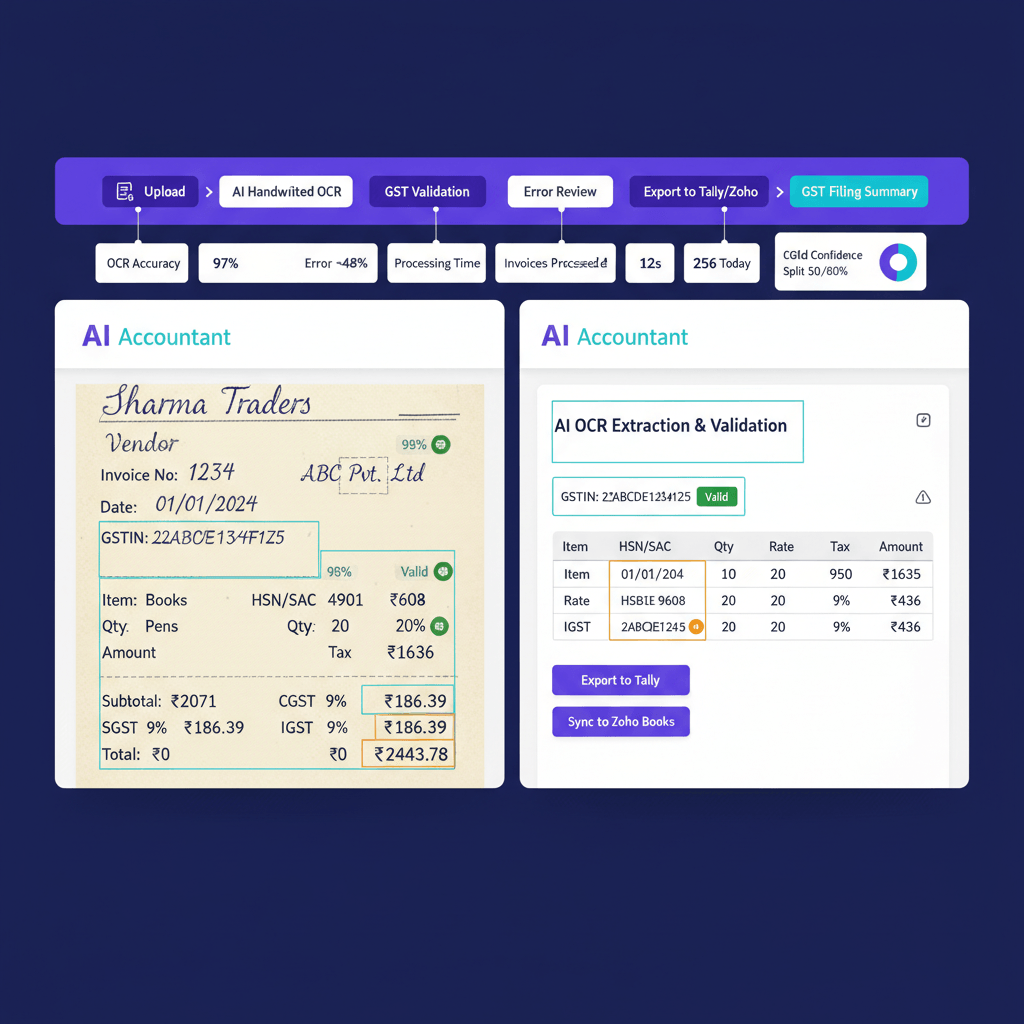
Seamless import from Excel, CSV, and ERP exports, with auto fetch of GSTR-2B JSON, and inclusion of credit notes, debit notes, and journal vouchers. Pre checks for duplicates and missing fields reduce rework.
Intelligent matching engine
Beyond exact matching, you need fuzzy logic for typos, date formats, prefixes or suffixes, and amount tolerances. It should auto deduplicate, link amendments to originals, and avoid false mismatches.
Exception handling
Clear buckets for in books not in 2B, in 2B not in books, duplicates, RCM, and blocked credits. Each bucket should have a workflow, with bulk actions and reason codes that roll up into reports.
ITC rules configuration
Rule engines must apply eligibility checks, follow the 180 day payment rule, and support partial or deferred claims, ensuring accurate mapping to GSTR-3B.
Vendor collaboration features
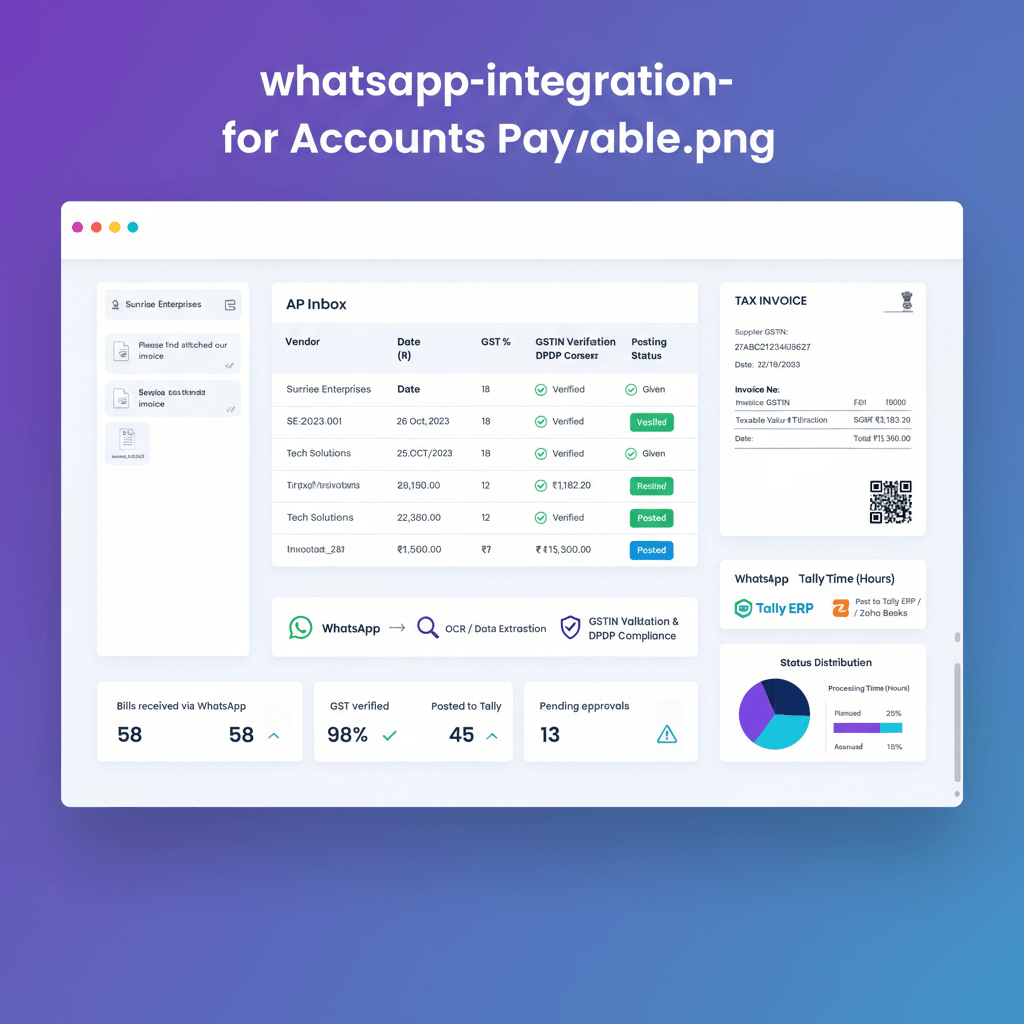
Automated reminders via email, SMS, and WhatsApp, with response tracking, escalation, and a supplier scorecard. This is where many teams win back hours every closing cycle.
Reporting and dashboards
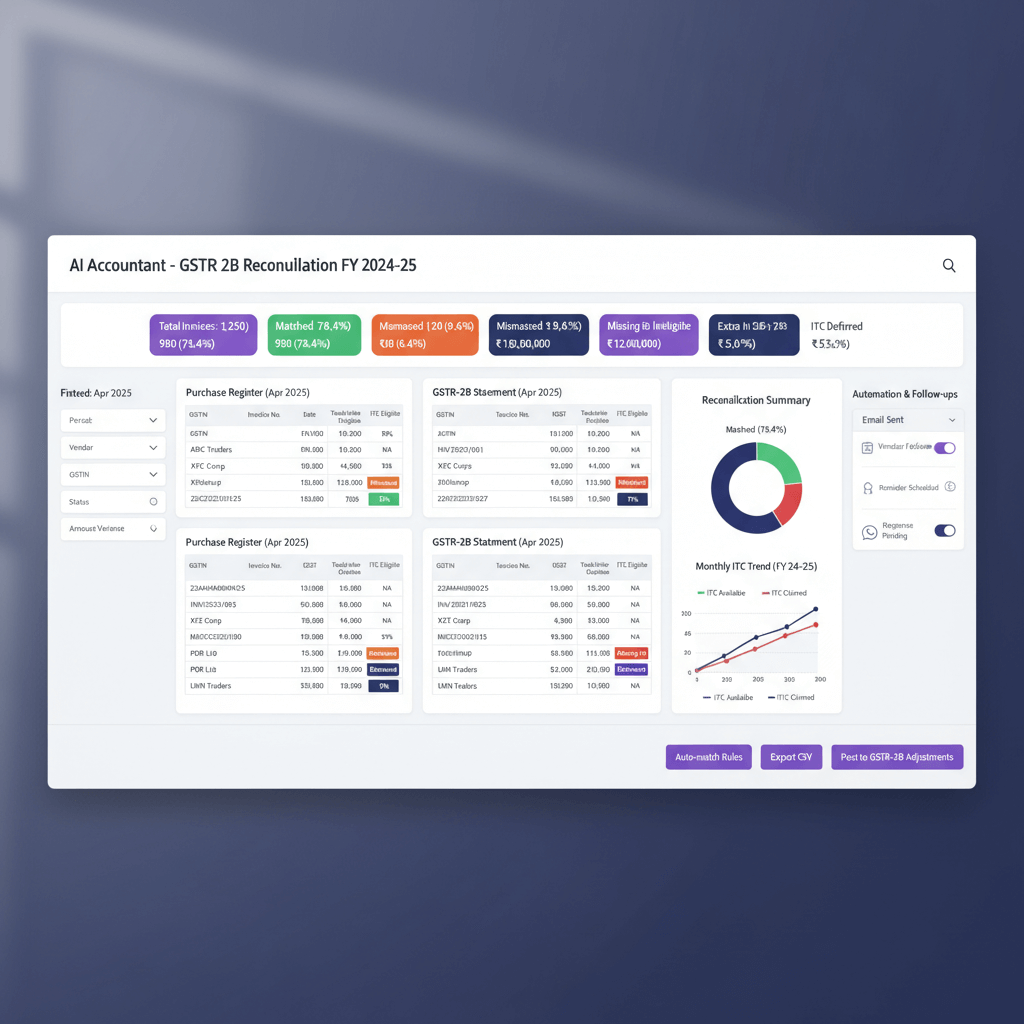
A concise monthly dashboard that shows eligible, availed, deferred ITC, vendor variances, and invoice level drill downs, with exports for audits and management packs.
ERP integration
Native, bidirectional sync with Zoho Books and Tally, so masters flow in, and reconciled results, deferrals, and tags flow back, reducing manual file handling.
Scale and performance
Multi GSTIN and multi client capability, with proven performance on tens of thousands of invoices per month without lag, so CAs and large SMEs can operate at scale.
Security and compliance
Look for ISO 27001 and SOC 2 Type II, plus India data residency, robust access controls, and immutable audit logs.
Support and onboarding
Fast setup, clear documentation, training sessions, and SLAs that match your closing calendar.
Top GSTR 2B reconciliation tools comparison
1. AI Accountant
End to end automation for CAs and SMEs, with strong fuzzy matching, clean exception buckets, ITC optimization, automated vendor follow up, and comprehensive dashboards. At scale, the platform processes high volumes, is ISO 27001 and SOC 2 Type II verified, and offers native Zoho Books and Tally sync, plus multi GSTIN and multi client features.
2. Munim
Designed for SMEs and CAs looking for integrated accounting and GST compliance, with auto fetch and smart matching, consolidated views, and approachable pricing.
3. ClearTax GST
Suitable for multi GSTIN setups with strong reporting and mismatch handling, quote based pricing, and selective ERP integrations.
4. TallyPrime
Best for teams already on Tally that want in workflow reconciliation, with desktop deployment and native Tally connectivity.
5. Octa GST
Geared for scale, supplier dashboards, and multi channel reminders, useful for high volume operations.
6. RealBooks
Strong audit trails and role based access, suitable when you want reconciliation within a broader accounting suite.
7. TaxBuddy
Enterprise leaning, with AI powered matching and expert review options for complex environments.
8. Vyapar TaxOne
SME friendly, quick reconciliation, AI assisted matching, and basic ERP connectivity. See the top AI powered GST reconciliation platforms rundown for more.
For a comparative angle before shortlisting, use this in depth comparison of GSTR-2B reconciliation software.
Deep dive into key features
Match purchase register efficiently
Go beyond exact GSTIN and invoice number checks with fuzzy matching for date formats, prefixes, and minor typos, while linking credit and debit notes to original invoices. Multi entity consolidation eases group reconciliations. See the GSTR 2B reconciliation tools guide and this in depth comparison of GSTR-2B reconciliation software for examples.
Identify missing invoices accurately
Two way checks flag in books not in 2B and in 2B not in books, with root cause hints for timing differences, non filing vendors, or GSTIN mismatches, and auto tagging for speedy resolution. Explore further in the latest updates for 2025.
ITC claim optimization
Automate eligibility tagging, handle RCM and blocked credits, support partial or deferred claims, and map to GSTR-3B correctly. Learn more about the 180 day payment rule and deferral logic in practice.
Vendor follow up automation
Use cadence based templates, email, SMS, and WhatsApp to engage suppliers, while tracking responses and escalating as needed. Practical illustrations are covered in the GSTR 2B reconciliation tools guide.
Monthly dashboard intelligence
Monitor ITC leakage, vendor aging, and trends, then drill to invoices and export packs for auditors. A sample construct appears in the monthly dashboard, with further comparisons in this in depth comparison of GSTR-2B reconciliation software.
Complete workflow, end to end reconciliation process
Step 1: Data import and validation
Bring in your purchase register, auto fetch GSTR-2B JSON, include credit and debit notes, and run pre checks for format and duplicates.
Step 2: Automated matching
Exact matches first, then fuzzy matches, with residuals flowing into actionable exception buckets.
Step 3: Exception resolution
Work each bucket with suggested actions, launch vendor follow ups, apply bulk fixes, and document reasons.
Step 4: ITC optimization
Apply rules, tag deferrals, compute claims for GSTR-3B, and produce ITC utilization reports.
Step 5: System synchronization
Push reconciled outputs to Zoho Books or Tally, lock the period, refresh masters, and archive support files.
Step 6: Reporting and analysis
Review dashboard KPIs, generate reconciliation and exception reports, and share packs with management or clients. For hands on walkthroughs, see the latest updates for 2025 and the broader GSTR 2B reconciliation tools guide.
ROI and business impact
Time reduction
Automated reconciliation compresses a 240 hour month end for 50,000 invoices into under 72 hours, freeing your team for analysis.
ITC recovery
Expect 3 to 5 percent uplift in ITC realization, compounding into meaningful working capital improvements.
Vendor management
Automated reminders and tracking cut manual follow ups substantially, while improving supplier responsiveness through consistent communication.
Audit readiness
Immutable logs, linked documents, and clear reason codes streamline audits and reduce risk.
Track hours saved, ITC leakage reduction, and faster closes to quantify ROI within two reconciliation cycles, as outlined in the GSTR 2B reconciliation tools guide.
Implementation best practices
Prerequisites for success
Arrange GSTR-2B credentials for all GSTINs, standardize purchase registers, document ITC policies, and validate vendor GSTIN masters.
Day 1 to 7 implementation playbook
Day 1 to 2, System setup: Connect Zoho Books or Tally, create users, add GSTIN credentials, and upload vendor masters.
Day 3 to 4, Test run: Import a past month, tune matching tolerances, and configure ITC rules.
Day 5 to 6, Team training: Practice exception workflows, finalize templates, and define escalations.
Day 7, Go live: Reconcile the current month, monitor performance, gather feedback, and fine tune.
Change management tips
Pilot with one GSTIN, update SOPs, create quick reference guides, and hold short weekly reviews until the process stabilizes. For onboarding context, refer to the GSTR 2B reconciliation tools guide.
Common questions and solutions
GSTR-2A vs GSTR-2B, which should I reconcile?
Use GSTR-2B for final claims since it is static, then prepare GSTR-3B accordingly. GSTR-2A is informative, useful to track supplier behavior, but not the basis for final ITC.
How do platforms handle quarterly filers?
Quarterly invoices are deferred to the eligible period automatically, with trackers to surface pending claims when 2B reflects the documents.
What about amendments and backdated entries?
IRN aware linking connects original and amended invoices, while backdated documents are flagged and carried forward with clear reason codes.
Can I manage multiple GSTINs with consolidated insight?
Yes, leading tools provide a unified dashboard across GSTINs, with entity level drill downs for compliance segregation.
How are RCM and blocked credits treated?
RCM is split out for liability and ITC as applicable, while blocked credits are auto tagged based on GST rules, reducing claim errors and audit risks.
For deep dives, refer to GSTR 2B reconciliation tools overview, this note on maximizing input tax credit through accurate GSTR-2A and GSTR-2B reconciliation, and the in depth comparison of GSTR-2B reconciliation software.
Buyer’s checklist for tool selection
Matching capabilities: Fuzzy matching with tolerances, amendment linking, and note to invoice associations.
Exception management: Clear buckets, reasons, bulk actions, and SLAs for closure.
ITC optimization: Configurable eligibility, deferrals, and 3B ready outputs.
Vendor communication: Multi channel reminders, tracked responses, and escalation.
Reporting: Entity and group dashboards, drill downs, and exports.
Integrations: Native Zoho Books and Tally, multi GSTIN, multi client.
Security and support: ISO 27001, SOC 2 Type II, India data residency, and responsive support.
Use the GSTR 2B reconciliation tools overview, the latest updates for 2025, and this in depth comparison of GSTR-2B reconciliation software to structure your evaluation.
Making the right choice
Match the tool to your operating model, whether you are a CA firm managing many clients or an SME running one or two entities. Confirm scalability for higher invoice volumes, ensure native Tally or Zoho Books connectivity, and assess team adoption through a short pilot. Factor total cost of ownership, including time saved, ITC uplift, and reduced compliance effort, not just subscription price.
Conclusion
With the right platform, GSTR-2B reconciliation becomes a fast, reliable, and insight rich process. Define your requirements, shortlist vendors, and run a pilot on your busiest month. The combination of automation, intelligent matching, and tight workflows will boost compliance, improve cash flow, and give your team peace of mind.
FAQ
As a CA, how do I structure a month end GSTR-2B reconciliation SOP that scales across 20 plus clients?
Standardize data templates, centralize GSTR-2B auto fetch, and enforce a three pass workflow, exact match, fuzzy match, exception resolution. Tools like AI Accountant allow entity wise rules and user roles, so your staff can process in parallel while partners monitor a consolidated dashboard and SLA based exception closures.
What matching tolerances should I configure for invoice amount and date differences without increasing false positives?
Start with a tight band, for example one to two percent on taxable value and a date window of plus or minus seven days, then review false positives and vendor behavior for one cycle. AI Accountant supports granular tolerances by vendor category, letting you tighten rules for good filers and relax for historically noisy suppliers.
How do I handle suppliers filing GSTR-1 late, can the tool auto defer ITC in 3B and reverse when conditions change?
Yes, configure deferral logic tied to 2B visibility and the 180 day rule. The system tags such invoices as deferred, excludes them from current 3B, and auto promotes them for claim once they appear in a later 2B or payment conditions are met. AI Accountant maintains an audit trail for each movement.
What is the recommended treatment for RCM entries during reconciliation and 3B preparation?
RCM should be recognized as a liability in the month of supply, with eligible ITC booked subject to rules. A capable tool segregates RCM lines during import, ensures they do not mismatch with supplier reported 2B, and outputs clean sections for 3B.
How do I quickly identify invoices in 2B but not recorded in books, and prevent revenue leakage from missed expenses?
Use two way checks that flag 2B only invoices, then push a task list to accounting. AI Accountant can auto create a review queue for book entries, attach supplier details, and trigger vendor confirmations if required, ensuring the expense and ITC are not missed.
For multi GSTIN groups, how do I consolidate analytics while maintaining entity level compliance?
Adopt a hub and spoke model, entity specific reconciliations with a group dashboard for ITC leakage, vendor risk, and trends. AI Accountant provides multi GSTIN views with drill downs, so partners can prioritize entities or vendors that drive the most leakage.
What evidence should I retain for audits to support ITC eligibility and exception resolutions?
Keep the matched pair, invoice and 2B line, reason codes for exceptions, vendor communications, payment evidence for the 180 day condition, and amendment linkages. AI Accountant auto archives these artifacts against each document, generating a single click audit pack.
How do I benchmark tool performance, beyond sales demos, before committing?
Run a pilot with your busiest month, at least 25,000 invoices or more if available. Measure exact match rate, fuzzy match uplift, unresolved exception count by reason, time to close, and ITC delta versus your baseline. AI Accountant provides pilot analytics so you can compare objectively.
Can reconciliation tools detect vendor level risk and help with proactive interventions?
Yes, look for supplier scorecards showing filing timeliness, mismatch frequency, amendment rates, and response times. AI Accountant ranks vendors, suggests cadences for reminders, and highlights those jeopardizing your ITC so procurement can intervene.
How should I price reconciliation services for clients when using an AI based tool?
Combine a base retainer for volume tiers with a success component tied to ITC recovered, while disclosing software subscription as part of your tech stack. With AI Accountant, you can quote confidently using metrics like invoices processed per month, exception closure SLAs, and ITC uplift achieved.
What is the best way to handle credit notes and debit notes to avoid duplicate or broken linkages?
Ensure the tool links notes to original invoices via reference numbers and IRN where available, then nets values correctly during claim computation. AI Accountant enforces linkage rules and flags orphan notes so you can resolve them before filing.
Does AI really improve matching accuracy compared to deterministic rules only?
Yes, AI driven fuzzy matching learns from historical corrections, improving tolerance recommendations and prefix or format handling. AI Accountant blends deterministic checks with learned patterns, raising match rates without compromising control.

Rohan Sinha is a fintech and growth leader building aiaccountant.com, focused on simplifying accounting and compliance for Indian businesses through automation. An IIT BHU alumnus, he brings hands-on experience across 0 to 1 product building, growth, and strategy in B2B SaaS and fintech.