-01%201.svg)
Key takeaways
- Stop Excel firefighting and reliably match purchase register entries to GSTR 2B using multi key, fuzzy, and tolerance based logic.
- Consistently identify missing invoices, accelerate vendor follow ups, and recover legitimate ITC with clear audit trails.
- Adopt AI assisted reconciliation once volumes cross 500 invoices a month or you manage multiple GSTINs, your month end will shrink from days to hours.
- Prioritize deep integration with Zoho Books and Tally, role based controls, and export friendly reports that your auditors will accept.
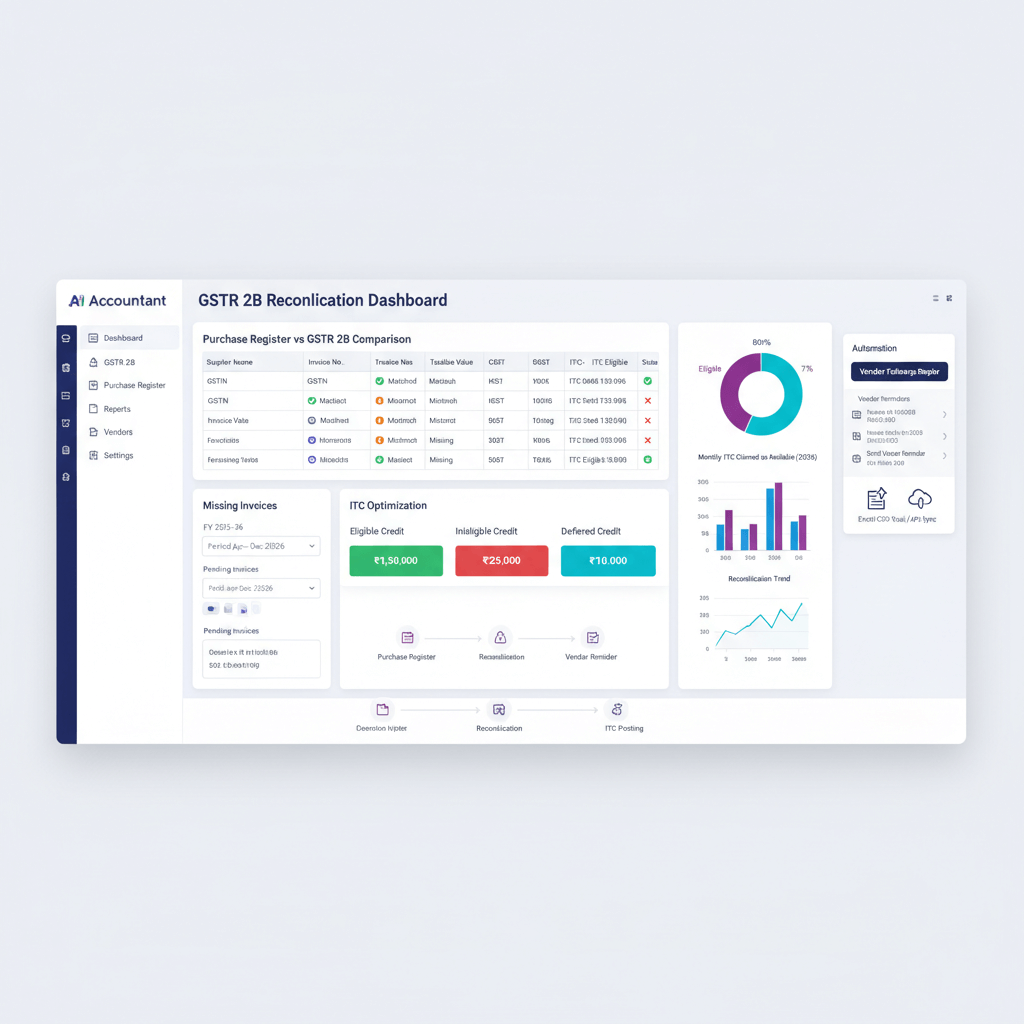
- Build a decision ready monthly dashboard that highlights ITC eligible versus claimed versus deferred, vendor ageing, and risk exposure.
- Insist on ISO 27001 and SOC 2 grade security, with maker checker, activity logs, and clear SLAs for peak month end loads.
Quick refresher: What is GSTR 2B and why reconcile monthly?
GSTR 2B is a static, supplier filed statement from the GST portal that drives your Input Tax Credit eligibility. Monthly reconciliation aligns what vendors filed with what you booked, so you avoid ineligible claims, recover missed credits, and cut notice risk. It is not only about compliance, it is about trustworthy books, predictable cash, and better vendor hygiene.
Whether you are a CA firm, an SME finance controller, or an AP manager, this guide explains exactly what GSTR 2B reconciliation tools can do for you, how to evaluate them, and how to operationalize monthly dashboard views your CFO will actually use.
Reconcile monthly, investigate weekly, and you will rarely firefight at return time.
How GSTR 2B reconciliation tools work
The workflow is simple, but powerful. You ingest your purchase register, bills, JVs, credit notes, and debit notes, then attach the GSTR 2B JSON or Excel from the portal. A matching engine compares GSTIN, invoice number, date, taxable value, and tax breakup, then applies fuzzy rules when typos, prefixes, or format differences appear.
- Outputs are neatly bucketed: matched, mismatched, missing in 2B, missing in books, duplicates, and ineligible.
- Each row carries a status, comments, a user trail, and is export ready for review.
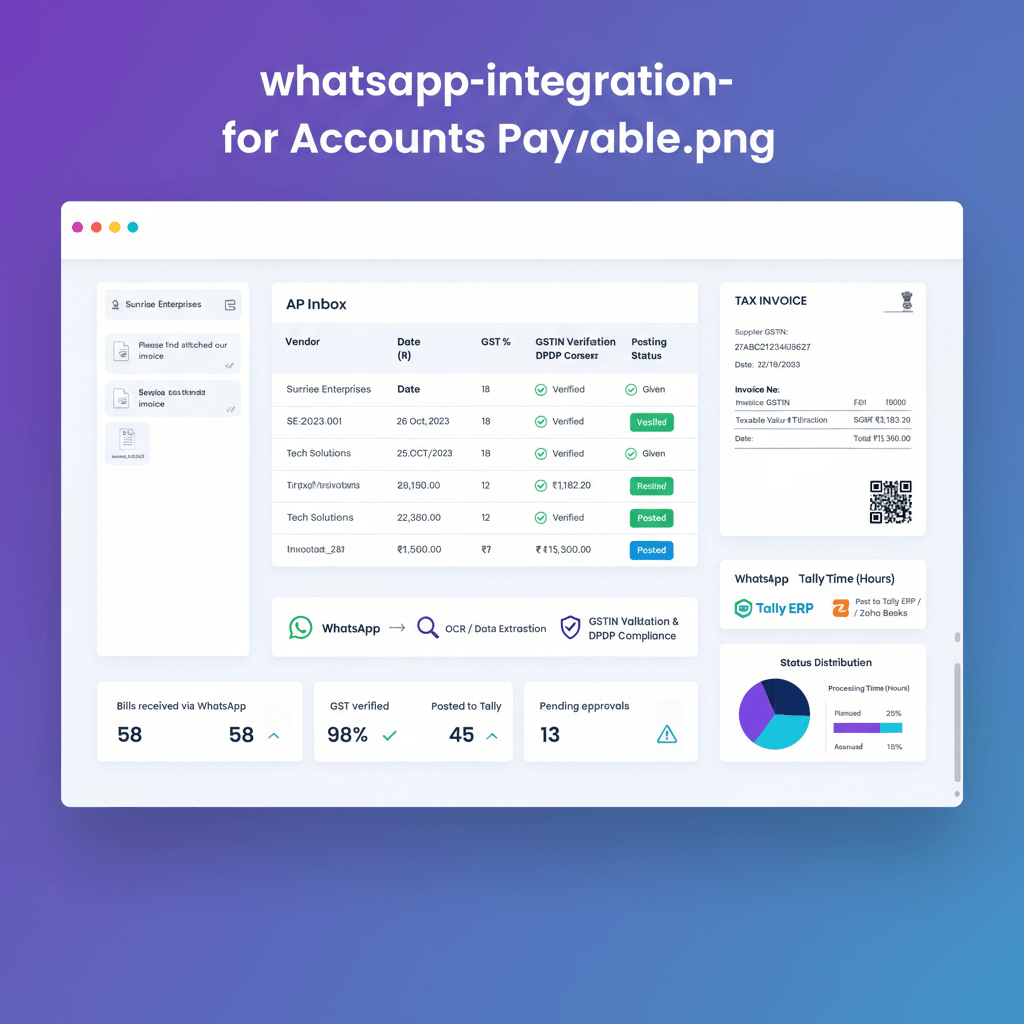
- Better platforms connect to Zoho Books and Tally to sync masters and post cleaned entries back.
- Security matters: look for ISO 27001 or SOC 2 certification, role based access, and comprehensive logs.
Must have features checklist
Accurate match purchase register
You need configurable multi key rules, value and date tolerances, duplicate detection, proper credit note handling, and auto linking when invoice numbers vary by prefixes or spacing. Accuracy first, then speed.
Identify missing invoices
Expect both direction lists, supplier wise ageing, and hints like GSTIN mismatch, RCM, or ISD exclusion. Intelligent root cause pointers cut manual investigation time dramatically.
ITC claim optimisation
The tool should auto classify eligible, ineligible, and deferred, flag Section 17(5) blocks, simulate follow up impact on ITC recovery, and track reversals and re claims precisely.
Vendor follow up automation
Generate supplier statements, email and WhatsApp templates, and escalation workflows. Centralize responses so you do not chase threads across inboxes.
Decision ready dashboards
A strong monthly dashboard should surface ITC eligible versus claimed versus deferred, trends, vendor ageing, top defaulters, and drill downs with export options.
Usability and control
Excel validations, row level error flags, bulk actions, and manual overrides turn a good engine into a tool your team actually uses.
Integrations
Native connectors for Zoho Books and Tally eliminate double entry, keep masters aligned, and push reconciled results back to source.
Scale and reliability
High volume performance, with SLAs that hold during month end, ensures the system does not stall when you need it most.
Compliance and security
ISO 27001, SOC 2, encryption in transit and at rest, and maker checker workflows protect sensitive financial data.
Step by step sample workflow
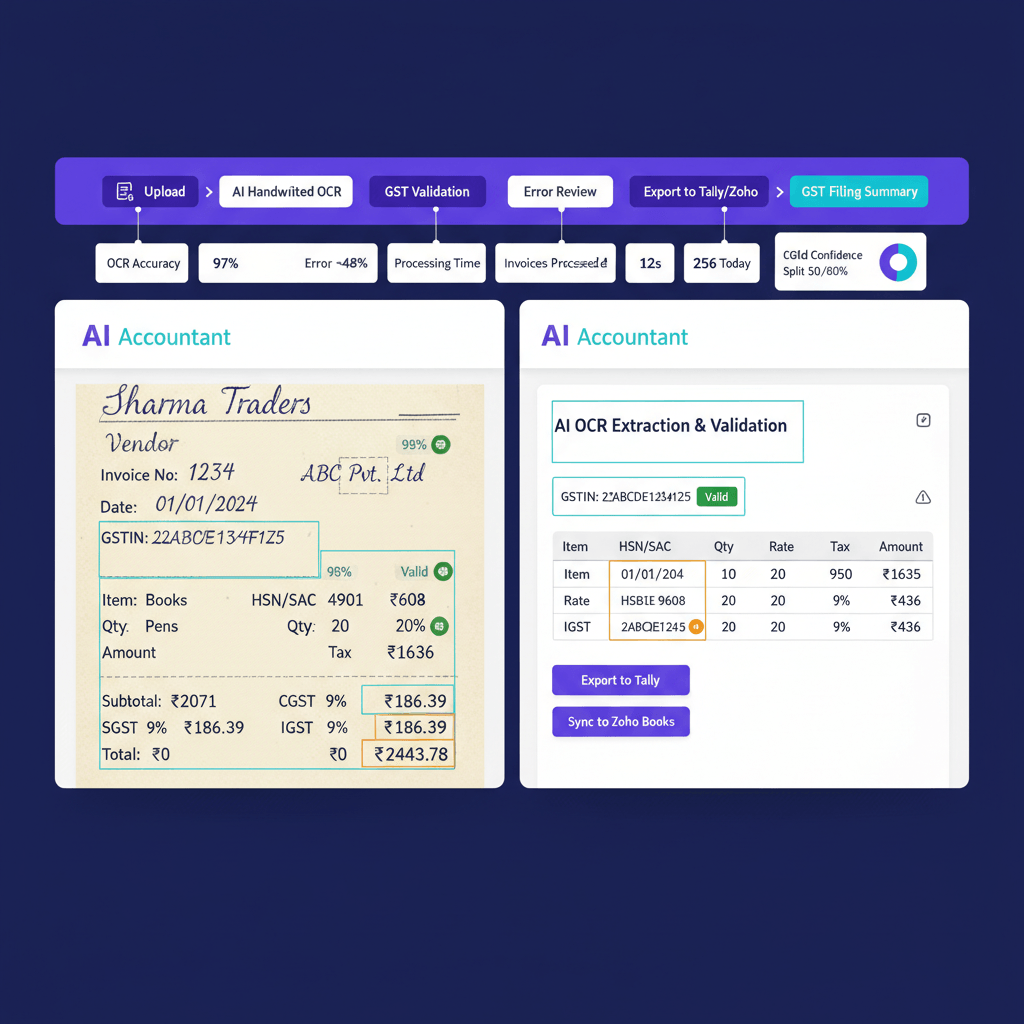
- Import purchase register. Upload Excel or pull from ERP, validate instantly, and fix GSTIN formats or missing numbers in the same pass.
- Attach GSTR 2B. Auto fetch with credentials or upload JSON, the parser structures it for matching.
- Auto match. Run the engine to match purchase register entries with 2B, fuzzy and partial rules resolve common variances.
- Identify missing invoices. Produce bi directional missing lists, then segment by vendor and ageing for targeted action.
- ITC claim optimisation. Classify eligible versus ineligible, simulate recovery, and schedule follow ups for high value gaps.
- Vendor follow up automation. Send reconciliation packs, track responses, and nudge laggards with one click sequences.
- Finalize monthly dashboard. Review summary, share with CFO, lock the period, and post entries back to Zoho Books or Tally.
What good looks like: measurable outcomes and KPIs
- ITC leakage drops by 20 to 30 percent, legitimate credits increase with fewer reversals.
- Close time compresses from six days to two, teams focus on exceptions, not data wrangling.
- Vendor compliance and response rates climb, unresolved ageing declines month over month.
- Risk of notices reduces, while audit trails document every decision.
Payback often arrives within one to two quarters through time savings and recovered ITC, before counting cleaner cash flow and lower risk.
Top GSTR 2B reconciliation tools to consider
- AI Accountant
End to end GST reconciliation with deep Zoho Books and Tally integration. Handles purchase registers, JVs, credit notes, debit notes, and GSTR 2B inputs with intelligent fuzzy matching. Includes missing invoice detection, ITC optimisation workflows, status tags, Excel validations, multi org support, and read only monthly dashboards. Built for scale and security with 300M plus transactions processed, ISO 27001, and SOC 2 Type II. - AccountingTool.in
Focused on Tally users with direct imports, fuzzy matching, invoice level reports, and basic vendor communication. Suits Tally centric firms. - TaxBuddy
Strong auto fetch and exception handling, executive dashboards, and automated follow up templates. Known for frequent compliance updates. - ClearTax GST
Enterprise friendly, part of a broader GST suite with e invoicing, e way bill, return filing, and reconciliation. - Zoho GST
Natural pick for Zoho users, solid reconciliation and reporting, limited vendor follow up automation. - QuickBooks GST
Integrated with accounting for smaller businesses, good for basic matching and missing invoice identification.
Pick based on your stack, volume, team capacity, and where your current bottleneck sits.
Comparison mini matrix
Excel or manual consumes days, is error prone with lookup gymnastics, offers weak auditability, and provides no central dashboard. Vendor follow ups spill across inboxes.
Specialized tools cut cycle time to hours, apply fuzzy logic, import directly from Tally, and deliver clean exports. Basic vendor communications are included, invoice level views improve visibility.
AI assisted platforms bring it down to minutes, auto fetch data, handle exceptions intelligently, and give executive grade month over month dashboards, with automated follow up packs.
Graduate from spreadsheets once you cross 500 invoices a month or manage multiple GSTINs, the ROI is immediate.
Implementation blueprint and timeline
- Week 1, data prep and setup: Clean masters, align templates, standardize your purchase register, configure users and roles.
- Week 2, pilot and calibration: Run one entity, tune matching rules, confirm dashboard views, document custom needs.
- Weeks 3 to 4, full rollout: Expand entities, finalize SOPs for vendor follow ups, train on exception handling, and set monthly cadences.
Most teams stabilize by month two. Get the rules right early, and everything else becomes smoother.
Buyer due diligence questions
- How are amendments, back dated filings, and period shifts handled in matching and reporting?
- How configurable are ITC computation rules, including Section 17(5), deferments, and re claims?
- How deep is vendor follow up automation, across templates, reminders, escalations, and response tracking?
- How flexible is the monthly dashboard for role specific views and exports?
- Which certifications exist, and what SLAs are guaranteed at month end loads?
- How seamless is the Zoho Books and Tally integration, including master sync and write back?
- What is the pricing model, and how does it scale with entities, users, or transactions?
- What is the migration and onboarding path from your current process?
Risks, caveats, compliance notes
These tools assist decisions, they do not replace professional judgment. Apply current law when claiming ITC, especially blocked credits under Section 17(5). Treat RCM, ISD, and import transactions with their specific rules. Track re claims carefully, and test e invoice cancel or amend scenarios before go live.
Proof points are encouraging. One CA firm cut close time from six days to two, recovered significant ITC by systematizing missing invoices, and reduced notice exposure. AI Accountant alone has processed over 300 million transactions with ISO 27001 and SOC 2 Type II controls.
Making your move
With the right platform you will consistently match purchase register entries, identify missing invoices before they snowball, drive ITC claim optimisation, streamline vendor follow up automation, and align leadership through crisp monthly dashboards.
Most vendors provide sandboxes to trial reconciliation and dashboards with sample data. Shortlist, run structured demos, and decide with evidence, not hope. The best time to implement was last quarter, the second best is before your next close.
FAQ
How often should a CA firm run GSTR 2B reconciliation for optimal ITC accuracy?
Run a monthly reconciliation for filing certainty, add a weekly sweep for vendor hygiene on larger books, and consider a daily check during peak cycles. AI Accountant supports scheduled auto fetch and auto match, so weekly and month end runs are effortless.
What is the best practice to handle Section 17(5) blocked credits in the reconciliation flow?
Configure rule based classification to auto park 17(5) items in an ineligible or deferred bucket, then include commentary at line item level. AI Accountant tags 17(5) scenarios, keeps them out of the claimable pool, and reflects them separately on dashboards.
How should credit notes, debit notes, and amendments impact ITC and matching windows?
Link notes to original invoices through document references, value offsets, and date windows. Maintain amendment lineage and display period of impact. AI Accountant auto links notes using multi key and fuzzy logic, then restates ITC in the impacted tax period with an audit trail.
What tolerance thresholds are acceptable for value and date differences in audits?
Common tolerances are small absolute value bands for rounding, and date variances that allow booking versus filing delays, both configurable and fully logged. AI Accountant maintains a change log for every rule tweak to satisfy audit queries.
Can we consolidate reconciliation across multiple GSTINs and financial years while preserving auditability?
Yes, adopt a multi org architecture with entity level segregation and group level roll ups. Retain immutable logs and versioned exports. AI Accountant provides unified dashboards across GSTINs, with maker checker and downloadable evidence packs.
How do we operationalize vendor follow ups and capture proof of communication?
Generate supplier wise reconciliation packs, send through integrated email or WhatsApp, record responses, and auto escalate on ageing thresholds. AI Accountant centralizes messages and attachments against each counterparty, creating a neat audit trail.
How are RCM, ISD, and import transactions treated during 2B reconciliation?
Exclude or separately classify RCM and ISD flows per policy, then map import BoE details where applicable. AI Accountant offers dedicated buckets and reports, so these do not contaminate standard vendor reconciliation.
How do I compute deferred ITC, reversals, and re claims without manual trackers?
Use rule engines that park deferred credits with reasons, trigger reversals under applicable rules, and auto surface re claim eligibility when conditions are met. AI Accountant tracks lifecycle status and posts clear signals on when to re claim.
What integrations matter most for Indian finance teams, and are templates provided?
Native integrations for Zoho Books and Tally are essential, plus import templates for Excel and CSV. AI Accountant ships with validated templates, API based sync, and write back for reconciled entries.
Which KPIs should appear on the CFO’s monthly dashboard for GST?
Show ITC eligible versus claimed versus deferred, vendor ageing and top defaulters, value at risk, amendment impact, and trend lines month over month. AI Accountant’s executive view consolidates these with drill downs and exports.
What security and governance controls should we demand before onboarding a tool?
Insist on ISO 27001 and SOC 2, encryption at rest and in transit, maker checker, role based access, and full activity logs. AI Accountant meets these standards, with evidence available during vendor due diligence.
What onboarding timeline and SLA should a CA firm expect for smooth month end?
Two to four weeks for data prep, pilot, and rollout is typical, with SLAs that protect month end performance and support response times. AI Accountant follows a structured implementation plan with defined cutovers and load tested performance benchmarks.

Rohan Sinha is a fintech and growth leader building aiaccountant.com, focused on simplifying accounting and compliance for Indian businesses through automation. An IIT BHU alumnus, he brings hands-on experience across 0 to 1 product building, growth, and strategy in B2B SaaS and fintech.