-01%201.svg)
Key takeaways
- Automated GSTR-2B reconciliation saves 20 to 30 hours per month, improves ITC recovery by 5 to 15 percent, and reduces reversal risk through auditable workflows.
- A robust workflow cleans inputs, performs multi key, fuzzy matching, buckets ITC into eligible, ineligible, and deferred, and outputs audit ready schedules.
- Shortlist tools with strong exception management, transparent matching logic, and automated vendor chasers that prioritise by value and ageing.
- Dashboards should show ITC trends, vendor risk, and unresolved ageing, with drill downs to invoice level and simple Excel or PDF exports.
- Implementation takes two to three weeks, from data mapping and rule configuration, to pilot runs, to go live with maker checker controls and month end validations.
- Evaluate with your own data using a 20 point checklist, then model ROI on time saved, ITC uplift, and reduced penalties.
- AI Accountant exemplifies end to end automation, including fuzzy matching, vendor follow up, rule driven ITC optimisation, and native Tally and Zoho integrations.
Why GSTR-2B reconciliation matters
GSTR-2B gives a static view of eligible input tax credit from supplier filings, yet reality is messy, with delayed filings, wrong GSTINs, mixed credit notes, late amendments, and confusion over reverse charge. To understand treatment for reverse charge in practice, see this reverse charge mechanism accounting in India explainer.
Every mismatch hurts cash flow. Unclaimed ITC leaves money on the table, reversals create interest exposure. Modern reconciliation systems ingest purchase registers, journals, and GSTR-2B JSON, then apply precise and fuzzy rules to surface exceptions that matter.
Think of it as a tireless teammate who never miskeys, who catches every discrepancy, and who documents every decision for audit comfort.
For a practitioner’s overview of capabilities and outcomes, explore this concise GSTR-2B reconciliation tools overview.
Ideal GSTR-2B reconciliation workflow
Start with clean inputs, purchase registers, debit and credit notes, and GSTR-2B downloads together. Strong tools normalise formats, remove duplicates, and standardise vendor masters.
The matching engine performs exact and fuzzy comparisons by GSTIN, invoice number, date, amount, and even HSN, catching OCR typos and rounding differences. Exception handling is decisive, clearly separating purchase only items, 2B only items, partials, duplicates, amendments, RCM, and tax mismatches, with crisp ITC bucketing into eligible, ineligible, and deferred, plus ready to post adjustment journals and audit trails aligned to Section 16, clause 2.
For an end to end snapshot of flows and output structures, review this guide to GSTR-2B reconciliation workflows.
Selection criteria, feature checklist
Matching accuracy and controls
Insist on multi field matching, tolerance windows for dates and rounding, and robust handling for amendments, credit or debit notes, RCM, imports, and e invoice cancellations. Transparent scoring and status codes build confidence. A practical breakdown of matching depth is in this technical overview of GSTR-2B matching.
Exception management
Supplier wise views, bulk edits, comments, attachments, and status workflows help nothing slip. Filters by supplier, value, and age, with exports for offline review, fit how teams actually operate.
ITC claim optimisation
Rules should reflect the latest advisories, simulate claim versus defer, and maintain rationale logs. For mechanics around reversals and evidence, see this primer on input tax credit reversal automation. Tools must update rule sets quickly when guidance changes. Additional examples are covered in this workflow deep dive.
Vendor follow up automation
Auto generated chaser lists, templated emails and WhatsApp, reminders, response tracking, and escalation paths are essential. Systems should learn which vendors need a nudge versus an urgent call.
Monthly dashboard
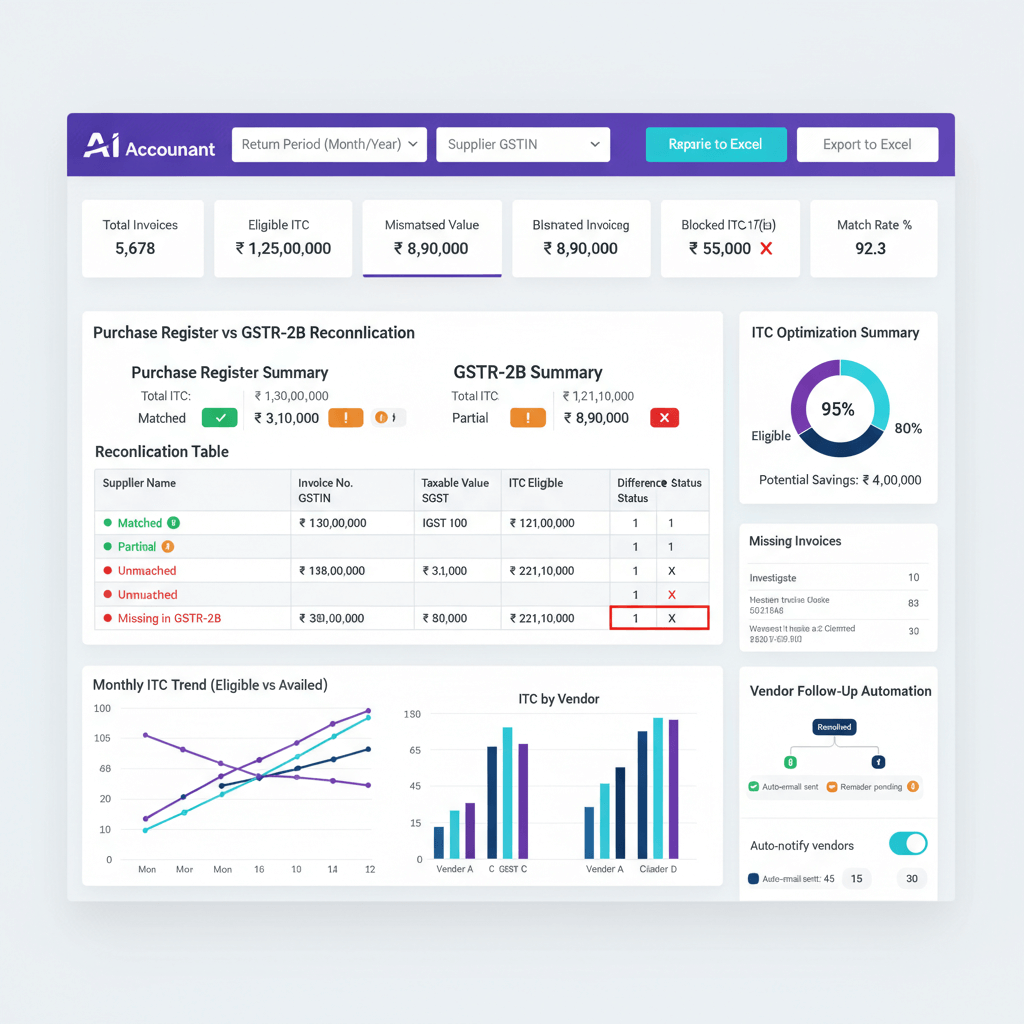
Look for real time ITC eligible, claimed, deferred, vendor risk flags, and ageing breakdowns, with drill downs to invoice level and quick exports. A useful reference is this GST health check dashboard.
Integrations and data operations
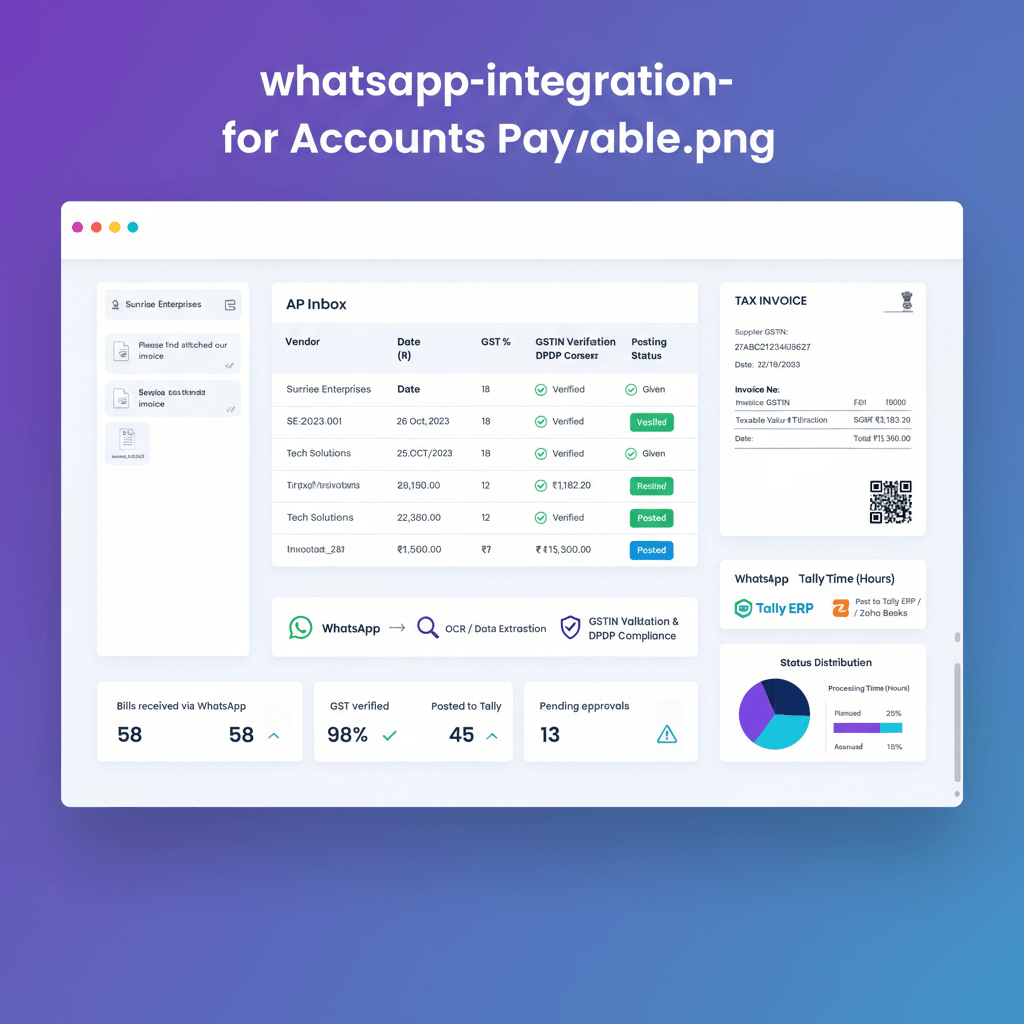
Auto fetch from GST portal, plus Zoho Books and Tally bi directional sync, keep books aligned with reconciliations. Security should include encryption, role based access, ISO 27001, and SOC 2, with detailed audit logs. Performance should handle ten thousand plus invoices monthly with ease, with India focused support for local clarifications.
How tools match purchase register to GSTR-2B
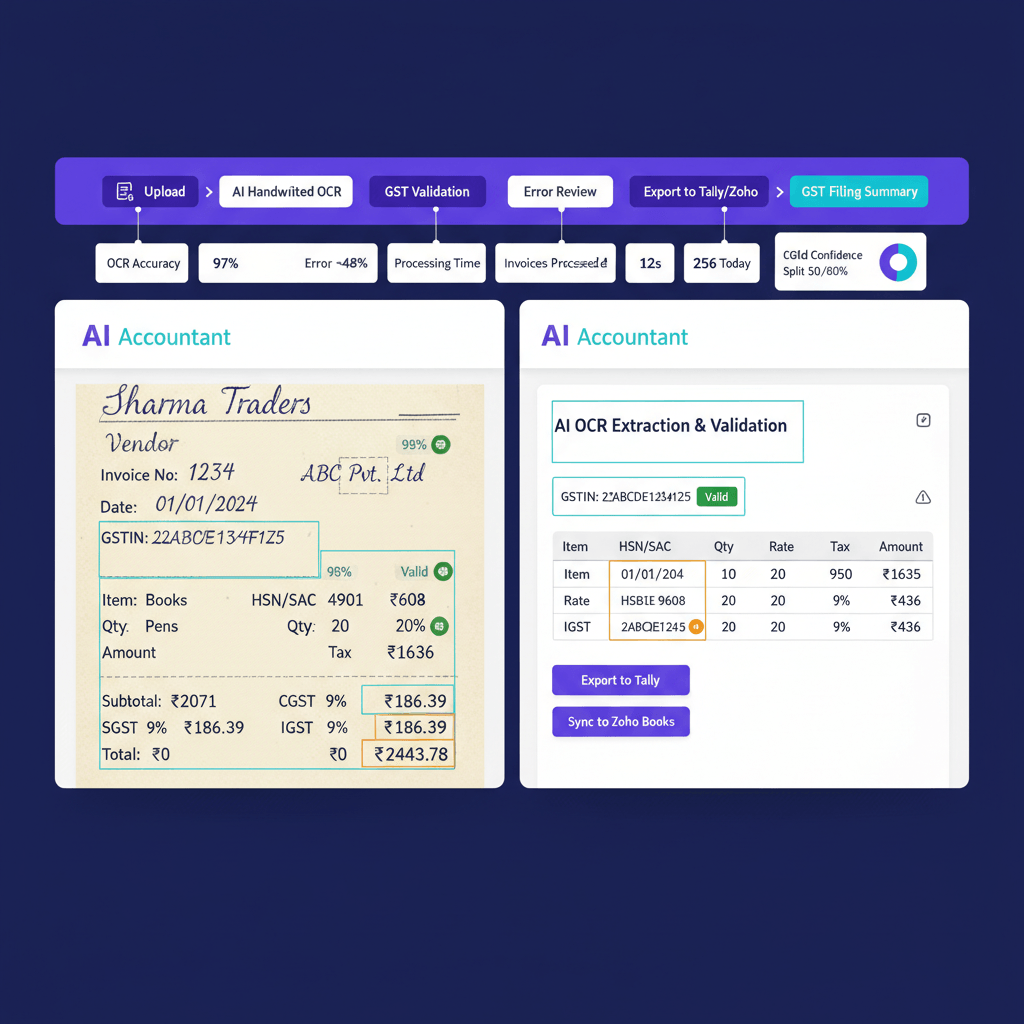
Evaluate on your data. Upload purchase registers in CSV or ERP export, add GSTR-2B JSON, then watch edge case behaviour. Back dated amendments test temporal logic, cross branch credits challenge GSTIN handling, OCR scanned bills reveal text extraction quality. Expect a transparent pipeline, exact matches first, fuzzy matches next, probable matches for review, then complete mismatches for investigation. For a rule by rule primer, reference this matching rules explainer.
Identify missing invoices and resolve quickly
Supplier wise patterns should be obvious, 2B only items hint at missed bookings, purchase only items suggest vendor filing gaps. Prioritise by ITC value and age, link amendments to originals, and keep version history to avoid double counting.
Resolution requires context, vendor contacts, historical filing behaviour, suggested next steps, and bulk remediation for similar issues. Templates and tracked outreach accelerate closure. A structured approach is outlined in this exception handling guide.
ITC claim optimisation, eligible versus deferred
Move beyond simple matches to scenario simulation, claim now versus defer, with cash flow and interest risk modelling. Ensure correct mapping to GSTR-3B, eligible in Table 4A, ineligible excluded, deferred held pending proof. Document reversal logic with auto generated journals and clear rationales. Historical analytics reveal chronic vendor issues and high reversal categories, feeding policy refinement. A concise practice note is here, ITC optimisation via reconciliation.
Vendor follow up automation that actually gets results
Set a predictable cadence, day one email, day seven WhatsApp, day fourteen call, then escalate. Track opens and replies, tune timing and copy, maintain vendor scorecards for timeliness, accuracy, and responsiveness. Use bulk sends with merge fields, schedule for optimal windows, and log commitments with reminders. Close the loop as vendors file corrections.
Monthly dashboard for finance and audit
Executive dashboards should surface ITC recovery trends, unresolved ageing, and vendor segments. Visuals show patterns quickly, drill downs reach invoice detail, filters serve entity, GSTIN, and cost centre views. Audit readiness means one click schedules and reconciliation reports, with full trails and documented decisions. For dashboard constructs, see this overview of reconciliation dashboards.
Implementation guide
Week zero to one, map purchase register fields, sync masters from Zoho Books or Tally, configure matching rules and tolerances, set up user roles and maker checker pathways.
Week one to two, run dry reconciliations on historical months, tune fuzzy thresholds, pilot chasers with friendly suppliers, draft SOPs, and train core users.
Go live, schedule pre GSTR-3B validations, generate audit packs for sign off, run daily exceptions, and coach extended teams.
Post go live, monitor match rates, adjust rules, expand automation to related tasks, and publish time saved and ITC uplift to sustain momentum. A stepwise blueprint is in this hands on implementation guide.
KPIs and ROI
Typical outcomes, 20 to 30 hours saved monthly, 5 to 15 percent ITC uplift, faster vendor turnarounds, and fewer reversals with interest.
For purchases of ₹10 crore annually at 18 percent GST, an uplift of 5 to 15 percent in ITC recovery equals ₹27 to ₹90 lakh in working capital. With time savings alone, payback often occurs within one to two quarters. Soft benefits include calmer month ends, stronger vendor relationships, smoother audits, and higher morale.
For benchmarking frameworks and examples, reference this KPI and ROI companion.
Common pitfalls and mitigations
- OCR and typos, mitigate with fuzzy rules and human review on high value exceptions, set confidence thresholds.
- Back dated amendments, maintain version history, defer uncertain items, and track vendor patterns.
- Misclassification, keep rules transparent, allow documented overrides, and review accuracy monthly.
- Over chasing, batch by value and age, escalate gradually, and recognise good performers.
- Integrations, test end to end before go live, retain fallback procedures, and document data flows.
- Change resistance, demonstrate quick wins, train on real data, and share success metrics openly.
Top GSTR-2B reconciliation tools comparison
- AI Accountant AI Accountant, comprehensive end to end workflows, fuzzy matching to GSTR-2B, missing invoice detection, ITC simulation and bucketing, automated vendor chasers, monthly ITC and payables dashboards, Zoho Books and Tally integrations, multi organization support, ISO 27001 and SOC 2 compliance, built for scale.
- OctaGST, strong matching flexibility and communication features, suitable when you need configurable rules.
- ClearTax GST, known for ITC optimisation and portal integrations, popular with larger enterprises.
- Zoho GST, natural fit for Zoho Books users, straightforward ecosystem alignment.
- TaxOne, focused on ITC compliance and claim control, with robust audit trails.
- TallyPrime, convenient built in reconciliation for Tally users, good for basic use cases.
For a practitioner angle on Tally workflows, see this complete guide to ITC matching and TallyPrime integration. For an at a glance comparison of reconciliation models, revisit this comparison overview.
Buyer’s comparison worksheet
Use this 20 point checklist when testing shortlists on last month’s data.
Matching capabilities
- Multi field matching algorithms
- Fuzzy logic for near matches
- Amendment handling
- Credit and debit note processing
- RCM transaction support
Exception management
- Missing invoice identification
- Duplicate detection
- Bulk editing features
- Status tracking workflows
- Supplier wise organisation
ITC optimisation
- Eligibility rule engine
- Claim simulation tools
- Deferral management
- Reversal tracking
- Audit trail generation
Vendor automation
- Chaser list generation
- Email and WhatsApp templates
- Follow up scheduling
- Response tracking
- Escalation workflows
Reporting and dashboards
- Monthly dashboard views
- Trend analysis
- Drill down capabilities
- Export options
- Real time updates
Weight criteria to your pain points, then compare match rates, exception closure speed, and reviewer effort to identify the best fit.
Taking the next step
Pilot your top three tools on live data, measure match rates, ITC uplift, and time saved. Bring your team into demos, and use a neutral checklist to avoid bias. The best tool is the one your team will use daily, with intuitive exception handling, clear ITC logic, and responsive support.
With the right platform, reconciliation shifts from exhaustion to execution. Month end becomes predictable, vendors stay accountable, and ITC is maximised with confidence. Start today, so the next GSTR-2B cycle arrives with workflows ready, not spreadsheets waiting.
FAQ
How should a CA structure month end GSTR-2B reconciliation to minimise reversals?
Run a preliminary reconciliation the day 2B releases, prioritise high value mismatches, and use a rules engine to bucket eligible, ineligible, and deferred ITC. Maintain rationale logs for every decision. An AI tool like AI Accountant can simulate claim versus defer, then generate adjustment journals with audit trails.
What matching tolerances are practical for invoice date and value differences between purchase register and 2B?
Most firms allow a date window of three to seven days and a rounding tolerance of one to two rupees or a small percentage for service invoices. Configure separate tolerances for goods and services. Tools such as AI Accountant let you tune these per GSTIN or vendor group.
How do I treat RCM entries during reconciliation and 3B reporting?
Segregate RCM items early, since they will not appear as supplier reported credits in 2B. Book self invoices and taxes payable, then claim ITC as eligible after payment of tax in cash, subject to conditions. Use your tool’s RCM filter and workflows to avoid mixing with vendor filed credits.
Can I reconcile historic periods with multiple amendments without double counting ITC?
Yes, provided the tool maintains version history and links amended documents to originals. Re run reconciliations for prior months with amendment logic enabled. AI Accountant tracks amendment chains, ensuring only the latest effective entry impacts ITC.
What workflows help with chronic late filing vendors who hold up ITC?
Create a vendor scorecard for timeliness and accuracy, prioritise chasers by ITC value and ageing, and automate reminders at set intervals. Consider provisional claims for reliable vendors where risk is acceptable, with strict reversal tracking. AI Accountant’s chaser lists and templates reduce manual effort.
How can a CA firm evidence ITC eligibility during audits without spending weekends on files?
Maintain system generated audit packs, supplier wise exception logs, rationale for deferrals and reversals, and supporting invoices with cross references. A dashboard that exports schedules in one click, like in AI Accountant, saves hours and improves audit confidence.
What ROI metrics should partners track to justify a reconciliation tool investment?
Track hours saved per month, match rate improvement, ITC recovered from previously missed invoices, reduction in reversals and interest, and vendor turnaround times. Many firms see payback within one to two quarters when using automation effectively.
How do multi GSTIN businesses handle inter branch credits and consolidated reporting?
Use a tool that supports multiple GSTINs under one organisation, with GSTIN wise rules and reporting, plus a consolidated view. Ensure the system treats inter branch supplies correctly and separates credits by registration for accurate compliance.
What is the best way to test a tool before onboarding clients at scale?
Use last month’s actual data for three clients of different sizes, upload purchase registers and 2B JSONs, and measure match rate, exception closure time, and reviewer touches per exception. Compare outputs against manual baselines. AI Accountant provides pilot sandboxes for such trials.
How do I prevent duplicate ITC when vendors issue amended invoices or multiple credit notes?
Rely on document lineage tracking, unique keys using GSTIN, invoice number, date, and value, and explicit amendment flags. Set system rules to supersede old entries when valid amendments arrive. Review high value cases with a maker checker control before posting.
What data security assurances should I demand when sharing client purchase registers?
Look for ISO 27001 and SOC 2, encryption at rest and in transit, role based access, IP controls if needed, and complete audit logs. Sign DPAs with clear retention and deletion clauses. AI Accountant adheres to these standards and provides audit evidence on request.
How can I integrate Tally or Zoho Books so that reconciliations and books stay aligned?
Choose a tool with certified connectors for bi directional sync, mapping ledgers and tax components correctly, and scheduling nightly updates. Post reconciliation journals back to the ERP with references, so reports match. AI Accountant offers native integrations for both Tally and Zoho Books.

Rohan Sinha is a fintech and growth leader building aiaccountant.com, focused on simplifying accounting and compliance for Indian businesses through automation. An IIT BHU alumnus, he brings hands-on experience across 0 to 1 product building, growth, and strategy in B2B SaaS and fintech.