-01%201.svg)
Key takeaways
- Accurate GSTR-2B reconciliation requires multi-parameter matching, intelligent exception handling, and scalable workflows, not just spreadsheet formulas.
- Automation should detect missing invoices from both sides, prioritize recovery by ITC value and aging, and streamline vendor follow ups.
- ITC optimization depends on robust eligibility classification, a configurable rules engine, and disciplined reversal tracking.
- Deep ERP integrations, especially with Zoho Books and Tally, eliminate manual data prep and reduce posting errors after reconciliation.
- Real time dashboards, ITC impact analytics, and customizable KPIs help finance leaders monitor compliance posture and working capital.
- Security is non negotiable, target ISO 27001, SOC 2 Type II, strong encryption, and role based access control.
- Evaluate tools with production data, define success metrics up front, and phase rollouts for faster adoption.
- Modern platforms, for example AI Accountant, often pay for themselves within one or two quarters through time savings and improved ITC recovery.
Understanding GSTR-2B Reconciliation: Why Manual Methods Break Down
The Compliance Challenge Finance Teams Face Daily
Every month, your purchase register tells one story while GSTR 2B tells another, dates drift, vendors amend, and credit notes surface late. Tally or ERP data structures rarely align with government JSON files, which means manual normalization, VLOOKUP sprawl, and version chaos. Meanwhile, audits demand line level accuracy, ITC blocks strain cash flow, and interest or penalties lurk if deadlines slip.
Manual reconciliation scales linearly with effort, automated reconciliation scales with data, not with people.
Key Pain Points Reconciliation Software Must Address
- Eliminate format friction with automated normalization of purchase registers and GSTR 2B JSON, ready for like to like matching.
- Apply fuzzy logic across invoice number, date windows, GSTIN, taxable value, and rate, so formatting quirks do not break matches.
- Move from ad hoc firefighting to systematic exception handling, with queues, notes, and audit trails that survive month close.
For a quick primer on capability scope, see this GSTR-2B reconciliation tools overview.
Core GSTR-2B Matching Capabilities
Essential Matching Parameters and Logic
High quality tools match by multiple parameters concurrently, not in a single field tunnel. Expect normalization of invoice numbers, tolerance based matching for taxable value and tax, date windows to handle booking delays, vendor GSTIN validation, and additional checks on Place of Supply, HSN, and rate combinations. Clear status codes should explain why a record is matched, partial, or unmatched, so your team can resolve quickly. For a capability map, start with this GSTR-2B reconciliation tools overview.
Handling Complex Scenarios
- Credit and debit notes must link to parent invoices, with netting logic and reversal tracking.
- Amendments across periods should update prior reconciliation outcomes, avoiding double counts.
- Duplicate detection should spot near identicals by vendor, amount, and date proximity, even with altered invoice numbers.
- Multi GSTIN operations need consolidated analytics, yet entity wise compliance tracking. See this GSTR-2B reconciliation tools overview for advanced scenarios.
Missing Invoice Detection and Recovery Features
Automated Identification of Gaps
- Found in GSTR 2B, missing in books, immediate ITC opportunity, grouped by vendor and value for quick action.
- Found in books, missing in GSTR 2B, vendor follow up queue to protect ITC and avoid future reversals.
- Period mismatches, same invoice landing in different months, a frequent cause of ITC timing errors. Reference, GSTR-2B reconciliation tools overview.
Vendor-Wise Reporting and Tracking
Generate vendor wise lists with contacts, categorize by status, for example Email Sent, Reminder Pending, Resolved, and apply priority scoring by ITC value and aging. Trend analysis flags habitual late filers, so you can educate, escalate, or reconsider terms. More patterns in this GSTR-2B reconciliation tools overview.
ITC Optimization and Compliance Tools
Eligibility Classification Systems
Automate segregation into eligible, blocked, restricted, and reversed buckets. Identify Section 17(5) blocks, handle industry specific restrictions, and track deferred ITC where receipt dates or other conditions push eligibility to later periods. Useful context, GSTR-2B reconciliation tools overview.
Rules Engine for Automatic Categorization
Configure rules by GL codes, vendor classes, HSN, or custom ERP fields, for example block Employee Welfare, or auto route gray zones to tax team approval. Test rules in a sandbox with what if scenarios before going live. See deeper coverage in this GSTR-2B reconciliation tools overview.
Reversal Tracking and Management
Automate reversals for non payment beyond 180 days, generate entries, and tie every reversal to the original claim. Monitor reversals due to credit notes, amendments, or audits, and publish forward looking schedules. Learn more in input tax credit reversal automation.
Vendor Collaboration and Communication Features
Automated Follow-Up Workflows
Define escalations by value and age, use template libraries for missing invoice notices, GSTIN corrections, and filing reminders, and track response speed by supplier to prioritize calls versus emails. Benchmark patterns here, GSTR-2B reconciliation tools overview.
Bulk Communication Tools
Send personalized bulk emails with vendor specific attachments, schedule recurring campaigns on fixed dates, and monitor open and response rates to refine your approach.
Progress Tracking and Escalation
Tag every discrepancy lifecycle, keep full conversation histories, and automatically escalate to management if vendors remain unresponsive beyond agreed service levels.
Integration Requirements with Accounting Systems
Deep Zoho Books Integration
Expect bi directional sync of purchase registers, vendors, and GL mappings, push reconciliation outcomes back into Zoho Books with tags and journal entries, and keep real time status updates. A comparative view appears in this GSTR-2B reconciliation tools overview.
Tally Integration Capabilities
Your platform should respect voucher types, cost centers, tracking numbers, and multi company contexts, then output Tally compatible import files for adjustments. Read more in Tally integration with AI Accountant, and cross check scope in the GSTR-2B reconciliation tools overview.
Data Sync and Master Management
Master sync should unify vendor name variants and GSTIN changes, keep GL mappings aligned with ITC rules, and surface conflicts for human review rather than creating duplicates.
Reporting and Analytics Dashboards
Real-Time Reconciliation Status Views
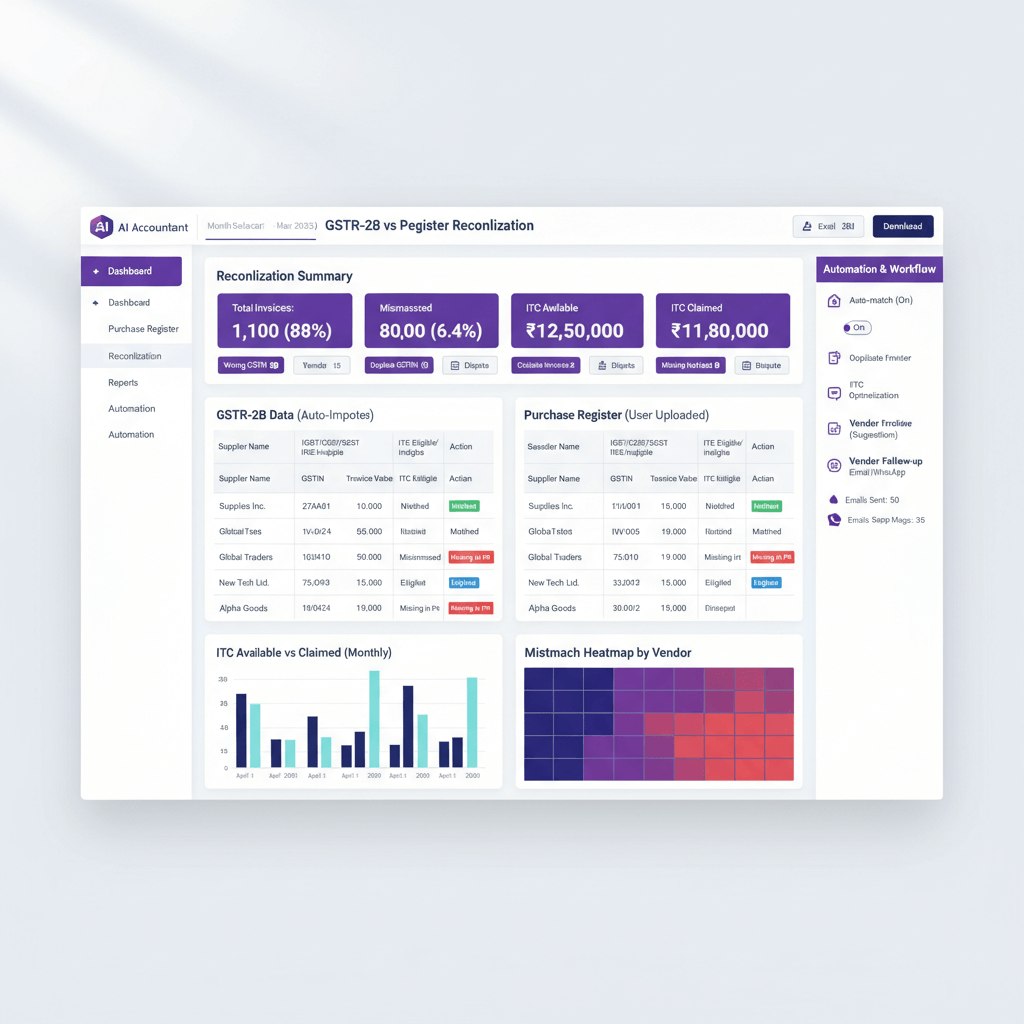
Dashboards should show invoices processed, match percentage, unresolved amounts, and drill downs to root causes, with period over period trend views. A quick framework is outlined in this GSTR-2B reconciliation tools overview.
ITC Impact Analysis and Trending
Measure available versus claimed credits, ITC aging, and vendor wise contribution to credits. For inspiration on analytics depth, explore this ICAI use case on GST analytics.
Customizable KPI Monitoring
Give CFOs an executive lens on recovery rates and compliance scores, and give tax teams operational metrics like exception turnaround and vendor response rates. Trigger alerts when KPIs breach thresholds.
Choosing the Right GSTR-2B Reconciliation Tool
Excel vs Dedicated Reconciliation Platforms
Excel suits low volume, simple cases, but beyond a few hundred invoices a month, formula complexity, data prep, and version control erode accuracy and speed. Dedicated platforms handle scale, add workflows, and maintain audit trails. See a balanced view in this GSTR-2B reconciliation tools overview.
Essential Security and Compliance Certifications
Insist on ISO 27001, SOC 2 Type II, encryption at rest and in transit, and role based access. A deep dive on enterprise grade readiness appears in this GSTR-2B reconciliation tools overview.
Top GSTR-2B Reconciliation Tools Comparison
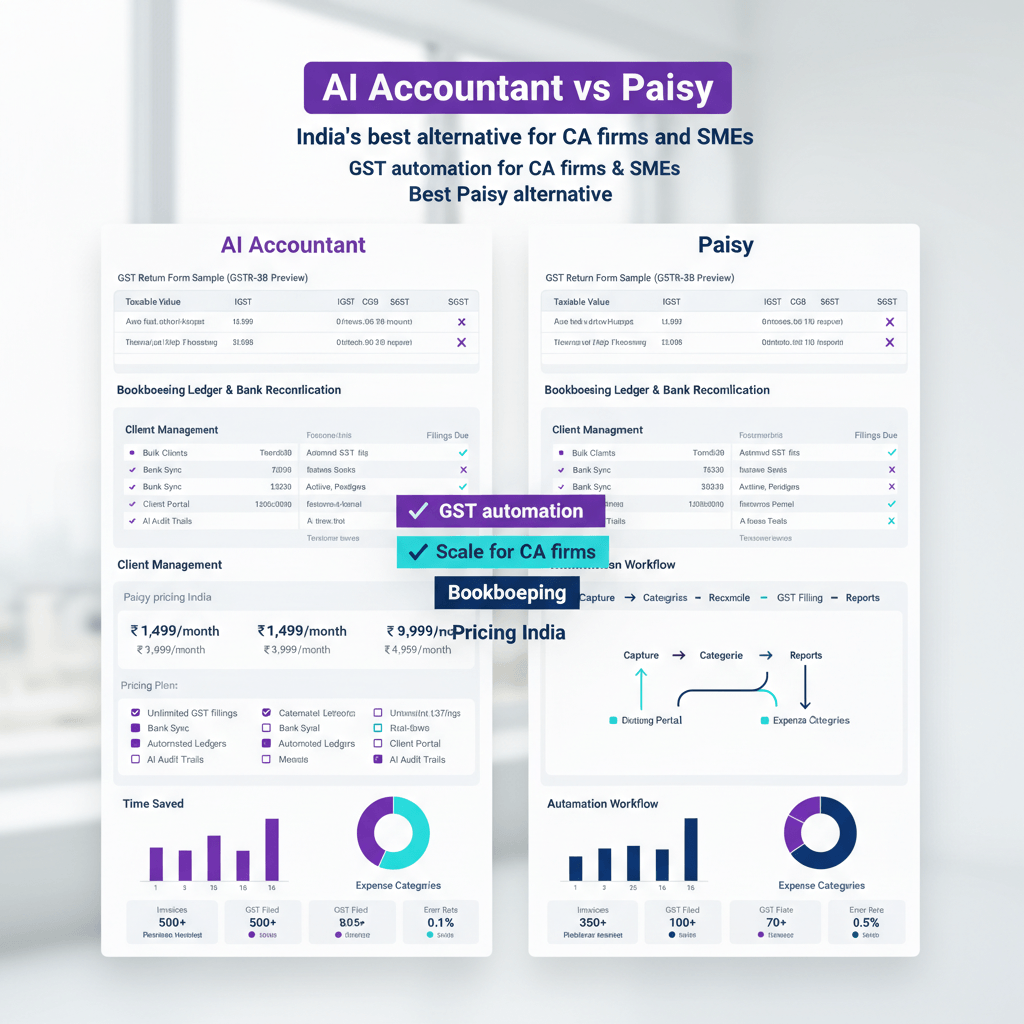
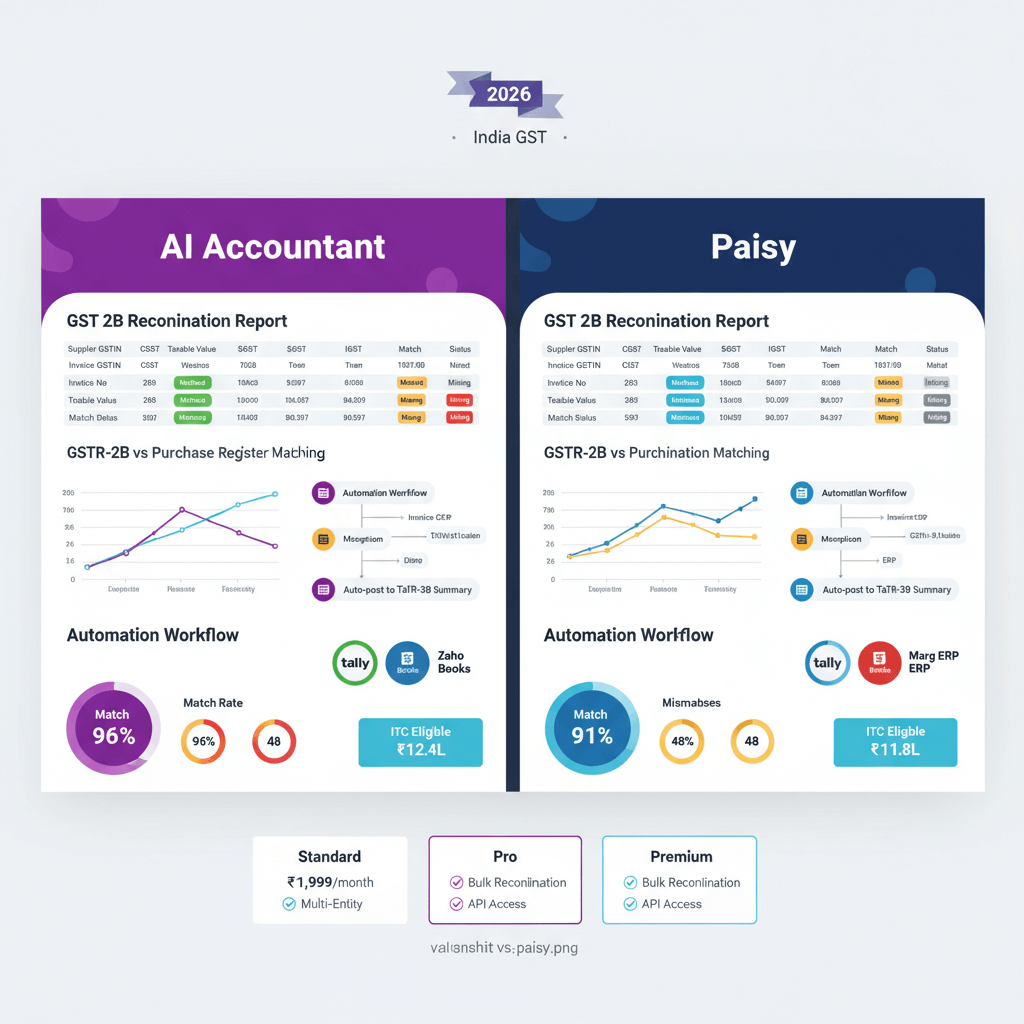
AI Accountant offers end to end reconciliation with fuzzy matching, missing invoice detection, ITC rules engine, and native depth for Zoho Books and Tally, designed for scale and auditability.
Other platforms to explore include ClearTax GST, Zoho GST, TaxOne, OctaGST, and QuickBooks GST, each with different strengths across volume, collaboration, and ecosystem fit.
Implementation Best Practices
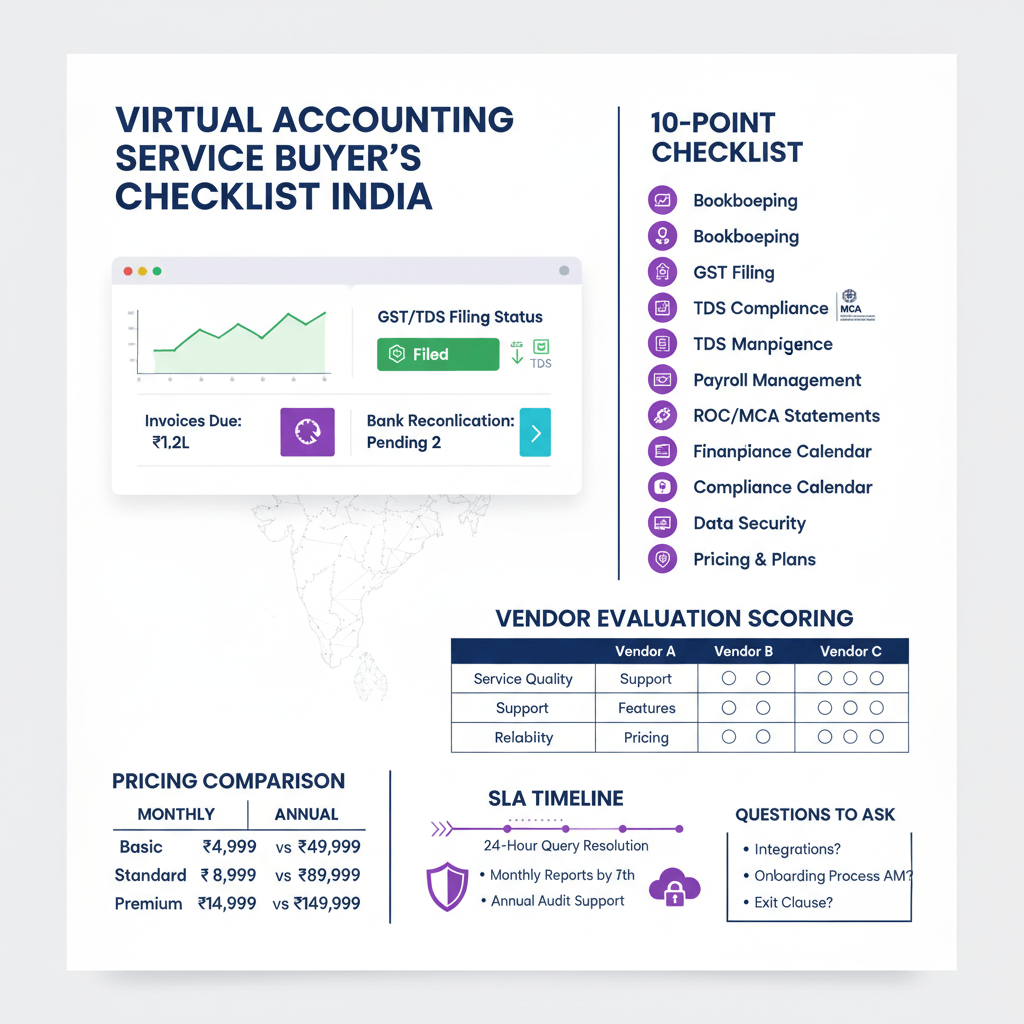
Building Your Evaluation Checklist
List must haves versus nice to haves, define data volume, user counts, and ERP integrations, and validate security proofs. Remember future growth, choose what you will not outgrow in six months.
Demo Questions That Reveal True Capabilities
- Run your messy data, including amendments, credit notes, and multi GSTINs, not a vendor picked sample.
- Trace an exception from mismatch to resolution, show notes, attachments, and audit trail.
- Prove scale, ask for the largest production volume they run today.
- Verify depth, can results post back to Tally with correct voucher types and to Zoho Books with preserved custom fields. Reference scenarios from this GSTR-2B reconciliation tools overview.
Setting Success Metrics and KPIs
Target a first pass auto match of 75 to 85 percent, under three percent unresolved after month end, sixty to seventy percent time reduction, and measurable ITC recovery uplift. See benchmarking notes in this GSTR-2B reconciliation tools overview.
Common Pitfalls and How to Avoid Them
Integration Failures and Data Quality Issues
Audit your data before go live, standardize invoice numbering, fix vendor GSTINs, and test with production volumes. Document mappings, then maintain them as masters evolve.
Change Management Challenges
Involve preparers and reviewers early, run focused training on their daily flows, and phase the rollout. Emphasize that automation frees time for analysis, not that it replaces people.
Inadequate Vendor Support
Test support during trial, check SLAs, review cadence of product updates, and validate vendor stability. A great product without responsive support adds risk.
ROI and Business Impact
Quantifying Time Savings
One thousand invoices can consume sixteen to twenty hours manually, but two to three hours with automation, mostly for exceptions. Scale this across clients, and you reclaim hundreds of hours monthly for advisory or reviews.
Cash Flow Improvements Through Better ITC Management
Faster reconciliation accelerates ITC claims by ten to fifteen days, which translates to meaningful working capital. Better gap detection lifts total ITC claimed, and fewer reversals avoid penalties. Practical benchmarks appear in this GSTR-2B reconciliation tools overview.
Risk Reduction and Audit Preparedness
Automated audit trails, consistent rules, and proactive discrepancy detection reduce notices and shorten audits. Staying audit ready year round removes the last minute scramble.
Conclusion and Next Steps
Start With Your Biggest Pain Point
Pick the bottleneck that costs you the most, time on matching, missing invoices, or vendor follow ups, and select a platform that nails that outcome first. Quick wins build momentum for the rest.
Take Action With a Structured Pilot
Run a pilot on one entity, compare manual versus automated outputs for a month, measure hours saved, ITC uplift, and error reduction, then expand. The journey to effortless GSTR 2B reconciliation starts with one deliberate step.
FAQ
GSTR 2B vs GSTR 2A, which one should I reconcile against for ITC claims?
Always reconcile against GSTR 2B for final ITC claims, since it is a static statement generated monthly. GSTR 2A is dynamic, useful for early visibility, but not for finalization. Many teams use AI Accountant to generate early 2A deltas, then finalize on 2B before filing.
What first pass auto match percentage should a CA firm target on client reconciliations?
With clean masters and a capable engine, expect seventy five to eighty five percent auto match on first run. If you see under sixty percent, check GSTIN accuracy, invoice format drift, and matching tolerances. Tools like AI Accountant allow configurable tolerances, which improves first pass rates without sacrificing control.
How do I handle amendments and credit notes spanning multiple tax periods without double counting?
Your tool should link every amendment or note to the parent invoice, adjust prior period statuses, and maintain an immutable audit trail. In practice, CAs configure period aware rules, then let the engine recast earlier matches automatically, AI Accountant demonstrates this in pilot sessions using client data.
What is the recommended workflow for invoices found in books but missing in GSTR 2B?
Create a vendor follow up queue, attach the invoice copy, cite the tax period, and trigger progressive reminders. Prioritize by ITC value and aging. In AI Accountant, firms tag records as Email Sent, Reminder Due, or Escalated, and track resolution time by vendor.
How do I structure ITC eligibility rules that reflect Section 17(5) blocks and industry specific restrictions?
Start with a rules library driven by GL codes, vendor categories, and HSN, then test in a sandbox on historical data. Route exceptions to reviewer approval. AI Accountant ships with a starter pack for common blocks, for example motor vehicles and employee welfare, which you can extend per client policy.
What is a practical KPI stack for month end reconciliation close?
Track match percentage, unresolved mismatch value, average exception turnaround time, and ITC aging. Add process KPIs like vendor response rate and number of reversals booked. CAs using AI Accountant often target less than three percent unresolved by filing date, and under two day exception cycles.
How do I quantify ROI for a reconciliation tool during a pilot?
Measure hours spent pre versus post implementation, ITC uplift from recovered invoices, and avoided reversals. Include opportunity cost saved by faster ITC availability. Many firms see sixty to seventy percent time reduction, plus working capital gains from earlier ITC, which together fund the subscription.
What integration depth should I demand for Tally and Zoho Books in a multi client CA practice?
Insist on automated pulls of purchase registers and masters, preservation of voucher types, cost centers, and custom fields, and push back of reconciliation tags and journal entries. AI Accountant supports bi directional flows for Zoho Books and Tally friendly import files for adjustments, reducing post reconciliation bookkeeping effort.
How can I reduce vendor related mismatches at source, rather than chasing them every month?
Publish vendor scorecards, educate on correct GSTIN usage, and set contractual SLAs for filing timeliness. Use automated reminders with supporting attachments. CAs report that consistent monthly campaigns from AI Accountant reduce chronic late filers within two to three cycles.
What controls ensure audit readiness, especially when teams change reviewers mid year?
Look for immutable logs of every action, reason codes for mismatches, attachments, and approval trails. Enforce role based access so juniors see only assigned entities. AI Accountant maintains complete histories per invoice, which simplifies audit responses and internal quality reviews.
How should I set matching tolerances without risking over claims on ITC?
Define narrow tolerances for taxable value and tax, then widen cautiously after sampling exceptions, never the other way round. Review false positives periodically. AI Accountant lets you test tolerance changes on a what if basis, so you can see impact before applying to live runs.
Is there a threshold where Excel remains acceptable, and when must I move to a platform?
Under one hundred invoices a month with stable vendors, Excel can work if governed tightly. Beyond five hundred invoices, rising error rates, duplicated efforts, and version issues usually make dedicated platforms mandatory. Most practices switch around the three to five hundred invoice mark to protect accuracy and staff time.
How do I prevent ITC reversals due to the 180 day payment rule without manual tracking?
Use a reconciliation tool that links invoice date, payment status, and reversal due dates, then auto computes reversal amounts and entries. AI Accountant tracks the 180 day window and publishes upcoming reversal schedules so teams can act before filing deadlines.

Rohan Sinha is a fintech and growth leader building aiaccountant.com, focused on simplifying accounting and compliance for Indian businesses through automation. An IIT BHU alumnus, he brings hands-on experience across 0 to 1 product building, growth, and strategy in B2B SaaS and fintech.