-01%201.svg)

Key takeaways
- One CA led team manages books, taxes, payroll advisory, and ROC, with a single dashboard for visibility.
- Clean monthly closes, on time filings, and real time insights reduce penalties and improve decisions.
- AI driven alerts highlight burn, anomalies, and late collections before they escalate.
- Scales with e invoicing, multi state GST, international advisory, and multi entity reporting.
- Clear metrics track closure timeliness, reconciliation rates, and filing punctuality.
- Ideal for freelancers and early stage startups that want accuracy, speed, and lower total cost.
- Pick a provider with CA leadership, robust security, a live dashboard, and defined SLAs.
- Start fast with an onboarding checklist and a demo of MIS and compliance workflows.
Financial Tax and Bookkeeping Solutions for Freelancers and Startups
Introduction to financial tax and bookkeeping solutions
If you are a freelancer or a startup, money work can feel messy. You juggle invoices, taxes, and filings while building your business. Missed dates bring penalties, spreadsheets get out of sync, and cash flow feels unclear. Financial tax and bookkeeping solutions fix this with one simple model, a CA led team handles bookkeeping and tax compliance end to end, and a dashboard shows your numbers in real time. You get clean books, on time filings, and clear insight into cash, burn, and runway.
AI Accountant delivers this as Virtual Accounting. Our CA team does the work, and the dashboard gives you live views, documents, and status, so you focus on growth. For additional perspective on bundled services, see this overview on bundling tax and bookkeeping and this look at full service bookkeeping.
Accurate records, on time filings, clear cash flow, these three unlock calm execution and confident decisions.
What are financial tax and bookkeeping solutions
Financial tax and bookkeeping solutions bundle core finance tasks into one managed service. Instead of separate vendors for books, taxes, and payroll, you get one CA led team with one system. This makes records accurate, filings timely, and insights fast.
Key parts include:
- Bookkeeping, record sales, purchases, expenses, bank entries, ledgers, reconciliations, monthly closes, and year end schedules.
- Tax compliance, GST registration and filing, TDS advisory and returns, Income Tax returns, advance tax, small company ROC filings, and e invoice enablement, with a compliance calendar.
- Payroll advisory, compute monthly TDS for salaries, structure pay to be tax friendly, and guide employees on tax saving choices.
- MIS reporting, share P and L, balance sheet, cash flow, KPIs like burn and runway, and highlight anomalies and trends.
- Centralized management, one repository for invoices, challans, returns, and working papers, plus single channel chat with your CA team.
Learn more about the benefits of bundling and outsourcing in resources such as bundled services, full service bookkeeping, outsourced bookkeeping, and controller and bookkeeping services.
Why these solutions matter for startups and freelancers
Clean books drive smart choices. With clear profit and loss and cash flow, you plan hires, marketing, and product spend with confidence. When you track expenses well, you spot deductions early and lower taxes. When filings are on time, you avoid interest and penalties. When your reports are investor ready, you move faster on funding and debt. See due diligence preparation ideas in this readiness checklist.
For founders and solo workers, time is scarce. A single CA led team saves hours each week, replaces multiple vendors, and ends copy pasting across tools. A live dashboard shows receivables, payables, bank balances, burn, and runway. Stress goes down as visibility goes up. As you scale, add e invoicing, multi state GST, or international tax advisory without changing the system or team.
Core components of financial tax and bookkeeping solutions
Accounting and bookkeeping services
- Monthly bookkeeping for sales, purchases, expenses, bank entries, and payment gateways
- Ledger scrutiny and clean up to fix coding errors
- Year end closing and schedules for smooth audit prep
- Fixed asset register and depreciation tracking
- Inventory records and reconciliations for D2C and retail
- Accounts receivable and payable management with aging
- Bank and gateway reconciliations to remove mismatches
- Cash flow preparation and forecasting
- MIS and management reporting, profit and loss, balance sheet, key ratios
- Coordination support with your statutory auditor
Taxation and compliance
- GST registration and advisory on place of supply, RCM, HSN and rates
- Monthly or quarterly GST filings, GSTR 1, GSTR 3B, annual GSTR 9 and GSTR 9C
- E invoice enablement and checks for turnover limits
- GST health checks and reconciliations
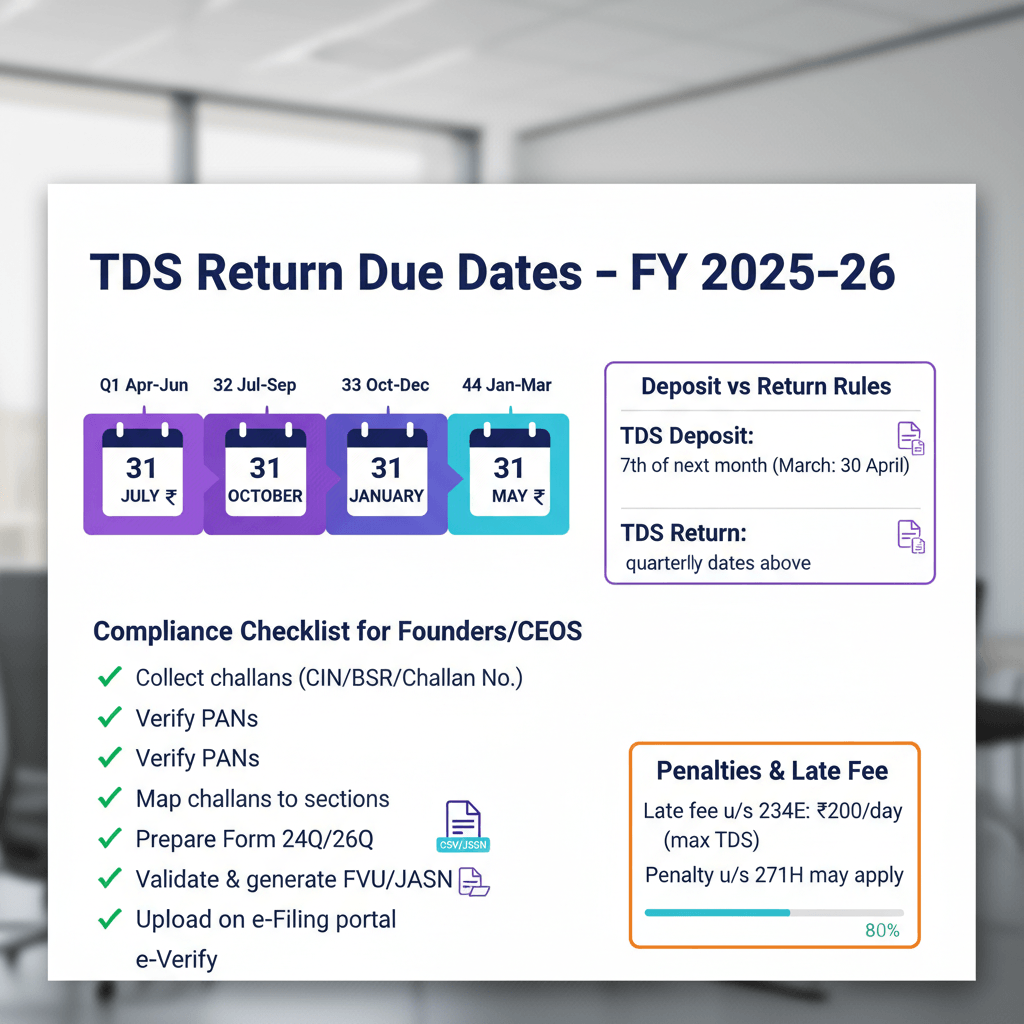
- TDS advisory and compliance, monthly challans and returns like 26Q, 24Q, 27Q, and 26QB, 26QC, 26QD
- Income Tax returns for individuals, partnerships, and companies
- Advance tax planning and payments
- Tax audit preparation support
- International tax advisory, expat tax, and 15CA preparation
Payroll services
- Monthly TDS for payroll
- Advice on salary structure to help staff save tax
ROC compliance and secretarial support for small companies
- Annual ROC filings, MGT 7 and AOC 4
- MSME filings for vendors through MCA
- DIR 3 KYC, DIN application, director appointment and resignation
- Increase of authorised share capital, share allotment
- Board meetings and minutes, AGM, statutory register, board report, annual report
Dashboard for visibility and control
- Financial overview of revenue, expenses, profit or loss, and balances
- Income and expense category breakdowns
- Cash flow trends, burn rate, and runway
- AI generated insights and alerts on anomalies or risks
- Recent transactions view to spot issues early
- Bank statement analysis and reconciliation aids
- Central document repository for bills, challans, and returns
- Compliance dates and filing status in one calendar
- Centralised communication with the CA team
How these solutions work in practice
A smooth process keeps you compliant year round. Here is the flow many clients follow with AI Accountant.
Onboarding
- Collect business details, PAN, TAN, GST, and any DIN data
- Set up the chart of accounts for your model and industry
- Baseline check on GST and TDS profiles, HSN and SAC mapping, and prior filings
- Load opening balances and last year trial balance
Month to month
- Capture all transactions from banks, cards, payment gateways, and billing systems
- Reconcile bank and gateway entries weekly or monthly
- Update MIS, cash flow, and working capital reports
- Share AI alerts on variances, unusual spends, or slow collections
Compliance cycle
- Track GST and TDS dates in a calendar
- Prepare and file returns on time and make challan payments
- Monitor ROC timelines for board and AGM events
Year end
- Prepare final schedules and ledgers
- Compute taxes and advance tax true ups
- Support with audit and queries from statutory auditors
Visibility
- Use a live dashboard to view key metrics, filing status, and documents
- Chat with your CA team in one place for follow ups and clarifications
Key features and benefits of bundled solutions
- End to end coverage, one CA led team handles books, taxes, payroll advisory, and ROC, which lowers error rates.
- Fewer penalties, systemized controls, reconciliations, and calendars reduce misses.
- Time savings, one point of contact replaces many vendors.
- Investor readiness, clean books and MIS with clear documentation speed diligence.
- Scalability, add e invoicing, multi entity reporting, or international tax as you grow.
- AI driven insights, spot burn, anomalies, and trends before they bite.
- Cost effective, bundled retainers are leaner than in house hires, with no training gaps.
Compliance essentials in India
Here is a plain guide many startups and freelancers follow. Your CA team will tailor this to your facts.
GST
- Registration thresholds often apply at 20 lakh or 40 lakh depending on goods or services and state rules
- Place of supply rules drive IGST or CGST plus SGST
- Reverse charge can apply to certain services
- HSN and SAC codes must be mapped correctly
- Rates vary and must match your items
- E invoicing is needed for turnover of 5 crore and above and requires system checks
TDS
- Common sections include 194J for professional fees and 194C for contracts
- Monthly challans through ITNS 281 and quarterly TDS statements like 24Q and 26Q are standard
Income tax
- Advance tax due dates are typically 15 June, 15 September, 15 December, and 15 March
- Presumptive schemes may apply for small businesses subject to limits
- Keep proofs for expenses and deductions
ROC for small companies
- Annual ROC filing includes MGT 7 and AOC 4
- Event based MCA filings cover director changes, capital increases, and share allotments
- Keep statutory registers and board and AGM minutes ready
Note, rules change and can vary by state and turnover, your CA team will confirm the right path for you.
Choosing the right provider
- CA led service rather than generic bookkeeping
- Real time dashboard for live data, compliance status, and documents
- Experience with startups, freelancers, SaaS, D2C, and export or import
- Support for international tax, payroll TDS, and e invoicing
- Strong data security, restricted access, and encrypted storage
- Clear service level agreements and response times
- A single platform for chat, tasks, and files
Pro tip, ask for a sample MIS pack and a view of the compliance calendar to assess process maturity.
Bundling benefits and outsourced controller advantages provide useful background as you evaluate options.
Tools for financial tax and bookkeeping operations
- AI Accountant, CA led virtual accounting with a live dashboard for books, GST and TDS compliance, MIS, and documents, see the site
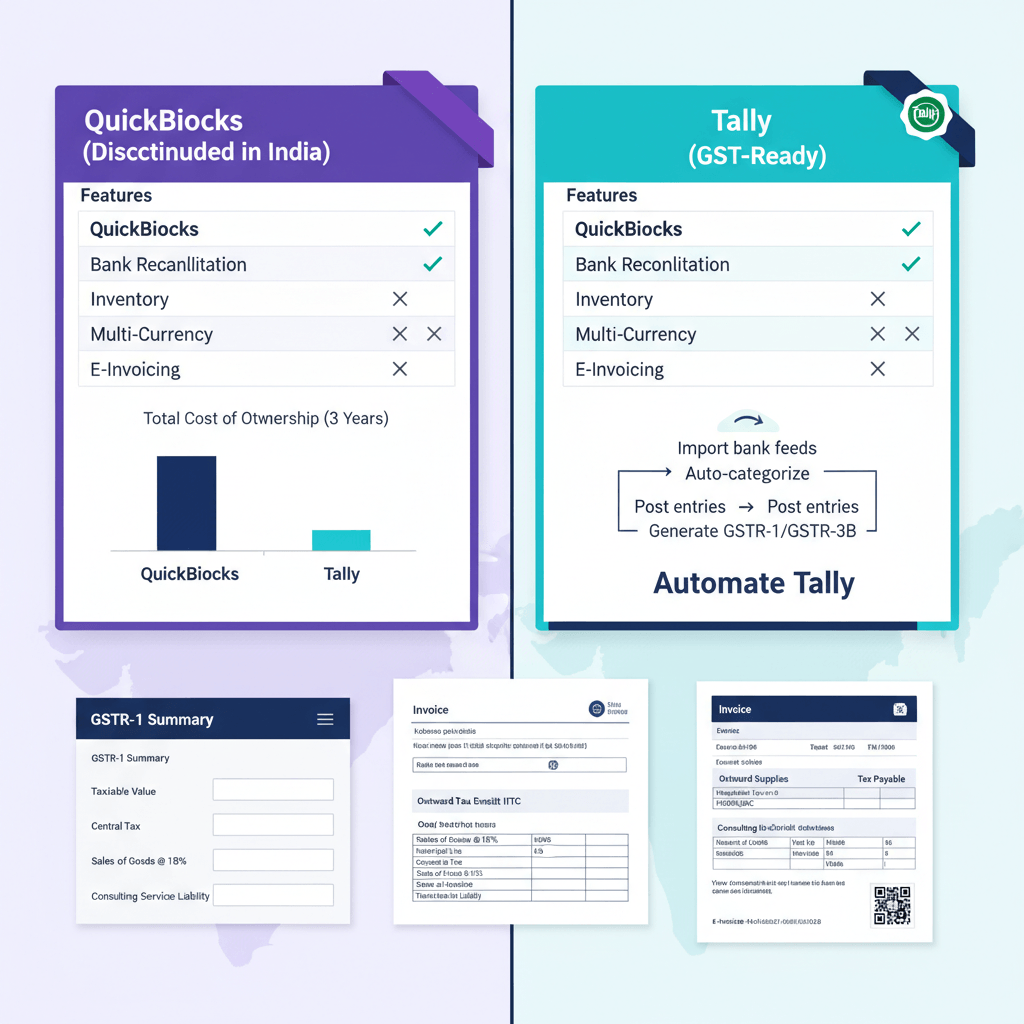
- QuickBooks Online, widely used for small business accounting and invoicing
- Xero, cloud accounting with strong bank feeds and reconciliations
- FreshBooks, simple invoicing and expense tracking for freelancers
- Zoho Books, integrated with the Zoho suite for billing and GST
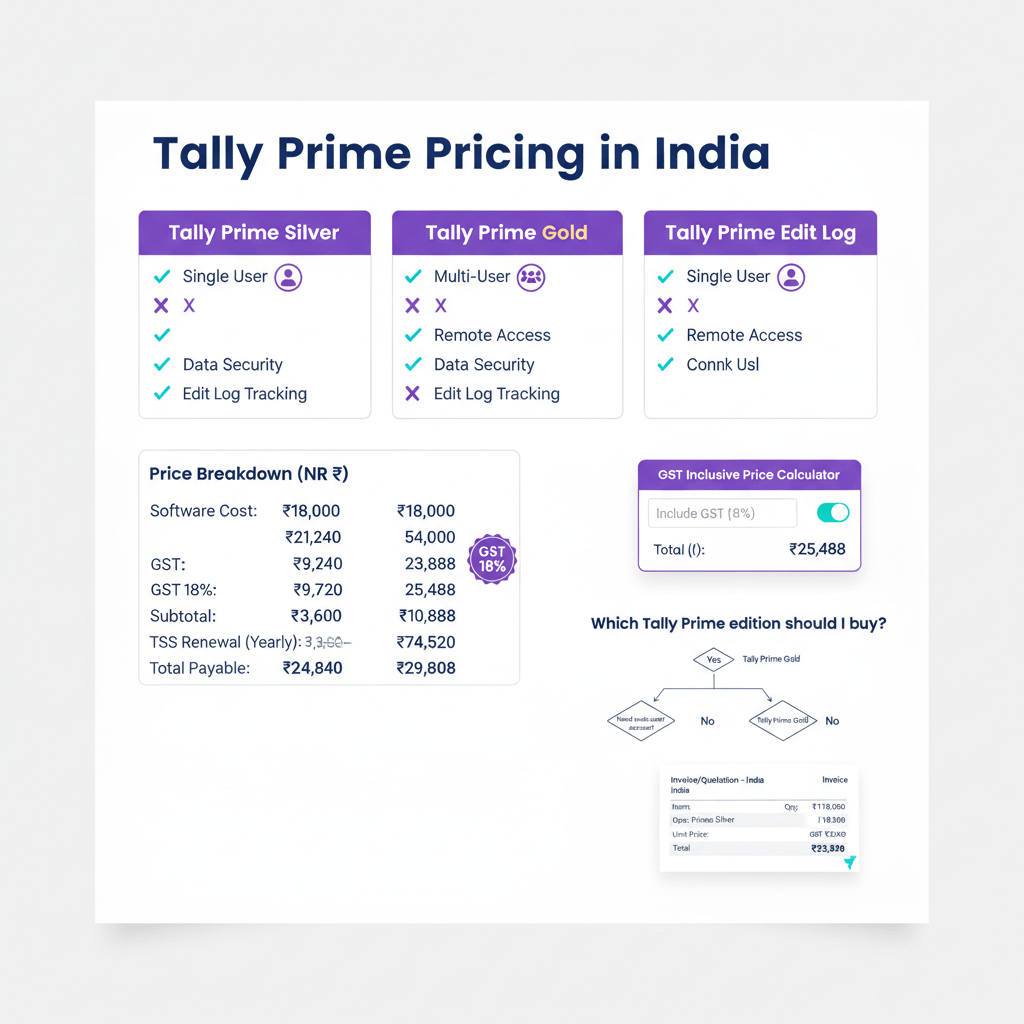
- Tally Prime, popular in India for GST and inventory
Your CA team can select the right stack and set up automations for bank rules, recurring invoices, and expense workflows.
Metrics and outcomes to track
- Book closure timeliness, days to close each month
- Reconciliation rates, bank and gateways reconciled to 100 percent
- Filing punctuality, GST and TDS returns filed on or before due dates
- Penalty incidence, count and value of notices or late fees
- DSO and DPO aging, receivables and payables in time buckets
- Burn and runway accuracy, forecast variance against actuals
- Audit readiness, document completeness and schedule readiness
Common mistakes and how to prevent them
- Misclassification of expenses or revenue, solved by CA review and a clear chart of accounts
- Missed TDS or GST deductions or payments, prevented with automated checks and a compliance calendar
- Bank mismatches due to missing entries, reduced by regular weekly reconciliations
- Documentation gaps, avoided with a central repository and checklists for bills, challans, and returns
- Delayed filings during busy months, prevented by assigning owners, early internal cutoffs, and dashboard tracking
Use cases
Freelancer
- Mixed income from local and international clients
- TDS deductions by clients and foreign remittances requiring 15CA
- Simple invoicing, expense capture, and year end returns
- Benefit from tax saving advice and clean books for credit checks
SaaS startup
- Recurring billing and payment gateways
- E invoicing if turnover crosses limits
- Deferred revenue and revenue recognition rules
- Focus on ARR, churn, CAC, and runway in MIS
D2C brand
- Inventory and multi warehouse control
- Multi state GST and e way bill workflows
- Reconciliations across platforms and gateways
- SKU level profitability and margin analysis
Small company
- Monthly GST and TDS compliance
- Annual ROC filings and board and AGM documentation
- Clean MIS for lenders and investor updates
Onboarding checklist
- Business profile, legal name, entity type, address, PAN, TAN, GST, and any DIN details
- Chart of accounts tailored to your industry
- Opening balances and last year trial balance
- Bank and payment gateway access or statements
- Vendor and customer master data with HSN and SAC mappings
- Historic filings status for GST, TDS, Income Tax, and ROC
- Payroll data, contracts, CTC sheets, and TDS declarations
- Key tools to connect, billing, invoicing, and expense apps
Virtual accounting versus in house
Many founders ask if they should hire in house or use virtual accounting, see a comparison at this AI Accountant post.
Virtual accounting
- Lower total cost than hiring a full in house team
- Access to a bench of experts across tax, books, and compliance
- Advanced tools and dashboards from day one
- Lower compliance risk with process discipline and checklists
In house
- Higher salaries and training overhead
- Knowledge loss if staff turnover occurs
- Tool setup and process design takes time
Many startups use a blend, a lean internal ops member for billing and vendor follow ups, plus a CA led virtual service like AI Accountant for accounting, tax, payroll advisory, and reporting.
How AI Accountant delivers financial tax and bookkeeping solutions
AI Accountant is a CA led managed accounting and compliance service supported by a central dashboard. You get end to end bookkeeping, GST, TDS, Income Tax, payroll advisory, MIS, and ROC support for small companies. The dashboard gives you real time financials, cash flow trends, burn and runway, AI alerts, document storage, and filing status. A dedicated CA team handles execution while you track progress and ask questions in one place. This replaces fragmented email, Excel, and chat with a single, structured model.
Next steps
- Make a short list of needs, books, GST and TDS, payroll, Income Tax, ROC
- Gather your onboarding checklist
- Ask for a demo of the dashboard and sample MIS
- Confirm timelines, owners, and SLAs
If you want a friendly walkthrough, explore AI Accountant Virtual Accounting and speak with the CA led team through this overview. For background, you can also review bundled benefits and full service bookkeeping.
FAQ
What is included in a CA managed virtual accounting scope for startups and freelancers
A complete scope includes monthly bookkeeping, GST and TDS compliance, Income Tax returns and advance tax planning, payroll TDS and pay structure advisory, MIS reporting, and a central dashboard for documents and filing status. Audit certification is separate, while the CA team prepares schedules and supports audit queries. AI Accountant delivers this model with CA execution plus a live dashboard.
How are retainers priced, and what variables move the fee up or down
Pricing is usually a monthly retainer driven by transaction volumes, number of bank and gateway feeds, complexity like inventory and revenue recognition, number of entities and states, and add ons like e invoicing or international tax. Seasonality, for example festive spikes, can be factored into a tiered plan.
What SLAs should a founder or finance head demand for closures and filings
Common SLAs include monthly close within five to seven working days, weekly or monthly reconciliations, GST and TDS filings at least three working days before due dates, and MIS packs by a defined day each month. AI Accountant typically aligns SLAs to your cutoff calendar, with a clear escalation path.
How is data secured, and what controls should we ask for during diligence
Expect encrypted storage, role based access, maker checker workflows, audit logs, and regular backups. Ask about device hardening, vendor due diligence, and breach response. Ensure least privilege access for bank statements and GST portal tokens, and a clean offboarding process.
How long does it take to clean up a year of messy books, and what affects timelines
A small business with moderate volume often takes two to four weeks for a baseline cleanup. Timelines depend on document completeness, the state of prior reconciliations, number of gateways, and corrections needed for GST and TDS mismatches. Clear data dumps and access speed up the process.
Can a virtual team work with Tally, QuickBooks, or Xero, and will we need to migrate
Yes, most CA managed teams support Tally, QuickBooks, Xero, and Zoho Books. You can stay on your current stack or migrate if there is a strong reason, for example multi entity reporting or better bank feeds. AI Accountant evaluates your setup, then recommends stay or move with a tested migration plan.
How do international payments and compliance work, including 15CA and withholding
For outbound services, providers prepare 15CA, advise on appropriate withholding, and reconcile foreign remittances. For inbound, they assess place of supply and GST implications for exports of services. AI Accountant handles these workflows and tracks documents in the dashboard repository.
Who signs the returns, and how does the maker checker process work
The CA team prepares workings and draft returns, a reviewer signs off internally, then authorized signatories in your company file using OTP or DSC as required. For GST and TDS, final challans and acknowledgments are stored in the repository with a clear audit trail.
What does the monthly MIS pack include, and how is it made investor ready
An investor ready pack includes P and L, balance sheet, cash flow, schedules for revenue and expense drivers, working capital metrics, DSO and DPO, burn and runway, and commentary on anomalies and trends. AI Accountant also provides bank and gateway reconciliation summaries for completeness.
How do AI driven alerts actually reduce errors and penalties in practice
AI models flag outliers in spend, duplicate vendor entries, missing TDS deductions, slow collections, and variance from budget. Alerts land in the dashboard and in the task queue, so owners resolve issues before filings. This reduces notices and late fees, and keeps books tidy.
What happens if we receive a notice, who drafts responses, and what is in scope
For routine tax and GST notices, the CA team drafts responses, compiles ledgers and challans, and files replies on the portal. Complex litigation and representation are usually out of base scope and quoted separately. AI Accountant maintains a notice log and status tracker in the dashboard.
Who owns the financial data and how easy is it to exit or switch providers later
You own all ledgers, trial balances, vouchers, returns, and working papers. At exit, the provider should hand over system backups, reconciliations, and documentation. AI Accountant follows a structured offboarding checklist so transitions are smooth and auditable.
How do you handle peak loads during quarter ends and audits without slippage
Capacity planning and early internal cutoffs are key. The team advances reconciliations, locks ledgers before filings, and adds review checkpoints. During audit season, a separate workstream handles PBC lists and queries so monthly compliance continues on time.
Can we get a sample compliance calendar and a demo before we commit
Yes, request a live walkthrough of the dashboard, a sample compliance calendar with GST and TDS due dates, and a redacted MIS pack. AI Accountant shares these during evaluation, so you can validate process depth before onboarding.