-01%201.svg)

Key takeaways
- CA led Virtual Accounting delivers managed bookkeeping, GST, TDS, Income Tax, and ROC compliance, while the AI dashboard is for visibility, tracking, and comfort, not for founders to do accounting themselves.
- Live status for filings and tasks, standard reconciliations, and proactive alerts reduce penalties and cleanup effort.
- Subscription pricing is predictable, hidden costs drop through fewer delays, less coordination time, and cleaner audits.
- Non attest service keeps independence intact, statutory audit stays separate with smooth auditor coordination.
- Migration from traditional setups follows a structured discovery, handover, setup, go live, and ongoing rhythm.
Introduction
If you are choosing between virtual accounting vs traditional CA, or comparing virtual accounting vs accountant, you are not alone. Indian founders, freelancers, and small businesses juggle email, Excel, WhatsApp, and loose files, which makes tracking money, filings, and tasks tough. Compliance complexity keeps rising, you monitor GST returns like GSTR 1 and GSTR 3B and annual GSTR 9 and GSTR 9C on the GST portal, you track TDS and Income Tax on the Income Tax portal, and you care about MCA and ROC filings on the MCA portal. At the same time, you need real time visibility of cash, burn, receivables, and compliance status, and dependable advice all year, not only at year end.
This guide compares Virtual Accounting vs Traditional CA, then gives a decision checklist and a practical migration plan.
What is Virtual Accounting
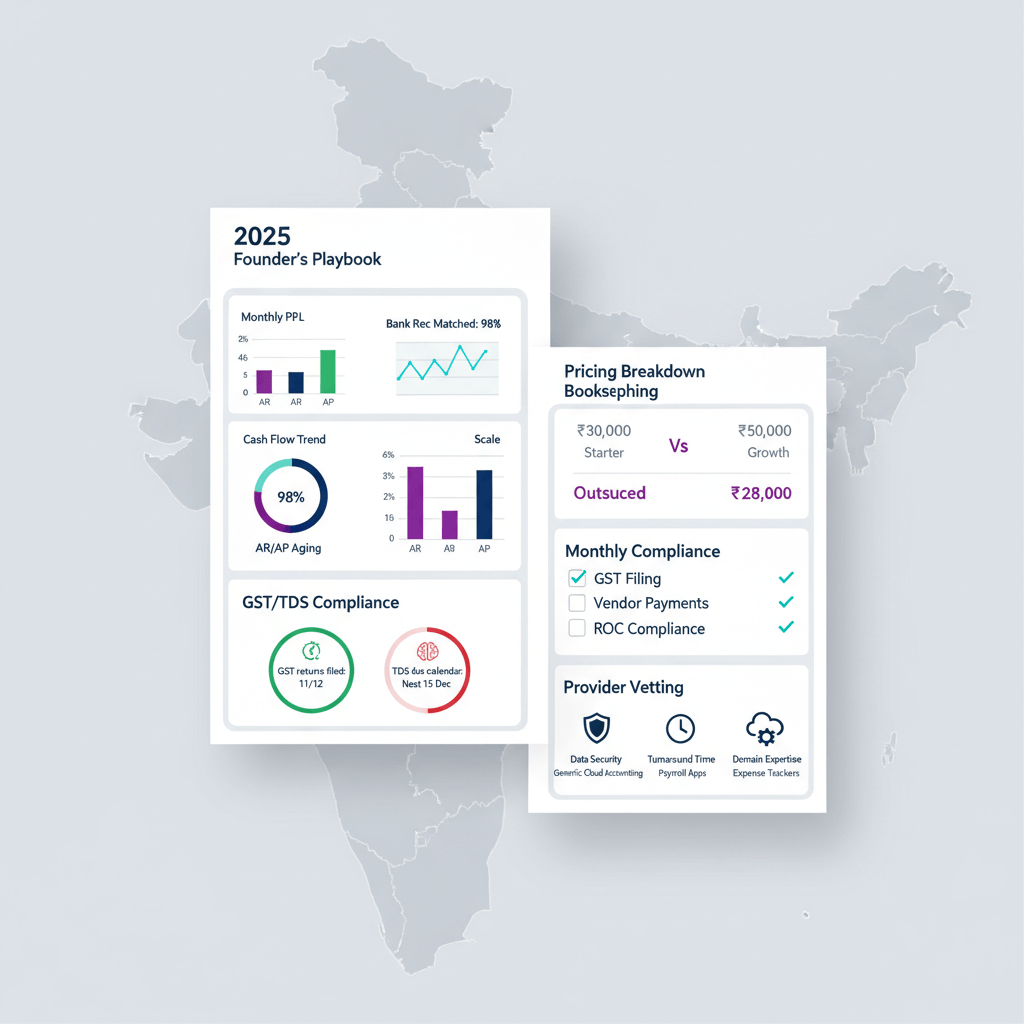
Virtual Accounting is a CA led, managed accounting and compliance service delivered remotely, explained in this overview of Virtual Accounting in India. You work through a centralised dashboard that shows live financials, documents, filings, and tasks. The service stays non attest, focused on bookkeeping, compliances, and advisory, not statutory audit. The dashboard is provided only for visibility, tracking, and comfort, founders do not do accounting themselves.
- Live profit and loss, balance sheet, and cash flow
- Burn rate and runway
- Category breakdowns and drill downs at transaction level
- A clean document repository for invoices, bank statements, and working papers
- A compliance calendar and filing status for GST, TDS, Income Tax, and ROC
- Central communication with the CA team for queries, clarifications, and tasks
For many businesses, this replaces the patchwork of tools with one managed service and one system, bringing structure, rhythm, and clear ownership. Learn more about the platform approach at AI Accountant.
What is a traditional CA or accountant
There are two common flavors. A traditional CA firm runs a conventional practice using email, Excel, Tally, WhatsApp groups, and physical files, you get periodic updates, often at month end or quarter end, not continuous visibility. Explore the accounting software ecosystem at Tally Solutions. Many firms also align with guidance from ICAI.
An individual accountant is a single practitioner or a small team, they handle day to day bookkeeping and basic returns, and escalate complex issues to a CA. Know how and output depend heavily on that one person.
Virtual Accounting vs Accountant, what is different
Virtual Accounting is a delivery model plus system, team based, CA led, and systemised. It runs standard processes and reconciliations, tracks service level agreements for timelines, and gives dashboards for visibility. A traditional accountant is a single practitioner or a small team, automation is limited, processes are ad hoc, manual trackers and one person dependency are common, quality and timeliness vary by capacity and habits. See how a system led service works at AI Accountant.
Bottom line, Virtual Accounting gives one managed service and one source of truth, a traditional setup gives periodic updates and person dependent processes.
Service scope and depth
Virtual Accounting, CA led managed service
Virtual Accounting usually bundles full scope work under one roof, a single CA team drives bookkeeping and compliance, while the dashboard provides visibility and status.
- Bookkeeping
Monthly accounting and ledgers, vendor and customer ledgers, bank, UPI, and payment gateway reconciliations, fixed asset and inventory registers. - GST
Support for GSTR 1, GSTR 3B, GSTR 9, and GSTR 9C on the GST portal, advisory on place of supply, RCM applicability, HSN and SAC classification, rate selection, e invoicing via the e-invoicing portal, and e way bill via the e-way bill portal, ledger and GSTR 2B reconciliations to reduce input tax credit exposure. - TDS
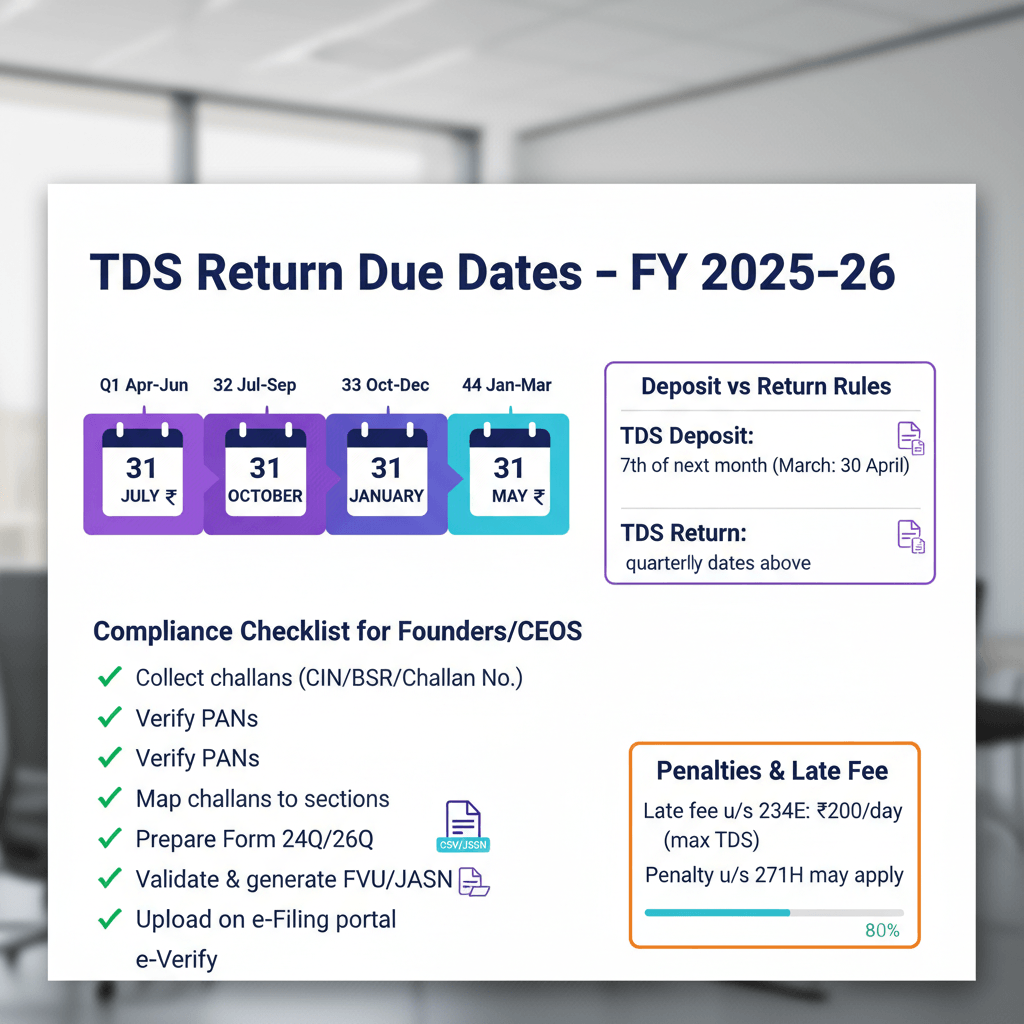
TDS applicability by section, thresholds, and rate selection, correct deduction logic and quarterly TDS returns, Form 16 and Form 16A, late fee or interest review on the Income Tax portal. - Income Tax
Computation and ITR filing for the business and often key promoters, advance tax working and basic tax planning, tax audit preparation as non attest support. - Payroll and HR linked compliance
Payroll TDS, salary structuring, and perquisite tax guidance. - MCA and ROC
Annual filings for small companies and LLPs, event based filings like director changes and share allotments, support for statutory registers, see ROC and secretarial support and file via the MCA portal. - MIS and advisory
Monthly MIS and cash flow reports, burn and runway, variance analysis, international and expat tax basics where needed.
Traditional CA or accountant
A traditional CA or accountant can cover most compliance items, the difference is delivery. Work is often split across multiple people or firms, one handles bookkeeping, another handles GST, another handles Income Tax, a company secretary handles ROC, advisory depth varies, MIS may be ad hoc. Reference sites include the GST portal.
Delivery model and collaboration
Virtual Accounting
The delivery model revolves around one dashboard, you log in to see a live financial summary and key ratios, cash flow, burn, runway charts, recent transactions and categorisation status, bank and payment gateway analysis, a document area for uploads and working papers, a compliance calendar with upcoming due dates and filing status, and a central chat or ticket system with the CA team. Explore a centralised system at AI Accountant.
You do not chase files across threads, you do not wonder if a return was filed, you view status and ask questions in context.
Traditional CA or accountant
Workflows run on email chains, WhatsApp groups and calls, and separate Excel trackers. Real time visibility is limited, founders often see the books at month end or quarter end, they wait for updates.
Transparency and timeliness
Virtual Accounting
Live status for GST, TDS, Income Tax, and ROC filings and tasks, alerts and reminders go out before due dates, SLAs set expectations for query turnaround, month end close, and MIS schedule. Status is visible on the GST portal and Income Tax portal.
Traditional CA or accountant
Updates are periodic, status checks need manual follow up, risks of last minute rush and errors increase near due dates.
Accuracy and controls
Virtual Accounting
Process driven controls include standard reconciliation cycles for bank and payment gateways, GST 2B versus books, TDS versus books, structured ledger reviews for advances and suspense accounts, defined workflows for fixed assets, depreciation, inventory movement, and system checks to flag anomalies and missing documents. See a system led approach at AI Accountant.
Traditional CA or accountant
Quality depends on the specific practitioner, reconciliations may be frequent or rare, second level review may or may not exist, cleanup during audit can be heavy if process is weak.
Cost structure and ROI
Virtual Accounting
Usually a subscription model, a bundled monthly or annual fee covers standard bookkeeping, compliances, and MIS, pricing is predictable, see typical pricing considerations in Virtual Accounting cost and pricing.
Hidden cost reduction comes from fewer penalties and interest on GST, TDS, advance tax, and ROC tracked via the GST portal, the Income Tax portal, and the MCA portal, less internal time spent on follow ups, and lower cleanup cost during audits.
Traditional CA or accountant
Common models include a retainer plus per filing charges, time based billing for calls or notices or special work, separate vendors for GST and ROC and bookkeeping. Hidden costs appear as penalties from missed or late filings, extra hours to clean up books, and founder time lost in coordination.
Scalability and flexibility
Virtual Accounting
Built for multi entity groups, remote first teams, and high volume operations like marketplaces, payment gateways, and subscriptions. Plans upgrade as volume and complexity grow, processes adjust without breaking. See growth readiness at AI Accountant.
Traditional CA or accountant
Scaling may require shifting to a bigger firm, hiring internal finance staff, or onboarding multiple specialised providers, coordination overhead rises, version control becomes hard, visibility goes down unless you invest in internal systems.
Advisory quality
Virtual Accounting
Explicitly CA led, advisory is woven into monthly reviews, covering GST structuring like place of supply and RCM design and classification, TDS applicability and optimisation, salary and founder remuneration structuring, basic international and expat tax and cross border payments including GST, TDS, and FEMA touchpoints guided by regulations on the RBI website, the GST portal, and the Income Tax portal.
Traditional CA or accountant
Variance is wide, some senior CAs offer excellent proactive advice, many engagements stay compliance driven and reactive, advice arrives if you ask, or when a notice appears.
Technology and integrations
Virtual Accounting
A central platform ingests bank feeds, payment gateway exports, and accounting software data, it uses AI and analytics for anomaly detection, trends, and alerts, maintains a clean audit trail of changes and approvals, the dashboard becomes the single source of truth. Tooling examples include AI Accountant, QuickBooks, Xero, Zoho Books, TallyPrime, and FreshBooks.
Traditional CA or accountant
Desktop Tally, Excel workbooks, manual data entry, and email or drive based file sharing dominate, you lose version control and audit trails, proving who did what and when is harder.
Security and compliance assurance
Virtual Accounting
Structured access control, role based access limits who can view or edit data, the document repository stores versions and backups, schedules and reconciliations link to books, notice responses and supporting documents compile faster because everything is organised. See system discipline at AI Accountant.
Traditional CA or accountant
Data sits across email attachments, WhatsApp documents, local folders, version conflicts and misplaced files are common, access control is informal.
Audit and attest coordination
Virtual Accounting
Non attest, it handles books and compliance, coordinates with statutory and tax auditors to provide schedules, clarifications, and documents, independence remains intact.
Traditional CA or accountant
Some firms provide both compliance and attest services, convenience is high, you must ensure independence and segregation per ICAI guidance, process rigor is critical.
Pros and cons summary
Virtual Accounting pros
- Real time visibility of financials and compliances
- Structured processes and reconciliations
- Bundled GST, TDS, Income Tax, and ROC under one CA led service
- Proactive alerts and a compliance calendar to reduce penalties
- Highly scalable for growth stage and remote first businesses
- Predictable pricing via subscription, for example with AI Accountant
Virtual Accounting cons
- Non attest service means you still need a separate statutory auditor
- Requires change management away from email, Excel, and WhatsApp habits
- Needs comfort with dashboards and digital document workflows
Traditional CA or accountant pros
- Strong personal relationships and in person discussions
- Potential for on site presence when needed
- Some CA firms can also provide attest services alongside compliance where independence rules allow
- Works well if you prefer face to face interaction, see professional guidelines via ICAI
Traditional CA or accountant cons
- Fragmented communication and status opacity
- Process rigor and timeliness can be variable
- Limited technology adoption reduces real time visibility
- Scalability challenges as volumes, entities, and geographies grow, typical desktop centric setups on Tally struggle
Best fit scenarios
When Virtual Accounting is a better fit
- Startups and growth stage companies that want fast month end close, burn and runway visibility, and clean books for fundraising and investor reporting
- Freelancers and solo founders who want bundled GST, TDS, and Income Tax without managing multiple vendors, preferring digital and asynchronous communication
- Remote first teams and multi location businesses
- High transaction volume, multi platform setups like marketplaces, SaaS, or payment gateways, consider AI Accountant
When traditional CA or accountant may be better
- Very small or local operations with low volume and a strong preference for physical meetings and paper records
- Businesses that need attest services from the same firm and value a single local relationship, refer to ICAI
- Teams not ready to adopt a dashboard model
Hidden costs and risk considerations
- Penalty and interest risk, missed or late GST, TDS, advance tax, and ROC filings because tracking is manual, classification or reconciliation errors lead to notices, check status on the GST portal, the Income Tax portal, and the MCA portal.
- Reconciliation gaps, bank, payment gateway, and GST 2B mismatches create tax exposure or cash leakage.
- Time loss, founders and finance leads spend hours chasing documents, status, and clarifications.
- Data security risk, unstructured sharing via email and WhatsApp with no central control or audit trail.
Virtual Accounting reduces these risks by tracking and alerting in one place, traditional setups can reduce them by building internal trackers and discipline.
How AI Accountant style Virtual Accounting delivers value
AI Accountant combines a CA led managed service with a centralised dashboard. You see live financials and category views, cash flow, burn, runway, AI insights for anomaly detection, overdue receivables, and expense spikes, real time compliance status across GST, TDS, Income Tax, and ROC.
- Detailed services, monthly bookkeeping and ledgers, bank, gateway, vendor, customer, fixed asset, and inventory reconciliations, monthly MIS and dashboards, GST returns plus advisory, TDS compliance, Income Tax returns, payroll TDS and salary structuring, annual ROC filings and event based MCA filings via the MCA portal, auditor coordination for statutory and tax audit.
- System led transparency, document repository with tags and search, compliance calendar with alerts and auto reminders, centralised communication and query tracking.
AI Accountant blends CA expertise with a clear dashboard, the dashboard is for visibility and tracking, the CA team does the accounting and compliance work.
Proof points and outcomes
- Faster month end close, books shift from closing in more than thirty days to within seven working days.
- Reduced penalties, drop in GST and TDS late fees and interest after implementing alerts and reconciliations.
- Improved cash flow visibility, founders track burn and runway monthly which informs funding and hiring decisions.
- Cleaner audits, statutory auditors receive reconciled ledgers and schedules, fewer queries, shorter audit cycles.
See case style outcomes and approach at AI Accountant.
Decision checklist
Use this checklist when deciding between virtual accounting vs traditional CA or accountant.
- Do you need real time visibility and a dashboard, or are periodic reports enough
- What is your volume and complexity, do you have multiple GST registrations, heavy TDS or payroll, international transactions, or multiple entities
- Do you prefer bundled compliance, or are you okay managing multiple providers
- Do you require attest services from the same provider, or can audit be separate
- How important is budget predictability versus ad hoc hourly billing
- What level of security and document control do you need
- What scalability do you foresee over the next twelve to twenty four months
If several answers point toward real time visibility, bundled compliance, and scale, Virtual Accounting is likely your best fit. If you value local face to face relationships and a single attest plus compliance provider, a traditional CA firm may suit you, guided by ICAI.
Migration plan
- Discovery, capture entity structure, registrations, and locations, review current compliance status and any pending returns or notices, list existing tools like Tally or Zoho or Excel and current processes.
- Data handover, share trial balance and ledgers, provide bank statements and payment gateway reports, give GST, TDS, Income Tax, and MCA credentials and past returns, share fixed asset and inventory registers and major contracts.
- Setup, onboard into the dashboard and set user access, map processes such as approvals and data sharing cadence, create a centralised communication channel.
- Go live, run initial reconciliations and clean up, activate the compliance calendar with due dates and owners, enable AI insights and alerts.
- Ongoing, do monthly bookkeeping and reconciliations, schedule MIS and review calls, run annual cycles for tax planning, ROC, and audit support.
The goal is simple, move from scattered files and manual trackers to one place where your books, documents, filings, and communication live together, see a sample flow at AI Accountant.
Take the next step
If you want to see how virtual accounting vs traditional CA applies to your setup, book a demo of the AI Accountant dashboard. We will run a quick compliance health check across GST, TDS, Income Tax, and ROC, you will get a side by side proposal that compares scope, process, and pricing versus your existing traditional CA or accountant.
FAQ
Is Virtual Accounting the same as outsourcing, or is it different because of the dashboard
Outsourcing is about who does the work, Virtual Accounting is CA led, systemised, and dashboard driven with defined SLAs and visibility. The CA team does the bookkeeping and compliance, the dashboard is for visibility and tracking, not for founders to do accounting themselves. See how this model operates at AI Accountant.
Are services non attest, how do we handle statutory audit and tax audit
Virtual Accounting stays non attest, your CA team handles books and compliances, statutory audit and tax audit are done by independent auditors. Independence and segregation align with ICAI guidance, the virtual team coordinates schedules and reconciliations without mixing roles.
What does onboarding look like, and how long does it take
Onboarding typically takes one to three weeks depending on complexity and data quality. You provide trial balance and ledgers, bank statements, GST and TDS and Income Tax and MCA credentials, past returns, fixed asset and inventory registers, and key contracts. The team sets access, maps processes, runs initial reconciliations, then goes live with alerts and a compliance calendar on the GST portal, the Income Tax portal, and the MCA portal.
How involved is the CA team month to month, will founders need to categorize transactions
The CA team manages categorisation, reconciliations, filings, and advisory. Founders and finance heads review MIS, approve queries, and provide documents. The dashboard in an AI Accountant style service gives visibility, status, and comfort, it is not a DIY accounting tool for founders.
Can Virtual Accounting handle multiple entities, multiple GSTINs, and high volume gateway reconciliations
Yes, the model scales across entities and registrations, it ingests bank feeds and payment gateway exports, runs GST 2B to books reconciliations, and automates matching cycles. For e invoicing and e way bill, filings reference the e-invoicing portal and the e-way bill portal.
What tools integrate best with a Virtual Accounting stack
Common tools include AI Accountant for the dashboard, QuickBooks, Xero, Zoho Books, TallyPrime, and FreshBooks. The goal is one source of truth with audit trails and controlled access.
How does pricing compare to a traditional CA, where do savings actually come from
Virtual Accounting uses predictable subscriptions, savings come from fewer penalties and interest on GST, TDS, and advance tax due dates tracked on the GST portal and the Income Tax portal, reduced founder time on follow ups, and lower audit cleanup. Traditional retainers plus per filing charges and ad hoc hours can add hidden costs.
Can the virtual team coordinate with our statutory auditors without conflict
Yes, Virtual Accounting teams coordinate with auditors by sharing reconciliations, schedules, and documents, while keeping non attest boundaries clear. This accelerates audit cycles and reduces queries, consistency with ICAI independence principles is maintained.
What compliance coverage do we get for GST, TDS, Income Tax, and ROC
You get end to end managed coverage, GST returns and reconciliations on the GST portal, TDS deductions and quarterly returns on the Income Tax portal, ROC annual and event based filings on the MCA portal. Advisory is woven into monthly reviews, founders get continuous visibility through the dashboard provided by an AI Accountant style service.
What does month end close and MIS cadence look like in practice
Typical cadence is books closed within five to seven working days of month end, MIS packs include P and L, balance sheet, cash flow, burn, runway, variance analysis, and key ratios. Alerts and queries are tracked centrally, decisions happen faster because data is visible, the CA team owns execution, founders review outcomes.
How is data secured, who gets access, and what happens when staff change
Role based access restricts viewing and editing, audit trails record changes, document repositories maintain versions and backups. When staff change, access is revoked centrally and handover is clean, this beats email and WhatsApp sprawl, see structured control models at AI Accountant.
We already use Tally, can we still adopt Virtual Accounting without disruption
Yes, Tally data can be exported and ingested, reconciliations are run, and the dashboard provides visibility across entities. You keep familiar ledgers while gaining system level tracking and compliance calendars, explore options via Tally and centrally through AI Accountant.