-01%201.svg)

Key takeaways
- CA led virtual accounting is a managed professional service where a trained team remotely handles your bookkeeping, GST, TDS, income tax, payroll, and compliance, while an AI dashboard gives you live visibility, status tracking, and peace of mind without adding chores to your plate.
- The dashboard is a supervision window for founders and finance heads, not a do it yourself accounting tool. The CA team posts entries, reconciles ledgers, and files returns. You monitor and approve.
- Scope is modular and locked in upfront: bookkeeping, bank and statutory reconciliations, GST returns, TDS credit matching against Form 26AS and AIS, payroll basics, and monthly MIS. You pick what you need.
- Predictable cadence keeps books and filings on track. Reconciliations close around day 7 to 10 after month end, MIS lands by day 10 to 15, and statutory filings follow due dates after your approval.
- Quality controls such as maker and checker reviews, CA sign off, audit trails, and two factor authentication protect accuracy without adding overhead for founders.
- If reconciliations across banks, GST ledgers, and vendor bills are eating your team's time, automated GST reconciliation can cut manual matching effort and flag mismatches before they become notices.
Virtual Accounting in India: What's New in 2026
Until March 2025, GST e-invoicing applied only to businesses with aggregate turnover above ₹5 crore. From April 2025, the threshold dropped to ₹1 crore, pulling a much larger pool of SMEs into the e-invoicing net. If your virtual accounting provider is not generating Invoice Reference Numbers (IRNs) in real time before issuing invoices, you risk rejected returns and blocked input tax credit for your buyers. The GST e-Invoice Portal now mandates IRN generation within tighter timelines, making automation a necessity rather than a convenience.
The Income Tax Department's Annual Information Statement (AIS) now pulls data from more sources: mutual funds, property registrars, foreign remittance records, and high value transactions. In 2024, AIS mismatches were a leading trigger for notices under Section 143(1). In 2026, any gap between your books and AIS is flagged almost instantly. A CA led virtual accounting setup that reconciles TDS credits against both Form 26AS and AIS every month (not just at year end) catches discrepancies before they escalate into demand notices.
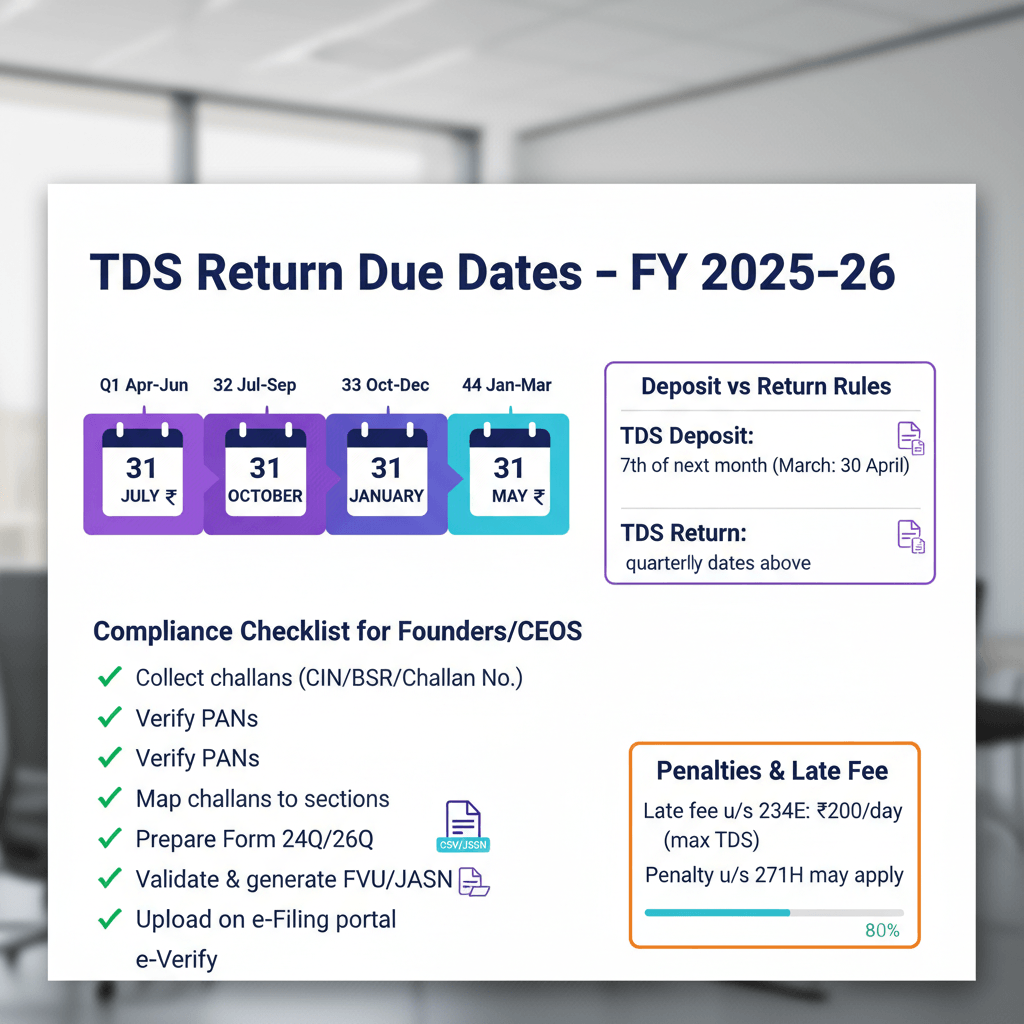
On the TDS front, the Finance Act 2025 consolidated several TDS rates and raised the threshold for TDS on rent under Section 194I from ₹2.4 lakh to ₹6 lakh per annum, reducing the compliance burden for smaller landlord payments. But new TDS provisions on online gaming, cryptocurrency, and certain e-commerce settlements mean more transaction types need classification during posting itself. Missing these during bookkeeping means short deduction notices and interest at 1.5% per month.
Here is what to check right now:
- Confirm your e-invoicing workflow generates IRNs before invoice dispatch, not after.
- Run a quarterly AIS reconciliation against your books, not just during ITR season.
- Review TDS applicability on newer transaction types (gaming, crypto, e-commerce settlements) in your chart of accounts.
Teams handling multiple entities or high transaction volumes are increasingly turning to bookkeeping automation platforms to keep classification and reconciliation current without scaling headcount.
What is CA led Virtual Accounting with AI dashboards
Virtual accounting services in India are a managed professional service delivered remotely. A trained team of accountants runs your books, reconciliations, and filings from their own office, using secure access to your systems. You deal with real people, not just software.
It is a service, not just a subscription. With do it yourself software, you operate the tool. With a managed service, accountants operate the tools for you and deliver reconciled books, statutory returns, and management reports for your review and approval.
In one line: a remote professional team runs your finance and compliance on secure online systems, then sends you complete, reconciled books and filings for approval. The AI dashboard gives clarity, not chores.
The CA team handles bookkeeping, GST and TDS, income tax, payroll basics, and monthly MIS. The AI dashboard adds timely visibility, alerts, and trend insights, so founders and finance heads can stay in control without doing accounting themselves.
Think of it as outsourcing your finance back office to a qualified team that logs into your Tally or cloud ledger, posts every vendor invoice, reconciles every bank transaction, and files every return, while you see the status on a single screen.
Scope and modules you can include
Scope sets expectations, deliverables, and accountability. If scope is vague, reconciliations slip, credits do not match, and notices follow. Typical modules include:
- Bookkeeping: day to day ledger entries, fixed asset register, depreciation schedules.
- Reconciliations: bank, debtors and creditors, GST ledgers (books versus GSTR 2B), TDS credits (books versus 26AS or AIS), payment gateways, ecommerce settlements, payroll liabilities. See Form 26AS and Annual Information Statement AIS.
- Accounts Payable: vendor bill posting, payment run preparation for your approval, ageing and overdue alerts.
- Accounts Receivable: sales and receipts posting, customer ageing, basic follow ups if agreed.
- Payroll basics: monthly payroll processing, PF, ESI, PT, TDS on salaries, payslips and challans.
- Tax and compliance where in scope: GST returns such as GSTR 1 and GSTR 3B, annual return (GSTR 9 and GSTR 9C), TDS and TCS returns, income tax computations and returns for the entity.
- Management reporting: monthly or quarterly Profit and Loss, Balance Sheet, Cash Flow, ageing, burn rate, runway, and notes on key variances or trends.
Scope is modular and agreed upfront. It can be bookkeeping only, or a full finance function with compliance and MIS. Most CA firms and SME finance teams start with bookkeeping plus GST and add modules as confidence builds.
How delivery works, data flow and cadence
- Onboarding: business model scoping, GST and TDS profile, payroll headcount, then access setup for accounting software (commonly Tally or cloud ledgers), bank view, GST portal, income tax portal, and MCA portal. Opening balances are migrated. Cut offs, approvals, and reporting timelines are mapped.
- Document sharing: structured email, secure portals or document systems, managed shared drives, controlled mobile capture routed to folders, and direct downloads from banks, ecommerce platforms, and payment gateways with read only access wherever possible.
- Recording and classification: bank feeds or imports matched to invoices, GST classification for B2B or B2C, intra or inter state, reverse charge checks, TDS applicability validated during posting, recurring entries scheduled. E-invoicing IRN generation is handled inline where applicable.
- Communication: daily or weekly queries on email or Slack or WhatsApp, review calls for open items and cash flow.
- Month end timelines (typical): reconciliations close around 7 to 10 days after month end, financials and MIS are ready around 10 to 15 days (subject to data completeness), statutory filings follow due dates after your approval.
This cadence gives predictable books and filings, while keeping your approvals in control. No surprises at quarter end, no last minute scrambles before the GSTR 3B deadline.
Roles and responsibilities, who does what
- What the business provides: source documents like invoices, vendor bills, and contracts. Bank statements or view access. Payroll inputs. OTPs or access for portals. Approvals for payments and returns. Review of reports. Major accounting judgments such as provisioning decisions.
- What the virtual accounting team handles: chart of accounts setup and maintenance, transaction postings, reconciliations and schedules, return workings and filing post approval, monthly financial statements and MIS, audit ready trails and schedules, due date reminders and follow ups.
- Responsibility clarity: the business is responsible for the accuracy and completeness of source information. The accounting team is responsible for correct accounting and filings based on the data you provide.
This split is not just operational. It also matters legally. If a GST notice arrives because a vendor invoice was never shared, that is on the business. If a return was filed with wrong HSN codes despite having the correct invoice, that is on the accounting team. Clear roles prevent finger pointing.
Outputs you receive and when
- Monthly: trial balance, Profit and Loss, Balance Sheet, basic Cash Flow, bank and key reconciliations, debtors and creditors ageing, GST and TDS working files and draft returns, payroll summary and statutory liability summaries.
- Quarterly: TDS return acknowledgements, high level MIS commentary, advance tax workings if applicable.
- Annually: finalised ledgers and schedules for audit, income tax return workings and acknowledgements, ROC basics where applicable.
- Ongoing: copies of filed returns and challans, notice tracking and basic draft responses if within scope.
These deliverables turn information into decisions and timely compliance. For a startup founder, the monthly MIS with burn rate and runway is often the most valuable output. For a CA firm managing multiple clients, the reconciliation summaries save hours of review time.
Common boundaries, what is not included
- Statutory and tax audits, internal or forensic audits.
- Legal representation before authorities or tribunals.
- Complex fundraising documentation and valuations, cross border or complex transaction advisory.
- Deep CFO level strategy unless a separate virtual CFO scope exists.
Treat virtual accounting as your operational finance backbone. Specialised projects are separate add ons. If you need a transfer pricing study or a DPIIT certification, those are scoped and billed independently.
Quality controls and data security
- Month end close checklist: bank and cash reconciliation, debtors and creditors reconciliation, GST and TDS reconciliations (books versus GSTR 2B or Form 26AS), payroll checks, provisions and accruals, depreciation.
- Review layers: maker and checker for postings, senior or CA review for returns and major journals, periodic classification checks and compliance risk reviews.
- Audit trail: every ledger entry linked to supporting documents, user IDs logged, notes for unusual items.
- Security basics: role based access, least privilege, two factor authentication on cloud ledgers and government portals, NDAs and data processing terms, backups, encryption at rest and in transit as per chosen tools.
These controls help keep books reliable and filings defensible in case of queries or audit. The Institute of Chartered Accountants of India (ICAI) recommends documented review processes for all outsourced accounting engagements, and a structured virtual accounting service follows this guidance by design.
AI dashboard, visibility not DIY
The AI dashboard surfaces what matters, without asking founders to post entries. Expect status on reconciliations, unresolved queries, filing calendars, recent challans, ageing trends, cash position, and high level variance flags. The CA team still does the work. You supervise with clarity.
The dashboard is a window, not the workshop. You keep approvals, the accounting team keeps the ledger accurate.
- Live tracking: books close progress by module, for example bank and GST reconciliations, vendor bill matching status.
- Compliance pulse: upcoming due dates for GST returns, TDS returns, income tax tasks, and e-invoicing status.
- Support visibility: open items tagged to owners, timestamps, and next steps.
- Decision helpers: MIS snapshots with trend notes, burn rate, and runway calculations, not raw data dumps.
Result: you gain faster decisions and fewer surprises, without adding more to your plate. Most founders check the dashboard once a week for five minutes and know exactly where things stand.
Misconceptions to avoid
- It is not a chatbot or a purely automated tool. You work with real accountants who use software to deliver outcomes.
- It is not only bookkeeping. Mature engagements include reconciliations, GST, TDS, income tax filings, payroll, and MIS, as per agreed scope.
- It does not reduce your control. You approve payments and returns and you have full visibility into books and reports.
- It is not restricted by location. Cloud systems enable service delivery across India, whether your business is in Bengaluru or Bhopal.
- It is not only for startups. CA firms use virtual accounting setups to serve 50 plus clients with a lean team. SME finance heads use it to get reliable MIS without hiring a full accounts department.
In simple words, you get a remote professional team that runs finance and compliance on secure systems and delivers reconciled books and filings for your approval.
Getting started, onboarding steps
- Discovery: confirm business model, entity structure, GST and TDS profile, payroll footprint, and MIS needs.
- Scope and proposal: pick modules, cadence, SLAs, and handoffs. Sign engagement and data processing terms.
- Access setup: accounting software (Tally, cloud ledger), bank view, GST portal, income tax portal, and document flows.
- Opening state: migrate opening balances, set cut offs, validate ledgers and masters.
- Run and close: operate month one with daily or weekly standups, close books, deliver MIS, and file post approval.
- Refine: tune reports and dashboard widgets to match your decisions and board cadence.
FAQ
What does CA led virtual accounting actually cover for an Indian company?
It covers bookkeeping, bank and statutory reconciliations, GST returns (GSTR 1, GSTR 3B, GSTR 9, GSTR 9C), TDS and TCS returns, income tax computations and ITR filing, payroll processing with PF, ESI, and PT, plus monthly MIS including cash flow and burn rate. The CA team delivers reconciled books and filings for your approval, while the AI dashboard provides real time visibility on status, ageing, and due dates.
Is the AI dashboard a do it yourself accounting tool for founders or finance heads?
No, the dashboard is for visibility, tracking, and comfort. The CA team posts entries, prepares workings, and files returns. The dashboard shows open queries, reconciliation status, upcoming filings, and MIS snapshots. Think of it as a cockpit that shows altitude and speed, while trained pilots do the flying.
How does a managed virtual accounting service differ from a freelance bookkeeper?
A managed service gives you a defined scope, maker and checker reviews, compliance calendars, a live dashboard for status, and audit ready trails. A freelancer typically lacks layered quality controls, formal security protocols, and MIS depth. The risk gap widens when compliance gets complex, for example when GST reconciliations, TDS credit matching against AIS, and e-invoicing all need to work together every month.
What reconciliations do you close each month, and how are credits matched?
Core reconciliations include bank, debtors and creditors, payment gateways, ecommerce settlements, and statutory ledgers. GST input tax credit is verified by matching books against GSTR 2B. TDS credits are matched against Form 26AS and the Annual Information Statement (AIS). Exceptions are logged on the dashboard with owners and next steps. With AIS now pulling data from more sources in 2026, monthly matching catches discrepancies before they trigger Section 143(1) notices (2026 update).
When do we receive MIS, and what does the monthly cadence look like?
With clean data flow, reconciliations close around day 7 to 10 after month end, MIS is delivered around day 10 to 15, and filings follow due dates post your approval. The dashboard shows progress by module, so you always know what is done and what is pending.
How is pricing structured for CA managed virtual accounting services?
Pricing is usually a monthly retainer aligned to scope, volume, and complexity, for example number of invoices, entities, payroll headcount, and compliance modules. Additional one time projects such as historical clean up or opening balance migration are quoted separately. The dashboard is typically included to keep all stakeholders aligned without extra cost.
How long does onboarding take, and what does success in month one look like?
Onboarding takes one to four weeks depending on access readiness and opening balance quality. Success in month one means clean portal access, migrated openings, stable document flow, first books close completed within 10 to 15 days, and a working dashboard that reflects reconciliation status, filing progress, and MIS snapshots accurately.