-01%201.svg)
Key takeaways
- CA-led Virtual Accounting delivers end to end bookkeeping, GST, TDS, income tax, and compliance, while founders use an AI dashboard for visibility, tracking, and comfort.
- The dashboard provides status, documents, due dates, and reconciliations, the CA team performs the accounting work, prepares filings, and responds to routine notices.
- Income tax compliance services focus on correct reporting and timely payments under the Income tax Act, not planning, not litigation, see income tax compliance services.
- Most issues arise from AIS or Form 26AS mismatches, wrong regime choice, and missed advance tax, the CA team reconciles these before filing.
- TDS or TCS compliance errors cause immediate interest, late fees, and penalties, well managed processes and TRACES reconciliation avoid defaults.
- Clear deliverables include tax computations, challans, acknowledgements, certificates, and a compliance calendar, all surfaced in the dashboard.
- Boundaries are explicit, the service does not include complex planning or litigation, specialized transfer pricing, or non income tax compliances.
CA-led Virtual Accounting, with AI dashboards
Virtual Accounting is most effective when a Chartered Accountant led team does the heavy lifting, while an AI dashboard keeps founders informed and at ease. You get managed bookkeeping and statutory compliance, the dashboard shows progress, tasks, exceptions, reconciliations, and filing proofs, you do not do accounting yourself.
For a deeper overview of a CA operated model, see CA-managed accounting services in India.
A dashboard should be your window, not your workload. The CA team handles entries, ledgers, returns, and notices, the AI layer surfaces status, risks, and artifacts in real time.
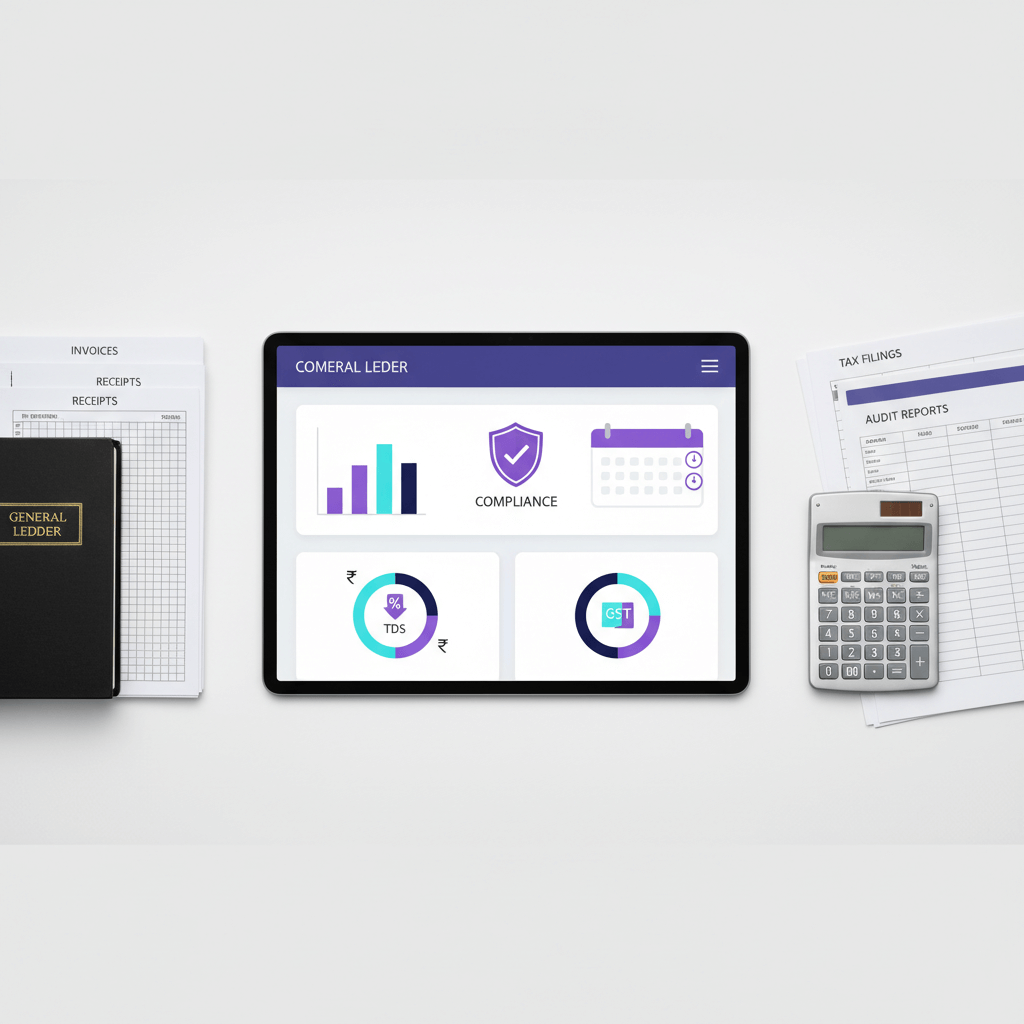
What founders see in the AI dashboard
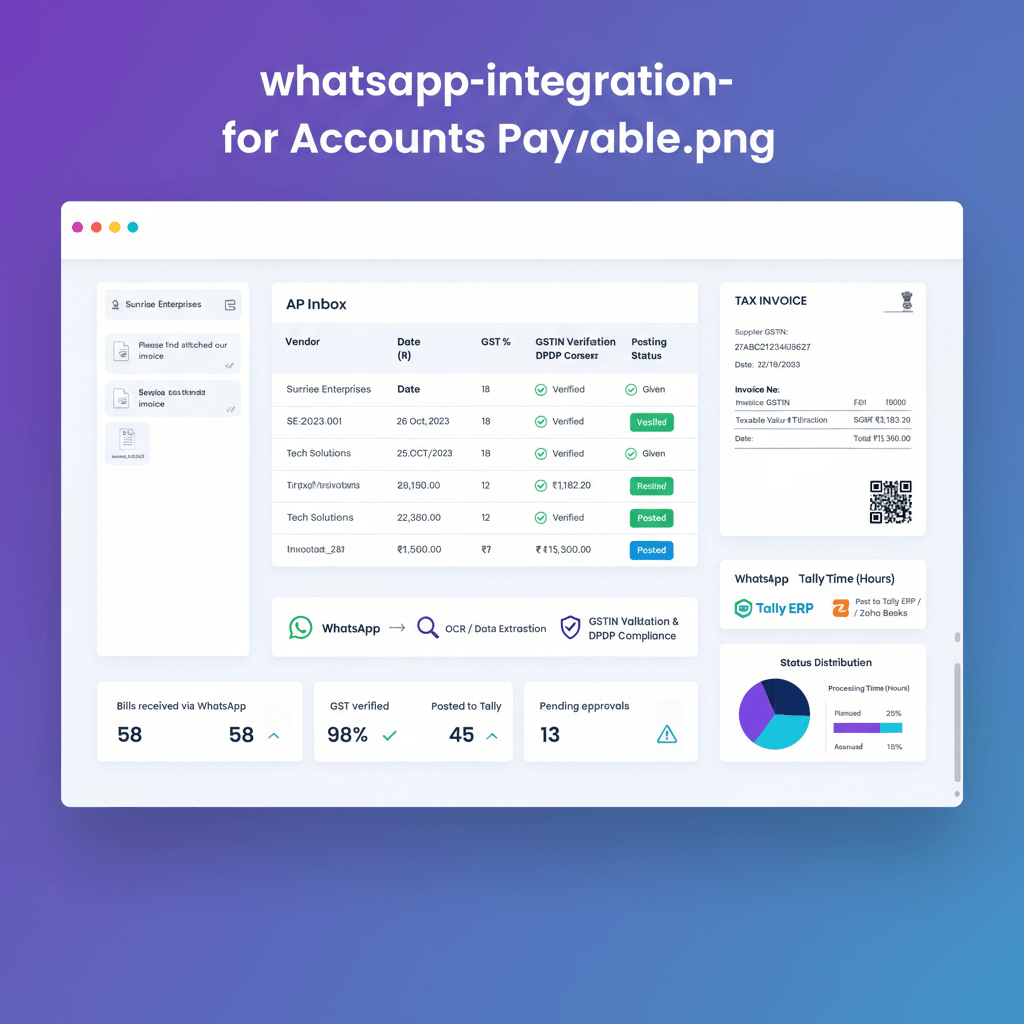
- Status cards for ITR, TDS, GST, audit, and refund tracking.
- Compliance calendar with upcoming due dates and SLA timers.
- AIS or Form 26AS reconciliation snapshots, TDS credit matching, and variance flags.
- Document vault for challans, acknowledgements, certificates, and intimation letters.
- Workflow queues for data requests, with nudges and activity logs.
- Risk alerts for advance tax shortfalls, delayed deposits, and mismatched PANs.
- Searchable ledger and reports for comfort, the CA team owns postings and adjustments.
Scope of managed services
The engagement includes end to end bookkeeping, GST return preparation, TDS or TCS compliance, income tax computations and filings, audit linked compliances wherever applicable, and routine notice handling. Founders get clarity, not chores, the team executes all statutory work.
Income tax compliance, meaning and scope
Income tax compliance services mean the routine, rule based work required to report income accurately and pay taxes on time under the Income tax Act. See mastering income tax compliance in India, avoid penalties, stay ahead, and adhering to the regulations and requirements for the underlying definition.
- Typical inclusions: ITR filing, TDS or TCS returns and certificates, tax audit reports where applicable, tax computations, advance tax and self assessment tax payments, TDS or TCS procedures, basic record keeping, responses to simple notices or defect memos.
- Not included: proactive or complex tax planning, and litigation such as scrutiny, reassessment, or appeals.
Why this matters: missed or wrong compliance leads to cash flow hits from interest, late fees, and penalties, and can trigger notices, often due to AIS or Form 26AS mismatch, wrong ITR form, missed advance tax, or delayed TDS deposits.
ITR compliance, core components end to end
Most issues come from wrong or incomplete data, missed reconciliation with AIS and Form 26AS, wrong regime choice, or missed advance tax. See income tax compliance services and compliance, avoid penalties for common pitfalls.
- Data collection: income under all heads, salary, house property, business or profession, capital gains, and other sources, deduction proofs under Chapter VI A such as LIC, PF, PPF, ELSS, NPS, medical insurance, donations, education loan interest, home loan interest certificates.
- Reconciliation: match AIS or TIS and Form 26AS with reported incomes, TDS or TCS, and SFT items, resolve mismatches before filing.
- Tax computation: compute head wise income, set off and carry forward of losses, surcharge and cess, rebates if eligible, compare old versus new regimes, compute MAT or AMT where applicable.
- Advance tax and self assessment tax: check applicability, identify shortfalls, compute interest under section 234B and section 234C if needed, prepare ITNS 280 challans.
- ITR filing: select the correct ITR form and status, validate details, e file within due dates.
- e Verification: complete via Aadhaar OTP, netbanking, DSC or EVC, or by sending ITR V when required.
Post filing support that is part of compliance
Many returns require small fixes after filing due to AIS or TDS mismatches or clerical issues, quick action avoids demand and speeds refunds, see post filing support essentials.
- Track processing and refunds under section 143(1), monitor refund status.
- Handle 143(1) intimations for arithmetic or mismatch issues, file rectification u/s 154 where needed.
- File revised returns within permitted timelines if updated data is provided.
- Respond to basic non filing communications or defect memos u/s 139(9).
- Boundary, scrutiny assessments and appeals are separate services.
TDS or TCS compliance for deductors
TDS or TCS errors create immediate interest, late fees, and penalties, and block counterparties from claiming credit, see TDS or TCS compliance guidance.
- TAN registration and maintenance.
- Apply correct sections and rates, track thresholds, consider PAN availability and lower or nil deduction certificates.
- Deduct or collect tax on credit or payment, whichever is earlier.
- Monthly deposits through ITNS 281, track CIN mapping to challans.
- Quarterly statements, Forms 24Q, 26Q, 27Q, and 27EQ.
- Issue certificates, Form 16, Form 16A, and Form 27D, download and reconcile through TRACES.
- File correction statements to fix PAN or challan mismatches, resolve defaults.
Audit linked compliances
- Tax audit u/s 44AB, preparation and e filing of Form 3CA or Form 3CB and Form 3CD within due dates.
- Ensure ITR consistency with the audit report, pull audit details correctly into ITR.
- Maintain audit documentation, ledgers, confirmations, fixed asset register, and TDS reconciliations.
- Transfer pricing Form 3CEB and TP documentation are separate specialized services.
Compliance calendar management
Missing due dates leads to interest, late fees, and penalties, a calendar reduces cash and compliance risks, see compliance calendar and tax compliance.
- Advance tax instalments, 15 June 15 percent, 15 September 45 percent, 15 December 75 percent, 15 March 100 percent, delays or shortfalls trigger section 234B and section 234C interest.
- ITR filing due dates, non audit cases usually 31 July, audit cases 31 October, transfer pricing cases 30 November, late filing can trigger fee u/s 234F, interest u/s 234A if tax is unpaid, and loss of some carry forward rights.
- TDS or TCS deposit due dates, generally by the 7th of the following month, special timelines for March may apply, delay attracts interest u/s 201(1A).
- Quarterly TDS or TCS returns, delay attracts late fee u/s 234E and possible penalty u/s 271H.
Information and documents you will provide
Accurate inputs prevent mismatches with AIS, Form 26AS, TRACES, and the books. The dashboard helps you upload, track, and acknowledge requests.
- Basic details, PAN, Aadhaar where applicable, TAN for deductors, address, bank details, contacts.
- Salary, Form 16, salary slips, perquisite details.
- Banking and interest, bank statements, interest certificates, FD or RD details, see bank statement analysis for accounting.
- Capital gains and investments, demat statements, broker P and L and capital gains reports, mutual fund statements, property documents.
- Business or profession, books or trial balance, P and L, balance sheet, fixed asset register, loan schedules, debtor and creditor lists, GST reconciliations for cross check where relevant.
- Other incomes, rent agreements or receipts, loan interest incomes, foreign income or asset details, dividends.
- Deductions, proofs under sections 80C to 80U, LIC, PF, PPF, ELSS, home loan interest certificate, medical insurance, donations, education loans.
- Past records, last year ITR acknowledgement, computation, tax audit report if any, past notices or orders.
- For TDS or TCS, deductee master names and PANs, payment details, salary data, challan details, TRACES access, lower or nil deduction certificates.
Outputs and deliverables you will receive
Clear deliverables help you track what was filed, what was paid, and how to respond if a notice arrives. The AI dashboard stores and surfaces these items.
- Tax computation sheets with head wise income, deductions, taxes, interest, and final payable or refundable amounts.
- Challan copies and receipts, ITNS 280 for advance tax, self assessment tax, and regular demand, ITNS 281 for TDS or TCS.
- Filed ITR forms, ITR acknowledgement, Form ITR V where applicable, e verification proof.
- Intimations and orders, section 143(1) intimation copies, rectification orders if any.
- TDS or TCS return acknowledgements, issued certificates, Form 16, Form 16A, Form 27D.
- Compliance calendar or tracker snapshots.
Boundaries, what is not included
To avoid scope confusion, the following are generally outside income tax compliance services.
- Proactive or complex tax planning, restructuring, cross border planning, ESOP structuring.
- Complex assessments and appeals, scrutiny u/s 143(3), reassessment, search or seizure, appeals before CIT A, ITAT, High Court, or Supreme Court.
- Transfer pricing studies and documentation, Form 3CEB, benchmarking, master file, local file.
- Non income tax compliances, GST, labour laws PF or ESI or PT, company law or MCA filings, FEMA or RBI work, for GST see GST compliance services in India.
These exclusions underline the core answer, income tax compliance services focus on accurate reporting and timely payments within the Income tax Act, see income tax compliance involves accurate reporting and adhering to the regulations.
Workflow, handoffs, and AI dashboard features
The CA team owns execution, the dashboard orchestrates requests, documents, approvals, and visibility.
- Onboarding checklist, entity and promoter KYC, prior filings, and opening balances.
- Monthly bookkeeping and reconciliations, bank feeds, vendor and customer ledgers, inventory or fixed asset registers.
- Compliance sprints, GST, TDS or TCS, and ITR cadences, calendar driven work packets.
- Quality gates, AIS and 26AS matching, TRACES reconciliation, refund tracking.
- Evidence locker, challans, acknowledgements, certificates, intimation letters, neatly catalogued.
- Escalations and SLAs, time bound nudges for inputs, red flags for due date risk.
Comfort first, the dashboard shows what is pending, what is done, and why, while the CA team closes the loop on filings and responses.
Security, data handling, and confidentiality
Access is role based, sensitive artefacts are handled by the CA team within controlled processes. The dashboard limits visibility to summaries and documents required for oversight, while underlying books, working papers, and credentials remain safeguarded.
Pricing and engagement models
Engagements are scoped by volume and complexity, monthly bookkeeping, number of returns and certificates, audit applicability, and notice handling. Pricing is transparent and tied to outcomes, filings completed, reconciliations cleared, refunds tracked, and calendar adherence.
Who benefits, typical use cases
- Bootstrapped startups that want compliant books and filings with minimal founder time.
- VC backed companies seeking audit readiness and tight controls, with dashboard comfort for finance heads.
- SMEs migrating from in house accounting to a CA managed model for predictability and risk reduction.
Conclusion
CA-led Virtual Accounting, enabled by AI dashboards, unites expert execution and real time visibility. Founders and finance leaders get peace of mind, correct filings, and fewer surprises, the team does the accounting, the dashboard keeps you informed.
FAQ
What does CA-led Virtual Accounting mean, and how is it different from do it yourself software?
CA-led Virtual Accounting means a Chartered Accountant team handles bookkeeping, GST, TDS, income tax, and compliance end to end, while you get an AI dashboard for visibility, status, and documents. Unlike do it yourself software, you do not post entries or file returns yourself, the CA team executes, the dashboard shows progress and proofs.
Will the AI dashboard replace my accountant or finance manager?
No, the dashboard provides transparency and tracking, the CA team performs the work. Many finance managers prefer this model because they can supervise through the dashboard, review reconciliations, and approve filings without doing every task directly.
How does the service handle AIS and Form 26AS mismatches before filing?
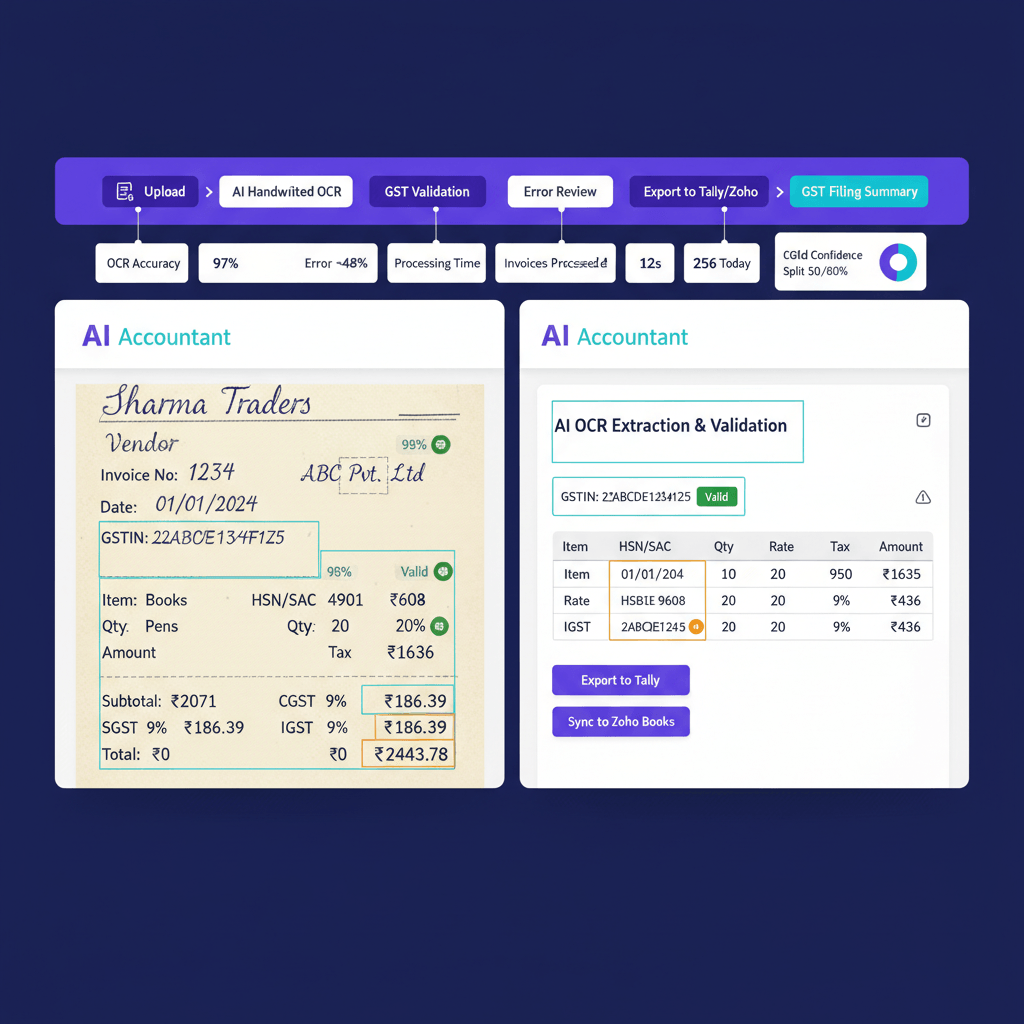
The CA team reconciles income and TDS credits against AIS or TIS and Form 26AS, resolves variances with vendors or banks, and documents adjustments. The dashboard surfaces reconciliation snapshots so founders can see mismatches closing in real time.
What exactly is covered under income tax compliance services, and what is not?
Coverage includes ITR preparation and filing, tax computations, advance tax and self assessment tax, basic notice responses, TDS or TCS procedures, and tax audit reports where applicable, see income tax compliance services. It does not include complex planning or litigation like scrutiny or appeals.
How does the AI Accountant model ensure timely TDS deposits and returns?
Through a compliance calendar, TAN wise tasking, payment reminders, and TRACES reconciliation. The CA team manages ITNS 281 challans, Forms 24Q, 26Q, 27Q, and 27EQ, and issues Form 16 or 16A or 27D certificates, while the dashboard shows due dates, payment status, and defaults resolved.
What post filing support do I get for 143(1) intimations or rectifications?
The CA team tracks processing and refunds, analyzes 143(1) differences, files rectification u/s 154 if needed, and provides revised return support within allowed timelines. The dashboard maintains intimation copies and rectification acknowledgements for audit trails.
Do you help with tax audits u/s 44AB, and how is it coordinated?
Yes, the service prepares and e files Form 3CA or 3CB and Form 3CD within due dates. The AI layer organizes ledgers, confirmations, fixed asset registers, and TDS reconciliations, ensuring ITR pulls audit details correctly and remains consistent.
Can founders or finance heads approve filings in the dashboard without doing the accounting?
Yes, approval steps are embedded, with summaries and computation highlights. You can review, comment, and approve filings, the CA team then executes the e filing and uploads acknowledgements, giving control without workload.
What inputs will I be asked for during onboarding and monthly cycles?
Typical inputs include PAN, Aadhaar where applicable, TAN, bank details, Form 16, bank statements, demat and broker reports, property documents, books or trial balance, and deduction proofs. For bank data preparation, see bank statement analysis for accounting.
How are advance tax instalments monitored to avoid interest under section 234B and section 234C?
The calendar tracks instalments, 15 June, 15 September, 15 December, and 15 March, with variance checks against projected income. Shortfalls are flagged early, ITNS 280 challans are prepared, and founders see status updates in the dashboard.
What happens if TDS is deposited late or PAN is incorrect, can the service fix it?
The CA team calculates interest u/s 201(1A), files correction statements to fix PAN or challan mismatches, and reconciles TRACES defaults. The dashboard shows exception logs and resolution steps so counterparties can claim credit promptly.
Is GST compliance part of the same Virtual Accounting engagement?
Yes, GST return preparation and reconciliations are part of managed services, while litigation remains separate. For the scope and approach, see GST compliance services in India, delivered by the CA team with dashboard visibility.
Does the service include complex tax planning or representation in scrutiny or appeals?
No, those are outside the standard compliance scope. Income tax compliance focuses on accurate reporting and timely payments, see compliance, avoid penalties, stay ahead, litigation and advanced planning require separate engagements.
How does AI Accountant compare to hiring an in house accountant and using spreadsheets?
AI Accountant centralizes bookkeeping, statutory compliance, reconciliations, and filings under a CA team, adds a dashboard for status and proofs, and reduces manual tracking and missed due dates. You gain stronger controls and fewer surprises, with evidence readily available.
What deliverables do I retain for audits or investor diligence?
You retain tax computations, challans for ITNS 280 and ITNS 281, ITR acknowledgements, Form ITR V where applicable, TDS certificates, and 143(1) intimations. The dashboard acts as a document vault so diligence becomes faster and cleaner.
Can the service support multiple entities, and how are permissions handled?
Yes, multiple entities can be onboarded, dashboard roles restrict access appropriately, while the CA team maintains separate ledgers, TANs, and filing calendars for each entity to avoid cross entity errors.
Is transfer pricing Form 3CEB and documentation included?
No, transfer pricing studies, benchmarking, master file, and local file are specialized services handled separately. The tax audit flow will flag TP applicability and recommend a TP engagement if required.
How quickly can the CA team respond to simple notices or defect memos u/s 139(9)?
Response times depend on data availability, the dashboard shows required inputs and SLA timers. For basic defect memos and 143(1) adjustments, most cases are addressed within a few working days once documents are provided.
Does the AI dashboard integrate bank feeds and ledger views for comfort?
Yes, read only bank feeds and ledger summaries are presented for visibility, while the CA team owns postings, reconciliations, and adjustments. Founders can spot check balances without engaging in data entry.
What is the engagement outcome I should expect in the first quarter?
Clean books, reconciled AIS or 26AS, TDS deposits and returns on time, GST filings on schedule, and a populated document vault with challans and acknowledgements. Refund tracking begins where applicable, with calendar adherence improving month over month.