-01%201.svg)
Key takeaways
- CA led Virtual Accounting gives founders peace of mind, expert teams handle bookkeeping, GST, TDS, income tax, and compliance, while an AI dashboard provides visibility, tracking, and comfort.
- The dashboard is not for founders to do accounting themselves, it is a transparent window into status, deadlines, filings, reconciliations, and cash impact.
- GST compliance services translate the law into monthly tasks, ensuring timely GSTR 1 and GSTR 3B filings, accurate ITC claims, and tight reconciliations, reducing penalties and audit risk.
- AI enabled workflows automate data intake, alerts, and exception handling, a CA reviews and files, so the process remains expert driven, safe, and audit ready.
- Clear scope and boundaries prevent confusion, non GST taxes like income tax and TDS are covered under Virtual Accounting, while litigation or complex rulings may require separate engagements.
- Consistent vendor follow ups, e invoicing, and e way bill control keep operations compliant, reconciliations align books and portal data before annual GSTR 9 and GSTR 9C.
- Founders only need to provide registers, invoices, GSTINs, and portal access, the CA team handles everything else end to end.
What is CA led Virtual Accounting, with AI dashboards
Virtual Accounting is a managed service where a dedicated CA team runs your finance back office, they handle bookkeeping, GST, TDS, income tax, and statutory compliance end to end, while you and your finance head view progress through an AI powered dashboard. The dashboard is a comfort layer, not a do it yourself tool, founders see tasks, filings, notices, cash impact, and reconciliations, but the CA team executes, reviews, and files.
Why it works: expert judgment, maker checker reviews, and structured calendars prevent errors and late fees, while AI surfaces risks early, highlights mismatches, and nudges vendor follow ups. The combination keeps filings timely, ITC accurate, and audits low risk.
In short, your finance is run by professionals, your visibility is real time, your workload is minimal, your compliance is consistent.
GST compliance services, scope, and why they exist
In India, GST compliance services are professional, CA led support that turn the GST Act into practical monthly tasks. They cover registration, invoice checks, returns, tax payments, reconciliations, and replies to routine notices. This exists because GST has frequent deadlines, strict input tax credit conditions, and tight portal matching, missing any step creates interest, penalties, cash blockages, and even registration suspension.
What breaks if ignored: late or wrong filings create fines and interest, wrong ITC claims cause cash surprises when credits are denied, repeated errors can lead to suspension or cancellation. CA led Virtual Accounting prevents these surprises by using calendars, checks, and reconciliations so your books match the portal, your ITC is eligible and documented, and your returns are filed on time. For related reading on AI enabled workflows, see bank statement analysis for accounting.
Core GST tasks covered
Why this matters: most GST errors come from missing a key task or doing it in the wrong order, a clear, repeatable scope prevents gaps and repeat notices. Typical coverage within CA led Virtual Accounting for GST includes:
- GST registration when thresholds are met, and amendments when business details change
- HSN SAC classification and correct rate application for goods and services
- Invoice content checks per GST rules
- E invoicing setup, generation, and IRN validation where thresholds apply
- E way bill generation and tracking for movement of goods
- ITC tracking and eligibility checks, with blocked credits excluded
- Reverse Charge Mechanism identification and accounting
- Periodic returns, GSTR 1 for outward supplies, GSTR 3B for summary tax and ITC
- Tax payment and challan creation aligned with each return
- Annual filings, GSTR 9 and where applicable GSTR 9C reconciliation
- Reconciliations, books vs portal, GSTR 1 vs GSTR 3B, GSTR 2B vs purchase register
- Routine GST notice tracking and draft responses for common mismatches
Deep dives and references, GST compliance services, GST compliance services in India.
Day to day compliance operations
Why this matters: compliance is not a form, it is a steady flow of data, checks, and timely actions, missing one step causes chain reactions that show up as interest, ITC denial, or notices.
- Onboarding, understand the business model, map data sources, collect documents, set up portal access
- Data cadence, gather monthly or quarterly sales and purchase registers, invoices, credit and debit notes, import and export documents
- Validations, check HSN SAC, rates, ITC eligibility, and RCM exposure before drafting returns
- Expert review, a second pair of eyes catches errors before filing
- Challan and filing, prepare challans, ensure funds are available, file GSTR 1 and GSTR 3B on due dates
- After filing, reconcile books vs portal, monitor GSTR 2B, respond quickly to routine notices
Outcome, timely filings avoid interest and penalties, accurate ITC claims reduce cash outflow, consistent books vs portal data reduces audit risk. See what is GST compliance, and operational practices for GST compliance.
ITC management
Why this matters: ITC is central to cash flow, over claim invites demand and interest, under claim locks cash. If claims do not match GSTR 2B or claims are ineligible, credits can be disallowed, causing cash crunch and notices.
- Match ITC in books with GSTR 2B and the purchase register
- Identify and exclude blocked credits, personal use, certain motor vehicles, and barred categories
- Reconcile vendor wise ITC, follow up with suppliers to fix reporting gaps so invoices reflect in GSTR 2B
- Document eligibility decisions, keep audit ready records for each claim
Learn more at GST compliance and GST compliance essentials, and see how dashboards highlight ITC health in cash flow dashboard.
E invoicing and E way bill
Why this matters: for eligible taxpayers, e invoicing is mandatory, without a valid IRN and QR code the invoice is non compliant, for goods movement, missing or incorrect e way bills lead to detention and penalties.
- Check e invoicing applicability based on turnover and business profile
- Generate e invoices through the IRP, validate IRN and QR code, retain digital records for audits
- Create e way bills for eligible movements, verify vehicle, document, and route details
- Maintain proper logs and archives to support checks by officers
Operational guidance, GST compliance services in India.
Reconciliations and year end compliance
Why this matters: month on month mismatches grow into large year end gaps, these trigger interest, notices, and delays in annual returns.
- Monthly outward check, GSTR 1 vs GSTR 3B, ensure the same taxable value and tax
- ITC check, GSTR 2B vs purchase register and vendor wise mapping to identify short reporting and ineligible credits
- Year end, consolidate data to prepare GSTR 9 and, if applicable, GSTR 9C reconciliation
- Resolve differences before annual filings to reduce future demands and audit flags
Reference, GST compliance.
Filing calendar managed
Why this matters: most penalties arise from late filings and late payments, a clear calendar helps plan cash and workload.
- Monthly regime, GSTR 1 generally due by the 11th of the next month, GSTR 3B generally due by the 20th, 22nd, or 24th depending on state
- QRMP scheme, quarterly GSTR 1 with monthly tax payments
- Annual returns, GSTR 9 and GSTR 9C generally due by 31 December for the previous financial year
- Tax is due with the return, paying on time helps avoid interest
See GST compliance timelines, and how calendars surface on an accounting dashboard for business.
What businesses must provide
Why this matters: filings are only as accurate as the data provided, missing or late data leads to incorrect returns, cash issues, and notices.
- Sales and purchase registers for the period
- Tax invoices, HSN SAC details, and vendor or customer GSTINs
- Credit and debit notes, advances, import and export documents
- Prior GST filings, and GST portal access credentials if needed
Checklist guidance, GST readiness for filings.
Boundaries of scope
Why this matters: clear limits prevent confusion and help plan additional advisory needs.
- Non GST taxes like income tax and TDS are managed within Virtual Accounting by the CA team, while GST compliance scopes remain distinct
- Complex classification rulings, litigation, or specialised representation may be outside standard scope and need separate mandates
- Pricing decisions or business policies are management calls, not part of compliance execution, even if they influence RCM or HSN SAC choices
Scope clarity, GST compliance.
The AI dashboard, visibility, and examples
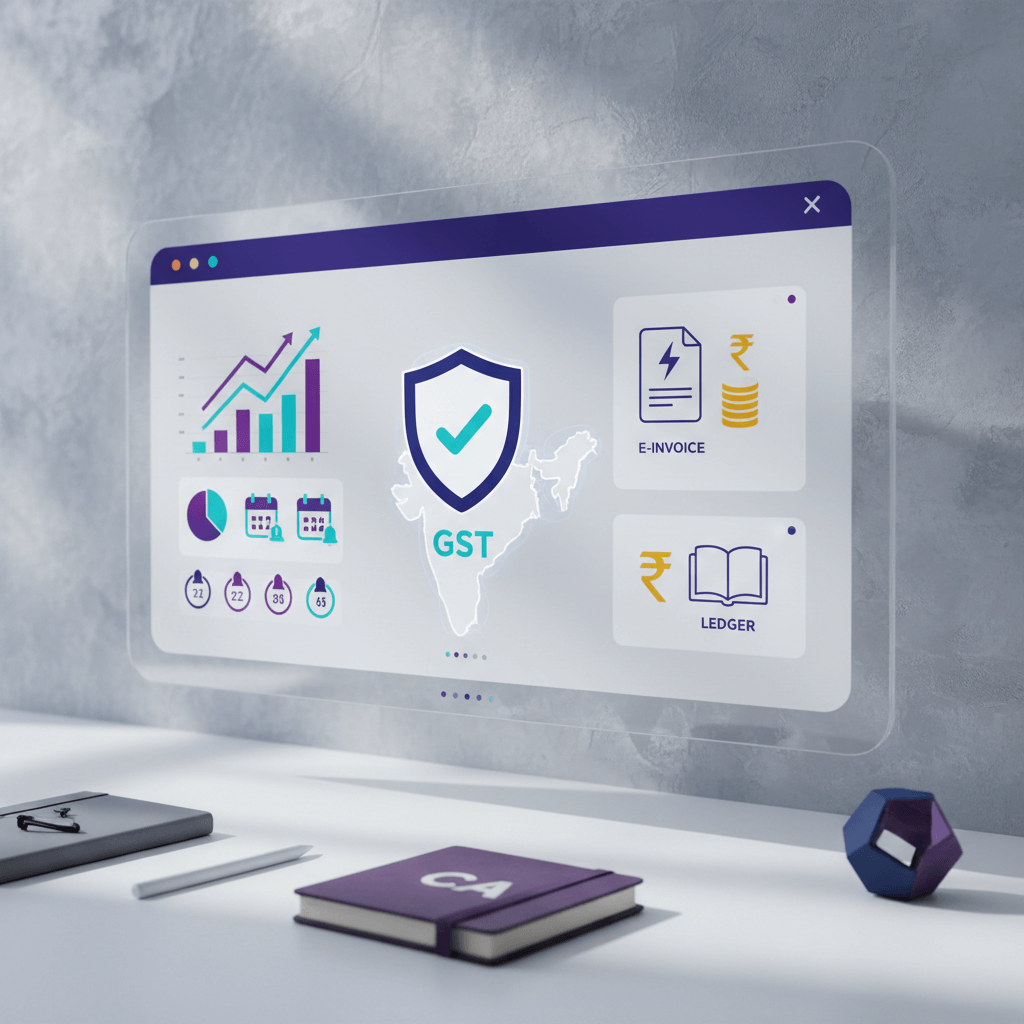
The AI dashboard gives founders visibility without forcing DIY, it summarizes open tasks, upcoming dues, filing statuses, notices, ITC health, and cash impact, while the CA team remains the operator. Typical widgets include reconciliation health, vendor follow up status, and tax payment readiness. For illustration, review the cash flow dashboard, and the bank statement analysis features that ease monthly closes.
Comfort first: founders get alerts, clear next actions, and assurance that experts are on the job, finance heads get drill downs to resolve exceptions quickly, auditors get clean logs and evidence trails.
Security, governance, and control
Access is role based, portal credentials are held under maker checker controls, filings require CA review, and dashboards log every action with timestamps. Vendor and customer data remains audit ready, IRN, QR codes, and e way bills are retained in secure archives, reconciliations and evidence are exportable for audits.
Pricing and engagement model
Virtual Accounting is typically a monthly retainer tied to transaction volume and compliance scope, onboarding covers setup and historical alignment, ongoing service includes bookkeeping, GST, TDS, income tax, and statutory filings. Complex advisory or litigation is priced separately, the dashboard is included for visibility and tracking.
FAQ
Is Virtual Accounting truly managed by a CA team, or do founders have to do parts themselves?
It is fully managed by a CA led team, founders and finance heads provide data and approvals, the AI dashboard is for visibility and tracking, not for self filing, your CA prepares, reviews, and files end to end.
How does an AI enabled Virtual Accounting service like AI Accountant keep GST filings on time and accurate?
An AI enabled service runs calendars, monitors GSTR 2B and vendor reporting, flags exceptions, and automates reminders, the CA then validates HSN, ITC eligibility, RCM exposure, and posts correct tax challans, filings are maker checker reviewed and submitted on due dates.
What exactly is covered under GST compliance in a CA managed engagement?
Registration and amendments, invoice content checks, e invoicing and IRN validation, e way bill generation, GSTR 1 and GSTR 3B filings, tax payment, ITC tracking with blocked credits excluded, reconciliations, annual GSTR 9 and GSTR 9C, and replies to routine notices.
How is ITC managed so we do not face cash surprises later?
ITC in books is matched with GSTR 2B and the purchase register, blocked credits are excluded, vendor wise gaps are followed up proactively, eligibility decisions are documented with audit trails, this reduces disallowance risk and cash crunches.
Do we need e invoicing and e way bills, and who handles them?
The CA team checks applicability based on turnover and business profile, if applicable they generate e invoices via IRP, validate IRN and QR codes, and create e way bills for eligible movements, logs and digital records are retained for audits.
What data do we need to share every month so filings are correct?
Sales and purchase registers, tax invoices, HSN SAC details, vendor and customer GSTINs, credit and debit notes, advances, import and export documents, prior filings if needed, and portal access for filing workflows.
Does Virtual Accounting include TDS and income tax, or is it only GST?
Virtual Accounting typically includes bookkeeping, GST, TDS, income tax, and statutory filings, while the GST compliance scope is a defined stream inside the service, specialised litigation or complex rulings are separate engagements.
How do reconciliations reduce audit risk in practice?
Monthly GSTR 1 vs GSTR 3B checks align outward supplies and tax, GSTR 2B vs purchase register aligns eligible ITC, vendor wise reconciliation drives corrections before claiming credits, year end consolidation and GSTR 9 and GSTR 9C resolve gaps prior to filings.
Will the AI dashboard let me file returns myself if I want to?
No, the dashboard is designed for visibility, progress tracking, exceptions, and evidence, filings are executed by the CA team under maker checker controls to preserve quality and compliance integrity.
What happens if we miss a deadline or a vendor fails to report an invoice in time?
The dashboard flags upcoming deadlines and exceptions, if a vendor misses reporting, your CA team triggers follow ups and adjusts ITC claims to avoid ineligible credits, deadline misses create interest liabilities, so calendars and alerts are used to avoid them.
How does AI Accountant approach bank statement reconciliation and cash tracking?
AI Accountant uses automated import and categorization of bank transactions, proposed matches to ledger entries, and exception queues for review, the CA team confirms, posts, and locks reconciliations, cash positions feed the cash flow dashboard so tax dues and payments are planned smoothly.
Can finance heads drill down without risking edits or breaking controls?
Yes, dashboards provide read only drill downs to vouchers, reconciliations, IRNs, and e way bills, edits require workflow permissions and CA review, so governance stays intact while visibility stays high.
How are notices under GST handled in a managed service?
Routine notices for mismatches or clarifications are tracked in the dashboard, the CA drafts and files responses with supporting reconciliations and documents, escalations or complex matters are separately scoped.
What engagement model suits high growth startups with frequent changes?
A monthly retainer with variable bands for transaction volume and periodic reviews works well, onboarding aligns opening balances and portal access, the dashboard gives founders comfort during rapid scale, while the CA team absorbs operational change without losing compliance rhythm.
How do we ensure privacy of GST credentials and financial data?
Credentials are stored under role based access, filings require maker checker approvals, audit logs capture who did what and when, evidence archives for IRN, QR, and e way bill are retained securely for compliance and audits.