-01%201.svg)
Key takeaways
- GSTR-2B is a static monthly snapshot, accurate reconciliation protects Input Tax Credit and prevents penalties, and the right software reduces manual effort dramatically.
- Modern tools ingest Excel, CSV, PDFs, and ERP exports, then apply smart, fuzzy matching to align purchase registers with GSTR-2B, minimizing false mismatches.
- Automated identification of missing invoices, duplicate entries, amendments, and RCM items, plus streamlined exception handling, moves teams from manual matching to exception management.
- ITC optimization needs classification, capping, reversals, and reclaim workflows, supported by audit trails, vendor nudges, and drill down dashboards.
- Deep integrations with Tally and Zoho Books, robust security, and scale readiness are non negotiable for multi GSTIN and high volume environments.
- Evaluate tools with a buyer’s checklist, pilot with last month’s data, and measure ROI in time saved, accuracy gains, and higher ITC realization.
Understanding GSTR-2B and Why Reconciliation Matters
GSTR-2B is your monthly, static ITC statement, and it finalizes on the 12th. Unlike GSTR-2A which updates continuously, 2B is your compliance anchor for GSTR-3B. When your purchase register and 2B do not align, you risk overclaiming or underclaiming ITC, both of which have real costs. For a practical deep dive on improving claim accuracy, see this guide on maximizing Input Tax Credit through accurate GSTR-2A and GSTR-2B reconciliation.
Manual reconciliation consumes days, not hours. Typical workflows rely on VLOOKUPs and filters across thousands of lines, leaving room for human error. When you add in late vendor filings, invoice format variations, and credit note adjustments, the complexity multiplies. The ICAI AI in Practice use case library highlights how automation reduces time and error rates across compliance routines.
“Reconciliation should not be a line by line hunt, it should be a focused review of exceptions, with clear reasons and audit trails.”
For a practical contrast between purchase registers and 2B matching approaches, explore this explainer on purchase register versus GSTR-2B reconciliation. If you prefer a quick visual overview, this YouTube walkthrough of GSTR-2B reconciliation is a helpful primer.
Where GSTR-2B Tools Fit in Your Month End Close Process
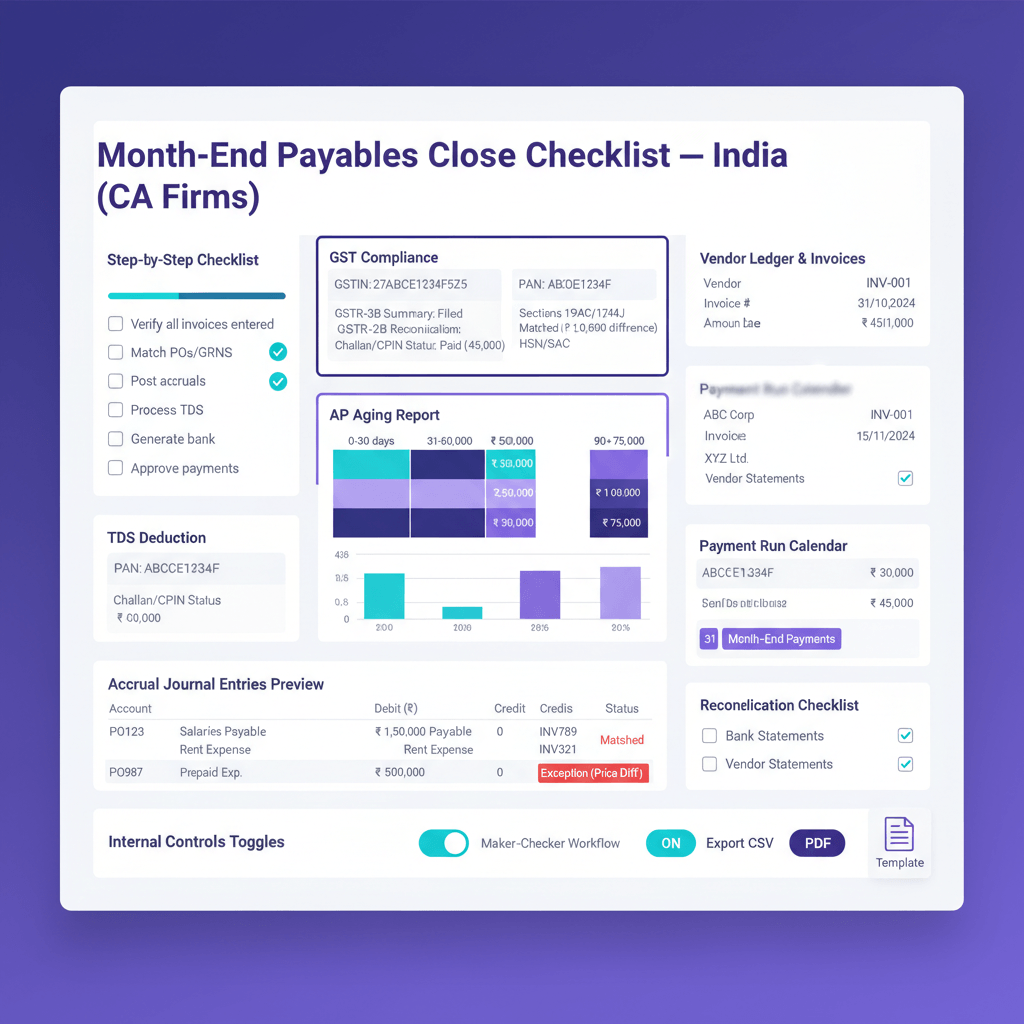
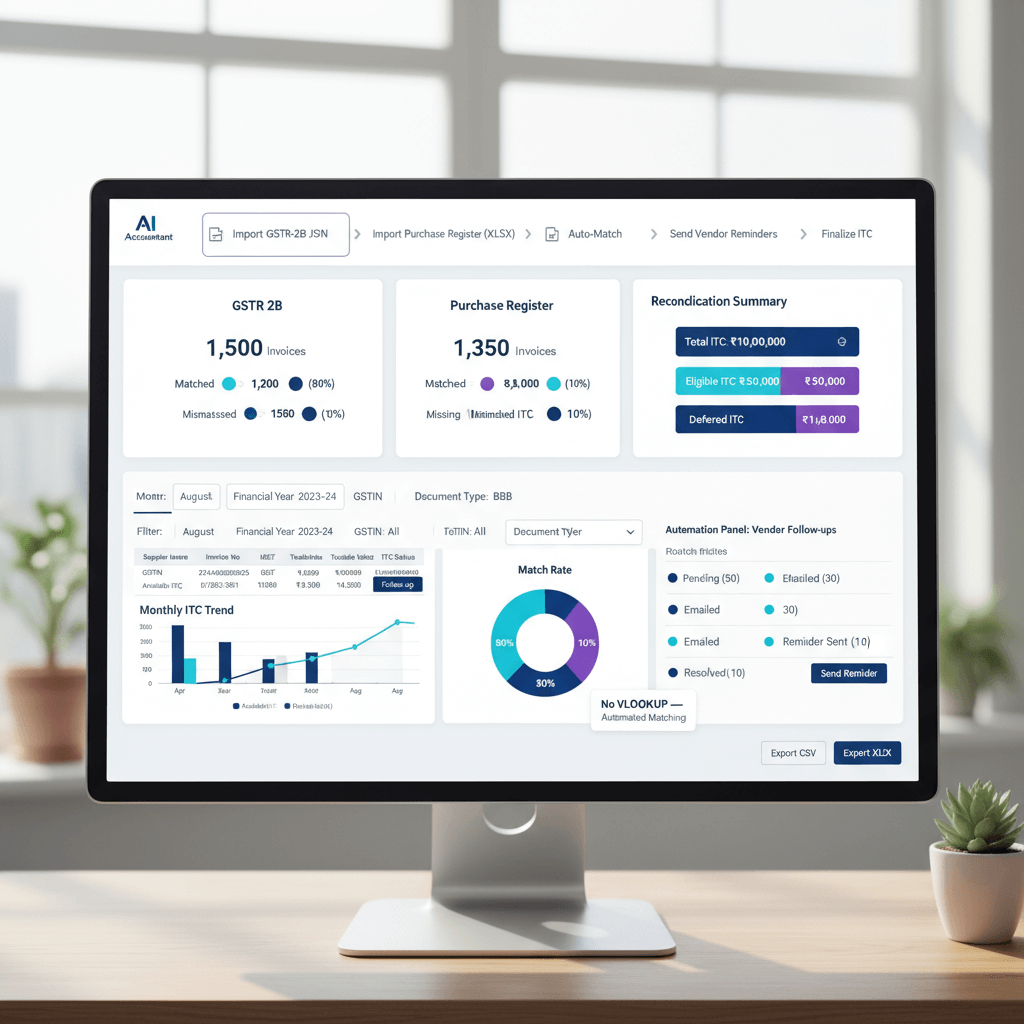
Reconciliation tools sit squarely in the close process, after books are updated and before GSTR-3B filing. They ingest purchase registers, journal vouchers, and credit notes, then auto match against the GSTR-2B snapshot, surfacing only exceptions for review.
Instead of firefighting at filing time, you get visibility into mismatches early, with vendor follow up baked in. A quick scan of GST reconciliation software listings shows how most products now target this exact close window with automated workflows. For fundamentals, this overview of PR versus 2B reconciliation is a useful reference.
Core Features to Evaluate in GSTR 2B Software
Data Ingestion Capabilities
Your tool should accept Excel, CSV, PDFs, ERP exports, and ideally scanned images with OCR. Auto detection of GSTIN, invoice number, date, taxable value, and tax amounts removes tedious column mapping. Bulk import, error logs, and template generators accelerate onboarding.
Matching Accuracy and Logic
Good tools match beyond exact values. Fuzzy logic tolerates extra spaces in invoice numbers, slight date variances, and rounding differences. The best engines operate at header and line levels, compare HSN codes, and flag probable duplicates with confidence scores. Three tier matching, header, line, and tax component, minimizes false positives and maximizes true matches.
Missing Invoice Detection
Automated bucketing should distinguish books not in 2B, likely vendor non filing, 2B not in books, likely missing entries, potential duplicates, amendments, and RCM. For background on RCM intricacies, see this primer on reverse charge mechanism accounting in India. Bulk approve, bulk assign, and bulk close actions keep exception handling fast.
Advanced Features for ITC Optimization
ITC Classification and Bucketing
Rule engines should auto classify ITC as eligible, ineligible, deferred, with logic for Section 17, blocked credits, and period based conditions. Automated reversals and reclaims prevent compliance slips. A practical view of automation is covered here, Input Tax Credit reversal automation.
Workflow Status Tagging
Every document should carry a status, matched, mismatched with reason codes, pending vendor action, deferred ITC, reported and closed. Complete audit trails, who changed what and when, are critical for reviews and litigation readiness.
Automated Vendor Follow Ups
Automated nudges via email or WhatsApp, with invoice level details, CUT OFF dates, and escalation sequences, dramatically improve vendor compliance. Listings like SoftwareSuggest’s GST reconciliation software and insights on pricing and value for GSTR-2B reconciliation software highlight follow up automation as a differentiator. Sector rundowns such as this Computaxonline overview of GSTR-1, 3B, 2A, and 2B reconciliation reinforce the operational need for proactive vendor communication.
Dashboard and Reporting Capabilities
Dashboards should surface total ITC, matched versus unmatched, exceptions by category, vendor wise scores, and aging. Leaders want drill down, from executive view to invoice image in two clicks. For a model of actionable insights, see this note on a GST health check dashboard for clients.
Export packs, PDF and spreadsheet, should be audit ready, with filters for period, GSTIN, and vendor. Trend views over months help spot chronic non filers and repeat mismatch reasons.
Integration with Accounting Systems
Native connectors to Tally and Zoho Books remove data silos, ensuring master data sync and round trip posting of reconciled, categorized entries. Evaluate vendor supported connectors in marketplaces such as SoftwareSuggest’s reconciliation category. Near real time sync is ideal during close, with scheduled jobs outside peak hours.
Security, Scale, and Compliance Considerations
Handling Volume at Scale
Multi GSTIN, financial year backfills, and quarter close spikes demand batch processing, background queues, and resumable jobs. Stress test with at least a quarter of data during pilot, including amendments and credit notes.
Security and Compliance Standards
Expect ISO 27001, SOC 2 Type II, encryption in transit and at rest, role based access, IP whitelisting, and immutable audit logs. Independent guidance, for example ICAI’s AI use cases and this take on pricing and value in reconciliation platforms, emphasize security due diligence as a purchase gate.
Comparing Different Tool Categories
Spreadsheet Solutions
Excel is ubiquitous and inexpensive, but formula sprawl, error risk, weak auditability, and collaboration limits catch up quickly. Complex cases, amendments, and RCM handling remain brittle.
ERP Add On Modules
Zoho Books and peers offer built in reconciliation, convenient and cohesive for simple volumes. Depth varies, so validate fuzzy matching, exception codes, and vendor follow ups before you commit.
Dedicated SaaS Platforms
Purpose built tools bring superior matching logic, automation, and analytics. They cost more, but for high volume and multi entity needs, the time savings, accuracy, and audit readiness typically outweigh license fees. For a curated view, check this short walkthrough, the ITC optimization guide, and tool directories like SoftwareSuggest, as well as ICAI’s AI use case hub and a practical review of pricing and value.
Top GSTR-2B Reconciliation Tools to Consider
1. AI Accountant
AI Accountant focuses on intelligent automation for GSTR-2B reconciliation with deep Tally and Zoho Books integrations. It supports bulk ingestion, multi format imports, fuzzy matching across header and line levels, and detailed workflow tagging. With ISO 27001 certification and SOC 2 Type II verification, the platform is designed for scale, processing hundreds of millions of records.
2. ClearTax
ClearTax offers an end to end GST compliance suite with robust 2B reconciliation, exception reporting, and ERP integrations, widely adopted by CA firms handling multiple clients.
3. Zoho Books
Within the Zoho ecosystem, native reconciliation delivers practical value for small to midsize businesses, especially when deep automation needs are moderate.
4. GSTZen
GSTZen concentrates on GST automation with strong matching logic, bulk operations, and vendor management features suited for power users.
5. TaxRaahi
TaxRaahi combines reconciliation with broader tax workflows, including fuzzy matching and multi GSTIN operations, backed by comprehensive audit logs.
6. FreshBooks
Best for straightforward, smaller volumes, FreshBooks provides user friendly reconciliation workflows where complexity is limited.
Implementation Roadmap for GSTR Reconciliation Software
Week 0 to 1, Foundation Setup
Connect Tally or Zoho Books, load a quarter of historical PR and GSTR-2B data, validate field mappings, and test multiple file formats. This baseline data trains matching logic and provides a benchmark for improvement. For inspiration on AI enabled finance transformations, browse ICAI’s AI use cases.
Week 1 to 2, Configuration and Testing
Set tolerance thresholds for dates and values, define handling for amendments and RCM, and run pilot reconciliations on recent months. Tune fuzzy parameters and prepare vendor follow up templates. Cost and capability trade offs are discussed here, navigating reconciliation software pricing and value.
Month 1, Full Implementation
Execute the first complete cycle, produce ITC buckets, eligible, ineligible, deferred, and present dashboard views to leadership for decisions. Document gaps for iterative tuning.
Ongoing Operations
Schedule automated data syncs, monitor vendor response SLAs, and track KPIs, reconciliation time, mismatch rate, ITC realization, and vendor compliance score. Continuously refine matching rules and exception workflows.
Measuring ROI and Success Metrics
Time Savings
Manual cycles of three to four days typically compress to hours. Include follow ups and error corrections when calculating net time saved. For context on process modernisation, see this quick walkthrough.
Accuracy Improvements
Track mismatch reduction and additional invoices recovered by fuzzy matching. Many teams realize double digit gains in legitimate ITC. Listings like SoftwareSuggest and guides such as PR versus 2B reconciliation summarize real world outcomes.
Compliance Benefits
Measure penalties avoided, audit readiness, and vendor compliance trend lines. Resource articles like Computaxonline’s reconciliation overview provide additional context.
Buyer’s Checklist for GSTR Tools
- Does the engine support reliable fuzzy matching at header and line levels, including HSN and tax component checks
- Can it categorize missing invoices with clear reason codes, books not in 2B, 2B not in books, duplicates, amendments, RCM
- Does the ITC module handle capping, reversals, and reclaims, with audit ready logs
- Are vendor follow ups automated, with templates, schedules, and escalation tracking
- Do dashboards provide drill downs to voucher, invoice image, and trail, not just surface metrics
- Is there a tested connector for Tally or Zoho Books, supporting bi directional sync
- Are ISO 27001 and SOC 2 Type II in place, with encryption and role based access
- Is onboarding support included, with realistic timelines and enablement materials
Red Flags to Avoid
Black Box Matching
If you cannot see why an invoice matched or failed, you cannot defend it in audit. Demand transparent reason codes and replicated results.
Missing Audit Trails
Every status change needs an immutable log. Absence of this is a compliance risk.
Manual Only Vendor Communications
If follow ups rely on exports and separate campaigns, you lose the efficiency gains that justify the software.
Surface Level Dashboards
Pretty charts without drill down stall investigations. Ensure you can move from total ITC to the exact invoice in a couple of clicks.
Limited Scope
Amendments, credit notes, and RCM must be first class citizens, not afterthoughts. Pricing pages like this reconciliation software value analysis often flag scope limitations, review them carefully.
Real World Case Study, CA Firm Transformation
A mid sized CA firm with 15 clients and 5,000 plus monthly invoices moved from four day VLOOKUP cycles to same day reconciliation. Mismatch exception rates dropped, vendor nudges shortened turnaround, and deferred ITC fell by double digits. The leadership dashboard became a client advisory tool. For further reading on applied automation, browse ICAI’s AI use cases or watch a concise reconciliation explainer.
Next Steps for Implementation
Run a quick readiness check, confirm data sources, PR, JVs, credit notes, GSTR-2B JSON or Excel, decide your pilot period, and select two representative GSTINs. Book a live demo with a platform like AI Accountant, bring last month’s files, and validate matching accuracy, exception codes, ITC buckets, vendor nudges, and dashboard drill downs on your real data.
Adopt a 30, 60, 90 day plan. In 30 days, stabilize ingestion and matching, in 60 days, automate vendor follow ups and ITC workflows, in 90 days, standardize reports and audit packs across all entities. The goal is not just faster matching, it is reliable ITC realization, better vendor compliance, and less stress at close.
FAQ
How should a CA structure a month end GSTR-2B reconciliation workflow to minimize carry forwards
Close books, ingest PR and 2B, run automated matching, then work only the exceptions, books not in 2B, 2B not in books, amendments, duplicates, and RCM. Tools like AI Accountant let you bulk assign exceptions, trigger vendor nudges with invoice details, and produce ITC eligible, ineligible, and deferred buckets, reducing carry forwards materially.
What matching tolerances do you recommend for invoice dates and amounts to avoid false mismatches
Typical setups allow a one to two day date variance, especially for late postings, and accept rounding differences within a small threshold on tax amounts. Validate on a pilot month, then tune. AI Accountant, for instance, applies fuzzy logic at header and line levels, with configurable variance rules.
How do I treat vendor late filing where invoices are in books but missing in GSTR-2B during GSTR-3B filing
Bucket such invoices as deferred ITC, supported by a vendor follow up workflow. The system should auto track when the vendor eventually files and move the item from deferred to eligible in the subsequent period. AI Accountant flags these with reason codes and can auto notify vendors.
What is the recommended approach to reconcile credit notes and amendments along with base invoices
Use a tool that links credit notes and amendments to original invoices with document references and GSTIN pair logic. The reconciliation pass should adjust ITC accordingly, and show a net effect view. AI Accountant’s line level matching helps ensure that credit note tax components are treated correctly.
Can an AI driven tool help identify duplicate invoices and probable data entry errors in PR
Yes, duplicate detection uses a combination of GSTIN, invoice number normalization, date, taxable value, and tax amounts, along with confidence scores. Probable errors appear as soft exceptions for quick review. AI Accountant highlights duplicates and near duplicates to reduce overclaim risks.
How should I configure RCM transactions to avoid false mismatches with GSTR-2B
Segregate RCM ledgers and tag RCM invoices distinctly in PR. The reconciliation engine should exclude RCM from vendor filing expectations, while still validating tax treatment. A good primer is this note on the reverse charge mechanism, and AI Accountant supports dedicated RCM handling.
What are the minimum audit trail requirements a CA firm should insist on during tool selection
Immutable logs capturing import, match, edit, status change, user, timestamp, pre and post values. Exportable audit packs with filters by GSTIN, vendor, and period are essential. AI Accountant provides drill downs from dashboard to document level with complete trails.
How do I justify ROI for a GSTR-2B tool to clients or management
Baseline current hours for reconciliation and vendor follow ups, measure mismatch rate and ITC realization, then compare after pilot. Savings usually come from time reduction, fewer errors, higher eligible ITC, and reduced penalties. Many CA firms see double digit gains in realized ITC with tools like AI Accountant.
What integration depth with Tally or Zoho Books is practically necessary for a smooth close
Bi directional sync, master data updates, vendor GSTIN validation, and posting of categorized reconciliation results back into the ERP. Scheduled syncs and on demand pulls during close are ideal. AI Accountant supports deep integrations to avoid CSV shuttling.
How should a CA team approach multi GSTIN, multi entity reconciliation without losing control
Adopt a workspace per client with role based access, standardize templates, and use dashboards that roll up to group level while enabling GSTIN level drill downs. Vendor scoring and exception aging help prioritize effort. AI Accountant’s multi entity views make this manageable.
What controls help prevent overclaiming ITC when vendors chronically delay filings
Hard rules to defer books not in 2B, automated vendor nudges with escalation, and periodic vendor scorecards. Consider contractual clauses tied to compliance. AI Accountant automates nudges, tracks response times, and surfaces chronic offenders.
How do I handle back filings and amended 2B data impacting prior periods
Rerun reconciliation for the affected months, maintain versioned snapshots of 2B, and generate delta reports to adjust claims. Tools should clearly flag prior period impacts. AI Accountant maintains amendment trails and supports accurate reclaims in subsequent filings.

Rohan Sinha is a fintech and growth leader building aiaccountant.com, focused on simplifying accounting and compliance for Indian businesses through automation. An IIT BHU alumnus, he brings hands-on experience across 0 to 1 product building, growth, and strategy in B2B SaaS and fintech.