-01%201.svg)
Key takeaways
- Virtual Accounting in India blends a CA led managed service with a smart dashboard, you get clean books, timely GST and TDS filings, income tax and ROC support, and real time visibility
- A dedicated CA team standardises your chart of accounts, reconciles banks and gateways, prepares returns, and maintains secretarial records, while the dashboard shows deadlines, filings, cash flow, and alerts
- AI Accountant provides this model with expert execution plus an always on dashboard, it reduces email chaos, improves control, and scales with your business
- Implementation is straightforward, discovery, data intake, bank and gateway mapping, workflow setup, compliance calendar, pilot month, then go live
- Founders and finance heads get MIS, KPIs, and audit readiness as a by product of clean monthly routines
Table of contents
Virtual Accounting for India: A CA led managed service with a smart dashboard
Virtual Accounting for growing Indian businesses
Virtual Accounting is a CA led managed service that brings accounting, taxes, payroll, and ROC compliance together in one place, it blends expert execution with a live dashboard. You get clean books, on time GST and TDS filings, income tax support, and MCA filings, along with always on visibility. Learn what is included.
AI Accountant offers Virtual Accounting with a dedicated CA team plus a centralised dashboard, it replaces email threads and scattered files with one clear flow. You see revenue, costs, cash flow, and filings in real time, your CA team handles the work while you track the status.
This guide explains how CA led Virtual Accounting works in India, what it includes, how the dashboard helps, and how to implement it, with references from GST, Income Tax, and MCA portals.
CA led Virtual Accounting overview and scope
A CA led Virtual Accounting model gives you a qualified team that runs bookkeeping, reconciliations, taxes, and company secretarial work. The team maintains ledgers, prepares GST and TDS returns, files income tax, manages advance tax, helps with tax audit preparation, and files ROC forms for small companies, it also supports payroll tax and salary structuring.
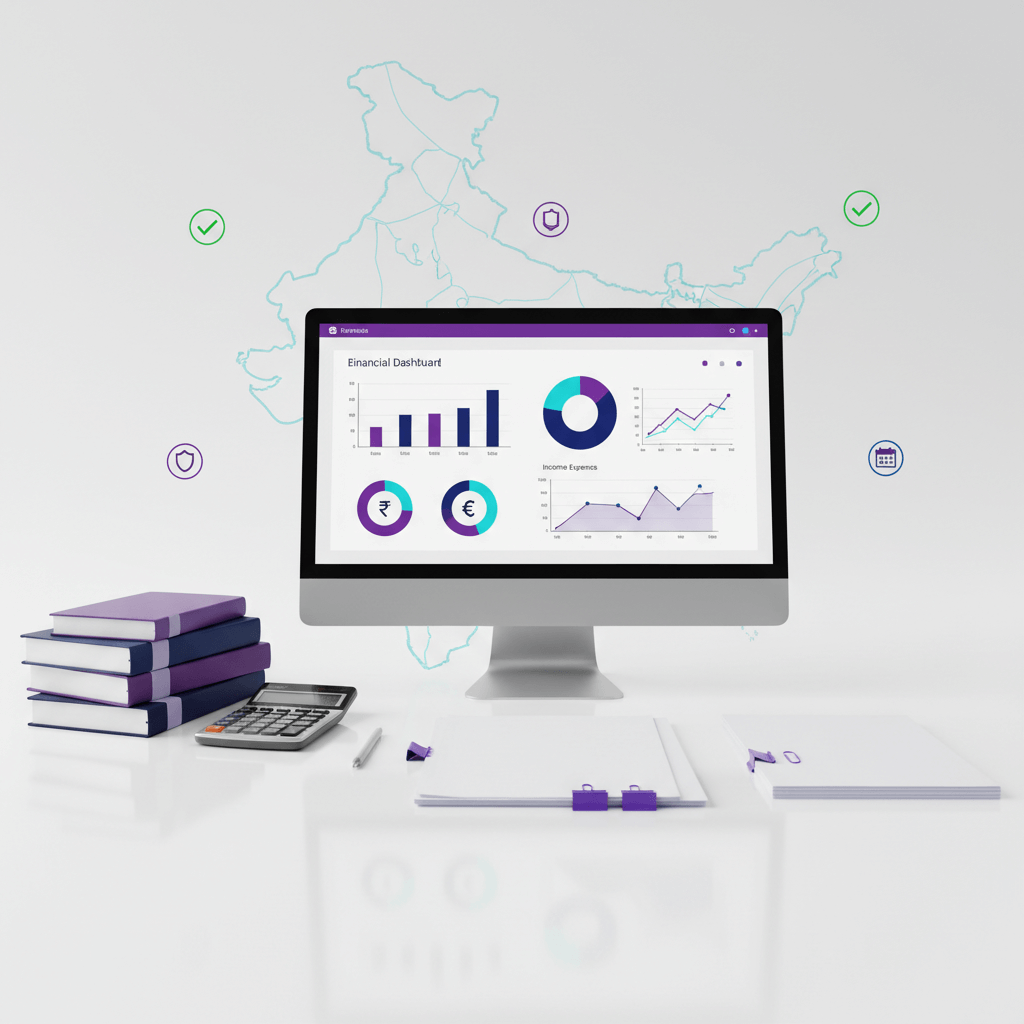
The dashboard shows live numbers and deadlines, you can view revenue, expenses, profit or loss, cash coming in and going out, burn rate, and runway. You can see GST and income tax due dates, TDS challan status, ROC forms due, and past filings, the system also stores documents and tracks changes.
This model reduces risk and improves control, you get process and oversight without building an internal finance team on day one. You keep clear ownership with service level clarity and a single source of truth. For a comparison with traditional setups, see this guide. References, ICAI, GST, Income Tax, MCA.
Bookkeeping and accounting basics with clean ledgers
Good accounting starts with clean and timely books. Monthly bookkeeping captures sales, purchases, and expenses, bank entries and payment gateway entries are posted and reconciled, vendor bills and customer invoices are tracked, ledgers are reviewed for errors, year end closing is done with schedules and supporting documents.
- Sales and receipts posted with GST treatment and e invoice details when required
- Purchases and input tax credit tagged correctly by HSN and place of supply
- Accounts receivable tracked with aging and reminders
- Accounts payable tracked with aging and cash planning
- Bank reconciliation and payment gateway reconciliation
- Fixed asset register maintenance with depreciation
- Inventory records with periodic reconciliation
- MIS with monthly P and L, balance sheet, and cash flow
A CA led team standardises the chart of accounts and aligns reporting with legal and management needs, the dashboard surfaces recent transactions and exceptions so you spot issues fast. References, ICAI, RBI.
GST compliance with GSTR 1, GSTR 3B, GSTR 9, and e invoice
GST is a major compliance area for Indian businesses, GSTR 1 reports outward supplies, GSTR 3B is the summary return for taxes payable and input tax credit, annual returns include GSTR 9 and when applicable 9C. Place of supply rules determine IGST or CGST plus SGST, reverse charge applies in specific cases, HSN and SAC codes are required as per turnover thresholds, e invoice is mandatory above notified turnover limits, reconciliations like GSTR 2B and books matching protect input tax credit.
- Customer invoices carry the correct GST rate, HSN, and place of supply
- E invoice enabled where required with IRN and QR code
- GSTR 1 and GSTR 3B filed on time with payment of tax
- Annual return GSTR 9 and when applicable 9C prepared using books
- GST health checks catch gaps in input tax credit and mismatches with 2B
- Alerts remind you before due dates and for any notices
The dashboard shows due dates, filing status, and payment challans, it stores working files and reconciliations for reference. References, GST, GST returns help, E invoice portal, HSN and SAC search.
TDS compliance and TRACES with forms 24Q, 26Q, 27Q, 26QB, 26QC, 26QD
Tax Deducted at Source applies on salaries, contractor fees, rent, interest, and more, the payer deducts tax and deposits it by the due date. Quarterly TDS returns use 24Q for salaries, 26Q for residents, and 27Q for non residents, there are specific challans and forms for property purchase and certain rent and payments under sections 194IA, 194IB, 194M, and others, certificates like Form 16 and Form 16A must be issued, TRACES supports challan view, justification reports, and certificate generation.
- Correct section and rate based on PAN and nature of payment
- Monthly challan payments and mapping to returns
- Quarterly return filing for 24Q, 26Q, 27Q
- Property and special returns where applicable
- TDS health check and correction statements if needed
- Reconciliation with Form 26AS and AIS for the year
The dashboard shows deductee lists, challan status, filing timelines, and certificate downloads. References, Income Tax, TRACES.
Income tax returns, advance tax, and tax audit preparation
Every entity must file an income tax return, individuals, firms, LLPs, and companies have different forms and timelines. Advance tax applies when total tax crosses the threshold, tax audit may apply based on turnover and other limits, books and ledgers must align with the return, TDS and TCS credits must match Form 26AS and AIS.
- Compute advance tax each quarter and guide on payments
- Prepare and file the correct return form on time
- Track and respond to notices with proper replies
- Prepare tax audit schedules and support the audit if applicable
- Plan deductions and allowances within the law
- Handle 15CA preparation for payments that require it, and guide on 15CB from a CA where needed
The dashboard shows filing status, challans, and assessment updates. References, Income Tax, ICAI.
Payroll services and TDS on salaries with section 192
Payroll has both people care and tax care, salary TDS under section 192 is computed each month based on projected income and employee declarations. Perquisite valuation, exemptions, and deductions are applied as per rules, Form 16 must be issued, many small businesses have EPF and ESI on separate portals.
- Clean salary structure that helps employees save tax where possible
- Proper calculation of TDS each month and timely deposit
- Filing of 24Q quarterly with correct PAN and amounts
- Support for perquisites and full and final settlements
- Simple payslip and proof management
The dashboard shows employee lists, TDS workings, and return status. References, Income Tax, EPF, ESI.
ROC compliance for small companies under MCA with MGT 7A and AOC 4
Companies must file annual ROC forms and maintain secretarial records. Small companies file the annual return and financial statements, common annual forms include MGT 7A and AOC 4, directors complete DIR 3 KYC. Boards conduct meetings, AGMs, maintain statutory registers, and prepare reports, changes like director appointments, capital changes, and share allotments require event based filings.
- Prepare and file MGT 7A and AOC 4 on time
- Track DIR 3 KYC for directors each year
- Prepare board meeting notices and minutes
- Prepare AGM documents and the annual report
- Maintain statutory registers
- Handle MSME half yearly reporting for due vendor payments where applicable
The dashboard lists upcoming MCA due dates and stores documents for the company record. Reference, MCA.
Secretarial support and event based MCA filings
Beyond annual compliance, many events need filings, this may include change in registered office, director changes, appointment of auditors, increase in share capital, share allotment, and other corporate actions. Even small companies must follow the Companies Act and the rules that fit them.
A managed service standardises documents and steps for such events, it ensures board approvals and shareholder approvals are in line, it prepares form sets and completes filings on the MCA portal. Your dashboard keeps a log of each event, with documents and forms in one secure place. Reference, MCA.
Dashboard visibility with cash flow, runway alerts, and AI insights
A dashboard is the control room for finance, it shows the big picture and the fine details. View revenue and expense trends, burn rate, and cash runway, drill into categories, see recent transactions and bank statement analysis to spot odd items, track GST, TDS, income tax, and MCA due dates, store vouchers, invoices, and notices in a document repository, chat with the CA team in one place so context is not lost. Explore cash dashboards, this overview.
- Unusual spend spikes by vendor or account
- Customers close to credit limits
- Input tax credit at risk due to supplier non filing
- Delays in TDS deposit that can invite interest
- Forecast of cash shortfalls based on current burn
AI powered insights reduce day to day chasing, they keep you ahead of deadlines. References, ICAI, RBI.
Implementation steps for startups and SMBs using Virtual Accounting
A good start leads to smooth operations, here is a simple path:
- Discovery and scope setup, confirm entity type, registrations, nature of business, and volume drivers
- Data intake, capture opening balances, ledgers, and past filings, collect customer and vendor masters
- Bank and gateway mapping, set up feeds or statements and posting rules for banks and payment gateways
- Document workflow, decide how invoices and bills will flow to the team and to the system
- Chart of accounts, create a clean structure that matches reporting needs
- Compliance calendar, load GST, TDS, income tax, and MCA due dates into the dashboard
- Pilot month, run one month with checks and fix issues early
- Go live, move into steady state and set review rhythms
Founders and finance leads get regular calls for a short review, the CA team shares MIS and action items, the dashboard holds tasks and status. References, Startup India, ICAI.
Measurement and KPIs for finance operations
What gets measured gets better, use metrics that drive cash and compliance.
- Days sales outstanding and overdue receivables
- Payables days and vendor ageing
- Gross margin and contribution margin by product or service
- Operating expense trends by function
- Cash conversion cycle
- GST credit utilisation and blocked credit
- TDS interest and penalty zero target
- On time filing rate across GST, TDS, income tax, and ROC
- Close time from month end to reports
- Budget versus actuals variance and forecast accuracy
The dashboard can surface these as charts and simple scores, the CA team reviews the why behind movements. References, ICAI, RBI.
Use cases for freelancers, startups, and growth stage companies
Freelancers and consultants need simple but strict compliance, they benefit from timely books, TDS support, and income tax filing, some adopt presumptive taxation based on eligibility, clear invoicing and cash tracking protect earnings.
Early stage startups want speed and clarity, they need cash runway, burn control, and clean GST and TDS compliance, they also need investor friendly MIS and ready records for diligence.
Growth stage companies need process and scale, they want clean books across many banks and gateways, rigorous reconciliations, and a repeatable month close, they need strong ROC support and tax planning playbooks. Virtual Accounting meets each group where they are, with a CA led team and a dashboard that grows with you. References, Income Tax, Startup India.
AI Accountant Virtual Accounting service and how it works
AI Accountant delivers Virtual Accounting as one managed service, a dedicated CA led team handles bookkeeping, reconciliations, GST, TDS, income tax, payroll tax, and ROC for small companies, the team supports tax audit preparation and international tax advisory where needed.
- Financial overview for revenue, expenses, and profit or loss
- Category breakdowns and drill downs
- Cash flow trends, burn rate, and runway
- AI generated insights and alerts
- Recent transactions and bank statement analysis
- Document repository for all finance files
- Compliance dates and filing status
- Centralised communication with the CA team
You get one place to see and solve everything, it is practical and calm, it does not try to replace judgment, it supports your decisions with clean data and expert help. Reference, AI Accountant.
Accounting tools and financial management tools for Indian businesses
If you are assessing tools for your finance stack, start with the managed service model if you want speed and compliance with less in house effort, match the tool to your process.
- AI Accountant, CA led Virtual Accounting with a centralised dashboard for Indian compliance and reporting, https://aiaccountant.com
- QuickBooks Online, global bookkeeping and invoicing with many app links, https://quickbooks.intuit.com/in
- Zoho Books, Indian GST ready accounting and invoicing, https://www.zoho.com/books
- TallyPrime, widely used desktop accounting with GST features, https://tallysolutions.com
- Xero, cloud accounting with simple UI and many integrations, https://www.xero.com
- FreshBooks, invoicing and simple accounting for small teams, https://www.freshbooks.com
Ensure your provider can work with your tool, or offer a single dashboard for all work. References, AI Accountant, QuickBooks, Zoho Books, Tally, Xero, FreshBooks.
Cash flow planning with burn rate and runway
Cash is the fuel for your business, a simple cash flow plan tracks expected inflows from customers and expected outflows to vendors, payroll, taxes, and rent. Burn rate shows how fast you use cash each month, runway shows how many months your current cash can last at the current burn.
- Plan vendor payments without late fees
- Hold enough cash for tax due dates
- Time marketing and hiring plans
- Decide when to raise funds or increase credit lines
A dashboard with forecasts, scenarios, and alerts keeps cash planning simple, the CA team can prepare non certified cash flow statements and join monthly calls on risks and options. References, RBI, ICAI.
Bank reconciliation and payment gateway reconciliation
Bank reconciliation matches the cash book with the bank statement, it catches duplicates, missing entries, charges, and errors, it confirms customer receipts and vendor payments. Payment gateway reconciliation links settlement reports to sales and fees, this is vital for ecommerce and subscription businesses.
- Daily or weekly match of feeds or statements
- Handle reversals, chargebacks, and fee entries
- Use clear suspense and clearing accounts with zero balance at month end
- Apply a maker checker review for high risk items
The dashboard lists unreconciled items and trends, this reduces leakages and protects cash. References, RBI, ICAI.
GST e invoice and place of supply essentials
E invoice applies when turnover crosses the notified limit, it requires generation of an Invoice Reference Number and a QR code through the government portal or an integrated solution. Place of supply rules control whether to charge IGST or CGST plus SGST based on movement of goods or location of services, using correct HSN codes and rates is required.
- Enable e invoice where you cross thresholds
- Set up invoice fields and print layouts with QR code
- Train your team on when to use e invoice and how to handle cancellations
- Review place of supply for exports, SEZ supplies, and inter state or intra state sales
Your dashboard can show e invoice usage and alert if an invoice misses IRN when required. References, E invoice portal, GST.
TDS on contractors, rent, and other payments
Common TDS areas beyond payroll include contractor payments, professional fees, rent, interest, and commission, the rate and section depend on nature of payment and PAN. Deducting on time and depositing by the due date avoids interest, correct returns avoid defaults like short deduction or late filing.
A managed service sets rules for vendors by nature of service and flags TDS at posting, it prepares monthly challans and quarterly returns, it reconciles with 26AS and issues certificates, the dashboard shows who was deducted, how much, and whether certificates are ready. References, Income Tax, TRACES.
International tax and cross border payments basics
With foreign clients or vendors, consider withholding, treaty benefits, and export or import rules. For outbound payments that need reporting, Form 15CA may be prepared and submitted online, a CA may issue 15CB where required, for inbound receipts, export of services or goods has specific GST rules, export is often zero rated under GST with conditions.
A CA led team guides on DTAA application, documentation, and tax credit, it aligns invoices, forex gains or losses, and compliance in books, your dashboard can track foreign currency invoices and collections, and store 15CA and 15CB records. References, Income Tax, GST.
MIS and management reporting with variance analysis
Management Information Systems turn entries into decisions, a monthly MIS pack includes P and L with month and year to date views, balance sheet, cash flow, and key ratios, it includes budget versus actuals with notes on major variances, department wise or product wise reports explain margins and costs.
The CA team prepares MIS and joins you for a run through, the dashboard hosts the pack and key charts so you can review on the go. Reference, ICAI.
Compliance calendar and workload planning
A strong calendar keeps the team relaxed and compliant, it lists GST due dates for GSTR 1 and GSTR 3B and annual return, TDS monthly challans and quarterly returns, income tax advance tax and return filing, MCA annual and event based forms for small companies, payroll tax cut off and payment timelines.
Your dashboard should show due dates, task owners, and status, it should send reminders well in advance. References, GST, Income Tax, MCA.
Controls, reviews, and audit readiness
Internal control prevents and detects errors, simple controls go a long way.
- Maker checker for payments and large entries
- Vendor master and customer master review
- Monthly close checklist with reconciliations and schedules
- Document repository with naming rules and access control
- Periodic ledger scrutiny by a CA
Audit readiness is a by product of clean monthly routines, when books are clean and schedules are ready, statutory audit becomes smooth, the CA team coordinates with your statutory auditors, the dashboard keeps evidence and status in one system. Reference, ICAI.
A simple checklist to get started with CA led Virtual Accounting
- Sign an engagement that defines scope and SLAs
- Share registrations like GST, TAN, PAN, and CIN
- Share bank details and gateways in use
- Share last year financials and trial balance
- Set chart of accounts and reporting needs
- Finalise compliance calendar in the dashboard
- Agree weekly or monthly review rhythm
- Start with a pilot month and refine
This checklist helps you switch from scattered tools to a single managed system with confidence. References, ICAI, GST, Income Tax, MCA.
Closing thoughts on Virtual Accounting in India
Virtual Accounting brings people and systems together, a CA led team does the heavy lifting, a dashboard gives you a live view of money and compliance, you move from chasing files to making decisions.
AI Accountant offers this model with a calm, steady approach, it is not about selling a tool, it is about giving you clean books, on time filings, and clear insights so you can focus on your work. If you want to run a tight finance operation without building one from scratch, Virtual Accounting is a smart path to consider. References, AI Accountant, ICAI, GST, Income Tax, MCA.
FAQ
How does a CA led Virtual Accounting service differ from hiring a traditional CA for ad hoc tasks
You get continuous execution plus a live dashboard that makes status visible, instead of periodic ad hoc jobs and email heavy coordination. The CA team maintains books, files GST and TDS, runs ROC and income tax, and the dashboard shows cash, filings, and tasks. AI Accountant combines expert work with an always on view, founders get clarity without micromanaging.
What governance do founders and finance heads retain when they outsource accounting to an AI enabled Virtual Accounting service
You keep ownership via documented scope, maker checker rules, and review rhythms, the dashboard shows approvals, exceptions, and upcoming filings. With AI Accountant, review calls cover MIS and action items, you approve payments and returns, while the team handles prep and reconciliation, this is control with less internal workload.
Can Virtual Accounting handle complex GST scenarios like reverse charge, place of supply for services, and e invoice thresholds
Yes, the CA team configures invoice rules, applies reverse charge where required, confirms place of supply, and enables e invoice when turnover crosses limits. The dashboard keeps IRN status, reconciles books with 2B, and alerts on mismatches, references are checked against the GST portal to avoid input tax credit loss.
How are TDS rates and sections governed across contractors, rent, and professional fees, and what happens if challans are delayed
Rates and sections map to vendor nature and PAN status, the service posts accruals with flags, prepares monthly challans, and files quarterly returns, if deposits are delayed, interest is computed and disclosed, correction statements are filed to clean defaults. AI Accountant reconciles against 26AS and AIS to ensure year end alignment.
Does the dashboard replace full accounting software or does it sit on top as a visibility and workflow layer
It sits on top, reflecting ledgers, documents, and compliance status, it can connect to underlying systems or operate with managed posting by the CA team. The focus is visibility, control, and workflow, while accountants execute reconciliations and filings, this separation keeps operations simple and auditable.
How do income tax obligations, advance tax schedules, and tax audit preparation get handled in a managed setup
The CA team computes advance tax quarterly, manages payments, prepares the correct return form, and drafts audit schedules if applicable. Notices are tracked and replied with documentation, deductions and allowances are planned within law, the dashboard stores challans, return acknowledgments, and assessment updates for instant reference.
What ROC deliverables should a small company expect each year, and how are event based filings managed
Annual filings include MGT 7A and AOC 4, DIR 3 KYC for directors, AGM documents, and statutory registers, event filings cover auditor appointment, director changes, capital increases, and share allotments. AI Accountant standardises board papers, minutes, and forms, then the dashboard logs filings and stores final copies, making diligence and audits faster.
What KPIs should a finance head track monthly to ensure cash discipline and compliance hygiene
Track DSO, vendor ageing, gross margin and contribution margin, operating expense trends, cash conversion cycle, GST credit utilisation, TDS interest and penalty zero target, on time filing rate, close time, and budget versus actual variance. The dashboard highlights variances, while the CA team explains movements, this turns monthly close into continuous improvement.
How quickly can a startup migrate to Virtual Accounting, and what data handover is essential
A typical migration is a few weeks, discovery and scope, intake of opening balances and past filings, bank and gateway mapping, workflow setup, compliance calendar, pilot month, then go live. Essentials include GST, TAN, PAN, CIN, bank statements, gateway reports, trial balance, customer and vendor masters, AI Accountant runs a pilot to flush issues early.
Can an AI enabled Virtual Accounting service support international payments, 15CA filings, and coordination for 15CB certificates
Yes, outbound payments that need reporting are prepared with 15CA, and a CA issues 15CB where required, DTAA application and documentation are guided, inbound export receipts are aligned with GST rules, forex differences are posted correctly. The dashboard stores certificates and trackers for cross border flows, reducing follow ups.
How are payroll taxes under section 192 handled, including perquisites, declarations, and Form 16 issuance
Projected income is computed each month, declarations and proofs are tracked, perquisites are valued as per rules, TDS is deposited on time, Form 16 is generated via TRACES. The dashboard shows employee wise workings and return status, this keeps payroll tax clean without adding internal admin load.
What audit readiness should founders expect, and how does the managed service help statutory auditors work faster
Audit readiness comes from monthly reconciliations, schedules, and clean ledgers, fixed asset registers and inventory reconciliations are maintained, bank and gateway reconciliations are continuous. The dashboard provides evidence packs, vouchers, and trail for auditors, AI Accountant coordinates queries so audit fieldwork is faster and less disruptive.