-01%201.svg)
Key takeaways
- Choose tools that cover GST, TDS, Income Tax, and MIS, with bank feeds, e invoicing, and 2B reconciliations baked in
- Prioritize real time dashboards for cash, burn, and runway, this helps founders and finance heads make faster calls
- Evaluate with a clear checklist of Indian validations, usability, security, pricing, and support, then pilot before rollout
- Cloud first options are easiest to scale, but software alone is not a substitute for CA oversight when stakes are high
- A CA led managed service, like AI Accountant Virtual Accounting, blends software, process, and expert execution for end to end control
- Plan migration with clean masters and reconciled openings, track KPIs monthly, and enforce maker checker and audit trails
- Use the FAQ to benchmark SLAs, 2B practices, TDS logic, multi GSTIN coverage, and data residency needs
Tax and Financial Reporting Tools for India
If you run a startup, a small company, or work as a freelancer in India, you already feel the pressure of filings and reports. Good tools make this simple. These platforms help with GST, TDS, and Income Tax, and they create investor ready P and L, balance sheet, and cash flow reports. For context and market snapshots, see overviews on professional suites and compliance focused reporting platforms at SAG Infotech and Giddh.
What you get: automation for entries, return preparation, live dashboards for revenue and expenses, bank reconciliations, and compliance reminders. Cloud SaaS now dominates because it updates fast and scales smoothly, though some teams still prefer desktop for control.
Tools deliver speed and structure, a CA managed model adds assurance and accountability.
What are tax and financial reporting tools
These are software platforms that automate Indian compliance and generate clean financial statements. The best products pull bank data, post entries, and prepare returns on time. They also show dashboards for revenue, expenses, cash, and burn.
- Tax tools focus on Income Tax and TDS, handling ITR prep, TDS forms like 24Q and 26Q, and advance tax. Examples include Gen Income Tax and ClearTax.
- Financial reporting tools focus on accounting and MIS, covering bookkeeping, GST reconciliations, and management dashboards. Examples include Giddh and Tally.
- Integrated suites combine both worlds, some add AI to spot anomalies or suggest categories, for example Quicko or Zoho Books combine tax and books.
Typical outputs include GSTR 1, GSTR 3B, GSTR 9, Forms 16 and 16A, ITR schedules, 2A and 2B reconciliations for input tax credit, and live dashboards with burn and runway. References and trends: SAG Infotech roundup, Giddh compliance blog, and a concise explainer video on workflows at YouTube.
Core features checklist for tax and financial reporting tools
Use this as a practical audit list before you buy.
- Accounting automation
- Sales, purchase, and expense ledgers
- Year end close and schedules
- Bank feeds and auto match
- GST compliance
- E invoicing and IRP integration
- HSN and SAC mapping
- Place of supply and RCM logic
- GSTR 1, GSTR 3B, GSTR 9 preparation
- 2A and 2B reconciliations and health checks
- TDS handling
- Deduction logic by section and nature
- Challan creation and tracking
- Forms 24Q, 26Q, 27Q, 26QB, 26QC, 26QD
- Due date reminders and proof logs
- Income Tax
- ITR prep for individuals, firms, and companies
- Advance tax estimates and alerts
- Audit schedules for tax audit preparation
- Payroll and ROC for small companies
- Payroll TDS on salaries
- Secretarial basics like MGT 7, AOC 4, DIR 3 KYC for small companies
- Dashboards and AI
- Cash flow views and forecasts
- Burn and runway views for startups
- Anomaly alerts and category suggestions
- Integrations and security
- Bank and payment gateway connections
- E invoice IRP links
- Role based access and detailed audit trails
(Alt text for checklist graphic: Tax and financial reporting tools features checklist for GST and TDS compliance in India, includes accounting automation, GST, TDS, Income Tax, payroll, ROC, dashboards, and security.) Sources and trends: Giddh, YouTube overview, SAG Infotech, Futurex Solutions.
Why financial reporting tools for GST and TDS matter for Indian freelancers and startups
If you miss a GST filing, interest can be 18 percent per year, late fees and mismatches add up quickly. Tools reduce this risk with reminders, validations, and clean reconciliations. Close time drops, and you see where cash is going. Startups care about burn and runway, strong reporting delivers this in real time, see examples at AI Accountant insights. As rules shift, like e invoicing thresholds, systems with place of supply logic and RCM coverage keep you audit ready. Read more at Giddh and ClearTax trends, with an explainer at YouTube.
How to evaluate and choose tax and financial reporting tools with reporting software for startups
- Map your needs
- Note your GST profile, B2B or B2C, single state or multi state, goods or services
- List payroll scope and TDS needs
- If you are a small company, map ROC support for the year
- Check compliance depth
- Look for Indian validations like RCM logic and 2B matching
- TDS sections must be clear with correct rates
- For Income Tax, confirm ITR coverage and advance tax alerts
- Assess usability and pricing
- Guided workflows your founder or junior accountant can follow
- Compare per entity software fees with CA led managed services, see a short primer at AI Accountant blog
- Transparent pricing for users, entities, and add ons
- Review support and security
- Ask about CA led SLAs, expert help, and response times
- Confirm encryption, backups, and access control
- Check references and the vendor’s track record
If you are a startup, demand live MIS, regulatory roadmaps, and cash insights. You want P and L, balance sheet, and cash flow with drill downs that are investor ready. Learn more at Giddh, SAG Infotech, ClearTax, and this short video overview.
Popular tax and financial reporting tools for India
- AI Accountant, a CA led managed service with a live dashboard that brings bookkeeping, GST, TDS, Income Tax, and small company ROC together, see aiaccountant.com
- QuickBooks, cloud accounting with invoicing, bank feeds, and reports, add India tax modules or connect third party apps
- Xero, clean dashboards and strong bank rules, popular with startups for integrations, needs India specific tax add ons
- Zoho Books, strong for GST in India, invoicing, inventory, and basic automation, pairs with Zoho Payroll and Zoho People
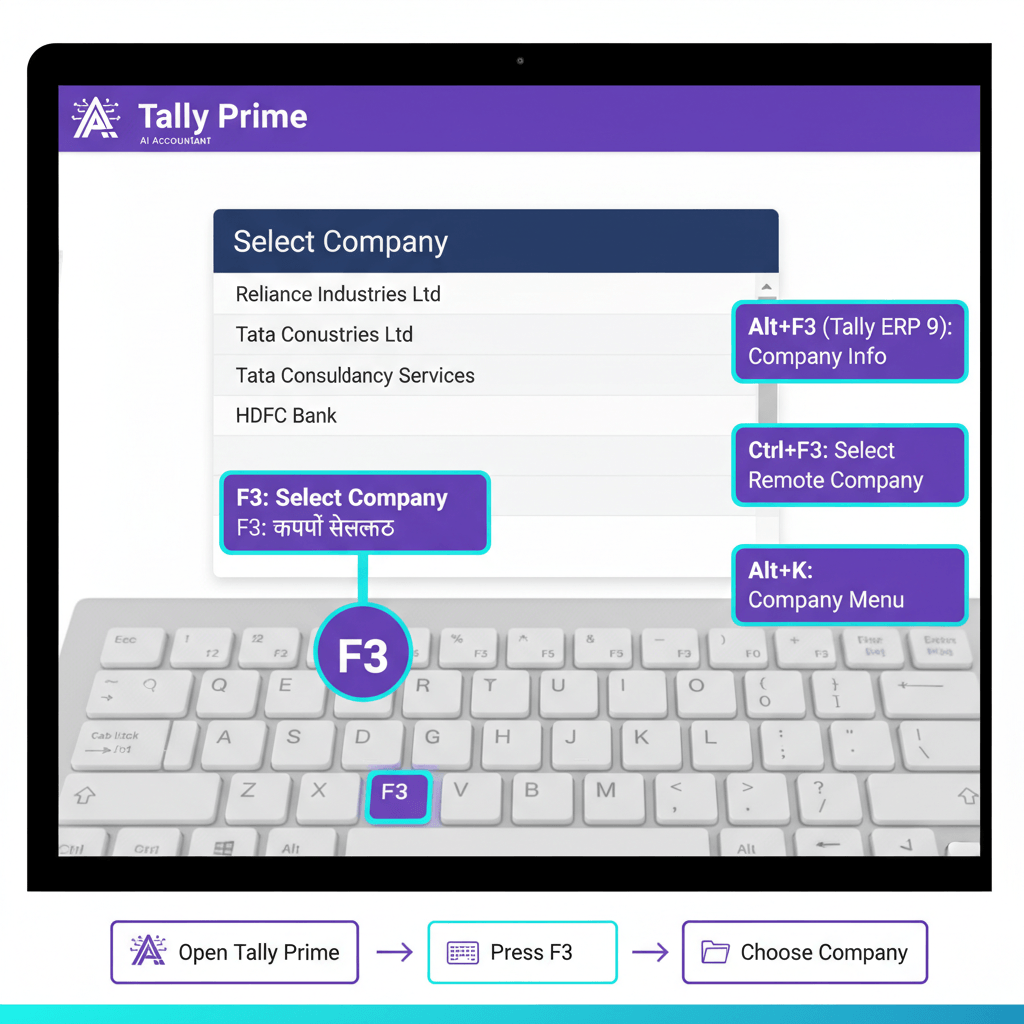
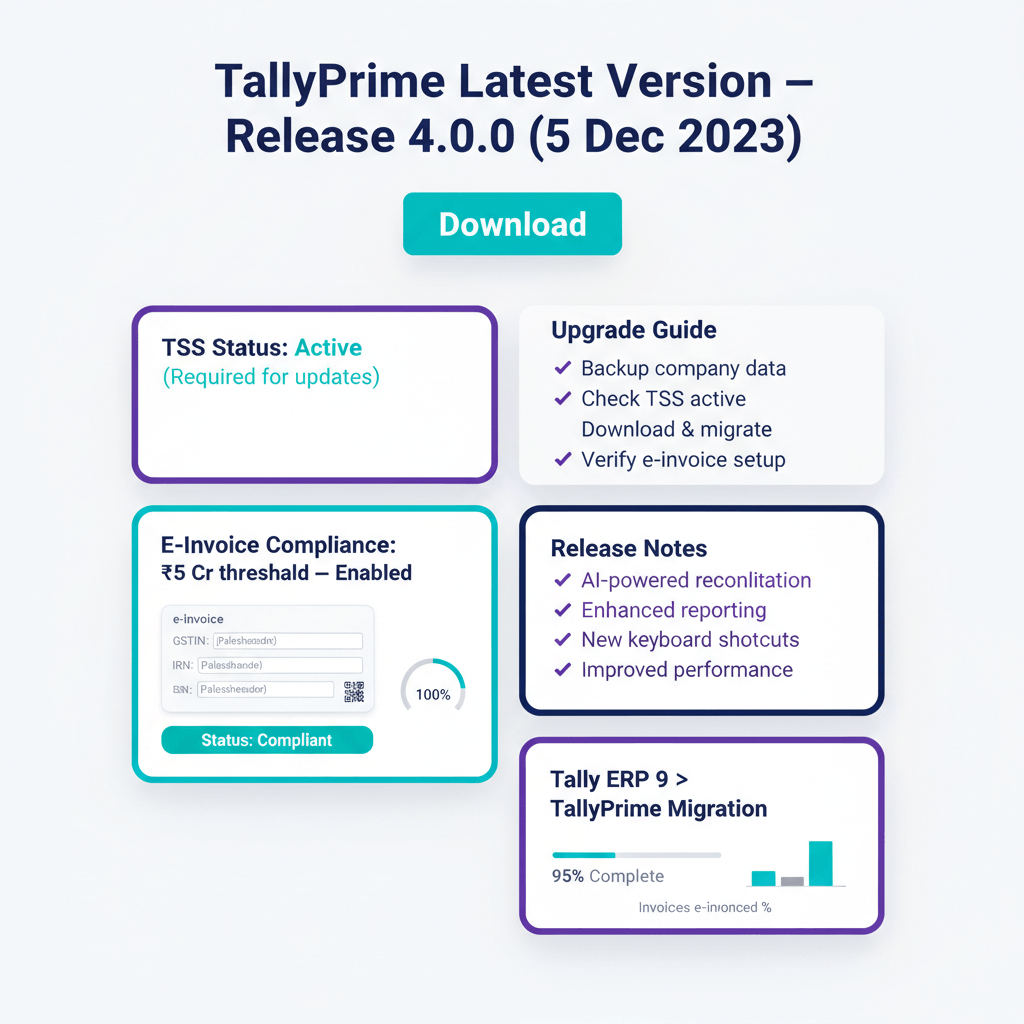
- Tally Prime, desktop first with cloud connected options, widely used for accounting and GST returns, benefits from a skilled operator
- Giddh, cloud accounting focused on reporting and compliance views for India
- ClearTax, popular for ITR and TDS filings, offers GST return prep and e invoicing connections
- Gen Income Tax Software, focused tax platform for ITR, TDS returns, and audit schedules for professionals
Cloud SaaS is the common path for scale and updates, but depth on India specifics varies. Some products are software only and need in house capacity, others bundle services. Choose for your team’s time and skill, not only features. Useful roundups and primers at Giddh, SAG Infotech, and this concise video.
Tooling options compared with CA led managed service
- Traditional CA plus Excel
- Pros, low upfront spend, flexibility
- Cons, manual entry, errors, delays across email and sheets, no real time view, hard audits
- Software only like Tally or Giddh
- Pros, automation, dashboards, standard reports
- Cons, needs trained staff, integrations can be tricky, complex cases need expert review
- CA led managed service like AI Accountant Virtual Accounting
- Pros, full execution by a CA team with a live dashboard, one place for data, documents, compliance status, and chat, expert oversight
- Cons, ongoing subscription fee, you must align on process
Many founders start with software, then add a CA, and discover gaps between systems and human work. A managed model closes that gap by unifying process and visibility. References, short video, Giddh, and SAG Infotech.
Deep dive, AI Accountant Virtual Accounting as your tax and financial reporting toolset
AI Accountant Virtual Accounting blends a CA team with a central dashboard designed for India. You get execution plus visibility, all in one managed workflow.
Scope the service covers
- Accounting and bookkeeping
- Monthly bookkeeping across sales, purchases, expenses, and bank entries
- Ledger checks and clean up, year end closing and schedules
- Fixed asset register, inventory reconciliation, AR and AP management
- Bank and gateway reconciliations, cash flow preparation, MIS reports
- Support for coordination with statutory auditor preparation
- Taxation and compliance
- GST registration and monthly or quarterly filings for GSTR 1 and GSTR 3B
- Annual GSTR 9 and GSTR 9C preparation support
- E invoicing enablement, GST advisory on place of supply, RCM, HSN, tax rates
- GST health checks and reconciliations
- Income Tax and TDS
- ITR filing for individuals, firms, and companies
- TDS advisory and compliance with monthly challans
- Forms 26Q, 24Q, 27Q, 26QB, 26QC, 26QD
- Advance tax calculations, tax audit preparation support
- International tax advisory, expat tax, salary structuring, and 15CA preparation
- Payroll and ROC for small companies
- Monthly TDS calculation for payroll, salary structure advisory
- MCA and ROC filings like MGT 7, AOC 4, DIR 3 KYC, and event based filings
Dashboard highlights
- Live P and L, balance sheet, cash flow
- Cash burn and runway views for startups
- AI insights and anomaly alerts
- Recent transactions with bank statement analysis
- Compliance calendar with due dates and filing status
- Document repository with maker checker trails
- Central chat to collaborate with your CA team
(Alt text for screenshot mock, Tax and financial reporting tools dashboard showing GST status, bank reconciliation alerts, and runway for a startup.) Learn more at this quick video and AI Accountant.
Typical workflows enabled by modern tax and financial reporting tools
- Monthly close
- Import bank statements or use bank feeds
- Auto reconcile payments and receipts
- Post accruals and adjustments
- Produce MIS with P and L, balance sheet, cash flow, and variance notes
- GST cycle
- Validate invoices for format, HSN, and place of supply
- Reconcile with GSTR 2A and 2B to track input credit, see an explainer at AI Accountant blog
- Prepare and file GSTR 1 and GSTR 3B
- Review health checks and fix mismatches early
- TDS and Income Tax
- Apply TDS logic by section and rate
- Create and pay challans
- File returns for 24Q, 26Q, 27Q and issue Form 16 or 16A
- Track advance tax and ITR prep steps
- ROC for small companies
- Prepare and file MGT 7 and AOC 4
- Maintain registers and minutes
- Plan AGM artifacts and board items
(Flowchart alt text, Monthly close flows into GST, then TDS and Income Tax, then ROC for annual or event items.) More background at Giddh, ClearTax, SAG Infotech, and Futurex Solutions.
Implementation roadmap for tax and financial reporting tools
- Discovery
- Review GST profile, TDS sections, and Income Tax scope
- Map bank accounts, gateways, and invoicing flows
- Document payroll and ROC needs if you are a small company
- Migration
- Clean and import masters for customers, vendors, items, and HSN codes
- Post opening balances with clear cut off dates
- Reconcile bank and 2B to set a clean base
- Configuration and go live
- Set tax rules, categories, approval flows, and maker checker
- Connect banks, IRP for e invoicing, and payment gateways
- Train users and define monthly and quarterly calendars
Pilot one cycle before full rollout, track issues, and resolve them before quarter end. For additional context, see Giddh and this video explainer.
KPIs to track with tax and financial reporting tools
- Filing timeliness and penalty savings
- Percent of returns filed on or before due dates
- Penalties and interest avoided
- Close time and cash clarity
- Days to close each month
- Accuracy of burn and runway forecasts
- Collections and control
- Days sales outstanding
- Error rates from reconciliations
- Number of unmatched bank and gateway items
- Return on investment
- Hours saved per month
- Cost avoided from errors and missed credits
Set a baseline in month one, review monthly, and share a simple scorecard with founders and your CA partner. Useful reading, Giddh on compliance reporting.
Security and governance best practices for financial reporting tools
- Maker checker for key actions like filings and payments
- Encryption at rest and in transit
- Seven year audit logs for traceability
- Data residency clarity for your records
- Vendor security audits and certifications
- Role based access with least privilege
Review access quarterly, remove stale users, and keep a short incident playbook. A short roundup of tools and governance pointers is at Invedus.
Common mistakes these tools help prevent in GST, TDS, and MIS
- Place of supply and RCM errors that distort tax liability
- GSTR 2B mismatches that block input credit
- TDS short deduction or wrong section coding
- Unreconciled payment gateway balances that overstate revenue
- Missing challan proofs and late filings that trigger interest
Mini cases
- Freelancer, a designer tracks income by client and month, quarterly MIS shows rising realization rate, better pricing follows
- SaaS startup, e invoicing connects automatically, 2B checks flag a vendor credit gap early, burn alerts show a six month runway
- D2C brand, gateways reconcile daily, returns and COD adjustments stay clean, close time drops from fifteen days to five days
(Diagram alt text, Compliance calendar that highlights monthly GSTR 1 and 3B, quarterly TDS, annual ITR and ROC, with alerts one week before every due date.) Background sources, Giddh and ClearTax.
A smarter alternative to standalone tax tools
Tools are vital, managed execution is decisive. Many Indian teams get the best of both worlds with a CA led managed service and a live dashboard. AI Accountant Virtual Accounting provides a dedicated CA team for bookkeeping, GST, TDS, Income Tax, and small company ROC, plus a real time dashboard for numbers, documents, and due dates. If you want to explore that path, book a short demo and we will walk through your stack and gaps together, see this short video and aiaccountant.com.
FAQ
How should a founder compare total cost of ownership between software only tools and a CA managed Virtual Accounting service
Model cost per entity per year including licenses, add ons, and internal time. Add reconciliation effort for banks and gateways, and expected review time by a CA for GST, TDS, and ITR. Contrast that with a managed service fee that bundles execution, dashboards, and CA oversight. A simple way is to price hours saved, penalties avoided, and accuracy gains. As a benchmark, AI Accountant Virtual Accounting quotes by scope, entity, and complexity, then commits to a monthly close calendar with SLAs.
What Indian specific validations are non negotiable for GST in a modern tool
Place of supply rules, RCM logic, HSN or SAC mapping, e invoicing through IRPs, and automated 2A or 2B reconciliations. You also want health checks that highlight ITC at risk before filing. See market roundups at ClearTax and Giddh.
Can AI Accountant handle multi GSTIN setups across states, and consolidate financials for investors
Yes, a CA led managed model like AI Accountant maps each GSTIN to books and compliance calendars, runs state wise GST, and consolidates MIS for investors. Inter branch or intercompany eliminations are posted during the close, with maker checker and audit trails retained for review.
How do we migrate mid year without breaking reconciliations or losing ITC
Pick a cut off month, post opening balances for ledgers, AR or AP, GST, and TDS, then reconcile bank and 2B through that date. Import masters for customers, vendors, HSN, and items. Run a pilot month in parallel before switching fully. A useful migration checklist appears in Giddh’s guide.
What is the recommended cadence for GSTR 2B reconciliation to protect ITC
Weekly checks during the month, a comprehensive review three to five days before GSTR 3B, and a final sweep on filing day. Flag vendor gaps, nudge suppliers, and book provisional adjustments only with CA sign off. For a walk through of SME reconciliation practices, see AI Accountant’s article.
How should a CFO think about TDS sections, rate exceptions, and interest computation
Map expense categories to sections such as 194C, 194J, or 194H, set PAN validation, and track thresholds. Your system should compute interest for short deductions and late payments automatically, and maintain challan proofs. Many tax suites described at SAG Infotech offer robust TDS modules.
What reporting pack do investors usually expect from early stage Indian startups
Monthly P and L, balance sheet, cash flow, cohort revenue where relevant, burn and runway, bank reconciliation status, and a short variance narrative. An AI enabled Virtual Accounting service like AI Accountant produces this pack on a fixed calendar, with drill downs that match ledger entries and documents.
Can these tools integrate with payment gateways and marketplaces, and how do we treat foreign receipts
Yes, modern tools connect to common gateways and pull settlements and fees, then match to orders and refunds. For foreign receipts, book forex gains or losses, ensure FIRA and compliance under FEMA where applicable, and maintain document trails for audits. A CA managed service ensures policy consistency across months.
What security and governance controls should a finance head insist on from day one
Role based access with least privilege, maker checker for filings and payouts, encryption in transit and at rest, seven year audit logs, quarterly access reviews, and vendor SOC or equivalent attestations. Keep an incident playbook that names the escalation path and evidence retention rules.
Does software replace auditors, or do we still need statutory and tax audits
No, software prepares clean data and reports, but it does not certify. You still need auditors where required by law or investors. A roundup of audit focused suites is available at SAG Infotech.
How quickly can a CA managed Virtual Accounting model get us to a predictable monthly close
With clean masters and reconciled openings, most teams stabilize within one to two cycles. AI Accountant typically defines a weekly cadence for banks and payables, then a monthly close calendar with target days for accruals, reviews, and sign off. Consistent inputs from sales and operations accelerate the timeline.
What is the difference between dashboards in software only tools and a managed service like AI Accountant
Software dashboards show data pipelines and standard metrics, a managed service dashboard adds context, tasks, compliance status, CA comments, and maker checker evidence. This turns numbers into decisions, and it reduces back and forth across chat, email, and sheets. For examples of real time visibility, see AI Accountant’s overview.