-01%201.svg)

Key takeaways
- CA led virtual accounting gives you a complete finance team as a managed service, you get bookkeeping, GST, TDS, income tax, payroll advisory, and ROC support, all in one place with a real time dashboard.
- One dashboard replaces scattered emails and spreadsheets, you see cash, burn, runway, reconciliations, documents, and filing status every day, you chat with your CA team in one place.
- Expert judgment plus system scale means fewer errors, fewer notices, faster closes, and cleaner audit readiness, your CA team reviews and signs off monthly.
- AI plus CA review flags anomalies, speeds reconciliations, and predicts liabilities, while a CA ensures compliance and context.
- Designed for startups and SMEs, it fits freelancers, founders, and finance heads who want scale without headcount, and a calm monthly close.
- Security by design, role based access, encryption, audit logs, and a clear retention policy keep your data safe.
Virtual Accounting for Startups in India with a CA led managed service and a real time dashboard
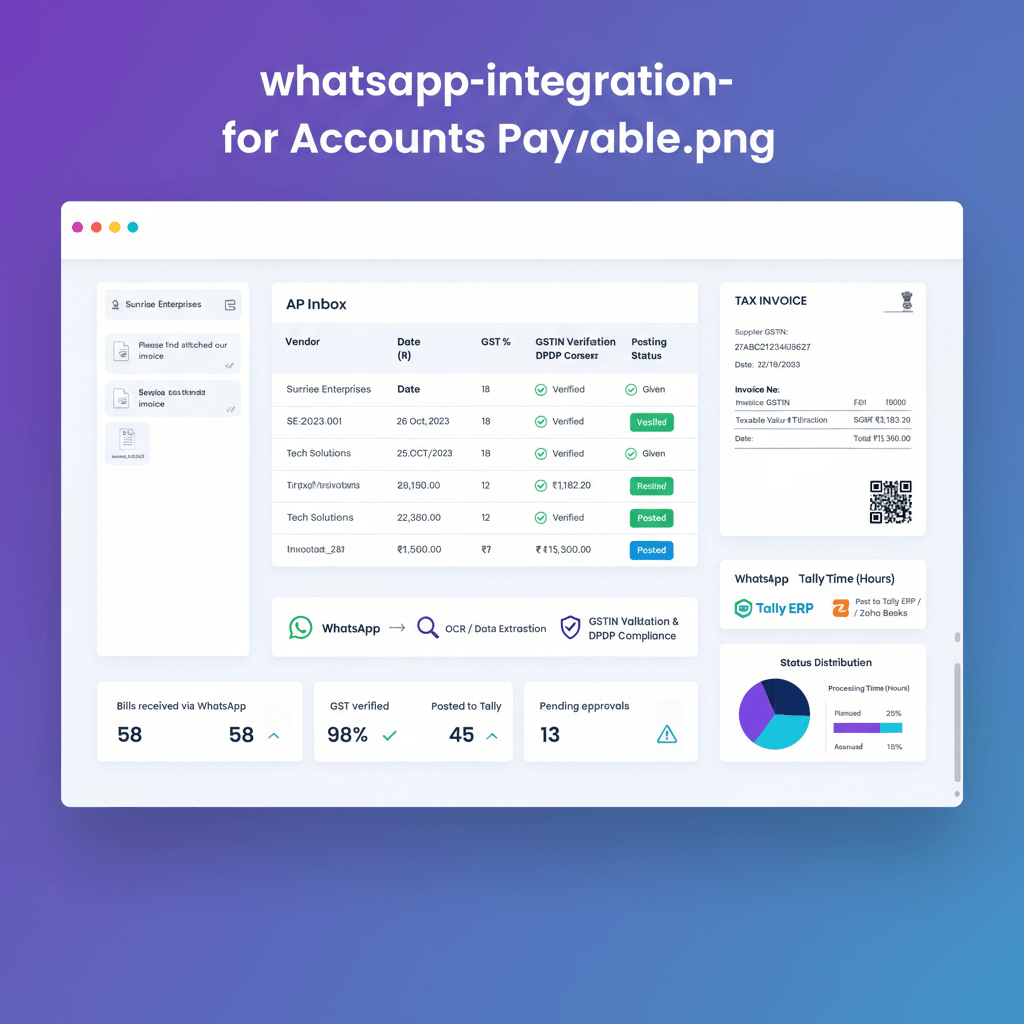
Virtual accounting gives you a complete finance team without the overhead, a CA led managed service runs your books, taxes, and filings while a real time dashboard shows your numbers and status every day. AI Accountant offers this as a single integrated service, you get continuous accounting, GST, TDS, income tax, payroll advisory, and ROC support, plus a central dashboard that shows cash flow, burn rate, runway, ledgers, documents, and filing status.
This guide explains how CA led virtual accounting works, what is included, who it is for, and how to get started, it uses simple language, it is detailed and direct.
What is virtual accounting
Virtual accounting is a complete accounting and compliance service delivered online, a qualified CA team does your bookkeeping, reconciliations, GST, TDS, and income tax, a dashboard gives you live visibility into revenue, expenses, balances, and filings, and you collaborate with your CA team in one place for documents, reports, and due dates.
- CA services for execution, compliance, and advisory
- Central dashboard with live data, documents, and alerts
Both parts work together as one managed service, replacing scattered emails, attachments, and old spreadsheets, bringing order to your finance workflow. Read more on inclusions at AI Accountant.
Why CA led matters for virtual accounting
A CA led model combines expert judgment with system scale, a CA can spot errors, interpret tax law, and guide decisions, they manage place of supply, reverse charge, HSN codes, TDS sections, and year end close, which reduces risk and rework. For background on CA standards visit ICAI.
For a startup or small company, you get the confidence of a CA firm and the speed of a cloud platform, that is the point of virtual accounting.
Dashboard features with real time visibility
A good dashboard is not a pretty chart, it is a control room, AI Accountant focuses on clarity and action.
- Financial overview with revenue, expenses, profit or loss, and balances
- Income and expense breakdowns by category and tag
- Cash flow trends with insights on burn rate and runway
- Recent transactions with bank statement analysis
- Bank and payment gateway reconciliations status
- Document repository for invoices, agreements, and workings
- Compliance calendar with due dates and filing status
- AI generated insights and alerts for anomalies and deadlines
- Central chat with your CA team
This lets you spot issues early, catch duplicate entries, missing invoices, and untagged spend, see GST reconciliations and TDS challan status, share docs fast, and close queries faster. Explore the approach at AI Accountant.
Accounting and bookkeeping services in scope
Virtual accounting covers the full monthly cycle, the CA team handles capture, clean up, review, and reporting.
- Monthly bookkeeping for sales, purchases, expenses, and bank entries
- Ledger scrutiny and clean up to fix mispostings
- Year end closing entries and schedules
- Fixed asset register with depreciation
- Inventory records and reconciliation
- Accounts receivable and payable management
- Bank and payment gateway reconciliations
- Cash flow preparation for internal use
- MIS and management reporting
- Coordination with your statutory auditor
This is non certification work, it prepares your books to be audit ready, with tight documentation and audit trails. See a primer on bookkeeping at Investopedia.
GST compliance for startups and small companies
Good GST hygiene stops cash leaks and notices, a complete flow should include:
- GST registration and profile setup
- Monthly or quarterly returns like GSTR 1 and GSTR 3B
- Annual returns like GSTR 9 and GSTR 9C where applicable
- Place of supply and RCM applicability checks
- HSN code mapping and tax rate validation
- E invoice enablement if you cross the threshold
- GST health checks and reconciliations such as GSTR 2B to books
Official references, GST portal, CBIC GST, E invoice.
TDS and income tax compliance made simple
Sections and rates change, a CA led team keeps you compliant.
- TDS advisory on sections like 194C, 194J, 194Q, 206C, and more
- Monthly challan preparation and payment support
- Quarterly TDS returns such as Form 24Q, 26Q, and 27Q
- TDS on property or rent like 26QB, 26QC, and 26QD
- Income tax return filing for individuals, partnerships, and companies
- Advance tax calculation and payment planning
- Tax audit preparation where required, not certification
- International tax advisory and expat tax structuring
- Form 15CA preparation with support through the CA network for 15CB when needed
Useful links, Income Tax portal, NSDL e tax, Form 15CA steps.
Payroll advisory and salary tax planning
Payroll touches compliance and people, small fixes can save tax for employees and reduce risk for the company.
- Monthly TDS calculation on salaries
- Advisory on salary structuring with basic, HRA, allowances, and reimbursements
- Guidance on new regime and old regime choice
- Payroll reconciliations to books
- Support for Form 16 and queries
See rates and guides at the Income Tax portal.
ROC and MCA filings for small companies
ROC is not optional, your CA led team should track and file on time.
- Annual return MGT 7 or MGT 7A as applicable
- Financial statements AOC 4
- DIN application, director appointment, and resignation
- DIR 3 KYC
- Increase in authorised share capital and share allotment
- Board meeting minutes and annual general meeting support
- Statutory registers, board report, and annual report
- MSME vendor filings on MCA
- Event based filings as they occur
Reference, MCA portal.
Who should choose virtual accounting
- Freelancers who want a simple and compliant setup
- Startups that need clean books and fast insights
- Growth stage companies that want finance scale without headcount
- Founders who want less time in WhatsApp and more time on product
- Finance teams who want execution plus a system of record
You get professional execution and a single source of truth, you reduce errors from scattered files, and you stay on top of dates. Learn more at AI Accountant.
How a CA led managed service works day to day
The best services feel simple to you, behind the scenes the team runs a tight close process.
- Onboarding with chart of accounts, past data import, and policy setup
- Secure data collection through connected banks or scheduled uploads
- Weekly posting and reconciliation of bank and gateway feeds
- Monthly ledger review and clean up by a senior accountant
- Monthly MIS with P and L, balance sheet, cash flow, and key ratios
- GST and TDS workflows with cutoffs and maker checker review
- Compliance calendar with alerts and status on the dashboard
- Quarter and year end tie outs with schedules and notes
- Ongoing chat for questions and tickets in one place
Step into the dashboard any time to see what is done, what is pending, and what is due, at AI Accountant.
Cost and ROI of virtual accounting versus in house
A full time accountant salary in India plus overhead can be a stretch for an early team, add subscriptions, training, and turnover, a managed service can be more predictable and often lower total cost. See pricing thoughts at AI Accountant, and market salary references at Glassdoor.
- Fewer errors mean fewer penalties and notices
- Faster closes mean faster decisions
- Better visibility means better cash control
- Strong documentation means faster audits and diligence
Run the math for your stage, count salaries, benefits, tools, and time saved.
Data security and confidentiality you can trust
- Role based access with least privilege
- Document encryption at rest and in transit
- Audit logs and maker checker for changes
- Secure bank connections and masked credentials
- Verified data centers with certifications
- A clear data retention and deletion policy
- Compliance with the India data protection law
- Signed confidentiality and service level agreements
Do not email passwords, do not send bank statements on chat apps, keep everything inside the system. See policy references at MeitY framework and the DPDP Act.
Onboarding checklist to get started
- Company details, PAN, TAN, GST, and CIN
- Access to bank accounts and payment gateways
- Prior year financials and trial balance
- Past GST, TDS, and income tax returns
- Vendor and customer master data
- Current chart of accounts and cost centers
- Payroll structure and employee list
- Fixed asset register and depreciation policy
- Inventory methods and stock reports
- Any open notices or assessments
Your CA team will map, clean, and load this into the dashboard, set your policies and close calendar, and confirm your first month close date. Start at AI Accountant.
Recommended accounting tools for startups
- AI Accountant https://aiaccountant.com
- QuickBooks Online https://quickbooks.intuit.com
- Xero https://www.xero.com
- Zoho Books https://www.zoho.com/books
- Tally Prime https://tallysolutions.com
- FreshBooks https://www.freshbooks.com
- Wave Accounting https://www.waveapps.com
With AI Accountant you get software plus service in one package, which simplifies your stack.
Key metrics to track cash flow burn and runway
Numbers tell you if you can sleep easy, focus on a few vital metrics, your dashboard should compute these daily or weekly, see a deeper dive at AI Accountant.
- Operating cash flow
- Net burn per month
- Runway in months based on current cash and average burn
- Gross margin and net margin
- Accounts receivable days and accounts payable days
- Working capital cycle
- Tax liabilities accrued versus paid
- Expense by function such as product, sales, and G and A
Simple rules help, if burn rises ask why, if receivable days increase push collections, if runway drops below your target cut spend or raise funds. Useful reads, YC and Sequoia.
Common bookkeeping mistakes to avoid
- Not reconciling bank and gateway accounts every month
- Misclassifying expenses and revenue
- Missing vendor invoices and losing input tax credit
- Not applying TDS where needed or applying the wrong section
- Booking revenue on a cash basis when you need accrual
- Not tracking advances, deposits, and prepayments
- Ignoring small rounding and exchange differences
- Putting off year end adjustments until the last minute
- Not keeping a clean document trail
A CA led team with a system driven workflow makes these less likely, the goal is boring books, clean and calm. More background at Investopedia.
Audit readiness without the headache
- Trial balance that ties to compliant financial statements
- Fixed asset register with invoice links and depreciation working
- Inventory reconciliation to physical counts or system reports
- Revenue recognition policy and supporting documents
- GST and TDS reconciliations with ledgers and returns
- Bank and gateway reconciliations with breakups for fees
- Related party transactions with board approvals where needed
- Working papers for all adjustments and provisions
See audit thresholds at the Income Tax portal.
International tax and cross border payments
- Check place of supply and GST on import of services with reverse charge
- For outward remittances, submit Form 15CA as needed, obtain 15CB from a CA for taxable remittances
- Keep FEMA and RBI rules in mind for receipts and payments
- Track equalisation levy and withholding where applicable
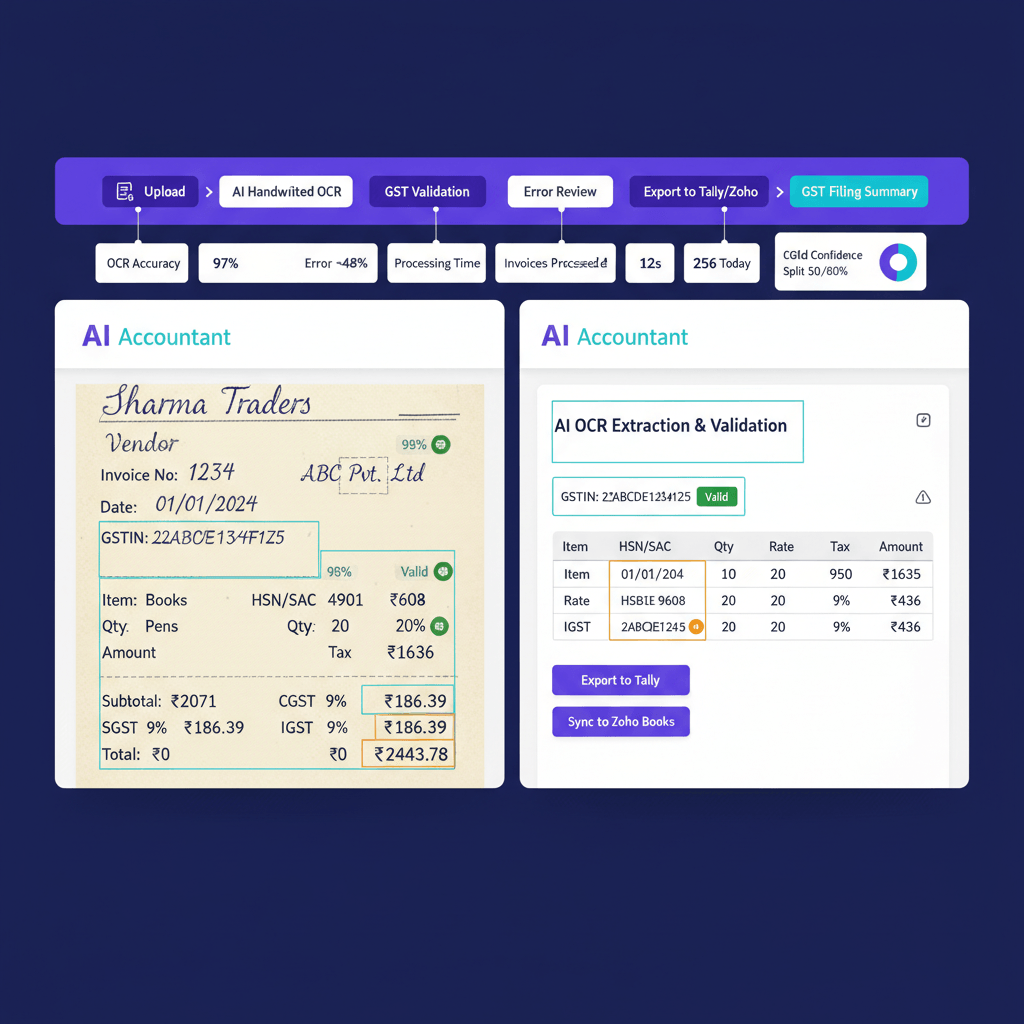
How AI in accounting helps accuracy and speed
- Flags duplicate invoices and payments
- Suggests codings for expenses based on past behavior
- Detects anomalies in cash flow or margins
- Predicts GST or TDS payable based on trends
- Drafts first pass reconciliations for review
- Summarises large bank statements quickly
With a CA in the loop, AI speeds work and reduces miss, with a dashboard, you see the impact fast. Learn more at AI Accountant.
A simple monthly close playbook
Week 1
- Lock the prior month bank feeds
- Collect missing invoices from vendors and teams
- Post sales and expense entries
- Reconcile gateways and bank accounts
Week 2
- Review ledgers and fix miscodings
- Compute GST and TDS and prepare challans
- Draft MIS and variance notes
Week 3
- Finalise returns and file
- Close MIS with P and L, balance sheet, and cash flow
- Update compliance status on the dashboard
Week 4
- Hold a short review call
- Log action items for next month
- Iterate on policies and tags if needed
Repeat, make it boring, consistency beats sprints. Start the rhythm at AI Accountant.
What a day inside the dashboard looks like
Open your dashboard with a coffee, you see current cash and runway, top five expense categories, yesterday’s bank movements, returns due this week, and tickets awaiting your approval.
You click on a vendor, see all invoices, TDS status, and payments, you share a contract, it gets filed and linked, you close the tab, you are done. That is the experience a good virtual accounting setup should deliver, see it at AI Accountant.
How to pick a virtual accounting partner
Ask practical questions, then run a short pilot, check fit, look for clarity and calm.
- Who signs off the monthly close and what is their qualification
- What is the maker checker process
- How do you handle GST and TDS reconciliations
- What is included and what is out of scope
- How does the dashboard pull bank data and protect credentials
- How are documents stored and who can see them
- What is the response time for tickets
- How will you help during a notice or a diligence
Explore an integrated option at AI Accountant.
Closing thoughts
Virtual accounting brings order to your finance stack, a CA led team runs your books and filings, a real time dashboard shows you what is going on, you get fewer surprises, faster decisions, and an easier audit. If this model fits your stage, start with a clean onboarding and a steady monthly close, keep processes simple, keep documents central, let the system do the heavy lifting, and let the CA guide the judgment. Begin at AI Accountant.
FAQ
What exactly does a CA led virtual accounting scope include each month, and what is out of scope?
The managed scope typically covers bookkeeping, ledger review, bank and gateway reconciliations, GST and TDS workflows, MIS, and routine compliance support, it excludes attest services like statutory audit or certifications, complex litigation, and custom ERP builds, AI Accountant delivers the monthly engine with a CA review, and brings in specialist CAs from its network when certifications or opinions are needed.
How quickly can we migrate from Tally to a cloud ledger without breaking our audit trail?
Most teams complete a clean migration in two to four weeks, the flow is export closing TB and ledgers from Tally, map COA and tax codes, import opening balances and open items, re tag GST details, then run a parallel month for validation, AI Accountant keeps a read only archive of Tally reports and working papers so your audit trail remains intact.
What does a standard monthly close calendar and maker checker process look like?
A common cadence is weekly postings and reconciliations, week two ledger scrutiny and tax computations, week three filings and MIS finalisation, and week four review, maker prepares, checker reviews, CA signs off, the dashboard at AI Accountant shows due dates, ownership, and status so nothing slips.
How do you handle GST complexities like place of supply, RCM, and HSN mapping for SaaS and D2C?
The CA team sets rule based profiles by customer and product, validates place of supply logic, applies RCM for import of services, and maintains an HSN catalog with rate checks, AI Accountant runs 2B to books reconciliations, flags mismatches, and chases missing vendor invoices to protect input tax credit.
How are TDS sections 194C, 194J, 194Q, and 206C tracked so we avoid interest and penalties?
Vendors are profiled with PAN, nature of service or goods, and thresholds, the system suggests the likely section, a CA validates edge cases, challans are computed monthly, returns filed quarterly, and defaults are monitored, AI Accountant’s dashboard highlights exceptions like PAN invalid or rate variances so action is taken before due dates.
Can you consolidate multiple entities, for example an Indian Pvt Ltd with a Delaware Inc subsidiary?
Yes, management consolidation can be produced monthly with currency translation and intercompany eliminations, statutory consolidation requires your auditor, AI Accountant prepares consolidation packs, schedules, and eliminations, then coordinates with your audit firm for sign off.
What assurances do we get on data security, data residency, and access controls?
Expect role based access, encryption in transit and at rest, detailed audit logs, and a documented retention policy, data is hosted with certified providers, access is time bound and least privilege, AI Accountant signs confidentiality and SLAs, and aligns with India’s DPDP Act requirements.
What SLAs apply for tickets, filings, and MIS delivery, and how are delays escalated?
Typical SLAs are next business day first response for tickets, seven to ten business days post month end for MIS, statutory filings as per calendar with internal cutoffs three to five days prior, AI Accountant escalates breaches to a supervising CA, and the dashboard shows red amber status so founders and finance heads can intervene early.
Can you integrate with our banks and payment gateways, and how do reconciliations work?
Where available, bank feeds and gateway exports are connected, otherwise scheduled uploads are used, reconciliations are run weekly with daily spot checks during peak periods, AI Accountant breaks out fees, chargebacks, and GST on fees so settlement ties out to the last rupee.
How does the dashboard calculate burn and runway, and can it reflect hiring or pricing plans?
Net burn is operating outflow minus inflow, averaged over recent months, runway is current cash divided by average net burn, the AI Accountant dashboard also models scenarios, for example a two headcount add in sales or a price change in a key SKU, so founders can see the impact on months of runway.
What support will we get during investor diligence or a tax notice, and what is chargeable?
The monthly package keeps books diligence ready, clean TB, schedules, and reconciliations, for intensive data rooms, QoE support, or representation on a notice, AI Accountant scopes a project with clear deliverables, many clients find that a tidy base cuts diligence timelines by weeks.
How is pricing structured, what drivers increase cost, and how do we evaluate ROI?
Pricing scales with transaction volume, entity count, payroll size, and complexity like multi state GST or international tax, ROI shows up as fewer penalties, faster closes, and founder time saved, AI Accountant provides a baseline model comparing in house costs against managed service outcomes.
Can we keep our current invoicing or billing tool, will you map it into the ledger?
Yes, most SaaS billing or D2C platforms export clean data, the CA team maps item codes, tax treatment, and customers to the ledger, AI Accountant automates the import and runs exception reports for failed or duplicate syncs.
How are payroll, Form 16, and old versus new regime handled for employees each month?
The team maintains employee declarations, computes TDS monthly, reconciles to books, and issues Form 16 at year end, AI Accountant’s advisory helps employees choose regimes with examples, while keeping company risks low on perquisites and reimbursements.
What exactly does AI automate and what remains with the CA, how do you avoid errors?
AI drafts codings, flags duplicates, spots anomalies, and predicts tax outflows, the CA validates edge cases, applies law, and signs off the close, AI Accountant enforces maker checker and keeps a full audit trail so every adjustment is traceable.