-01%201.svg)
Key takeaways
- ERP accounting integration makes finance lighter, cleaner, and faster, when ERP and books sync in real time.
- AI Accountant brings a CA led, dashboard driven, Virtual Accounting service that stitches ERP, GST, TDS, income tax, payroll TDS, and ROC into one managed flow.
- Clean masters, smart mappings, daily reconciliations, and clear controls are the backbone of a calm rollout.
- Bank and payment gateway reconciliations, GST e-invoicing and returns, and TDS automation deliver early ROI.
- Measure success with a small set of KPIs, then iterate with insights and alerts for compounding gains.
Introduction to ERP accounting integration
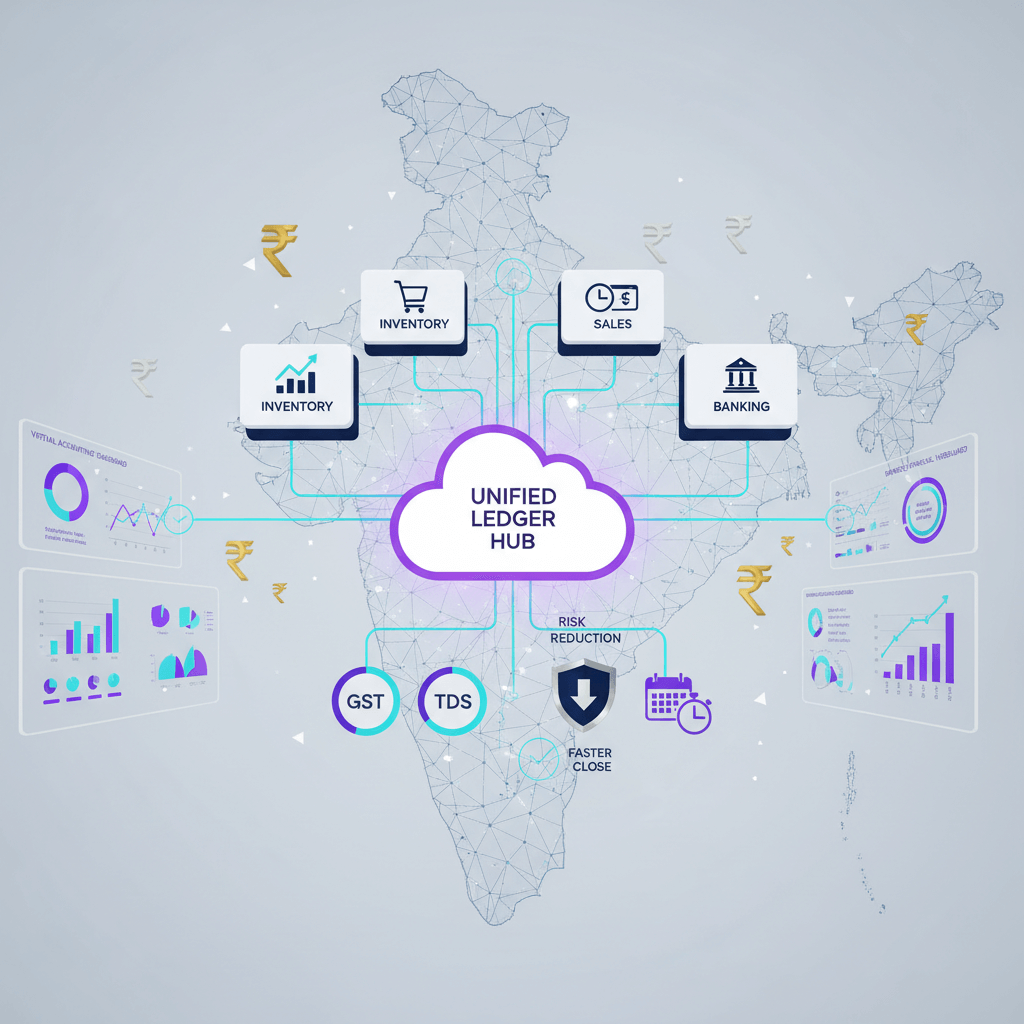
ERP accounting integration sounds heavy, it does not have to be. When your enterprise resource planning and your books talk to each other in real time, the work gets lighter, data moves without copy paste, errors drop, closes get faster, and teams trust one source of truth.
This is where AI Accountant helps. Our Virtual Accounting service is CA led and dashboard driven, we bring accounting, GST, TDS, income tax, payroll TDS, and ROC into one managed flow, then we stitch your ERP and systems into that flow so numbers stay clean and current.
Why ERP accounting integration matters
ERP accounting integration brings three things, it brings real time data sync, it reduces manual errors, and it speeds up your close.
- Real time data flow means sales, purchases, inventory, and cash move into your general ledger as they happen, your P and L and cash view stay fresh.
- Less manual entry means fewer mistakes from typos and missed uploads.
- A faster close means management reports land on time, you spot issues early, you decide with confidence.
Global studies back this, they show that ERP links reduce handoffs and batch work, they show that automated reconciliations save time and money, they show that finance teams shift from data prep to analysis, see these explainers for a clear view of how ERP integrations work and why they matter, seamless ERP to accounting integration, how ERP integrations work, finance ERP integration.
Virtual accounting service with a CA led model
AI Accountant delivers a Virtual Accounting service, it is a CA led managed service, not just a tool, you get a dedicated CA team for execution and advisory, and a central dashboard for visibility.
What the CA team does
- Bookkeeping every month across sales, purchases, expenses, and banks
- Ledger checks and clean up
- Year end closing and schedules
- Fixed asset and inventory records with reconciliations
- Accounts receivable and accounts payable follow up
- Bank and payment gateway reconciliations
- MIS and management reports
- Support with your statutory auditor
- GST registrations, monthly and annual returns, advisory and health checks
- TDS advisory and monthly challans and returns
- Income tax filings for individuals, firms, and companies
- Advance tax working
- International and expat tax guidance
- Payroll TDS and salary structure advisory
- ROC support for small companies and event based filings
What the dashboard shows
- Revenue, expenses, profit or loss, and balances
- Income and expense category breakdowns
- Cash flow trends, burn rate, and runway
- AI insights and alerts
- Recent transactions and bank statement analysis
- Document repository and version history
- Compliance dates and filing status
- Central chat with your CA team
You run your business inside your ERP, we run your books and compliance with our team and system, together, the two sides integrate into one smooth process.
Bookkeeping integration with ledgers and reconciliations
Bookkeeping is the base, for ERP accounting integration to work, masters and ledgers must map well.
- Chart of accounts mapping, we align ERP item groups, cost centers, and tax codes to your general ledger accounts, we keep names and codes clear and simple.
- Customer and vendor master sync, we link ERP parties to accounting parties one to one, we freeze rules for GSTIN, PAN, and address fields.
- Product and service mapping, we link SKUs and HSN or SAC to revenue and expense categories.
- Tax code mapping, we map CGST, SGST, IGST, and RCM flags to the right tax ledgers and input credits.
- Payment terms and due dates, we sync due dates and credit limits to keep receivables and payables clean.
- Bank and gateway mappings, we use unique codes for each bank account and each payment gateway channel for easy match.
We then automate feeds where possible, we connect ERP exports via API, webhook, SFTP, or scheduled pulls, we set validation checks at ingest, we build tie outs every day and every month, your subledgers and bank balances then talk to each other without fuss.
GST integration with einvoicing and GSTR flows
GST is a big lift, ERP accounting integration must handle it right or your credits and filings will break.
- Einvoicing data flow, sales invoices push from ERP to the Invoice Registration Portal, IRN and QR codes flow back and sit on the invoice inside ERP and the accounts, we store the payload and ack in the document vault.
- GSTR 1 data prep, B2B, B2C, CDN, export, and advance lines pull from the ERP, we validate GSTIN, place of supply, HSN, tax rate, RCM, and rounding, we flag gaps before filing.
- GSTR 3B alignment, we build a 3B view from books, we check it against GSTR 1 and GSTR 2B, we flag ITC mismatches by vendor and by invoice, we also check RCM on services and on import of services.
- GST health checks, we run monthly checks on nil rated, exempt, zero rated, and non GST supplies, we look for wrong states, wrong HSN, and wrong tax splits, we watch credit notes and advances for timing.
- E invoice and e way bill rules, when needed, we help set rules for e way bills and distance and vehicle details at dispatch.
This keeps your output tax, input tax, and returns in sync with operations, it also reduces post filing fixes and cash flow shocks from delayed credits.
TDS automation and income tax compliance integration
TDS is detail heavy, ERP accounting integration makes it simple.
- TDS section mapping, we map vendor types and nature of payment to TDS sections like 194C, 194J, 194H, or 194I, rates and thresholds apply in the ERP at the right time.
- PAN and TAN controls, we validate PAN for vendors and employees, we tag payments that need lower or nil deduction certificates.
- Monthly challans and returns, we build monthly ledgers that tie to 26Q, 24Q, 27Q, and property or rent forms like 26QB 26QC 26QD, we keep due dates on the dashboard, we show status and ack numbers.
- 26AS and AIS tie outs, we match books with data in 26AS where useful to spot missed credits or wrong TDS.
- Advance tax, we project profits, we look at seasonality, we plan advance tax dates and amounts.
- Tax audit prep, we prepare schedules for clauses and keep vouchers and ledgers ready for the tax auditor.
All of this keeps TDS and income tax clean, it also helps your year end go smooth.
Payroll TDS and employee tax structure
Payroll and TDS need care and privacy.
- Payroll TDS working, we apply slabs, rebates, and new or old regime choice, we adjust for investment proofs and perquisites, we spread TDS across months to avoid spikes.
- Salary structure, we advise on HRA, LTA, reimbursements, and allowances, we keep it simple and compliant.
- Form 16 support, we reconcile payroll and TDS returns so Form 16 prints right the first time.
This links HR and finance so net pay and taxes line up.
ROC compliance integration for small companies
For small companies, ROC work can feel far from the ERP, we still bring it into the same flow.
- Annual filings, we plan MGT 7 and AOC 4 work early, we align with your audited financials.
- MSME vendor returns, we tag vendors that meet MSME terms, we file on time.
- Director updates, we keep DIN, DIR 3 KYC, and changes ready with docs.
- Event based filings, we track share capital changes, allotments, board meetings and minutes, and AGMs.
- Registers and reports, we keep statutory registers and the board report in the document vault.
Your dashboard tracks due dates and status so there are no surprises.
Data architecture and API strategy for ERP accounting integration
A clean data design makes or breaks ERP accounting integration.
Key design choices
- Master data governance, one owner per master, clear field rules, version history.
- Chart of accounts design, simple, scalable, and aligned to reporting, use cost centers and dimensions instead of many accounts.
- Integration method, use API or webhook where possible for real time, API for accounting automation, use SFTP for batch safe loads, keep retry logic and idempotency keys to prevent duplicates.
- Staging and validation, land data in a staging area, run checks on required fields, tax codes, and numbers, reject bad rows with clear reasons.
- Transaction ids, use unique keys for invoices, orders, shipments, and payments so matching is easy.
- Reconciliation rules, define one to one, one to many, and many to many match logic across orders, invoices, gateway payouts, and bank statements.
- Automation and RPA, where API is not ready, use robotic process automation with strong controls and alerts.
This mirrors best practice guidance for finance ERP links and accounts payable integrations, they stress real time flows, clean masters, and clear validation gates to cut errors and speed up close, finance ERP integration, AP integration guide.
Bank reconciliation and payment gateway reconciliation
Cash is king, reconciliations keep it honest.
- Bank feeds, we ingest bank statements daily, we standardize formats, we auto match based on amount, date, and reference, automated reconciliation services India, we handle partials and fees.
- Payment gateways, we ingest gateway reports for each channel like card, wallet, UPI, netbanking, payment gateway integration for accounting, we account for MDR, GST on fees, chargebacks, and rolling reserves.
- Collections match, we match customer receipts to invoices, we use customer id, UTR, and narration keys.
- Payouts match, we match vendor payments to bills and debit notes, we tag TDS cuts and net offs.
- Exception handling, we flag unmatched items, we add notes, we chase fixes.
Finance ERP links work best when bank and gateway reconciliations are semi automated with clear exception queues, this is a core value driver in many studies on finance integration, finance ERP integration, ERP integration best practices.
Accounts payable automation with three way match
A strong accounts payable flow ties to inventory and general ledger.
- Vendor master checks, PAN, GSTIN, bank proofs, and MSME status verified.
- PO to GRN to bill three way match, quantity and rate checks prevent overbilling.
- RCM rules, we tag services or imports with reverse charge, we accrue the right tax.
- Approval matrix, bills route to the right approver, limits are clear and logged.
- Payment runs, batches plan out by due date and cash flow, TDS and early payment discounts apply.
This is the core engine behind many accounts payable integration guides, they show how matching and workflows reduce errors and fraud, AP integration guide.
Controls, audit trail, and security in ERP accounting integration
Trust grows when controls are clear and simple.
- Role based access, each user has the least access they need.
- Maker checker flows, one person posts, another person approves.
- Audit trail, every change has a who, what, and when, you can see it on the dashboard.
- Document control, vouchers, bills, contracts, and filings sit in one place with versions and tags.
- Data privacy, sensitive data like PAN, salary, and bank account numbers stay masked where they should.
- Backup and retention, data backups follow a set plan, retention follows law and policy.
- Alerts, the system flags unusual items like round sum entries, duplicate vendors, or back dated edits.
These patterns are common in mature finance ERP setups, they reduce risk and make audits smooth, finance ERP integration.
Implementation roadmap for ERP accounting integration
A calm rollout beats a rushed one, here is a simple plan that works.
- Discovery, map current processes, gather master data, list systems, owners, and pain points, define success metrics.
- Design, lock the chart of accounts, freeze mapping rules, plan API and data flows, draft reconciliation logic and exception handling.
- Build, configure the ERP and accounting system, set up the dashboard, build integrations, prepare test data packs.
- Test, run unit tests, run end to end tests with real edge cases, validate tax, TDS, and GST totals, stress test volume loads.
- Train, teach users how to post, approve, and reconcile, share quick guides and short videos.
- Cutover, pick a go live date, freeze changes where needed, migrate opening balances and open items with checks.
- Stabilize, watch daily dashboards, clear exceptions, hold a daily stand up in the first two weeks.
- Review, after one month, review KPIs, fix gaps, plan the next wave.
Playbooks from finance ERP integration leaders echo this, they stress small sprints, testing, and change management to lock in value, ERP rollout guide, finance ERP integration.
KPIs and metrics for ERP accounting integration success
You cannot improve what you do not measure, track a small set of finance KPIs.
Operational KPIs
- Close cycle time in days
- Percent of auto matched bank lines
- Number of unreconciled items over seven days
- Invoice to payment cycle time
- Accounts receivable days and accounts payable days
- Percent of invoices with correct tax codes
Compliance KPIs
- GST mismatch rate versus 2B by count and by value
- TDS exception rate and correction time
- On time filing rate for GST, TDS, income tax, and ROC
- Number of notices received and resolved time
Data quality KPIs
- Duplicate vendor or customer rate
- Master data rejection rate at validation
- Exception queue aging
Value KPIs
- Hours saved per month in reconciliations
- Reduction in manual journals
- Reduction in write offs and penalties
Finance teams that track these see faster gains from ERP links according to integration insights from trusted sources, finance ERP integration.
Tools for ERP accounting integration and automation
When you choose tools, think about fit, scale, and support, here are options to consider for accounting, automation, and ERP links.
- AI Accountant https://aiaccountant.com Virtual Accounting with a CA led team, real time dashboard, and managed GST and TDS, strong focus on bookkeeping, reconciliations, and compliance for Indian businesses.
- QuickBooks Online, widely used for small and mid sized firms, good for invoicing and bank feeds, many API connectors.
- Xero, cloud native accounting with strong bank rules and multi currency, rich app marketplace.
- Zoho Books, good value, deep links with Zoho CRM and Zoho Inventory, GST friendly features.
- Tally Prime, popular in India, desktop first with sync options, strong inventory and vouchers.
- SAP Business One, ERP suite for mid market, deep inventory, production, and finance modules.
- Oracle NetSuite, cloud ERP for scale, strong revenue recognition and multi entity features.
- Microsoft Dynamics 365 Finance and Business Central, ERP options with Office and Power Platform links.
If you already use any of these, AI Accountant can integrate our service and dashboard into your stack, we meet you where you are and build clean bridges.
Worked example of ERP accounting integration for a startup
Company profile
- A D2C startup, sells on its website and a marketplace.
- Uses Shopify for store, uses Razorpay and a marketplace gateway for payments.
- Uses a light ERP for inventory and purchase orders.
- Wants clean books, GST right every month, and a fast month end.
Step by step flow
- Orders and invoices, orders from Shopify create invoices in the ERP, einvoicing rules apply for B2B, IRN and QR come back and sit on each invoice record, the accounts pull the same into revenue ledgers with the correct tax splits.
- Collections, Razorpay sends payouts to bank, gateway reports land daily, the system matches order id and payment reference, MDR and GST on fees post to expense and input credit.
- Returns and credits, returns create credit notes, GST reflects in GSTR 1 and in the books, inventory updates flow back.
- Purchases, purchase orders go to vendors, goods come in, goods receipt notes match to bills, three way match flags rate or quantity gaps.
- GST, GSTR 1 compiles from invoices and credit notes, GSTR 3B builds from books, 2B matches show which credits are safe to claim, RCM posts where needed.
- TDS, vendor bills get TDS tags based on nature of payment, TDS is cut on payment or credit as per rule, monthly challans and returns file on time.
- Bank and gateway recon, bank statements land daily, the system auto matches, unmatched lines go to a queue.
- MIS and cash, dashboard shows sales, returns, gross margin, burn, and runway, founder sees trends and alerts.
- Year end, schedules for fixed assets, inventory, receivables aging, and payables aging sit ready, statutory auditor gets what they need on time.
AI Accountant runs the engine behind the scenes, the founder sees the numbers, the status, and the risks on one screen, the CA team handles the work and the judgment calls.
Common pitfalls in ERP accounting integration to avoid
- Messy masters, if GSTIN, PAN, and addresses are wrong, returns will break.
- Over complex chart of accounts, too many accounts slow posting and reporting.
- No staging checks, bad data flows straight in and takes hours to fix later.
- Weak id logic, without unique ids, you get duplicate invoices and payment mismatches.
- All manual reconciliations, spreadsheets do not scale.
- Customizations without design, one off scripts pile up and break on updates.
- No change control, people make quick changes in live and cause drift.
Guides on ERP links call these out, they stress design, validation, and change control as keys to success, ERP to accounting guide, how ERP integrations work, finance ERP integration.
How AI insights and alerts help your finance team
A smart dashboard saves time, AI Accountant adds insights on top of live data.
- Variance alerts, it flags unusual jumps in spend or drops in margin.
- Reconciliation nudges, it spots patterns in unmatched lines and suggests matches.
- Tax risk hints, it flags vendors with repeated 2B mismatches.
- Cash early warning, it predicts cash dips based on burn and inflow trends.
- Close checklist, it guides month end tasks and tracks who did what.
This turns raw data into simple tasks, your team gets more done with less stress.
Collaboration and communication with your CA team
People and process matter as much as tech.
- One channel, use the dashboard chat to keep audit trails clean.
- Clear SLAs, set response times and service levels for routine and urgent work.
- Shared calendars, keep a shared calendar for GST, TDS, advance tax, and ROC dates.
- Role clarity, decide who raises POs, who approves bills, who uploads bank proofs, who posts journals.
- Weekly pulse, a short weekly call keeps issues small.
Cost and ROI of ERP accounting integration
Think of cost and benefit over one year.
Costs
- Setup and configuration of ERP and accounting mappings
- API or integration build time and fees
- Change management and user training
- Ongoing support and monitoring
Benefits
- Time saved in reconciliations and month end
- Fewer errors and penalties on GST and TDS
- Better cash control and vendor discounts
- Faster reporting and better decisions
Most teams see payback inside a few months once reconciliations and close times drop, industry notes often cite this return when data flows turn real time and manual work fades, finance ERP integration.
A simple checklist for go live readiness
Use this quick list before you go live.
- Chart of accounts reviewed and signed off
- Master data cleaned for customers, vendors, items, GSTIN, PAN
- Tax codes and RCM rules tested
- API or data feeds tested with pass and fail cases
- Einvoice and GSTR 1 test runs passed
- Bank and gateway reconciliation rules working
- Opening balances and open items migrated and reconciled
- User roles and approvals set
- Close checklist loaded into the dashboard
- Backups and rollback plan ready
If all boxes are ticked, you are ready.
When to choose AI Accountant Virtual Accounting
Choose AI Accountant when you want both brains and a system.
- You want a CA led team to run the books and compliance, not just a tool.
- You want one dashboard to see P and L, cash, documents, and filings.
- You want ERP accounting integration but do not want to manage the build alone.
- You want clean reconciliations, clear alerts, and steady advice.
We fit freelancers, startups, and growth stage companies, we work with founders and finance teams, we replace scattered emails and sheets with a steady managed service.
Conclusion on ERP accounting integration
ERP accounting integration does not have to be hard, with clean masters, clear mappings, simple controls, and a steady rollout, it is calm and powerful, your numbers stay fresh, your filings stay on time, your team spends more time on insight and less on entry.
AI Accountant brings a CA led virtual accounting service and a live dashboard to make this real, we meet your ERP where it is, we build the bridge, we run the engine, you see the truth in your numbers every day.
If you want to explore a fit, start with a short discovery, we can map your current flow and show a clear plan.
FAQ
How do I quantify ROI from ERP accounting integration and Virtual Accounting in an Indian context?
Start with baseline metrics, close cycle time, auto match percent on bank lines, GST mismatch rate versus 2B, and time spent on reconciliations, after integration with an AI enabled Virtual Accounting service like AI Accountant, most teams see 30 to 60 percent faster close, bank auto match rates above 85 percent, and a sharp drop in GST and TDS exceptions, convert hours saved into cost, add avoided penalties, then factor improved cash flow from faster collections and vendor discounts to arrive at payback, which often lands inside one to three months.
What are the non negotiable master data fields I should freeze before integration go live?
For Indian businesses, freeze customer and vendor legal names, GSTIN with state code validation, PAN, place of supply, and address, for items, freeze SKU, HSN or SAC, tax rates, and unit of measure, for banks and gateways, freeze unique account or channel codes, AI Accountant enforces these through staging validations so bad rows are rejected with clear reasons rather than polluting your books.
How does AI Accountant handle e-invoicing and e-way bill within ERP to books flow?
Sales invoices push from ERP to IRP, IRN and QR data flows back and is stored with the invoice, the same data posts to the ledger with correct CGST, SGST, IGST splits, where e-way bill is applicable, rules at dispatch ensure distance and vehicle details are captured, our reconciliations tie IRP ack payloads to ledger entries, reducing post filing fixes.
Can we automate TDS at source based on section and threshold, without over cutting or under cutting?
Yes, we map vendor type and nature of payment to sections like 194C, 194J, 194H, or 194I, we apply thresholds and rates in ERP at the right event, payment or credit, the system tags lower or nil deduction certificates where present, AI Accountant then ties monthly ledgers to 24Q, 26Q, and other statements, with challan and ack tracking on the dashboard.
How do you reconcile payment gateways at scale across UPI, cards, wallets, and marketplaces?
We ingest gateway reports by channel daily, normalize formats, and post MDR, GST on fees, chargebacks, and rolling reserves correctly, matching uses order id, payment reference, amount, and date, partials and nets are supported, exceptions queue with notes for finance or ops to resolve, our clients commonly reach above 95 percent auto match within the first month.
What controls and audit trails will our statutory auditor expect after integration?
Auditors look for maker checker controls, role based access, immutable logs on who did what and when, and versioned document storage, AI Accountant provides an end to end trail for invoices, journals, reconciliations, GST and TDS filings, with alerts for round sum entries, duplicate masters, or back dated edits, which reduces sampling risk and audit queries.
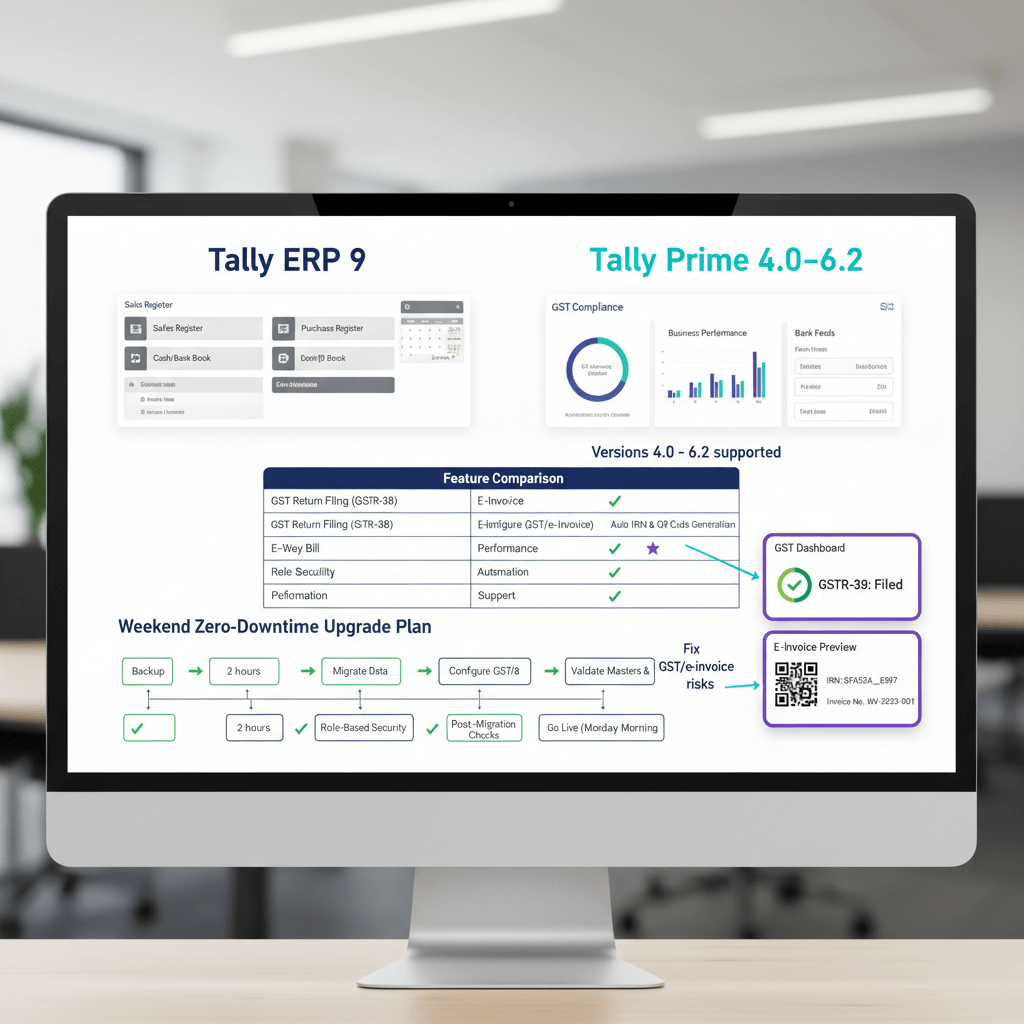
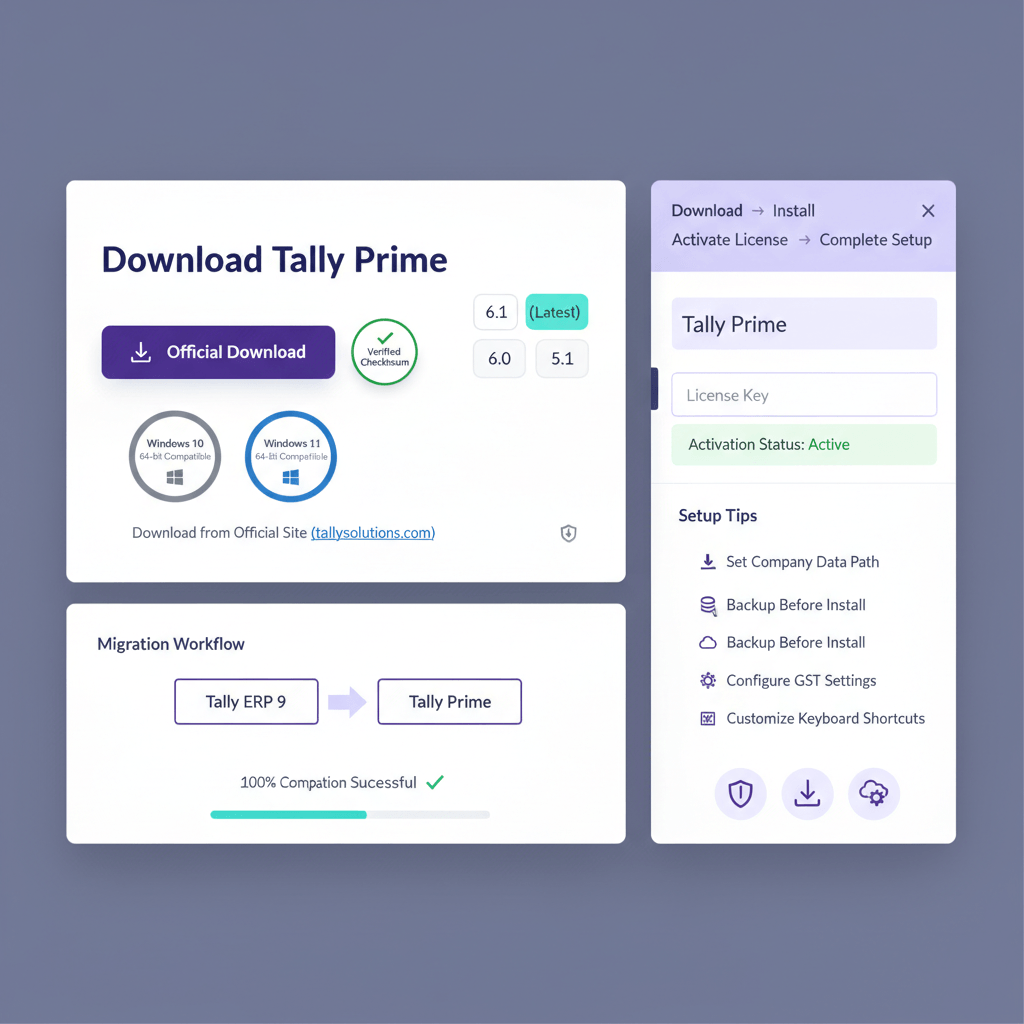
We already use Tally or Zoho Books, can you still integrate with our ERP and manage filings?
Yes, AI Accountant meets you where you are, we connect via API, webhook, SFTP, or RPA if needed, we keep idempotency keys and retry logic to prevent duplicates, the CA team then manages bookkeeping, GST, TDS, income tax, payroll TDS, and ROC inside one dashboard, while your ERP continues to run operations.
How do you ensure GST 3B ties to GSTR 1 and 2B, and prevent ITC losses?
We build 3B from books, then reconcile it to 1 and to 2B vendor wise and invoice wise, mismatches are flagged early with reasons, missing invoices, wrong GSTIN, wrong state, wrong HSN, or rounding variances, we also reconcile RCM on services and imports, this discipline protects credits and avoids cash flow shocks from denied ITC.
What training and change management effort should we plan for finance and ops teams?
Plan short role based sessions, posting, approving, reconciling, and closing, with quick guides and two minute videos, AI Accountant runs a calm cutover, freeze windows where needed, daily stand ups for two weeks, and a one month review against KPIs, this limits churn and locks in new habits.
How do you handle data security, privacy, and regulatory retention for finance data?
We operate least privilege access, mask PAN, salary, and bank numbers where appropriate, and keep backups on a fixed schedule, retention policies follow law and your policy, every document and ledger change carries a time stamped trail, this satisfies both internal risk teams and external auditors.
What KPIs should my CFO track weekly to prove the integration is working?
Track close cycle time, percent of auto matched bank and gateway lines, unreconciled items over seven days, GST mismatch rate versus 2B, TDS exception rate and correction time, and invoice to payment cycle time, AI Accountant displays these on one screen, with AI insights that nudge users to clear exceptions.
Can AI actually reduce reconciliation effort, or is it just rules under a new label?
Rules do the heavy lifting for deterministic matches, AI adds value at the edges, pattern based suggestions for partials and nets, anomaly detection on fees, and vendor tax risk scoring, AI Accountant blends rules with AI, so your team resolves exceptions faster, with fewer back and forth loops.