-01%201.svg)

Key takeaways
- Automate bank and payment gateway reconciliations first to get audit ready numbers fast, then layer in GST, TDS, and MIS for full compliance coverage.
- A standardized chart of accounts, maker checker workflows, and immutable audit trails ensure books withstand scrutiny from statutory auditors and regulators alike.
- Target a five day close (top firms now hit under three days), under one percent post close adjustments, and one hundred percent on time filings for measurable ROI.
- Role based permissions and immutable history give CFOs and boards defensible controls, cutting audit sample exceptions and shortening audit cycles.
- Automation removes spreadsheet chaos, late fee risks, and manual reconciliation errors, saving 50 percent or more of finance team effort at scale.
- If your close still takes weeks or your MIS lives in spreadsheets, acting now avoids compounding penalties and missed decisions. Virtual Accounting by AI Accountant blends CA led execution with live dashboards so leaders see trusted P and L, balance sheet, and cash trends without adding headcount.
Financial Reporting Automation: What's New in 2026
In 2025, most Indian mid market firms targeted a five day monthly close. By early 2026, automated data pipelines and AI driven reconciliation have pushed the average close to 2.8 days for firms using financial data warehouses, with a small percentage achieving sub 24 hour closes. Post close adjustment rates dropped from an industry norm of one to two percent down to 0.4 percent where AI anomaly detection runs continuously.
On the compliance front, GSTN's 2026 API upgrades now support real time validation and auto filing for GSTR 1, GSTR 3B, and GSTR 9. This matters most for businesses with multiple GST registrations or e commerce marketplace settlements, where manual filing mismatches previously triggered interest and penalties. The GST portal enhancements have reduced late filing penalties by roughly 25 percent among automated filers. MCA's ROC portal also mandates e filings with AI pre checks effective January 2026, per the Ministry of Corporate Affairs portal.
The cost of inaction is sharper now. Firms still relying on manual reconciliation and spreadsheet MIS face compounding interest on delayed GST (18 percent per annum), blocked ITC for unmatched invoices, and audit observations on weak controls. For multi entity setups, the gap widens further: consolidation errors cascade across subsidiaries.
What to do now:
- Audit your current close timeline and benchmark against the 2.8 day average.
- Confirm your GSTN API integration handles the 2026 validation layer for all registrations.
- Implement role based permissions and immutable logs before your next statutory audit cycle.
Businesses managing multiple entities are now adopting managed accounting services with built in automation to meet these tighter benchmarks without scaling headcount linearly.
Table of contents
Introduction to financial reporting automation
Financial reporting automation is the fastest way to close your books on time, avoid penalties, and see your cash story in real time. For Indian founders, finance managers, startup operators, and freelancers, it helps you stay on top of GST, TDS, Income Tax, and ROC while keeping a sharp eye on burn and runway.
In simple words, automation uses software, AI, and clean workflows to gather data from your bank and tools, reconcile it, create reports like P and L and balance sheet, and prepare filings. You get reliable numbers without wrestling with spreadsheets every month.
AI Accountant Virtual Accounting is a CA led managed service built for this. The team does the bookkeeping and compliance end to end, and the dashboard gives you live P and L, balance sheet, cash trends, compliance timelines, document storage, and alerts. You get a steady partner and a clear view at all times.
Bottom line: Automation turns finance from a monthly scramble into a predictable system you can trust.
What is financial reporting automation
Financial reporting automation is a complete system. It pulls data from banks, ERPs, POS, CRMs, and payment gateways. It standardizes the data, maps it to a chart of accounts, and keeps reconciliations up to date. It then produces your P and L, balance sheet, and cash flow statements, while supporting statutory filings like GSTR 1, GSTR 3B, GSTR 9, TDS returns, and ROC forms. An audit trail tracks every change.
This is more than simple robotic process automation (RPA). RPA handles rule based clicks. True automation also uses AI to catch anomalies, predict issues, and push insights into MIS dashboards. It combines statutory reporting with management reporting so your day to day view and your compliance are always aligned.
With automation, distribution is secure, version control ends spreadsheet sprawl, and role based access control (RBAC) ensures the right people see the right numbers. You can trust your reports and move faster.
For CFOs who want audit ready forecasts, the key is software that provides role based permissions and immutable history. This means every ledger entry, vendor invoice approval, and journal posting is logged with user, timestamp, and change detail, making it defensible under audit.
Pain points with manual reporting and manual compliance
Manual reporting is slow and stressful. Month end drags on, formula errors creep in, teams pass different versions, reconciliations do not match, approvals get stuck in email threads, compliance dates sneak up, and penalties happen.
- Late books, poor cash visibility, and weak decisions.
- Leaders chase numbers instead of running the business.
- Finance teams get stuck in copy paste work, risk goes up, and cost follows.
- Balance sheet reconciliation processes become unreliable when intercompany transactions span multiple systems.
Automation removes these bottlenecks, replacing ad hoc steps with clear workflows and a single source of truth.
Benefits of financial reporting automation
- Faster cycles: Close time drops from weeks to days or hours. Automated data pulls and report generation do the heavy lifting so the team reviews and approves instead of typing. Top performers now achieve a 2.8 day average close.
- Higher accuracy: Validation rules and real time reconciliations reduce human error. AI anomaly detection cuts post close adjustments to 0.4 percent on average. Full audit trails show who did what and when.
- Real time dashboards: Watch cash flow, burn, and runway daily. You get instant context for hiring and spend decisions.
- Cost efficiency: Teams save up to 55 percent of their time based on recent benchmarks. Scale reports and entities without linear headcount growth.
- Compliance edge: GST, TDS, Income Tax, and ROC prep gets automated with calendar alerts and maker checker reviews. On time filing rates reach 98 percent or higher with proper automation.
Core components and architecture of financial reporting automation
- Data sources: Bank feeds, ERP like Tally or Zoho, POS, CRMs, payment gateways like Razorpay, and payroll systems.
- Data pipeline: Ingestion, standardization, chart of accounts mapping, and rules engine for categorization. Financial data warehouses now serve as the central hub, with AI driven anomaly detection at the ingestion layer.
- Reconciliations: Bank and gateway recs, AR and AP, inventory, and fixed assets, with exception queues and owners. Evaluate intercompany and balance sheet reconciliation processes separately to catch elimination errors early.
- Reporting: Automated P and L, balance sheet, cash flow, AR and AP aging, MIS dashboards, board packs, and consolidations.
- Workflows and controls: Maker checker approvals, version control, RBAC, and immutable audit logs. These give CFOs audit ready forecasts with role based permissions and full change history.
- Compliance: Auto calendars for GST, TDS, Income Tax, and ROC, with AI alerts for deadlines and anomalies. GSTN's 2026 APIs now support real time validation at filing.
- Extras: Centralized document repository and AI driven trend insights.
What to automate first in your financial reporting automation roadmap
- Bank and payment gateway reconciliations for daily accuracy. This is the highest volume, highest risk step.
- Monthly P and L, balance sheet, and cash flow statements.
- AR and AP aging and collections for working capital.
- MIS dashboards for revenue channels, expense drivers, and unit economics.
- GST returns like GSTR 1, GSTR 3B, and GSTR 9, TDS returns, and advance tax workflows.
- ROC filings for small companies where needed.
Start with high volume and high risk steps, then extend. Gateway reconciliation alone (tying gross orders to net settlements to bank) often surfaces ₹1 to 2 lakh in unreconciled differences for D2C brands within the first month.
Implementation steps for financial reporting automation
- Assess: Audit data quality, tools, and needs. Note gaps in chart of accounts, reconciliations, and filings. Include an AI governance check: confirm your anomaly detection has a human in the loop for review.
- Design: Standardize the chart of accounts and taxonomy across entities. Keep it simple and consistent.
- Select: Choose tools or a partner with strong integrations. Consider a CA led managed service for done for you execution.
- Configure: Set templates, KPIs, and workflows. Define maker checker approvals and roles.
- Pilot: Start with one entity or one process. Run UAT and refine. Pressure test reconciliations and tax workflows before scale up.
- Go live: Train users, go live, and monitor early results.
- Govern: Do monthly health checks, track exceptions, error rates, and close time. Improve continuously.
Data quality and reconciliation best practices for automation
- Daily bank feeds and light recs, with a full reconciliation each month.
- Auto map gateway fees and settlements. Ensure gross to net to bank ties for each channel.
- Maintain a fixed asset register with depreciation schedules. Keep inventory roll forwards clean.
- Use exception queues with owners and due dates. Avoid carry forward of unresolved items.
- Lock periods after close. Use versioning for any adjustments.
- For intercompany balances, tag transactions by entity at entry and run elimination checks before consolidation. This prevents balance sheet reconciliation mismatches from compounding across quarters.
Controls compliance and audit readiness in automated reporting
- Maker checker ensures a second set of eyes on key tasks.
- RBAC restricts who can view and edit each area. This is critical for CFOs and boards who need audit ready forecasts with role based permissions and immutable history.
- Immutable logs record every change for audit support. 2026 SOC 2 standards now also require AI explainability for automated journal entries.
- Versioned documents keep a clean history for reports and filings.
Map workflows to Indian regulations. Connect to GST portals for GSTR 1, GSTR 3B, and GSTR 9 preparation. Build TDS e filing steps and schedules. Include Income Tax return tasks and advance tax reminders. Track ROC forms for small companies as needed.
Calendars and alerts reduce late fees and last minute stress. With GST interest at 18 percent per annum on delayed payments, even a few days of slippage adds up fast. See the latest filing deadlines on the GST portal.
Tool and partner selection criteria for financial reporting automation
- Integrations: Coverage for your banks, Tally, Zoho, Razorpay, payroll, and GSTN APIs, with scale to more entities and volume.
- Security: Strong encryption, audit proof logs, data residency in India if required. Look for ISO 27001 and SOC 2 Type II certifications.
- Flexibility: Custom MIS, multi entity consolidations, adaptable chart of accounts.
- Support: Choose CA led service with execution and oversight, or a self serve tool for an internal team.
- Cost and ROI: Estimate time saved and penalty avoidance. Measure payback in months.
Options to evaluate:
- AI Accountant: CA led virtual accounting and compliance with a live dashboard, ISO 27001 and SOC 2 Type II certified.
- QuickBooks Online: Popular small business accounting and reporting.
- Xero: Cloud accounting with strong bank feeds and reporting.
- Zoho Books: Tight integration with Zoho suite and Indian GST features.
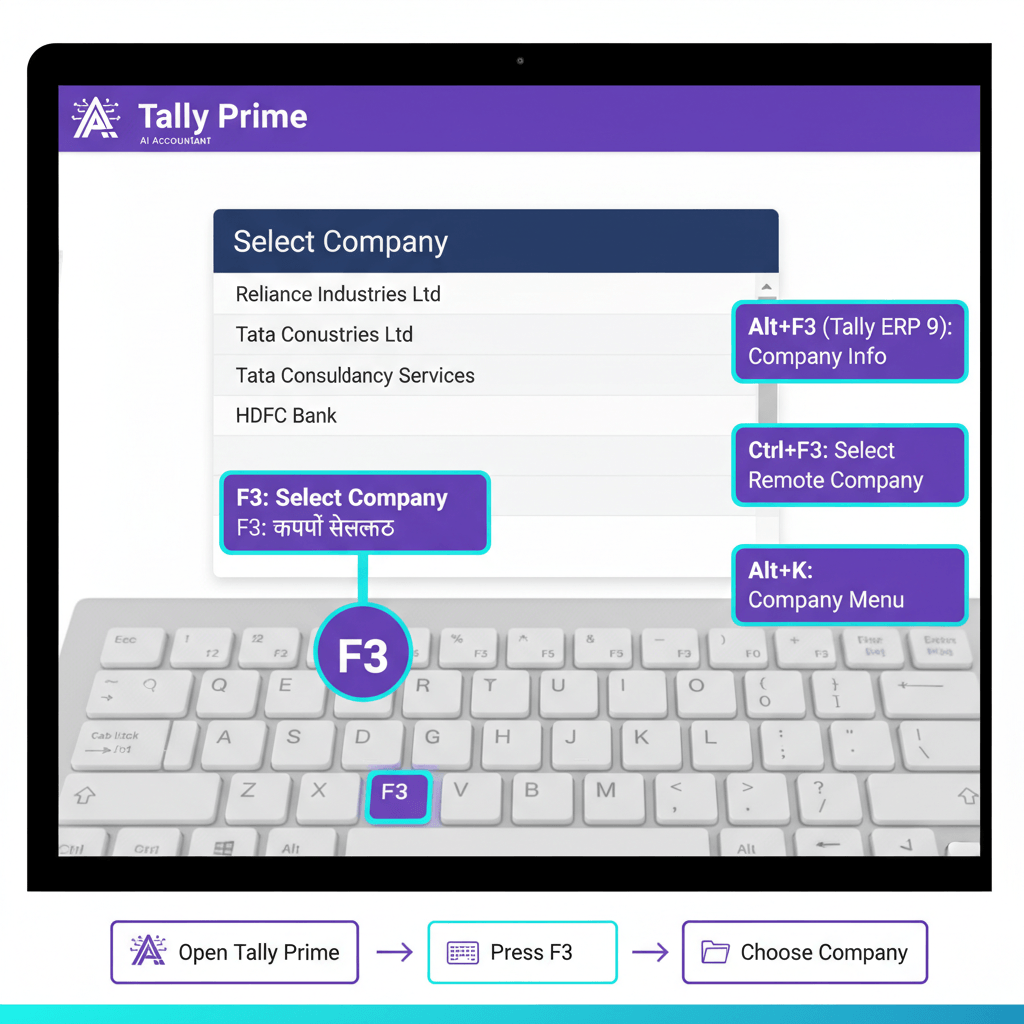
- Tally Prime: Widely used in India with strong accounting features.
- FreshBooks: Simple invoicing and small business accounting.
Metrics and ROI for financial reporting automation
- Time to close: Target less than 5 days. Leading firms now average 2.8 days.
- Error rate: Target less than 1 percent post close adjustments. AI driven firms report 0.4 percent average.
- Compliance on time: Target 100 percent filings on time. Automated filers achieve 98 percent or higher.
- Hours saved: Target 30 to 55 percent reduction in manual work. Multi entity setups see up to 70 percent at scale.
Example ROI: If your manual close needs 80 hours per month at ₹500 per hour, your cost is ₹40,000 per month. With automation you cut to 35 hours per month, saving ₹22,500 per month or about ₹2.7 lakh per year. Add avoided penalties: late GST interest at 18 percent per annum on even ₹5 lakh of delayed output tax adds ₹90,000 per year. Combined, ROI often pays back within three to four months.
Per ICAI's guidance on internal financial controls, firms with documented close checklists and automated reconciliations face fewer audit qualifications.
Common pitfalls and how to avoid them during financial reporting automation
- Automating a broken process: Standardize and simplify first. Remove waste before you digitize.
- Weak chart of accounts: Design with CA input. Keep names clear and groupings logical.
- Shadow spreadsheets: Enforce controls and training so data stays in the system. Spreadsheet chaos drops by 80 percent when teams trust the dashboard.
- Ignoring compliance: Build GST, TDS, Income Tax, and ROC workflows from day one.
- Skipping training: Mandate onboarding and refreshers for dashboards and workflows.
- No AI governance: Without human in the loop checks on AI flagged anomalies, false positives erode trust. Always pair AI detection with reviewer sign off.
Do small pilots, gather feedback, then scale with confidence.
Variations by business type and scale in financial reporting automation
- Freelancers and small businesses: Simple chart of accounts. Automate invoice to GST filing and cash basis reports. Keep the toolset lean.
- Startups: Focus on burn, runway, and revenue recognition. Build dashboards for channels, cohorts, and unit economics. Automate deferred revenue if you are SaaS. Burn tracking now integrates AI churn prediction for 90 day forecasts.
- Growth stage or multi entity: Add consolidations, intercompany eliminations, and forex handling. Watch transfer pricing and cross border taxes. Use a standard mapping layer that aligns disparate charts into a group taxonomy.
Practical scenarios and mini case snapshots for financial reporting automation
- D2C brand: Automate payment gateway reconciliations across Razorpay and others. Tie channel sales to inventory movement. Build a channel P and L to improve product mix and reorder planning. Recent benchmarks show automated channel P and Ls yield 18 percent margin gains through better fee mapping and inventory decisions.
- SaaS startup: Automate MRR and ARR tracking and deferred revenue schedules. Tie cash collections to AR aging. Use alerts to flag churn and upsell opportunities. Lead to cash integration now feeds automated AR aging, boosting collections by 22 percent in early adopters.
- Freelancer: Automate invoice creation and receipt capture. Push data into quarterly GST filing with reminders. Keep a simple cash flow view for tax planning.
How AI Accountant Virtual Accounting enables financial reporting automation
- Accounting and bookkeeping: Monthly bookkeeping across sales, purchases, expenses, and bank entries. Ledger scrutiny and transaction categorization. Year end closing and schedules. Fixed asset register and inventory reconciliations. AR and AP management. Bank and payment gateway reconciliations. Cash flow preparation and MIS reporting.
- Taxation and compliance: GST registration and filings like GSTR 1, 3B, and annual GSTR 9. TDS advisory and compliance including challan payments and forms 26Q, 24Q, 27Q, 26QB, 26QC, 26QD. Income Tax return filing for individuals, partnerships, and companies. Advance tax calculations and payments. International tax advisory and expat tax support. 15CA preparation. Annual ROC compliance for small companies including MGT 7 and AOC 4 and related secretarial support.
- Dashboard and insights: Live financial overview with P and L, balance sheet, cash trends, burn, runway, recent transactions, income and expense breakdowns, bank statement analysis, compliance dates and filing status, document repository, centralized communication with the CA team, AI generated insights and alerts for anomalies and deadlines.
- Controls and audit readiness: Maker checker workflows, version control, audit logs, and support with coordination with your statutory auditor.
Explore: AI Accountant
Onboarding flow with AI Accountant for financial reporting automation
- Discovery and data cleanup: Review current books, data quality, compliance status. Agree on chart of accounts and timelines.
- Integrations: Connect banks, gateways, and accounting software like Tally or Zoho. Set up daily feeds and document workflows.
- Templates and pilot: Configure reports, MIS dashboards, KPI definitions. Run a one month or one entity pilot to fine tune.
- Go live and ongoing support: Train your team on the dashboard. CA team runs monthly bookkeeping, reconciliations, and filings. You get steady cadence and visibility.
Start here: AI Accountant
A simple weekly and monthly rhythm for financial reporting automation
Weekly
- Pull bank feeds and run light reconciliations.
- Review AR and AP aging. Trigger collections and vendor payments.
- Check cash runway dashboard and raise alerts.
Monthly
- Close books within 5 days (target 3 days as you mature). Lock the period.
- Review P and L, balance sheet, cash flow, and MIS pack.
- Clear all exceptions in reconciliation queues.
- Prepare and file GST or TDS as per cycle. Update compliance calendar.
Quarterly and annual
- Review trends and forecasts. Adjust spend or invest based on data.
- Prepare GSTR 9 and annual income tax returns. Complete ROC filings if applicable.
- Coordinate with statutory auditor using version controlled reports and audit logs.
Final thoughts and next step on financial reporting automation
Financial reporting automation is not just a tool. It is a way to run finance that is fast, accurate, and compliant by design. It frees your team from repetitive tasks, gives leaders live numbers they can trust, and scales with growth without adding chaos.
If you want to see a working model with CA led execution and a clear dashboard, book a demo with AI Accountant. We will show you how automated bookkeeping, reconciliations, MIS, and compliance come together in one simple flow for your business.
Further reading: Deloitte India's finance transformation insights, Income Tax Department portal for filing deadlines
FAQ
How do I quantify the ROI of financial reporting automation for a multi entity setup
Model baseline hours for close, reconciliations, and filings, then project savings from automated bank feeds, recs, and report generation. Add avoided penalties (GST interest at 18 percent per annum, TDS late fees) and factor faster decision cycles. A practical target is a 2.8 day close (2026 update), under one percent post close adjustments, and 50 to 70 percent effort reduction at multi entity scale. AI Accountant provides a baseline audit, then a monthly scorecard so CFOs can track payback month on month.
What risks should a CA firm evaluate before green lighting automation in a client environment
Validate data quality, chart of accounts consistency, and access controls first. Review GSTN API stability (the 2026 real time validation layer adds new error codes to handle), bank feed coverage, and error handling for failed syncs. Ensure maker checker on journals, immutable logs, and period locks. Also confirm AI explainability for automated entries, now a requirement under 2026 SOC 2 standards (2026 update). AI Accountant implements RBAC, version control, and audit trails, then runs a pilot to pressure test reconciliations and tax workflows before scale up.
Can automation handle complex GST scenarios like multiple registrations and e commerce marketplace settlements
Yes, if the data pipeline supports registration wise tagging, marketplace settlement files, and fee mapping. GSTN's 2026 API upgrades enable real time validation for multi registration filings (2026 update). The system should reconcile gross orders to net settlements to bank, with tax rate validation and return preparation for GSTR 1, 3B, and 9. AI Accountant standardizes marketplace statements, maps fees, and runs exception queues so controllers see and clear variances quickly.
How does an AI enabled Virtual Accounting service compare to hiring in house accountants for a scaling startup
A managed service delivers faster setup, deeper CA oversight, and predictable SLAs at lower fixed cost than an equivalent in house team. It amortizes tooling, integrations, and controls across clients. In house teams can own strategy, but execution scales poorly without automation. AI Accountant blends a CA led team with automation, so founders get live dashboards, reconciliations, and filings without adding fixed headcount.
Our CFO wants audit ready forecasts. What software provides role based permissions and immutable history
Look for platforms with RBAC that restricts view and edit access by role, immutable audit logs recording every journal, approval, and change with timestamps, period locks after close, and versioned documents. Together these create a defensible control environment for boards and statutory auditors. AI Accountant shares control matrices and access logs directly with auditors, which shortens audit cycles and reduces sample exceptions.
How do we evaluate intercompany and balance sheet reconciliation processes in an automated setup
Tag intercompany transactions by entity at the point of entry, run automated elimination checks before consolidation, and maintain a reconciliation queue with owners and due dates for unmatched items. The system should handle multi currency translation and produce group reports with drill downs to entity level. AI Accountant supports multi entity consolidations, runs eliminations, and flags unresolved intercompany balances before period close.
What does an ideal compliance calendar look like for GST, TDS, Income Tax, and ROC to avoid penalties
A single calendar with entity, form, due date, preparer, reviewer, and dependencies, backed by automated reminders and status tracking. Include GSTR 1, 3B, 9, TDS challans and returns, advance tax schedules, Income Tax filings, and ROC forms like MGT 7 and AOC 4. Reference the CBIC notification page for the latest GST due date changes. AI Accountant's dashboard shows due, in progress, and filed status, with documents archived for audit.