-01%201.svg)
Key takeaways
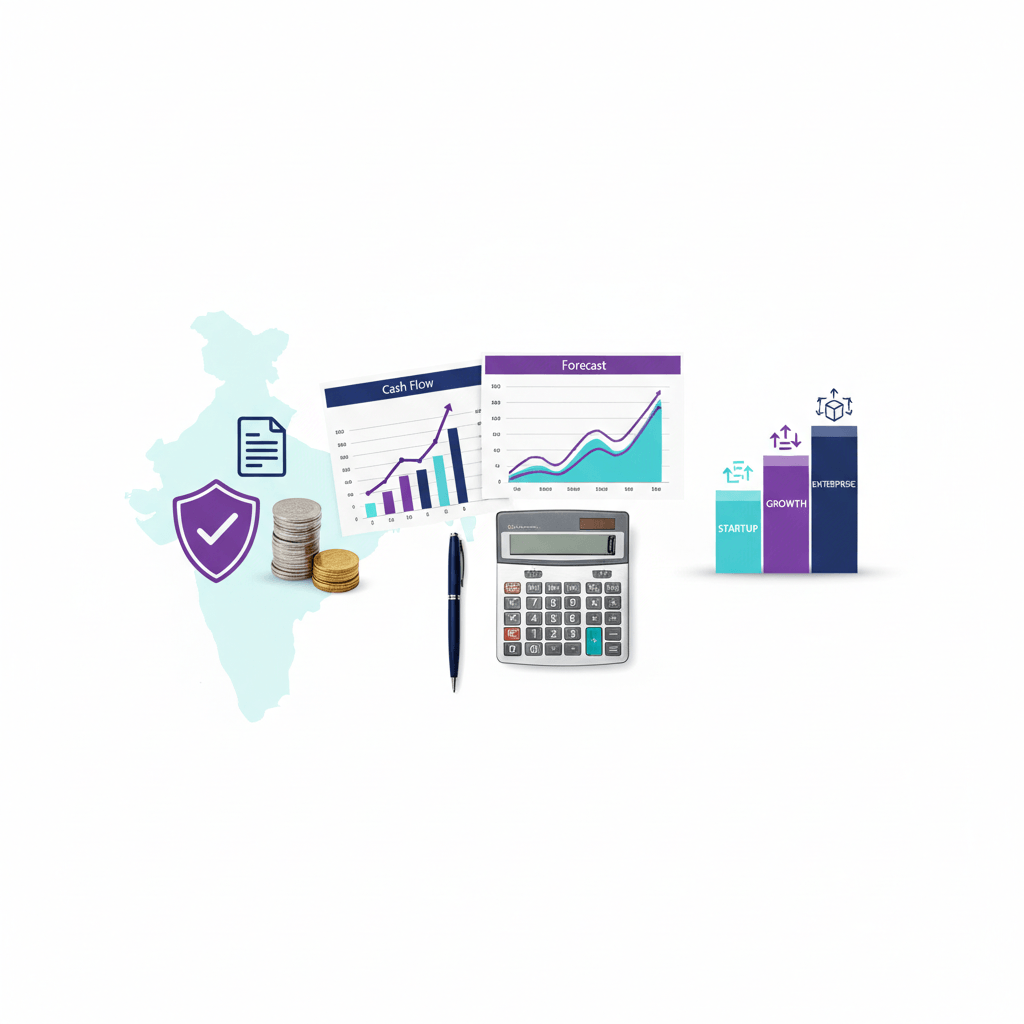
- Financial forecasting tools turn raw data into clear, rolling views of revenue, expenses, cash flow, and runway, they help leaders take timely decisions.
- Start with a 13 week cash flow for near term control, then add a 12 to 18 month rolling P and L with scenarios and monthly variance reviews.
- Choose tools by stage, spreadsheets for early teams, accounting add ons for seed, FP and A for growth, enterprise platforms for complex operations.
- Clean actuals drive trustworthy forecasts, CA led managed accounting, such as AI Accountant, keeps books reconciled and GST or TDS schedules wired into cash.
- Use driver based models for revenue, hiring, and working capital, model DSO and DPO to convert revenue timing into cash timing.
- Set controls for data hygiene, audit trails, and assumption logs, keep best, base, and worst cases live to react quickly.
- Integrate accounting, banks, payroll, and CRM, refresh weekly for cash and monthly for the P and L, lock prior periods to protect accuracy.
Introduction to financial forecasting tools for businesses
Financial forecasting tools for businesses help you look ahead. They turn your data into clear views of revenue, expenses, cash flow, and runway. Unlike a fixed budget, a forecast updates often, uses real time data, and gives leaders practical levers to plan hiring and spend, to meet GST and TDS on time, and to build trust with investors.
This guide shows you how to pick a tool, set it up, and get clean and reliable cash flow insights. You will also see how AI Accountant brings CA led Virtual Accounting to keep your actuals clean and your India compliance in check, so your forecast is always fed by trusted numbers.
Forecasts are living documents, not annual budgets, maintain a steady cadence, keep scenarios current, and tie compliance cash into the plan.
Sources: Baremetrics on forecasting software, Abacum on forecasting tools, Irvine Bookkeeping on revenue tools
What is financial forecasting for businesses
Financial forecasting is a way to predict what your money will look like in the future, it uses your current and past numbers, and it creates simple outputs that leaders can act on.
Core outputs you should expect
- Revenue projections by product or channel
- Expense trends by nature or department
- Profit and loss, both monthly and year to date
- Cash flow and operating cash flow
- Working capital and the timing of cash in and cash out
- Runway, months of cash left at your current burn
Common methods you can use
- Qualitative judgment, expert calls on markets or one time events
- Quantitative models, these use data and trends
- Time series analysis, it looks at patterns in your numbers over time
- Driver based models, connect drivers to results, headcount drives payroll, prices and conversion rates drive revenue, DSO and DPO drive cash timing
- Scenario planning, build best, base, and worst cases, change hiring, pricing, or costs with simple toggles
Rolling forecasts and review cadence
- Rolling forecasts update each month or quarter, keep the next 12 to 18 months visible, better than a static annual plan
- A 13 week cash flow for near term cash control, simple and very clear
- Do monthly reviews of the P and L, do quarterly reviews for big changes
Sources: Baremetrics, Abacum, Irvine Bookkeeping
Types of financial forecasting tools for businesses
You can choose from simple spreadsheets to advanced FP and A platforms, the best fit depends on your stage and needs, see a deeper primer here: AI Accountant guide for startups and SMBs.
Main categories and when to use them
- Spreadsheets, Excel and Google Sheets with templates or simple add ons, flexible and low cost, fragile with version control pain, good for freelancers and very early teams
- Accounting add ons, QuickBooks or Xero with Float, Fathom, or Jirav, or Zoho Books with Analytics, fast sync and native widgets, simple to start, limited for custom models, good for seed stage with growing transactions
- SMB and scale up FP and A, tools like Jirav, LivePlan, Cube, and Pigment, driver based models, scenarios, and variance analysis, some onboarding time and higher cost, good for growth SMBs up to a few hundred people
- Enterprise FP and A and CPM, Planful, Anaplan, Workday Adaptive, and Prophix, complex models, multi entity, and multi currency, two to six months to set up and costly, good for complex operations
- BI dashboards, Power BI and Tableau with forecasting templates, strong visuals and custom models, data engineering often needed, better for analytics heavy teams
- AI driven layers, Baremetrics Forecast Plus and Planful Predict, pattern detection and automatic scenarios, check explainability and governance before trust, can enhance any stack
Helpful notes on integration
- Jirav connects with QuickBooks, Xero, and NetSuite, that gives instant value
- Cube lets you keep Excel but automates data and controls, comfort of sheets plus central data
Suggested tools to explore
- AI Accountant
- QuickBooks Online
- Xero
- Float
- Fathom
- Jirav
- Cube
- Planful
- Anaplan
- Workday Adaptive Planning
- Prophix
- Microsoft Power BI
- Tableau
- Baremetrics Forecast Plus
Sources: Baremetrics list, Abacum roundup, Irvine Bookkeeping, Prophix overview, US Chamber resources
Feature checklist for financial forecasting tools for businesses
Use this checklist to compare options, it keeps you focused on what matters for cash and compliance.
Data connections
- Native links to accounting systems like QuickBooks and Xero
- Bank feeds and gateway data
- Payroll and HRIS
- CRM for pipeline and revenue cohorts
- Reliable APIs with frequent refreshes
- Easy mapping to your chart of accounts
Data hygiene and controls
- Bank and gateway reconciliation support
- Duplicate detection rules
- Chart of accounts mapping
- Clear entity and segment mapping
- Audit trails and logs
- Ability to lock prior periods
Modeling depth
- Driver based models for revenue seasonality, cohorts, pricing, and conversion
- Working capital drivers for DSO, DPO, and days in hand
- Allocations and roll ups by department and cost centers
- Hiring plans with benefits and TDS for payroll
- Cohort views for subscriptions and retention
Cash flow and liquidity
- 13 week cash forecasts
- Burn rate and runway in months
- Covenant or reserve tracking
- Bank balance views by account and entity
- Alerts for low cash thresholds
Scenarios and sensitivity
- One click toggles for hiring, pricing, and spend
- Best, base, and worst cases
- Rolling forecasts with variance versus actuals
- Assumption sheets with owner and date
Collaboration and governance
- Roles and permissions
- Comments and tasks inside the model
- Version control and assumption logs
- Board pack generation and share links
India compliance and taxes
- GST, TDS, and advance tax outflows scheduled into the cash plan
- Multi currency and multi entity support for cross border
- Reminders for filings and payments
Reporting and AI
- Board ready reports and decks
- Anomaly detection and alerts
- Compliance reminders
- Pattern insights powered by machine learning
Security and scalability
- SOC 2 or strong security controls
- Tiered pricing from free or low monthly plans to enterprise plans that can reach one and a half lakh or more per month
- Clear data export and backups
Sources: Baremetrics, Abacum, Irvine Bookkeeping, Prophix
Choosing the right financial forecasting tool by business stage and use case
Pick what fits your volume and complexity, then upgrade as your needs grow.
Freelancer or very early stage
- Use spreadsheets with a clean cash template
- Keep it simple, track cash in and cash out weekly
- Upgrade once you have more invoices and channels
Seed to Series A
- Add ons like Float and Fathom bring quick wins
- Get runway, burn rate, and basic SaaS metrics
- A clean link to your accounting system saves time
Growth SMB
- Move to Jirav or Cube for deeper modeling
- Use driver based plans, multi entity, and scenarios
- Build variance analysis and monthly close routines
Enterprise or complex operations
- Platforms like Planful or Anaplan support scale
- Expect longer setup but stronger governance
- Use robust models, workflows, and multi currency
Sources: Irvine Bookkeeping, Baremetrics, Abacum, Prophix
Implementation playbook for financial forecasting tools for businesses
Follow this path to get from raw data to a live, trusted forecast.
Step 1. Prepare your data
- Clean your chart of accounts, keep names clear and short
- Reconcile all bank accounts and payment gateways
- Close each month on a set date
- Fix duplicate or mis coded entries
- Make sure revenue recognition rules match your model
Step 2. Connect your sources
- Link your accounting, banks, payroll, and CRM
- Validate two or three years of history if you have it
- Map dimensions like departments and locations
- For India, map GST categories and TDS sections to accounts
Step 3. Build your models
- Define revenue drivers like price, volume, and conversion
- Define hiring plans and payroll taxes
- Build a 13 week cash flow with weekly dates
- Build a rolling P and L for 12 to 18 months ahead
- Add tax outflows for GST, TDS, and advance tax on actual due dates
Step 4. Operate and improve
- Do a monthly variance review versus actuals
- Run best, base, and worst scenarios after new data
- Log any changes to assumptions and who made them
- Refresh weekly for cash and monthly for P and L and balance sheet
Where AI Accountant helps
- Our CA team handles monthly closes and reconciliations
- We keep AR and AP clean and on time
- We wire GST and TDS dates into your cash plan
- We build non certified 13 week cash flows and MIS that feed your chosen tool
Sources: Baremetrics, Abacum
Forecasts to build first for accurate cash flow insights
Start with the plans that protect cash and compliance, add detail as you gain maturity.
Priority order
- Thirteen week cash flow, AI Accountant guide on cash flow tools, track weekly cash in and out, watch burn and runway
- Revenue by product and channel, model price and volume, add seasonality
- Operating expenses, split fixed and variable, tie payroll to hiring plans
- Working capital, model DSO, DPO, and inventory days, turn revenue into cash timing
- Tax outflows, add GST, TDS, and advance tax by date and amount, do not bunch them at month end
- Hiring and payroll, include TDS on salaries and any bonuses
Practical tips
- Use cohorts for subscriptions to improve revenue accuracy
- Link CRM pipeline stages to revenue conversion
- Include buffers for tax payments and one time costs
- Set alerts for low cash or covenant limits
Source: Irvine Bookkeeping
Key metrics and outputs from financial forecasting tools for businesses
Cash and runway
- Runway in months at current burn
- Net burn and gross burn
- Operating cash flow
- Cash conversion cycle
Profitability and growth
- Gross margin by product or service
- CAC payback and unit economics
- Revenue growth rate and churn for subscriptions
Working capital and efficiency
- DSO, DPO, and days in hand
- Collections forecast and aging profile
- Inventory turns and stock levels
Forecast accuracy and governance
- Variance to plan each month
- Forecast accuracy by line item
- Change logs and assumption owners
Tax and compliance buffers
- Liquidity for GST, TDS, and advance tax
- Compliance calendar status
- Alerts for due dates
Sources: Baremetrics, Abacum
Common pitfalls in financial forecasting and how to fix them
Dirty data and weak closes
- Fix by enforcing monthly reconciliations for banks, gateways, AR, and AP
- Lock closed months to prevent drift
Mixing revenue and cash
- Fix by modeling AR and AP lags, use DSO and DPO
- Separate revenue recognition from cash collection
No scenarios or slow changes
- Fix by keeping best, base, and worst cases at all times
- Review assumptions after each month close
Missing compliance cash planning
- Fix by embedding GST, TDS, and advance tax dates into the cash flow
- Add reminders and schedule payments in advance
No logs and poor control
- Fix by keeping one source of truth with version control
- Keep an assumption notebook, include owner and date
Source: Baremetrics
Light comparison examples for financial forecasting tools for businesses
Spreadsheets
- Speed, fastest to start
- Maintenance, high manual effort with higher risk of errors
- Best fit, early stage and simple needs
Add ons like Float or Fathom
- Speed, quick sync from accounting
- Maintenance, low ongoing effort
- Best fit, small to midsize teams that want runway and basic dashboards
SMB FP and A like Jirav or Cube
- Speed, two to four weeks to implement
- Maintenance, moderate
- Best fit, growing companies that need drivers, scenarios, and variance
Enterprise platforms like Planful
- Speed, two to six months for full rollout
- Maintenance, lower daily work with higher upfront setup
- Best fit, scale and complex operations with many entities
Sources: Irvine Bookkeeping, Baremetrics, Abacum, Prophix
How AI Accountant virtual accounting supports your forecasting stack
Strong forecasts need clean actuals, AI Accountant is a CA led managed service that keeps your books accurate and up to date, that means your forecasts are fed by trusted numbers.
What the service includes for forecasting readiness
- Monthly bookkeeping for sales, purchases, and expenses
- Ledger review and clean up
- AR and AP tracking with reconciliations
- Bank and payment gateway reconciliations
- Year end closing and schedules
- MIS and management reporting for leaders
- Support for coordination with your statutory auditor
- GST and TDS advisory and filings so tax cash is planned and paid on time
How the dashboard helps
- Live views of revenue, expenses, burn, runway, and cash flow trends, see example here, AI Accountant cash dashboard
- AI generated insights and alerts
- A document vault for invoices and returns
- A compliance calendar that shows GST, TDS, and ROC filing status
- A single place to chat with your CA team
Setup and ongoing support
- We integrate your accounting system and forecasting tool
- We map your accounts and drivers
- We build a 13 week cash flow and a rolling forecast that you can use
- We run monthly variance analysis and keep an assumption log
Mini case example
A small SaaS firm used spreadsheets and got mixed signals on runway, they moved to Jirav as an add on to Xero, AI Accountant cleaned AR and AP, reconciled all banks, and mapped tax schedules, forecast accuracy improved by about thirty percent, leadership saw a six month runway with confidence, GST and TDS were paid as planned without last minute gaps.
Sources: Baremetrics, Irvine Bookkeeping
Final thoughts and next steps
Financial forecasting tools turn noise into a plan, pick a tool that fits your stage, build a 13 week cash plan first, add rolling forecasts and simple scenarios next, tie in GST and TDS so you are never short on tax days, keep the process light, honest, and regular.
If you want help getting clean actuals and a working forecast, AI Accountant’s Virtual Accounting gives you CA led execution with a live dashboard, you get reconciled books, a clear compliance calendar, and a model you can trust.
Book a free demo and see how our dashboard and team can support your forecasting setup and compliance, aiaccountant.com.
Extra resources from this guide
- Baremetrics on forecasting software, baremetrics.com blog
- Abacum on financial forecasting tools, abacum.ai blog
- Irvine Bookkeeping on revenue forecasting tools, irvinebookkeeping.com article
- Prophix on FP and A software landscape, prophix.com blog
- US Chamber on financial planning tools, uschamber.com resources
FAQ
What forecast cadence should a VC backed startup follow for board reporting?
Use a monthly rolling forecast for P and L and balance sheet, lock the prior month after close, and present best, base, and worst cases in each board pack. Keep a weekly 13 week cash flow for liquidity calls, AI Accountant can automate variance analysis and supply board ready MIS so you maintain trust and speed.
How do we model GST and TDS within cash flow so tax days never surprise us?
Map each liability to its statutory due date and amount, embed those as line items in the 13 week plan, and keep a small buffer for revisions. AI Accountant’s CA team wires these schedules into your forecast and sets reminders, your tax cash is ring fenced and visible.
What accuracy can we expect from a 13 week cash forecast and how do we get there?
With clean books and weekly refreshes, 90 to 95 percent accuracy is realistic. Reconcile banks and gateways weekly, model AR and AP lags via DSO and DPO, and track known one offs. AI Accountant enforces reconciliations and maintains an assumption log so deviations are explained and corrected quickly.
We are on QuickBooks, should we adopt Float or jump straight to Jirav or Cube?
If your needs are runway, burn, and basic dashboards, Float is a fast win. If you need driver based modeling, multi entity, and variance workflows, Jirav or Cube will serve better. AI Accountant integrates with all three, we can migrate your drivers and history so the switch is smooth.
How do founders translate CRM pipeline into revenue forecasts with confidence?
Use stage based conversion rates and cycle times, apply price and volume drivers, and validate against historical cohort behavior. Refresh assumptions monthly. AI Accountant’s AI enabled Virtual Accounting can link CRM data to forecasting drivers and flag anomalies in win rates or deal slippage.
What governance should a finance head set for forecast changes and audit readiness?
Maintain version control, lock closed months, and keep an assumption register with owner and date. Track change logs for every major driver. AI Accountant provides audit friendly trails, reconciliations, and MIS schedules that align with statutory audits.
How do we model working capital so revenue timing becomes cash timing?
Set DSO and DPO by segment, model inventory days if relevant, and translate invoicing to collections via lags. Include AP terms and expected payment cycles. AI Accountant helps calibrate these drivers from your AR aging and AP patterns so the cash curve mirrors real behavior.
We operate multiple entities and currencies, which stack handles consolidation cleanly?
For moderate complexity, Cube or Jirav with proper dimensions can work, for high complexity or many entities, Planful or Anaplan is safer. AI Accountant maintains entity mappings, FX assumptions, and eliminations so your consolidated view stays consistent.
What ROI should we expect from moving off spreadsheets to an FP and A platform?
Typical gains include faster closes, clearer variance analysis, and better hiring and spend decisions, which protect runway. Time saved and error reduction often offset license costs within a few months. AI Accountant’s managed service accelerates setup and keeps actuals clean, improving forecast accuracy and confidence.
How do we prepare for fundraising with forecasts that withstand diligence?
Produce a rolling 12 to 18 month P and L, plus 13 week cash, maintain best, base, and worst scenarios with documented drivers, show CAC payback, gross margin, runway, and unit economics. AI Accountant packages MIS, compliance calendars, and clean reconciliations to support diligence.
Can AI help with anomaly detection and forecast suggestions without black box risks?
Yes, use AI to surface patterns and anomalies, then require explainability and governance. Tools like Baremetrics Forecast Plus and Planful Predict add value when paired with human review. AI Accountant blends AI insights with CA oversight so recommendations are clear and auditable.
What budget and timeline should we plan for implementation at seed versus growth?
Seed teams can set up add ons in days at low cost, growth SMBs should plan two to four weeks for Jirav or Cube, enterprise FP and A may require two to six months. Pricing can range from free or low monthly plans to enterprise tiers that reach one and a half lakh or more per month. AI Accountant reduces onboarding time by prepping data, mapping drivers, and building starter models.