-01%201.svg)

Key takeaways
- An expense policy India framework defines reimbursable categories, GST invoice rules, city-tier caps, and approval workflows so every claim is processed fairly and compliantly.
- ITC recovery jumps when invoices carry your company GSTIN with correct tax breakup; bills in the employee's name forfeit credits regardless of business purpose.
- A structured seven-day rollout (draft, configure, train, launch) gets your policy live without months of planning or expensive consultants.
- Processing time drops below five working days when you digitize submissions, set clear timelines, and run weekly payment batches.
- Fraud and duplicate claims fall sharply with automated invoice matching, random audits, and transparent escalation rules.
- If manual receipt handling and GST mismatches are slowing your finance team, automated GST reconciliation eliminates the bottleneck and recovers missed credits.
Expense Policy India: What's New in 2026
Until March 2025, GST e-invoicing applied only to businesses with turnover above ₹5 crore. From April 2025, CBIC extended mandatory e-invoicing to entities with aggregate turnover exceeding ₹1 crore. This pulls a significantly larger pool of SMEs and their vendors into the e-invoicing net, which directly affects reimbursement documentation. Your employees now receive e-invoiced bills from more suppliers, and your finance team must validate IRN (Invoice Reference Number) and QR codes before claiming ITC.
The operational shift is real. Previously, smaller vendor bills lacked structured digital data. Now, many hotel chains, fleet operators, and service providers in the ₹1 to ₹5 crore bracket generate IRN-tagged invoices. Finance teams need to verify IRN validity on the GST e-invoice portal before booking ITC. Missing or invalid IRNs on invoices above the threshold will trigger ITC denial during GSTR-2B matching.
Who does this hit hardest? SMEs and CA firms managing 50 to 200 reimbursement claims monthly. If your vendors crossed the ₹1 crore threshold and you are still accepting plain invoices without IRN verification, blocked credits accumulate silently.
Cost of inaction: ITC reversal with 18% interest under Section 50, plus potential penalty under Section 122 for claiming credit on non-compliant documents. For a firm processing ₹5 lakh monthly in reimbursable expenses, even a 15% ITC leakage means ₹75,000 lost annually.
What to do now:
- Update your documentation standards to require IRN and QR code on vendor invoices above ₹1 crore turnover threshold.
- Train employees to request e-invoiced bills (especially from hotels and transport vendors) with company GSTIN.
- Run a one-time audit of Q1 2026 reimbursement invoices against GSTR-2B to identify gaps.
Teams using bookkeeping automation platforms can flag invoices missing IRN data automatically during ingestion, catching compliance gaps before they become costly reversals.
Why your small business needs an expense reimbursement policy
Without a policy, reimbursements turn messy. Claims arrive months late, paperwork piles up, and GST credits get rejected. A structured policy sets rules everyone understands.
It reduces disputes through clarity, controls costs with transparent limits, and aligns with GST and Income Tax requirements. Reimbursements stay non-taxable when backed by business invoices.
Imagine a sales executive traveling to Mumbai for client meetings. They know the hotel cap, meals guidance, and documents needed. Claims are submitted within seven days. Finance processes within five days. Your P&L stays accurate, and ITC is claimed correctly.
Smaller teams benefit even more. Every rupee matters and you cannot afford leakage or penalties.
Policy clarity creates fairness, not bureaucracy. It helps employees submit correctly, and helps finance pay quickly.
India-specific basics: reimbursements, allowances, advances, and GST
Reimbursements cover actual business expenses supported by invoices. These include flights, hotels, local transport, and client meals. They differ from fixed allowances (which are taxable) and advances (pre-funded amounts settled later).
Reimbursements are non-taxable to employees when business-related and properly documented. Per diems simplify admin with no receipt collection, yet you lose GST credits.
You can claim ITC only on invoices carrying your company GSTIN with valid tax breakup details. Section 17(5) of the CGST Act excludes certain items like personal use, club memberships, and specific services.
Record reimbursements through employee ledgers, not vendor ledgers, unless the vendor is paid directly by the company. This distinction keeps books clean and audit-ready.
Core building blocks: your small business policy checklist
Start with foundation elements your employees can follow with confidence.
Scope and eligibility
Specify coverage for full-time employees, part-time staff, interns, and contractors. Clarify that Indian rupee expenses qualify unless foreign currency spend is pre-approved.
Define city tiers for caps. Require pre-approved business activities for all claims.
Allowable categories
- Travel: economy air, AC train, taxi fares, personal vehicle mileage.
- Lodging caps: ₹6,000 per night in metros, ₹4,500 in Tier-2 cities.
- Meals: ₹750 per person for client meetings, ₹500 daily for individual travel meals.
- Telecom and internet for work, work-from-home setup within limits, training and certification, client entertainment with prior approval.
Disallowed expenses
- Personal shopping, family travel costs, alcohol unless specifically approved with documentation.
- Fines and penalties, luxury upgrades, unapproved gifts or donations.
Limits and per diems
- City-tier caps: hotels ₹6,000 metros, ₹4,500 Tier-2.
- Mileage: cars ₹9 to ₹15 per kilometer, bikes ₹4 to ₹6 depending on fuel and location.
- Meals: ₹500 to ₹750 daily based on context.
Advances
Advances support anticipated travel or project expenses. Require settlement within 15 days with complete reconciliation.
Payment methods
Prioritize UPI, net banking, or corporate cards. Limit cash because it complicates GST documentation and verification.
Documentation standards for compliance
Your policy must state exactly what documents employees submit for every claim. Tight documentation accelerates payouts and preserves ITC.
Valid GST invoices
- Supplier GSTIN, invoice number and date, HSN or SAC codes, tax breakup with CGST, SGST, or IGST.
- Company GSTIN printed, not the employee's details. Otherwise ITC will be denied.
- For vendors above ₹1 crore turnover: verify IRN (Invoice Reference Number) and QR code are present on the invoice.
Non-GST documents
Small purchases under ₹2,500 from unregistered vendors may lack GST details. These can be reimbursed, but ITC is not available.
Travel support
- Flights: e-tickets and boarding passes.
- Hotels: GST-compliant bills with stay dates and company GSTIN.
- Local travel: cab receipts or mileage logs with start and end odometer readings.
Lost receipt handling
Under ₹5,000, accept a signed affidavit explaining the loss. Higher amounts need managerial approval and justification.
Retention
Store documents digitally for eight years as per Indian Income Tax Act provisions. Cloud storage works well for small teams.
Example: Conference visit to Bangalore. Submit registration invoice with GST details, flight e-ticket and boarding pass, hotel bill with your GSTIN, cab receipts, and itemized meal bills. Missing documents delay reimbursement or forfeit ITC.
Submission and approval workflow
Timelines
Require submission in 7 to 30 days. Process approved claims within five working days. This cadence keeps cash flow predictable for everyone.
Digital submission
Use mobile or web forms for uploading receipt images. Enter purpose and category. The digital trail speeds audits.
Approval matrix
| Amount range | Approver level |
|---|---|
| Up to ₹5,000 | Direct supervisor |
| ₹5,001 to ₹25,000 | Department manager |
| Above ₹25,000 | Department head and finance |
Finance verification
- Check duplicates: ensure the same invoice is not claimed twice.
- Validate GST invoice details: match vendor GSTIN, tax breakup, and IRN where applicable.
- Confirm category limits and policy alignment. Schedule weekly payment runs with tracking.
India tax and accounting considerations
ITC eligibility
Claim ITC only when the invoice carries your company GSTIN and correct tax breakup. Bills bought personally by employees do not qualify even for business purposes.
Permanent ineligibles under Section 17(5) of the CGST Act apply regardless.
Per diems versus actuals
Per diems reduce paperwork and speed approvals, but you lose ITC. Actuals take more effort, but you gain credits. Choose per role or scenario based on priorities.
Accounting entries
Debit relevant expense ledgers (travel, meals, communication). Credit the employee reimbursement ledger, or cash or bank for immediate payment.
Reconcile employee ledgers monthly. Accrue unclaimed amounts at month-end for accurate reporting.
GST returns
Include eligible reimbursement invoices in GSTR-3B ITC. Match purchases with GSTR-2B. Retain documents for audits.
Practical examples for implementation
Business travel
Two-day Mumbai trip: economy airfare around ₹12,000, hotel under ₹6,000 per night, meals around ₹1,500 over two days. Submit flight e-ticket, GST hotel bill with your GSTIN, Uber receipts. Avoid luxury upgrades.
Work from home
Developer claims ₹2,000 monthly internet. Submit broadband bill and business-usage note. Capped at allowance even if actual exceeds the limit.
Client entertainment
Lunch at ₹3,000 for four with prior approval. Stay under ₹750 per person. Submit itemized restaurant bill with GST details and attendee list. ITC available when documentation is complete.
Controls and fraud prevention
Duplicate detection
Identify repeated invoices across employees or split bills aimed at bypassing approvals.
Vendor monitoring
Track suspicious merchant categories. Maintain a vendor blacklist where needed.
Random audits
Review ten percent of claims monthly. Do an annual deep dive to update rules.
Escalations
First violations trigger warnings. Repeated issues affect reviews or bonuses. Serious fraud leads to termination and legal action.
Trust grows when controls are transparent and consistent. Employees know the boundaries, finance knows the checks.
Rollout plan for small businesses
Week 1 preparation
Draft a one-page summary with examples. Seek leadership buy-in. Prepare training materials and quick reference cards.
Training and communication
Explain the intent behind rules. Run a pilot. Incorporate feedback. Then publish the final policy.
Ongoing optimization
Review quarterly in the first year, then annually. Adjust limits for inflation and refine categories based on actual usage.
Templates and tools
Policy skeleton
- Introduction and purpose
- Scope and eligible employees
- Expense categories with limits
- Documentation requirements
- Submission and approval workflow
- Payment timelines
- Tax and compliance notes
- Violation consequences
Digital claim form fields
- Expense date and amount
- Category selection
- Business purpose
- Receipt upload
- Approval routing
Expense management tools to streamline operations:
- AI Accountant: automates receipt capture, reads PDFs and scans, categorizes expenses, syncs with Tally, handles GST reconciliation.
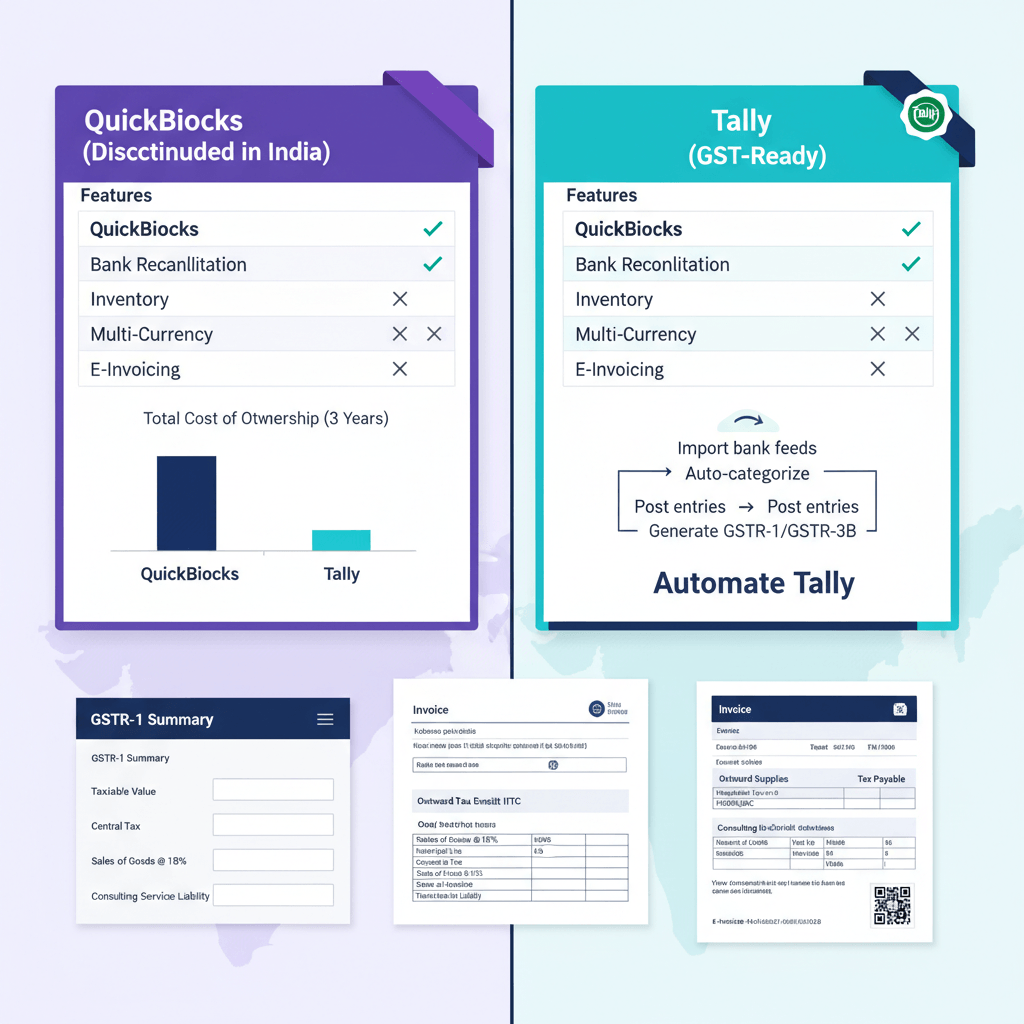
- QuickBooks: accounting with expense tracking and mobile receipt capture.
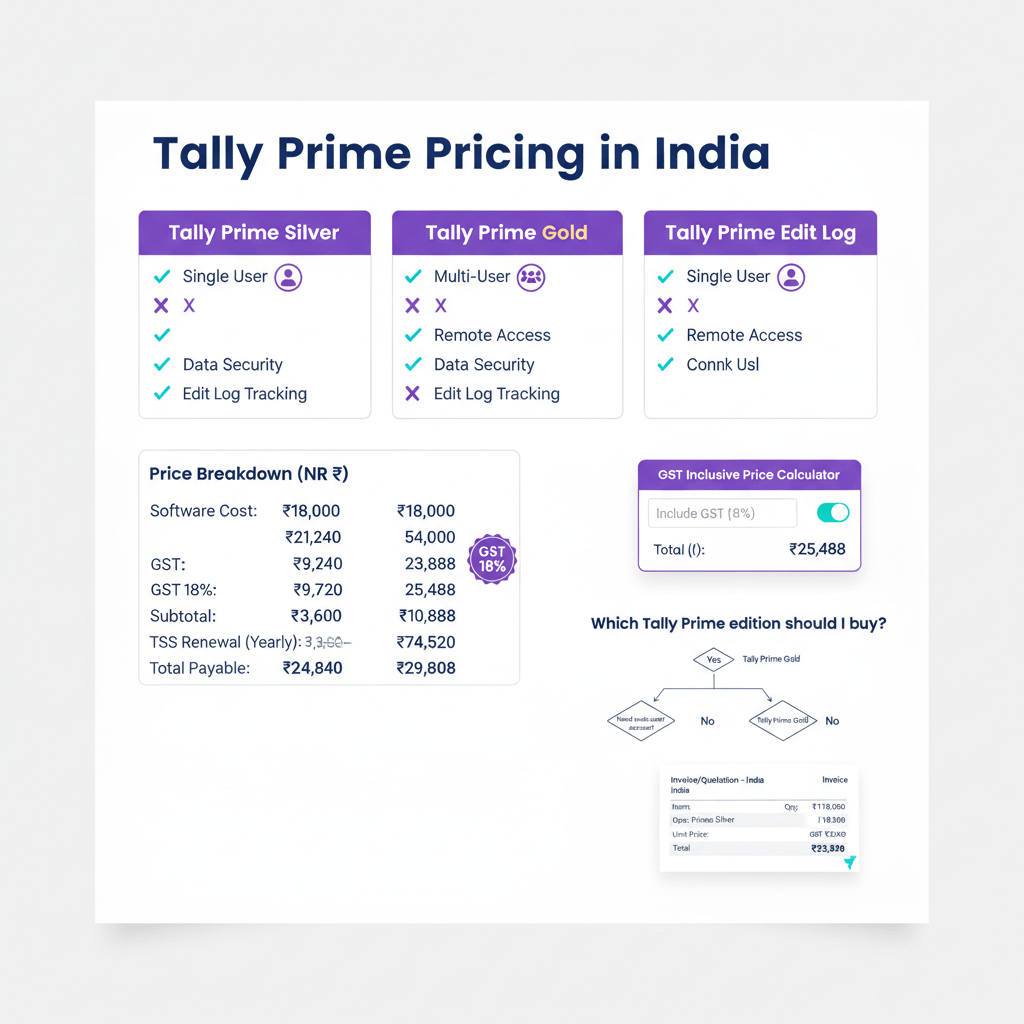
- Tally Prime: accounting with expense vouchers and GST compliance.
- FreshBooks: cloud accounting with expense tracking and projects.
- Fyle: expense management with real-time policy checks and card feeds.
Indicative caps
| Category | Metro cities | Tier-2 cities |
|---|---|---|
| Hotel per night | ₹6,000 | ₹4,500 |
| Meals per day | ₹750 | ₹500 |
| Client meals per person | ₹750 | ₹500 |
| Mileage per km, car | ₹12 to ₹15 | ₹9 to ₹12 |
| Mileage per km, bike | ₹5 to ₹6 | ₹4 to ₹5 |
| Internet per month | ₹2,000 | ₹1,500 |
How AI tools operationalize your policy
AI accounting tools convert manual tasks into automated workflows.
- Intelligent receipt capture: read PDFs and images, extract vendor, date, amount, GST details. Cut processing time drastically.
- Smart categorization: learn patterns, route Uber to local conveyance, map Swiggy to client entertainment, sync to ledgers consistently.
- GST reconciliation: match invoices to GSTR-2B, flag missing GST fields or invalid IRNs before submission, prevent rejected credits.
- Advance tracking: link pre-funds to claims, auto-calculate balances, flag overdue settlements.
- Multi-entity support: manage separate companies with distinct rules and learnings.
- Real-time dashboards: monitor pending claims, category spend, violations, and settlements.
Quick-start checklist: launch in one week
Days 1 and 2: foundation
Draft the core policy. Set city-tier caps. Define GST and documentation rules. Add scenario examples.
Day 3: process definition
Map approvals and timelines. Design the claim form. List finance verification checks.
Day 4: system configuration
Set categories in Tally. Create employee ledgers. Configure your chosen tool. Run test claims.
Day 5: training
Run a short training. Share guides. Answer questions. Start with a pilot team.
Days 6 and 7: launch and monitor
Roll out. Process first claims. Collect feedback. Make quick adjustments. Plan monthly reviews.
Ongoing
Audit monthly. Review quarterly. Update limits annually. Refine based on data.
Common pitfalls and how to avoid them
- Over-complication: keep policy under five pages. Use examples and plain language.
- Ignoring GST: train employees on company GSTIN and invoice requirements.
- Inflexible limits: revisit caps quarterly with inflation and usage data.
- Manual processing: adopt digital tools early for speed and accuracy.
- Inconsistent enforcement: apply rules uniformly. Document genuine exceptions.
- Poor communication: send reminders. Maintain easy access to the policy and forms.
Measuring success: KPIs that matter
- Processing time: target under five working days.
- Compliance rate: aim for ninety five percent complete documentation.
- ITC recovery: reach ninety percent of eligible credits.
- Policy violations: keep under five percent of claims.
- Employee satisfaction: target eighty percent positive feedback.
- Cost savings: compare pre and post policy spend by category.
Conclusion
A practical, India-specific expense reimbursement policy delivers clarity, compliance, and speed. Keep rules simple. Embrace digital submission and approvals. Use automation for receipts and GST reconciliation. Review regularly based on experience.
Implement the one-week checklist, lean on templates, and evolve continuously. Within a month, reimbursements will be smoother, documentation tighter, and ITC capture stronger.
Further reading: employee reimbursement system with UPI in India, and ICAI guidance notes on GST compliance.
FAQ
How should reimbursements be treated under GST when employees pay vendors and the company reimburses later?
The invoice must be addressed to the company with the company GSTIN to claim ITC. A personal invoice in the employee's name blocks ITC, even if the expense is business related. Finance should verify HSN or SAC codes, tax breakup, and IRN (for vendors above ₹1 crore turnover), then record the expense in the appropriate ledger and the liability in the employee reimbursement ledger. Settle via bank or UPI within five working days.
Are per diems taxable, and do they impact ITC recovery compared to actuals?
Per diems are generally non-taxable if reasonable and policy backed. However, they do not come with GST invoices, so you cannot claim ITC. Actual reimbursements require receipts and verification but enable ITC when invoices carry the company GSTIN and proper tax details. Many firms use per diems for small day trips, and actuals for hotels, flights, and larger spends.
What ledger entries should I pass in Tally for reimbursement advances and settlements?
On advance payment, debit "Employee Advance (Name)" and credit bank. On claim submission, debit expense ledgers by category (travel, meals, lodging) and credit the employee ledger. Net off the advance against the claim and pay any balance due. Reconcile employee ledgers monthly, and accrue month-end unclaimed amounts if needed for accurate financials.
What is acceptable documentation when a GST invoice is lost?
For amounts under ₹5,000, a signed loss affidavit and detailed claim note are acceptable. For higher amounts, require manager approval and an alternate proof trail such as bank statements, booking confirmations, and emails. Without a GST-compliant invoice in the company's name, ITC will not be available even if you reimburse the employee.
Can we claim ITC on hotel bills if the company GSTIN is not printed?
No. ITC requires the invoice to carry your company GSTIN and tax breakup. Request the hotel to reissue a GST-compliant bill with your GSTIN. Ensure stay dates and room details are accurate, and keep digital copies for eight years. Reimbursement may still be allowed per policy, but ITC will be forfeited without proper invoices.
Do vendors below ₹1 crore turnover still need to issue e-invoices for reimbursement claims?
No. E-invoicing is mandatory only for businesses with aggregate turnover exceeding ₹1 crore (2026 update). For vendors below this threshold, a regular GST invoice with your company GSTIN, valid tax breakup, and HSN/SAC codes is sufficient for ITC claims. Always verify the vendor's registration status on the GST portal before booking credits.
How do we detect split bills and repeated invoices across employees?
Run duplicate detection checks weekly. Compare vendor names, invoice numbers, dates, and amounts. Flag suspicious patterns such as the same bill submitted by two employees or large invoices split into smaller claims to bypass approval limits. Randomly audit ten percent of claims monthly and escalate repeat violations.

Rohan Sinha is a fintech and growth leader building aiaccountant.com, focused on simplifying accounting and compliance for Indian businesses through automation. An IIT BHU alumnus, he brings hands-on experience across 0 to 1 product building, growth, and strategy in B2B SaaS and fintech.