-01%201.svg)

Key takeaways
- Business financial insights turn raw numbers into actions, they guide pricing, hiring, cash, and compliance decisions.
- Timely, accurate, contextual, and actionable insights outperform static reports, and reduce guesswork.
- Dashboards that surface cash, burn, runway, margin, and working capital make weekly and monthly reviews simple.
- Clean data, a standard chart of accounts, and tight reconciliations are the foundation for trustworthy insights.
- A 30, 60, 90 day playbook can stand up live dashboards, alerts, and review rituals without heavy overhead.
- CA managed services like AI Accountant blend bookkeeping, tax, and an always on dashboard, so insights arrive with less effort.
What business financial insights really are
Business financial insights are patterns and forward looking takeaways from your accounting data. A report might show revenue for the month, an insight says gross margin slipped because cost of goods rose faster than price, prompting a vendor negotiation or a price test.
Strong insights share four traits, they are timely, accurate, contextual, and actionable. Data is a log, reports are summaries, insights are the story with a decision at the end.
Ask of every chart, what decision does this change, what action does this trigger, and who owns it next.
For deeper background on metrics and finance KPIs, see overviews from Sprinkle Data, insightsoftware, and NetSuite.
Why business financial insights matter
Insights power weekly and monthly moves, they support pricing, hiring, budget adjustments, inventory buys, tax planning, and even fundraising narratives.
- Freelancers, track income stability and tax set asides, avoid year end shocks.
- Startups, monitor burn, runway, CAC to LTV, cohort health, and payback.
- SMEs, improve working capital, inventory turns, and receivable risk.
Done well, insights make investor updates and bank talks easier, strengthen unit economics, and de risk compliance.
Profitability insights for pricing and margin
- Gross margin, net sales minus cost of goods divided by net sales, common targets exceed 40 percent, watch vendor rates, input prices, discounting, and product mix.
- Contribution margin, what remains after variable costs to cover fixed costs, core to unit economics and break even analysis.
- Net margin, profit after all costs and taxes, reveals true bottom line strength.
- Break even, units or revenue needed to cover all costs, anchors pricing and volume targets.
- Unit economics, contribution by unit, customer, or order, scale only what pays back.
Track by product, channel, and region, compare budget versus actuals and trends. Small tweaks, like retiring a discount that never pays back, can create outsized gains. Helpful primers, insightsoftware and Sprinkle Data.
Cash and liquidity insights for runway and risk
- Operating cash flow, approximate as EBIT plus depreciation minus taxes minus change in working capital, persistent negative flow demands spend changes or funding.
- Burn rate, total monthly cash out, lower burn extends runway.
- Runway, months of cash at current burn, time to build and correct course.
- Cash conversion cycle, DSO plus DIO minus DPO, lower is better.
- Cash buffers, many teams hold three to six months of operating expenses, tune for seasonality and risk.
Put cash first on your dashboard, review weekly, and act early. See a practical guide to cash and runway dashboards from AI Accountant, cash dashboard essentials.
Revenue insights for growth and stability
- Growth rate, month on month and year on year, sliced by product, channel, region.
- Recurring revenue, MRR and ARR with new, expansion, contraction, and churn.
- Cohorts and seasonality, retention and repeat by signup month, watch peaks and dips.
- Customer concentration, exposure to top customers, high concentration raises risk.
- LTV and CAC payback, faster payback is safer, link to channel efficiency.
Use these to pick channels, set pricing, and align sales capacity with cash. For metric definitions, see Sprinkle Data.
Expense insights to control cost without hurting growth
- Fixed versus variable, know what scales with revenue and what does not.
- Vendor trends, track price drift and negotiate with data.
- Discretionary versus committed, cut with minimal operational impact.
- Unit costs, per unit, per order, per lead, per seat, expose silent drags.
Add anomaly alerts and simple robotic checks for duplicate bills and unusual spikes.
Working capital insights across receivables, payables, and inventory
- AR aging, monitor buckets and risk flags, act on slow payers early, see AI Accountant’s AR automation guide.
- AP aging, capture early pay discounts when cash allows, stay within terms.
- Inventory turnover, low turns point to overstock, very high turns risk stock outs.
- Advances and provisions, track advances and maintain provisions for returns and write downs.
Align AR and AP targets with finance, shorten the cash conversion cycle, and reduce bad debt. See more KPI context from NetSuite.
Tax and compliance insights to avoid penalties
- GST input versus output, reconcile input tax credit to supplier uploads, fix gaps early, see the GST portal.
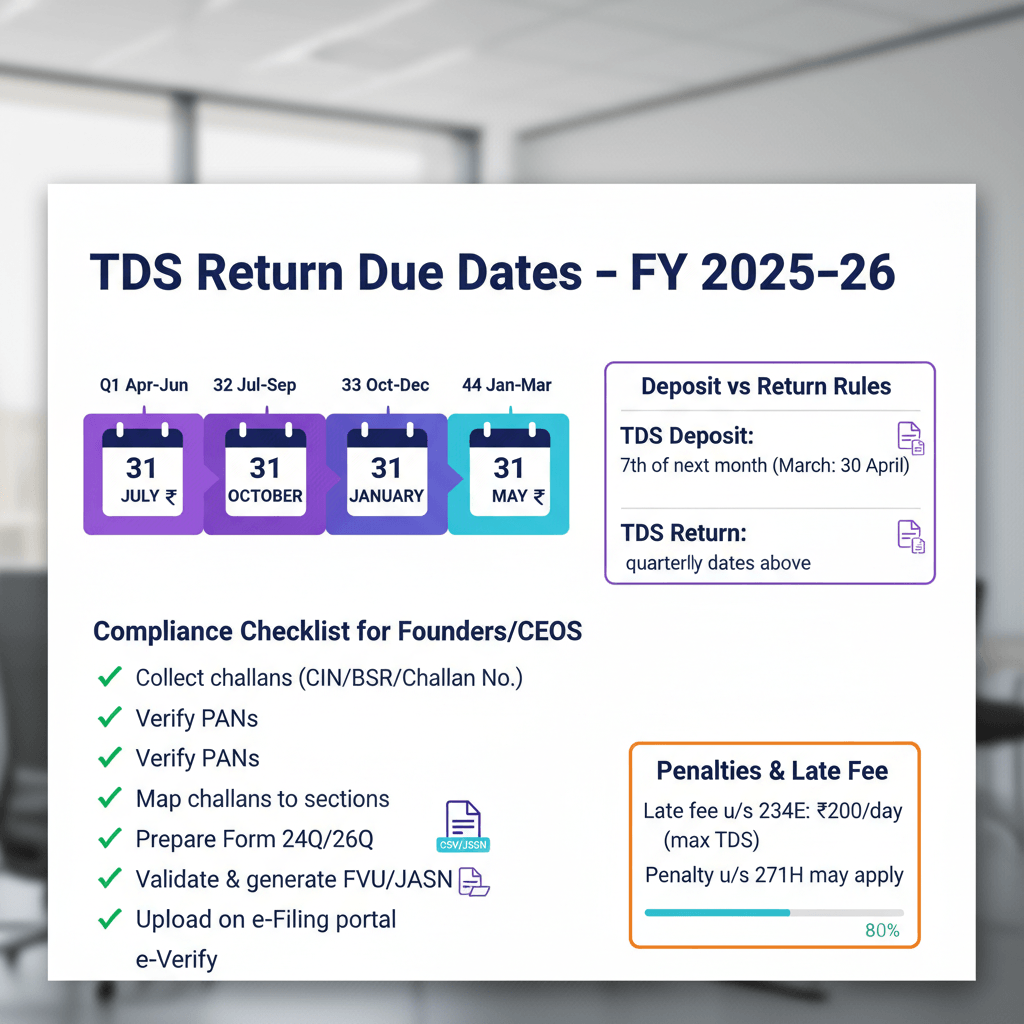
- TDS exposure, track transactions where TDS applies, pay challans and file 26Q, 24Q, 27Q on time.
- Advance tax, estimate, provision, and pay on schedule to avoid interest.
- Compliance status, monitor due dates and filings across GST, income tax, and MCA.
Early visibility prevents cash shocks. Useful references, Income Tax and MCA.
Risk and control insights to protect the business
- Payment gaps, missed receipts, duplicates, and unmatched entries.
- FX exposure, currency risk on receivables and payables.
- Receivable concentration, guard against exposure to a few buyers.
- Policy exceptions, spend outside approved categories or vendors.
Use alerts, maker checker workflows, monthly reviews, and strict bank reconciliations. For a control list, see NetSuite.
Data hygiene foundations
- Monthly bookkeeping, record sales, purchases, expenses, banks, and journals promptly.
- Bank and gateway reconciliation, match statements and gateways to books.
- Standard chart of accounts, consistent categories speed analysis.
- Close checklist, repeatable steps reduce lag and errors.
Clean data produces clean insights, messy books produce noise and rework.
Analytics and reporting stack
- Budget versus actuals, spotlight variances and drivers.
- Ratio analysis, margins, liquidity, leverage, and efficiency.
- Trend lines, watch inflection points month by month.
- Cohort analysis, behavior by customer group and time.
- Scenario planning, simple what if views for price, cost, and volume.
Start simple, add depth over time. More ideas from insightsoftware and Sprinkle Data.
Dashboard must haves
- P and L overview, revenue, cost of goods, gross margin, operating expenses, net profit.
- Cash insights, cash balance, trend, burn, runway.
- Working capital, AR and AP aging, inventory turns, cash conversion cycle.
- Revenue breakdown, product, channel, region.
- AI alerts, spend spikes, margin drops, overdue invoices.
- Bank statement analysis, unusual items and unmatched entries.
- Compliance calendar, GST, TDS, income tax, MCA due dates and status.
- Document vault, filings, invoices, and receipts linked to transactions.
- Communication pane, central chat with your CA team.
Keep it live, keep it clear, keep every widget tied to an owner and an action. For structure, review this KPI guide, and AI Accountant’s real time dashboard guide.
Tools that power insights
- AI Accountant, https://aiaccountant.com
- QuickBooks Online, https://quickbooks.intuit.com
- Xero, https://www.xero.com
- Zoho Books, https://www.zoho.com/books
- FreshBooks, https://www.freshbooks.com
- Sage Intacct, https://www.sage.com/en-us/sage-intacct/
- Wave Accounting, https://www.waveapps.com
Platforms vary by features and price. AI Accountant combines a CA led service with a live dashboard and managed compliance, which reduces setup work for small teams.
Cadence for reviews
- Weekly, review cash inflows and outflows, burn, runway, new receivables and payables, triage big tickets.
- Monthly, full MIS with P and L, budget versus actuals, cash flow, working capital, actions and owners.
- Quarterly, tax and GST checks, forecast refresh, pricing, margin, and hiring reviews.
Cadence turns insight into habit, habit turns into better decisions.
30, 60, 90 day playbook
Days 0 to 30, Baseline
- Clean six to twelve months of history.
- Define a standard chart of accounts.
- Connect banks and gateways.
- Set initial KPIs and a simple budget.
Days 31 to 60, Systematize
- Build core dashboards and reports.
- Automate reconciliations and vendor mapping.
- Set alerts for spend spikes, margin drops, and due dates.
- Create a month end close checklist.
Days 61 to 90, Operationalize
- Start weekly and monthly reviews.
- Run scenario tests for price and cost changes.
- Review margin by product and channel.
- Book tax provisions, validate compliance calendars.
By day 90, you should have clean books, a live dashboard, and a working review rhythm. References, insightsoftware, NetSuite, and Sprinkle Data.
Use cases by business type
Freelancers and solopreneurs
- Track income volatility and plan advance tax.
- Capture deductible expenses and store receipts.
- Monitor cash flow, maintain a buffer.
Startups and SaaS
- Monitor burn, runway, CAC to LTV, and payback.
- Track cohorts for retention and expansion revenue.
- Align hiring with cash and milestone timing.
E commerce and SMEs
- Optimize inventory turns and reorder points.
- Reconcile GST input and output monthly.
- Compare vendors and reduce cost per order.
Principles stay constant, metrics and actions vary by model.
Common pitfalls
- Data lag, late close makes insights stale, use a month end checklist and automation.
- P and L only, add cash and balance sheet KPIs like DSO and DPO.
- No context, always compare to budget and forecast.
- Mixed transactions, separate business and personal, use dedicated bank accounts.
- Compliance gaps, track GST, TDS, income tax, and MCA in one place.
Most fixes are simple, the payoff is large. See guides from NetSuite and insightsoftware.
KPI cheat sheet
- Burn rate, total monthly expenses, target aligns with desired runway.
- Gross margin, net sales minus cost of goods divided by net sales, many aim above 40 percent.
- Cash conversion cycle, DSO plus DIO minus DPO, aim under sixty days where feasible.
- AR aging, strive for over eighty percent under thirty days.
- CAC payback, months to recover acquisition cost, under twelve months is often healthy.
- GST net position, reconcile input minus output monthly to claim credit and avoid disputes.
These KPIs anchor finance control and growth discipline, with more examples at insightsoftware, NetSuite, and Sprinkle Data.
Templates and checklists
Monthly finance review agenda
- P and L variances by line item.
- Cash trends, burn, and runway.
- AR and AP priorities.
- Tax and compliance updates and due dates.
- Three to five key decisions with owners and deadlines.
Dashboard widget list
- Revenue trend and seasonality.
- Gross margin by product and channel.
- Cash with burn and runway.
- Working capital, AR, AP, and inventory turns.
- AI alerts for anomalies and deadlines.
- Compliance calendar and status.
AR aging follow up
- Zero to thirty days, friendly reminder with invoice copy.
- Thirty one to sixty days, call and agree a date.
- Over sixty days, escalate and consider credit hold.
Simple playbooks turn insight into action.
How AI Accountant enables insights
AI Accountant is a CA led managed accounting and compliance service with a live dashboard, so you get business financial insights without chasing files. Explore the approach at AI Accountant.
Service coverage
- Accounting and bookkeeping, monthly books, ledger review, closing, fixed assets, inventory, receivables, payables, bank and gateway reconciliations, cash flow prep, MIS, and auditor support.
- Taxation compliance and advisory, GST registration, GSTR 1 and 3B, GSTR 9 and 9C, E invoice enablement, health checks, place of supply, RCM, HSN, and rate guidance.
- Income tax, returns for individuals, partnerships, and companies, TDS advisory and forms 26Q, 24Q, 27Q, 26QB, 26QC, 26QD, advance tax, audit prep, international and expat tax, salary structuring, and 15CA.
- Payroll, monthly TDS calculation and salary structuring advice.
- ROC and secretarial for small companies, MGT 7, AOC 4, DIN, DIR 3 KYC, author share capital changes, allotments, board meetings and minutes, statutory registers, and event filings.
Dashboard capabilities
- Financial overview, revenue, expenses, P and L, and balance snapshots.
- Category views, income and expense breakdowns.
- Cash insights, trends, burn, and runway.
- AI insights and alerts, anomalies and reminders.
- Recent transactions, bank statement analysis.
- Document repository, filings and key papers in one place.
- Compliance status, GST, TDS, income tax, and MCA.
- Central chat, one place to talk to your CA team.
This setup replaces scattered email, spreadsheets, and chats with one clean system, and because a CA team handles execution, your data stays clean. Government references, GST, Income Tax, and MCA.
Next step to unlock business financial insights
If you want simple control over cash, margin, and compliance, this playbook gets you there. You can do it yourself, or you can partner with a CA led managed service.
AI Accountant can set up clean books, a live dashboard, and a working review rhythm. You will see runway, margin, and tax status at a glance, no more data chase. Book a demo to receive a month end close checklist and a KPI pack, AI Accountant.
Keep cash visible, keep decisions frequent, keep data clean.
FAQ
What is the practical difference between a financial report and a business financial insight for a founder
A report summarizes transactions, an insight interprets patterns and proposes an action. For example, a report shows gross margin by month, an insight explains the margin dip came from freight costs, then recommends a vendor negotiation or a price change, see KPI framing from insightsoftware.
What is the minimum viable MIS cadence for a seed stage SaaS, especially when runway is tight
Weekly cash, burn, and runway, monthly full MIS with P and L, budget versus actuals, cash flow, working capital, plus a short action list with owners. AI Accountant’s live dashboard keeps cash and burn front and center, which protects runway in between board meetings.
How fast can a virtual accounting provider stand up a reliable dashboard if our books are messy
Expect thirty to sixty days depending on history and scope, week one to two for bank and gateway reconciliation, week three to four for a clean chart of accounts and KPI definitions, then publish core widgets, cash, margin, working capital. AI Accountant often completes a first usable dashboard inside the second month.
Which KPIs should a finance head present to the board every month without fail
Cash balance and runway, burn rate, gross margin by product or channel, ARR or revenue growth, CAC payback and LTV where relevant, AR and AP aging, cash conversion cycle, and top three risks. These map to the must haves surfaced by NetSuite’s KPI lists.
How do I know if my CAC payback is good enough to continue scaling paid acquisition
Compute CAC payback as CAC divided by monthly gross margin contribution per customer. Under twelve months is a common benchmark for early stage, shorter is safer when cash is tight. Pair this with cohort retention to avoid overestimating LTV. AI Accountant’s dashboard can show payback trend alongside cash runway to make spend decisions safer.
What is the cleanest way to reconcile GST input tax credit every month without a spreadsheet mess
Pull supplier uploads, reconcile input versus books, resolve mismatches with vendors before filing, and lock the period. A managed service like AI Accountant automates pulls, flags gaps, and prompts for corrections ahead of GSTR 3B deadlines, see the GST portal for rules.
Can a CA managed service replace in house FP and A for a small company
For many small teams, yes. Dashboards plus a monthly MIS and scenario views often cover the first eighty percent. As scale increases, you can add FP and A for deeper modeling. AI Accountant provides the foundation, budgets, scenarios, and decision ready summaries, then hands off to FP and A when complexity rises.
How should a founder prioritize cuts when runway drops below nine months
Start with discretionary spend, pause experiments with long payback, renegotiate vendors with price drift, and protect revenue engines with fast CAC payback. Lock a weekly cash review, and set owner based actions. AI Accountant’s alerts can highlight spend spikes and margin drops so you act before the month closes.
What working capital levers move cash fastest in a trading or D2C business
Shorten DSO with proactive AR follow ups, lengthen DPO within terms, tune reorder points to lift inventory turns, and clear dead stock. AI Accountant’s AR module triggers reminders and escalations, see an AR follow up playbook for examples.
How do I structure a monthly finance review that actually ends with decisions, not just slides
Use a short agenda, top five charts, cash, margin, working capital, growth, compliance, then three to five decisions with owners and due dates. Keep a living action log in the dashboard. AI Accountant’s central chat binds decisions to widgets and transactions, which improves follow through.
What controls reduce duplicate payments and missed receipts without adding bureaucracy
Enable maker checker on key payments, run duplicate invoice checks, reconcile banks and gateways weekly, and monitor exception alerts. Keep thresholds simple. AI Accountant’s AI alerts flag duplicates and unmatched entries so the finance head is not hunting through emails.
How do I integrate my existing CA with a virtual accounting dashboard without disrupting operations
Keep your accounting system, connect read only bank feeds, define the chart of accounts, and map a monthly close checklist. Your CA can continue filings while the dashboard supplies live visibility. AI Accountant can collaborate with your CA or take full ownership with a CA led team.
What documentation will investors expect during diligence around financial controls and compliance
Clean trial balances, bank reconciliations, AR and AP aging with follow ups, GST and TDS filings and challans, compliance calendar status, and a three to six month MIS pack. AI Accountant’s document vault and compliance tracker consolidate this in one place, which shortens diligence cycles.
Do AI generated insights actually help, or do they create noise for finance teams
They help when grounded in reconciled data and tied to thresholds. Useful signals include spend spikes by vendor, margin compression by SKU, overdue invoices, and cash runway changes. AI Accountant limits alerts to decision ready items, and links each alert to the underlying transactions for quick verification.
What is a realistic implementation path if we want results in ninety days without hiring
Follow the 30, 60, 90 plan, clean history and connect feeds, publish core widgets, automate reconciliations and alerts, start weekly and monthly reviews. A managed service like AI Accountant typically delivers a working dashboard in the second month and a full cadence by the third month.