-01%201.svg)
Key takeaways
- Automated accounting integrations connect banks, payment apps, sales channels, GST systems, and payroll to your accounting software, reducing manual entry and errors while keeping books clean.
- They deliver faster closes, fewer GST and TDS notices, and real time cash flow, which is crucial for founders, finance leads, and freelancers in India.
- For India specific needs, the most valuable integrations are bank feeds, payment gateways, ecommerce and POS, billing and subscriptions, expense tools, payroll, and GST and TDS workflows.
- Behind the scenes, high quality integrations rely on strong data mapping, transformations, reconciliation logic, and robust controls with audit trails.
- A CA led managed service, such as AI Accountant, often provides the quickest path to accuracy, compliance, and steady operations.
Introduction to automated accounting integrations
Automated accounting integrations move financial data from your banks, payment gateways, ecommerce carts, billing and payroll systems into your ledger, so bookkeeping and compliance flow with less manual work. They reduce copy paste, cut duplicate entries, and prepare GST and TDS data as you operate, not at the last minute. For busy Indian founders, finance heads, and freelancers, this removes daily friction and month end chaos. You get clean books, on time filings, and a current view of cash, AR, and AP.
For additional background, explore concise explainers and overviews from sources like AC Tax India, Volopay, and Mysa.
Why automated accounting integrations matter now
Manual bookkeeping creates avoidable delays and errors. Copying bank CSVs invites duplicates, reconciliations drag, and compliance timelines slip. Leaders wait for data, and the month end stretches indefinitely. Integrations address root causes by syncing daily, posting settlements with correct tax splits, and preparing GST and TDS datasets in the background, so filing is calm, not chaotic.
- Daily bank feeds keep reconciliation current, rather than a month end scramble.
- Gateway settlement logic posts gross, fees, GST on fees, and net correctly with exact dates.
- Ecommerce syncs preserve HSN or SAC, discounts, and channel details.
- GST and TDS prep runs in the background, reducing notice risk and rework.
See practical perspectives via BillsDeck and AC Tax India, plus an operations view from Volopay.
What are automated accounting integrations
They are software connectors that move and map financial data into your books using APIs, webhooks, or scheduled imports. Think of them as bridges between your bank, payment gateways, ecommerce carts, billing tools, HRMS, and your ledger. Unlike local rules inside an accounting tool, integrations fetch source data reliably and enrich it before posting.
- Pull Razorpay and Stripe settlements with fee and GST splits, then post net credits accurately.
- Bring Shopify orders with item level tax lines and HSN or SAC for correct GST reporting.
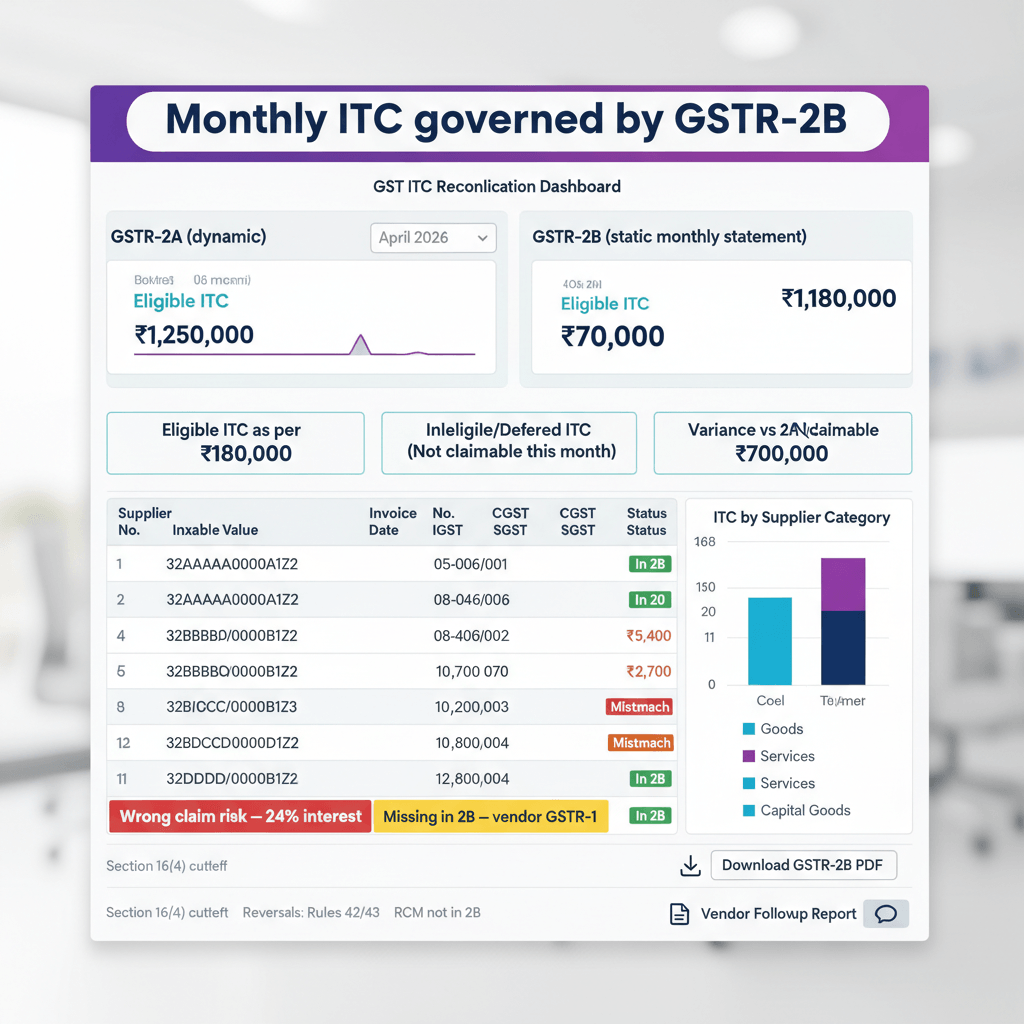
- Compare GSTR 2B with your purchase ledger to protect ITC.
- Push payroll journals with cost centers, and track payroll TDS.
Explore technical primers from AI Accountant, solution overviews from Satva Solutions, and practical guides by Volopay and AC Tax India.
Types of automated accounting integrations in India
- Bank feeds. Automate daily imports for faster reconciliation, no more manual uploads.
- Payment gateways. Sync Razorpay, Stripe, PayU, and others, capture gross, fees, GST on fees, and net credits with accurate dates, see AI Accountant.
- Ecommerce and POS. Bring Shopify or WooCommerce sales with item HSN or SAC, discounts, and channel tags.
- Billing and subscriptions. Connect tools like Zoho Subscriptions or Chargebee for invoices, receipts, and deferred revenue.
- Expense automation. Sync corporate cards and claims from tools like Zoho Expense, auto code spends with GST tags.
- Payroll and HRMS. Post payroll with cost centers and payroll TDS support.
- GST workflows. Prepare GSTR 1 and 3B data, reconcile GSTR 2B, match ITC vendor wise, support e invoice.
- TDS workflows. Prepare challans and returns like 26Q and 24Q, reconcile with 26AS style views.
For broader tool comparisons and India focused insights, review Al Hikma, Mocha Accounting, and BillsDeck.
How automated accounting integrations work behind the scenes
- Data mapping. Map COA, tax codes, HSN or SAC, RCM, and location logic to prevent wrong ledgers and bad ITC.
- Transformations. Clean and normalize data, handle currencies and rounding, use hash checks to avoid duplicates, and add missing metadata where possible.
- Reconciliation logic. Match bank credits to gateway settlements and sales ledgers, match purchase entries to GSTR 2B, escalate clear exceptions, see AI Accountant.
- Controls and reliability. Maker checker, audit trails, real time API syncs or safe batches, retries and alerts for failures.
Additional notes and vendor considerations are covered by Satva Solutions, Volopay, and AC Tax India.
Benefits and ROI from automated accounting integrations
- Faster close. Move from weeks to ten days or less, since entries and matches are prepped daily.
- Less manual entry. Cut typing and copy paste by fifty to eighty percent, focus on review and analysis.
- Fewer notices. Accurate and timely GST and TDS filings reduce notices and penalties.
- Live visibility. Daily syncs power cash flow, burn, AR, and AP views, which improves decision speed.
See supporting discussions from Mocha Accounting, Volopay, and BillsDeck.
Challenges, risks, and how to reduce them
- Poor mapping. A weak COA and tax mapping leads to misclassified GST and ITC misses, run a mapping workshop with your CA, then test in a sandbox.
- API breaks. Vendor changes and rate limits may pause syncs, monitor actively, keep CSV fallbacks, lock SLAs with providers.
- Duplicates or misses. Without idempotency, records can double post or vanish, use unique IDs, hash checks, and exception queues.
- GST mismatches. Vendors may file late, perform monthly GSTR 2B reconciliations, chase gaps on schedule.
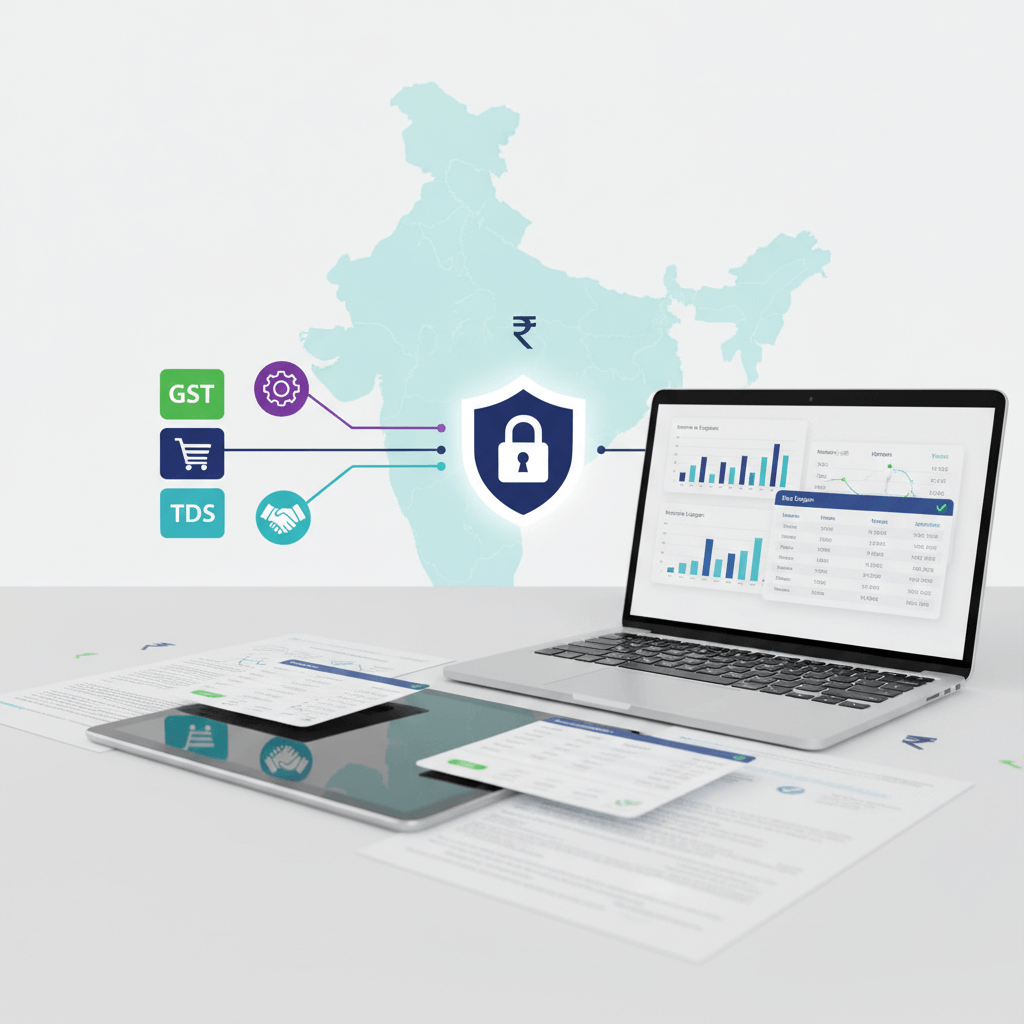
- Security. Use MFA, key rotation, and encryption, choose vendors with SOC 2 or ISO 27001, ask about data residency and access logs.
Tip: Treat exceptions like a product backlog, categorize by root cause, and close the top three drivers every month for continuous improvement.
For more context, see Volopay, Satva Solutions, and Mocha Accounting.
Evaluation checklist for automated accounting integrations
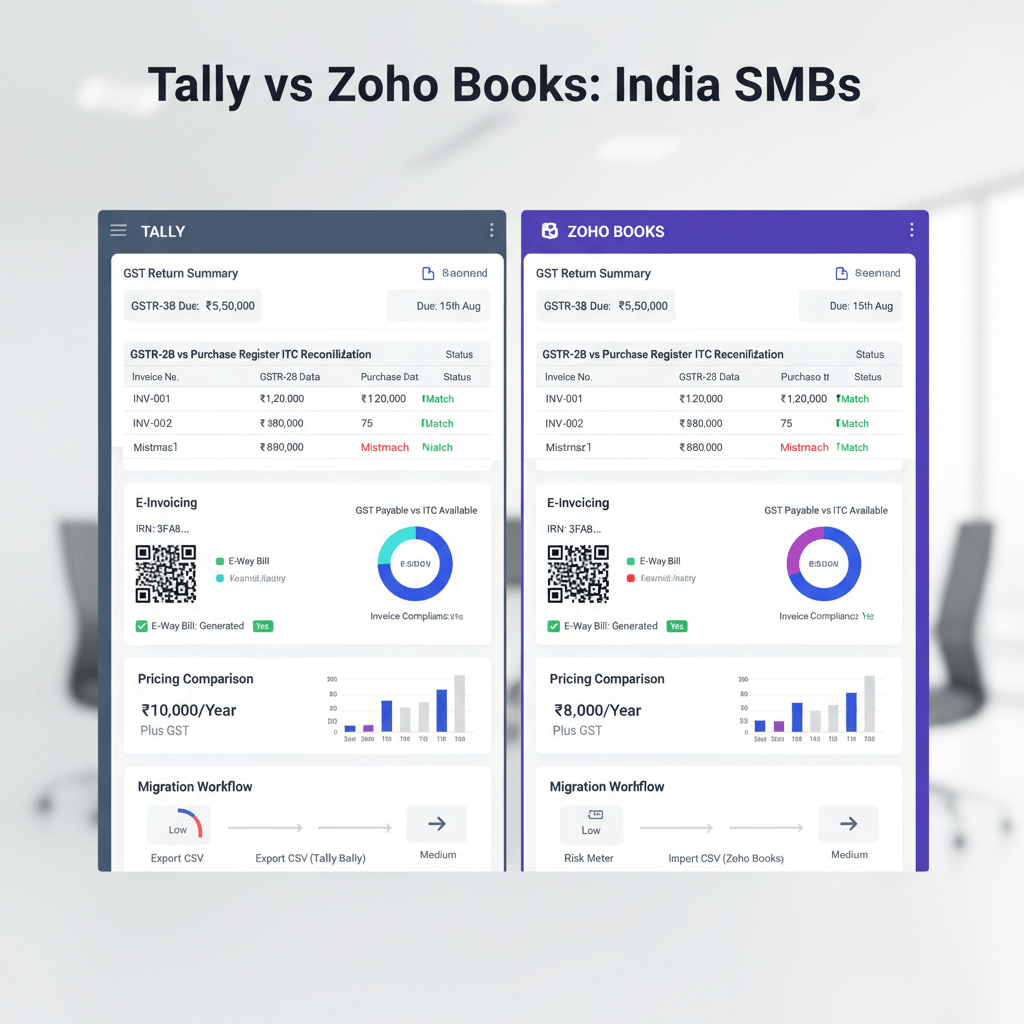
- Compatibility. Support for Tally, Zoho Books, QuickBooks, plus India compliance for GST, TDS, and ROC.
- Type of solution. Native connector, iPaaS, or custom build, clarify who owns maintenance and change management.
- Controls. Audit trails, approvals, activity logs, and change history are non negotiable.
- Data quality. Flexible field mapping, safe rollback for bad syncs, strong deduplication logic.
- Security. ISO 27001 or SOC 2, data residency options, strict secret management.
- Support. SLAs, uptime history, onboarding help, and realistic migration timelines.
Deeper vendor lists and checklists: Satva Solutions, Volopay, BillsDeck, and Mocha Accounting.
Step by step plan to implement automated accounting integrations
- Discovery. List systems, map order to cash and procure to pay, note monthly volumes, document pain points and goals.
- Design. Finalize COA design, GST logic including RCM, HSN or SAC usage, approvals, and maker checker.
- Build. Turn on connectors, map fields, configure transformations and exceptions, write automated tests.
- Validate. Run in parallel for a full cycle, compare variances, fix mapping and tax gaps.
- Go live. Roll out by bank or business unit, enable alerts for failures and large variances.
- Operate. Monthly health checks, quarterly rule tuning as business evolves, keep audit logs tidy.
Implementation primers are available from Mysa, Satva Solutions, and AC Tax India.
Build vs buy vs managed service for automated accounting integrations
- Build. Maximum control and customization, but high engineering effort and support burden.
- Buy. Fast to start for common use cases, but India specific rules for GST, e invoice, and TDS can require add ons.
- Managed service led by a CA. Expert mapping, reconciliation ownership, and steady compliance, ideal for lean teams.
Rule of thumb: If finance is stretched, volumes are growing, and GST or TDS complexity is rising, a CA led managed service delivers the best early accuracy and ROI.
See comparative viewpoints from Mocha Accounting, BillsDeck, and Satva Solutions.
How AI Accountant Virtual Accounting delivers automated accounting integrations
AI Accountant provides a CA led managed accounting and compliance service with a live dashboard. The team connects banks, Razorpay, Shopify, payroll, and expense tools using APIs or structured imports, maps your COA and tax rules, and operates with maker checker and audit trails. Daily syncs and monthly reconciliations keep books current. The team prepares GSTR 1 and 3B, annual filings like GSTR 9 and 9C, runs GSTR 2B checks to protect ITC, manages TDS challans and returns like 26Q and 24Q, advises on payroll, and handles ROC for small companies. The dashboard shows revenue, expenses, cash flow, burn, recent transactions, and filing timelines, and you can talk to your CA team inside it.
Outcome: current books, on time filings, and zero drama. Learn more via AC Tax India, Satva Solutions, and Volopay. For the service page, visit AI Accountant.
Popular tools that support automated accounting integrations
- AI Accountant. CA led managed service with a live dashboard and strong India compliance fit, see AI Accountant.
- QuickBooks Online. Cloud accounting with bank feeds and third party apps.
- Zoho Books. GST ready accounting, tight integrations in the Zoho suite.
- Xero. Cloud accounting with a large app marketplace and bank feeds.
- Tally Prime with connectors. Desktop first, widely used with add ons for bank and GST imports.
- FreshBooks. Simple invoicing and expense tracking for freelancers.
For curated lists and comparisons, see AC Tax India, BillsDeck, and Al Hikma.
Use cases and mini case studies for automated accounting integrations
- Freelancer services. A solo consultant links bank feeds and a simple invoicing tool, invoices, receipts, and expenses auto post with GST tags, manual entry drops by roughly eighty percent, the CA files GSTR 3B on time, the dashboard shows cash and upcoming tax dates.
- D2C startup. Shopify and Razorpay connect to the ledger, gateway fees and GST on fees split correctly, daily sales post with HSN and tax rates, bank credits match to settlements with high accuracy, around ninety percent lines auto reconcile, month end closes in seven days.
- SaaS company. Billing integrates with e invoice, recurring invoices flow in, revenue recognizes on schedule, customer TDS is tracked, errors drop by seventy percent, the compliance calendar prevents filing misses.
Read more practitioner insights via Mocha Accounting, Volopay, and AC Tax India.
Metrics to monitor after you go live with automated accounting integrations
- Auto reconciliation rate. Aim for seventy to ninety percent on bank and gateway lines.
- GST variance. Track the gap between GSTR 2B and purchase ledger, keep it trending down.
- TDS vs 26AS. Confirm that deductions you make or that are made on you match the 26AS summary.
- Close time. Push days to close under ten.
- Exceptions count. Reduce manual review lines and eliminate top root causes monthly.
- Filing timeliness. GSTR 1, GSTR 3B, TDS returns, and annual returns filed on time.
- Working capital indicators. AR days, AP predictability, and cash inflow accuracy.
Helpful references include Volopay, AC Tax India, Mysa, and Mocha Accounting.
Closing thoughts on automated accounting integrations
Automated accounting integrations are now essential for Indian freelancers and startups. They remove manual effort, refresh your numbers daily, and keep you compliant. You do not need a large finance team for enterprise grade control, you need the right connectors, clean mapping, and a steady operating rhythm.
If you want a simple, high confidence path, consider AI Accountant’s Virtual Accounting, a CA led service with a live dashboard, automated data syncs, and on time filings. Book a demo and request a free Integration Readiness Assessment to map your flows and identify fast wins. Learn more via AC Tax India, Volopay, Satva Solutions, and visit AI Accountant to get started.
FAQ
What exactly counts as an automated accounting integration for an Indian startup or freelancer
It is a connector that uses APIs, webhooks, or scheduled imports to sync data from banks, payment gateways, ecommerce, billing, payroll, and GST systems into your ledger. It maps and posts entries, preserves tax details like HSN or SAC, and prepares datasets for filings so your CA focuses on review and exceptions rather than data entry. See introductions by Satva Solutions and Volopay.
Do integrations replace my CA or internal accountant
No, they improve speed and data quality, but India specific compliance needs judgment. A CA validates mappings, handles GST, e invoice, and TDS nuances, reviews exceptions, and owns filings. An AI enabled managed service like AI Accountant combines automation with CA oversight for accuracy and accountability.
How do integrations handle GST, e invoicing, and ITC protection in practice
They post sales with HSN or SAC and tax rates, prepare GSTR 1 and 3B data, reconcile GSTR 2B to purchases vendor wise, and flag ITC gaps. For e invoicing, they generate IRNs or route to your e invoice tool, and manage cancellations within timelines. This reduces notice risk and protects ITC by design.
What should my mapping design include for accuracy from day one
Define a clear chart of accounts, GST tax codes, place of supply logic, RCM handling, HSN or SAC usage, cost centers, and document maker checker flows. Include rules for payment gateway fees and GST on fees, rounding norms, and a rollback plan. A CA led workshop, which services like AI Accountant run at kickoff, avoids costly rework later.
How do these systems avoid duplicates and mismatches during reconciliation
They use idempotency keys, unique transaction IDs, and hash checks, then match bank credits to gateway settlements and sales entries using amount, date windows, and references. Exceptions route to a review queue with clear reasons. If an API fails, a CSV fallback and queued retries maintain continuity.
What security and compliance controls should founders and finance heads insist on
Multi factor authentication, strict role based access, encryption in transit and at rest, audited logs, and standards like ISO 27001 or SOC 2. Ask where data is stored, how secrets are managed, and review uptime and incident history. Managed providers such as AI Accountant operate with CA grade controls and audit trails.
How long does implementation typically take and what drives the cost
Most small to mid sized stacks go live in four to eight weeks. Timeline depends on number of systems, data volumes, migration cleanup, and custom rules for GST and TDS. Cost is driven by scope, transaction counts, and ongoing reconciliation coverage. A managed service bundles tools, mapping, and monthly ops into a predictable fee.
Can integrations support accrual accounting, deferred revenue, and TDS on sales for SaaS
Yes, billing connectors can post invoices, apply revenue recognition schedules, and track customer TDS deductions, with periodic journals to align accruals. For example, a SaaS stack that pairs subscriptions and ledger mapping can automate revenue deferrals and reconcile TDS with 26AS monthly.
How do payment gateway integrations treat settlement timing and fee GST correctly
They post gross order values to sales, split fees and GST on fees to expense and input tax ledgers, then reconcile net credits to bank dates. They keep invoice dates separate from settlement dates, so revenue recognition is correct while cash timing is reflected accurately in the bank reconciliation.
We operate multiple entities and cost centers, can the setup handle that
Yes, with entity scoped connectors, separate ledgers, and consistent COA templates. Cost centers can flow from source systems or be derived through rules. A managed team like AI Accountant will enforce naming conventions, approval workflows, and intercompany mapping for clean consolidation.
How do integrations reduce GST notices and TDS discrepancies over time
By preparing filing data continuously, running monthly GSTR 2B to purchase reconciliations, tracking vendor wise ITC issues, and matching TDS with 26AS or TRACES style summaries. Exceptions are closed before returns. Over a few cycles, notice volume and rework typically drop sharply.
Should we build our own connectors, buy off the shelf, or use a CA managed service
Build for edge case control if you have strong engineering and ongoing support bandwidth. Buy for speed when your cases match a vendor’s templates, but budget for India specific gaps. A CA managed service such as AI Accountant usually delivers the fastest, lowest risk path for lean teams because mapping, reconciliations, and compliance are owned end to end.