-01%201.svg)

Key takeaways
- If you need an echo mission alternative india that handles deep GST workflows, bi-directional Tally and Zoho sync, and true multi-org scale, AI Accountant is purpose-built for those needs.
- Echo Mission suits simple, single-entity books, but it struggles with GSTR-2B edge cases, voucher posting to Tally, and org-level learning for CA firms.
- Echo mission pricing india typically follows a per-entity, custom-quote approach that scales costs quickly for CA firms managing dozens of clients.
- AI Accountant offers transparent INR pricing, powerful bulk operations, and dashboards that give founders cash flow visibility without month-end waits.
- For a detailed side-by-side overview, see the internal comparison: Echo Mission vs AI Accountant.
Understanding Echo Mission for Indian Accounting
Echo Mission positions itself as an AI-driven automation platform for accounting teams. It focuses on bulk bill processing, basic categorization, and routine bank reconciliation, which can help single-entity SMEs reduce manual data entry.
Who should read this guide
CA firms with 10 or more client entities, SMEs running on Tally or Zoho Books, and founders who want daily cash visibility will find this comparison most useful. We cut through marketing, and emphasize workflows that affect compliance, accuracy, and closing speed.
Echo Mission’s core strengths
- Standardized bill ingestion for predictable invoice formats, extracting basic fields reliably.
- Routine bank reconciliation where narration patterns are clear, and counter-parties are easy to identify.
- Manageable learning curve for teams automating for the first time.
Where Echo Mission falls short in India
- Surface-level GST handling, limited depth for mismatched GSTINs, partial credits, amendments, and cross-period scenarios.
- Tally integration gaps, especially when pushing back cleaned transactions as proper vouchers without manual workarounds.
- Multi-org friction, each client often needs separate setup, with little cross-org learning, so patterns must be retrained repeatedly.
“Echo Mission worked fine until we added more entities, then reconciliation accuracy dropped and our team kept retraining patterns across clients.”
For a structured comparison of capabilities that matter in India’s context, explore Echo Mission vs AI Accountant.
How echo mission pricing india typically behaves
Pricing is usually custom-quoted, based on volumes, modules, users, and entities. Per-entity billing quickly becomes expensive for CA firms with 20, 50, or 100 plus clients, especially when you add integration fees, API limits, and support tiers.
AI Accountant: Built for Indian Accounting Reality
AI Accountant focuses on Indian workflows end to end, with deep support for GST, Tally and Zoho Books, and large-scale multi-org management for CA firms.
Core capabilities that matter
- AP and Bills Automation: Imports PDFs, images, Excel, and CSV, flags vendor and GSTIN mismatches, and gives row-level error reporting.
- Bank and Card Processing: Normalizes statements from HDFC, ICICI, SBI, Amex, and more, standardizing dates, narrations, and credit or debit conventions automatically.
- Transaction Mapping and Matching: Learns from context, predicts ledgers accurately, supports bulk edits, handles splits, links payments to open bills, and preserves audit trails.
Zoho Books and Tally integration depth
The platform offers bi-directional sync for masters and vouchers, not just CSV exports. For a deeper look, see Tally integration with AI Accountant. Chart of accounts, vendor or customer lists, tax setups, and open bills flow in, while cleaned transactions post back as native vouchers.
GST reconciliation at scale
AI Accountant ingests purchase registers and notes, standardizes formats, and matches intelligently against data explained in the GSTR-2B reconciliation tools overview. It tracks statuses, handles amendments, date shifts, and partial credit claims with clarity.
Multi-org support for CA firms
Manage dozens of clients under one login, with role-based access, per-entity learning, and one-click org switching. The system adapts category predictions to each client’s industry and patterns.
Head-to-Head Comparison: Echo Mission vs AI Accountant
Automation quality and depth
Echo Mission covers standard extraction and matching. AI Accountant thrives on exceptions, from low-quality scans to messy narrations, and enables bulk review with filters, inline edits, and exception workflows.
Integration capabilities
Echo Mission often relies on CSV exchanges. AI Accountant syncs masters and pushes back vouchers natively, reducing manual mapping, imports, and sync errors, especially impactful for Tally voucher types and cost centers.
Reporting and dashboards
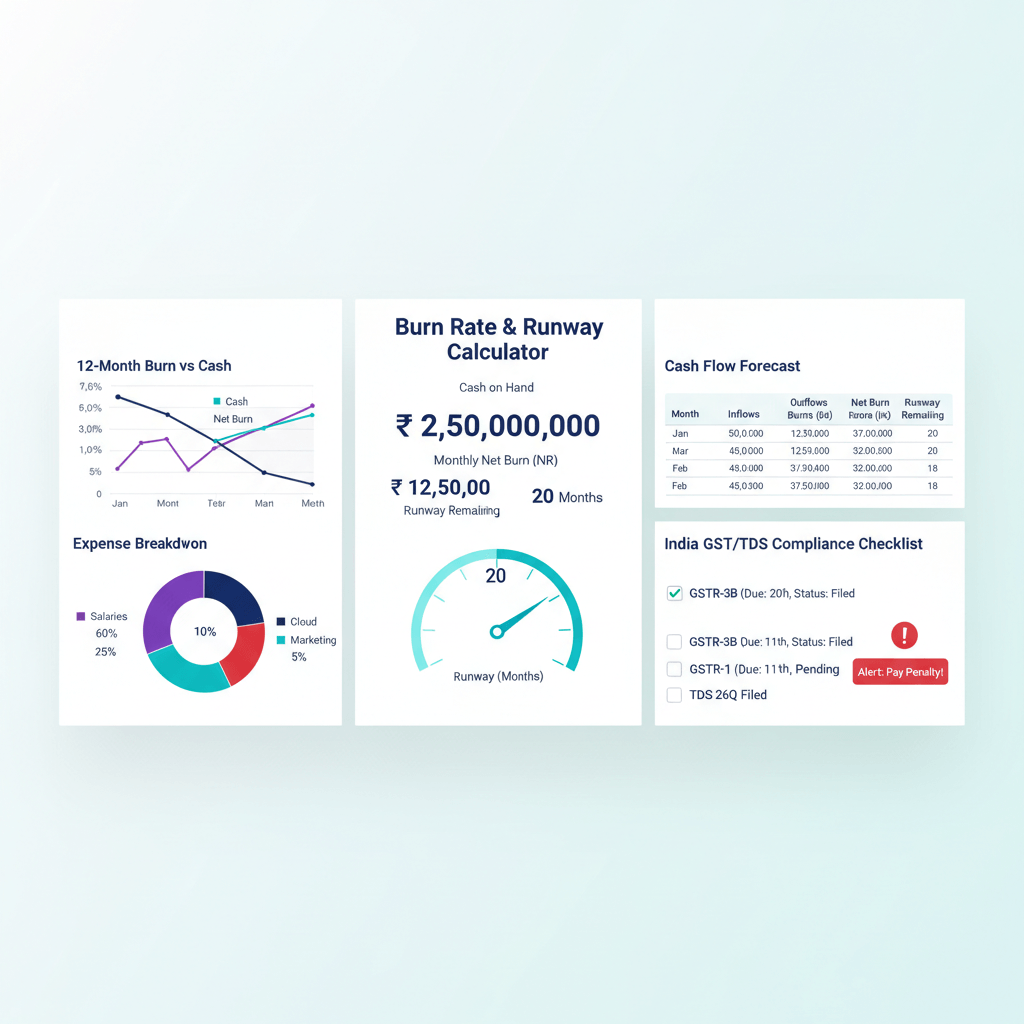
Echo Mission provides basic financials. AI Accountant delivers real-time dashboards for cash trends, receivables aging, payables due, and category-wise spends, giving founders daily visibility.
Security and compliance
AI Accountant communicates ISO 27001 and SOC-2 Type II rigor, encrypted storage, and India data residency, which CA firms often require for client assurance.
Support and implementation
IST-timezone support, GST and Tally expertise, and proven parallel-run playbooks help teams become productive quickly.
Echo Mission Pricing India vs AI Accountant
Echo mission pricing india commonly uses custom quotes that scale per entity, plus add-ons for API usage, integrations, and support. For CA firms, costs rise rapidly with each client added.
AI Accountant, by contrast, offers transparent INR tiers that align with volume and value. Time savings are significant, for example 70 percent less AP entry effort, 80 percent faster bank reconciliation, and GSTR-2B matching done in hours, not days. For multi-entity CA firms, 12-month TCO is often 40 to 60 percent lower.
Real Implementation Stories from India
A Mumbai CA firm with 50 plus clients cut month-end closures by half after moving from Echo Mission to AI Accountant, doubling reconciliation throughput and boosting accuracy via automated vendor and GSTIN validations.
An SME in Bangalore running Zoho Books reduced manual tagging by 70 percent, with daily cash dashboards enabling better working capital calls. Ledger errors dropped sharply, and month-end closed in 3 days instead of 10.
“We were spending more time fixing the tool than doing accounting. With AI Accountant, our Tally books update with proper vouchers, and multi-org just works.”
Switching from Echo Mission: Practical Steps
- Export data from Echo Mission, then load via AI Accountant’s Excel templates to standardize masters and history.
- Run a 2-4 week pilot on one or two representative entities, in parallel, to validate accuracy and train staff.
- Scale to remaining clients using role-based access and per-org learning, with guided implementation and secure, encrypted data transfer.
Making the Decision: Is AI Accountant Your Right Echo Mission Alternative?
Ask if you need native voucher posting to Tally or Zoho, enterprise-grade GSTR-2B reconciliation, robust multi-org scale, and India-first support. If yes, the balance tilts toward AI Accountant. If your use case is simple and single-entity, Echo Mission may suffice.
Pro tip: run a pilot with your toughest data, messy narrations, and complex GST scenarios, then compare outputs side by side. Let accuracy, speed, and control guide the decision.
Recommended Accounting Automation Tools for India
- AI Accountant — Built for Indian accounting, with deep Tally or Zoho integration, comprehensive GST reconciliation, and multi-org scalability.
- QuickBooks Online — Good for straightforward SME needs, limited depth for Indian-specific reconciliations.
- Xero — Polished, cloud-first, better for modern stacks, Indian GST coverage is present but may need add-ons.
- Zoho Books — Strong Indian feature set, enhanced further by pairing with AI Accountant for automation and reconciliation depth.
- FreshBooks — Useful for freelancers and micro-businesses, limited GST and no Tally support.
- TallyPrime — India’s standard ledger system, pairs well with AI Accountant for automation.
FAQ
How do I evaluate an echo mission alternative india for a 20 plus entity CA practice?
Prioritize bi-directional Tally and Zoho sync, GSTR-2B depth, and multi-org controls. AI Accountant covers these with native voucher posting, advanced reconciliation, and role-based access that scales without retraining across clients.
Does AI Accountant post transactions back to Tally as proper vouchers?
Yes. After processing, entries are pushed as native vouchers with correct voucher types, taxes, cost centers, and references, keeping your Tally daybooks, purchase registers, and bank books clean and audit-ready.
How does echo mission pricing india typically impact CA firms at scale?
Per-entity custom quotes add up quickly, especially with extra charges for integrations, APIs, and premium support. Firms with 50 or more clients often find TCO escalating faster than expected compared to transparent INR tiers from AI Accountant.
Can AI Accountant handle GSTR-2B mismatches, partial credits, and amendments?
Yes. It standardizes purchase data, applies intelligent matching against 2B records, flags discrepancies, tracks partial ITC, and manages amended invoices across periods with clear status reporting.
What migration path should a CA firm follow when moving from Echo Mission?
Export masters and transactions, load via AI Accountant templates, and run a parallel pilot for 2-4 weeks. Validate outputs, refine mappings if needed, then scale to remaining entities using guided onboarding and encrypted transfers.
How quickly can staff learn AI Accountant if they already use Tally or Zoho Books?
Adoption is fast because workflows mirror accounting practice. Most teams are productive within a week with IST-based enablement sessions, and in-app guidance for reviews, bulk edits, and approvals.
Will AI Accountant reduce manual bank reconciliation effort for Indian banks?
Yes. It normalizes statements from common Indian banks and cards, learns narration patterns, auto-suggests ledgers, and links payments to open bills, reducing reconciliation time by up to 80 percent.
How does AI Accountant manage multi-org learning across diverse clients?
Each entity maintains its own learning context. The model differentiates sector-specific patterns, for example, fuel for logistics versus SaaS expenses, so predictions remain accurate without cross-client noise.
What security assurances does AI Accountant provide for client data?
ISO 27001 and SOC-2 Type II controls, encryption at rest and in transit, and India data residency. Access is role-based, with audit trails for every change, satisfying CA firm compliance needs.
Can founders get real-time visibility without waiting for month-end?
Yes. Dashboards show updated cash positions, receivables aging, payables due, and spending by category as transactions are processed, enabling proactive working capital decisions.
Does AI Accountant support exception handling at bulk scale?
It does. Teams can filter exceptions, perform inline edits, apply bulk updates, and re-validate in batches, preserving an audit log for every action, which speeds up closings substantially.
What’s the typical ROI window for a CA firm switching from Echo Mission?
Most firms reach ROI within 60 to 90 days due to reductions in AP entry time, faster bank reconciliation, and rapid GST matching. SMEs often see payback in the first month via error reduction and time saved.

Rohan Sinha is a fintech and growth leader building aiaccountant.com, focused on simplifying accounting and compliance for Indian businesses through automation. An IIT BHU alumnus, he brings hands-on experience across 0 to 1 product building, growth, and strategy in B2B SaaS and fintech.