-01%201.svg)
Key takeaways
- You can book expenses for occasional vendors without creating new supplier records, using a single generic “One-Time Supplier” while capturing full invoice details in the transaction.
- Unchecked vendor creation leads to duplicates, payment errors, and compliance issues that surface during audits and year-end reconciliations.
- Adopt clear policy patterns: generic one-time vendor, reimbursements or corporate cards for micro-purchases, petty cash for nominal amounts, smart thresholds, and compliance-first exception lists.
- For India, get GSTIN, invoice data, and apply correct TDS, RCM, and e-invoice rules even for one-time suppliers, so GSTR-2B matching remains accurate.
- Automate extraction, duplicate detection, routing, and threshold-driven conversion to full vendors, so your vendor master stays clean.
- Quarterly reviews, maker-checker controls, fuzzy matching, and fraud alerts keep your supplier list lean and your controls strong.
- Track KPIs like ITC mismatch rate for one-time vendors, duplicate detection rate, and conversion from one-time to regular suppliers.
Why One-Time Supplier Management Matters for Your Books
Creating a new supplier for every ad-hoc bill clutters your vendor master, creates duplicates, and slows your close. Over time, the bloat becomes costly, and the pain shows up during audits, when reconciliations take longer and controls look weak.
- Duplicates and payment errors: Slight name variations split history across codes, risking double payments and missed discounts.
- Tax complications: GST reconciliation breaks when the same GSTIN sits under multiple vendor names. TDS ledgers get messy when transactions scatter across codes.
- Operational drag: Longer month-ends, heavier data cleanups, and more audit queries, all preventable with a smarter approach.
A clean vendor master is not an accident, it is the product of policy, process, and automation that treat one-time suppliers differently from strategic vendors.
Policy Patterns: Choose Your One-Time Vendor Strategy
The Generic “One-Time Supplier” Approach
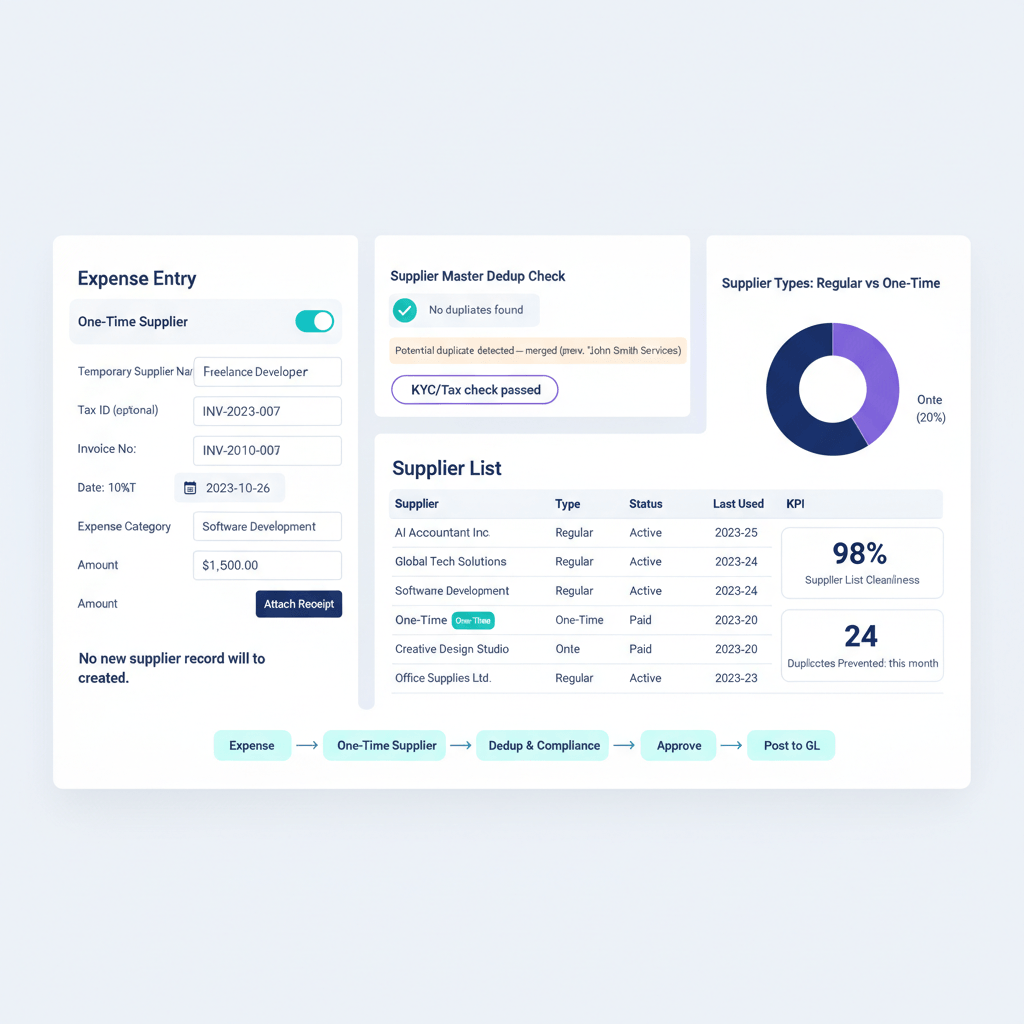
Create one vendor called “One-Time Supplier” or “Miscellaneous Vendor.” Post all occasional bills to this vendor, but capture the actual vendor’s legal name, GSTIN or PAN, address, invoice number and date, and contact details in custom fields or narration. You keep postings simple, while preserving audit-ready traceability.
This suits low-frequency, low-value B2B purchases. The trade-off is reporting discipline, so you can promote repeat suppliers to full records when they cross thresholds.
Employee Reimbursement and Corporate Card Routes
For micro-purchases below your threshold, route spends via reimbursements or P-cards. This removes the need for vendor master interaction, as long as receipts are captured and approvals flow correctly.
Petty Cash for Minimal Amounts
Use petty cash for tiny, local expenses with no GST implications. Keep vouchers and receipts attached to the voucher entry, use it sparingly, and reconcile cash frequently.
Smart Threshold Rules
Adopt rules like “Create a full vendor record only if spend exceeds ₹50,000, or supplier recurs more than once in six months.” Everything else uses the generic flow, with automated flags to convert recurring suppliers.
Compliance-First Exception Lists
Always create full records for categories that carry added compliance, for example legal services, rent, and certain professional services. This de-risks TDS, contracts, and statutory reporting from day one.
India Compliance Checklist for One-Time Suppliers
GST Compliance
Capture GSTIN, invoice number and date, HSN or SAC, and tax breakup even when using a generic vendor. This ensures accurate ITC claims and smooth GSTR-2B reconciliation.
E-Invoice Requirements
Check e-invoice applicability for the supplier. If mandated, store the IRN and QR data alongside the bill. Missing IRN for eligible suppliers can trigger ITC issues.
TDS and TCS Obligations
Evaluate nature of payment under sections such as 194C, 194J, or 194Q, and apply TDS accordingly. If PAN is unavailable, default rates apply. Automate these checks to avoid under-deduction.
Reverse Charge Mechanism
Identify RCM scenarios like freight, rent-a-cab, or import of services, and post self-invoice entries as required, with correct tax ledgers.
KYC Documentation
Maintain basic KYC: PAN or GSTIN, registered address, and verified bank details when paying via transfer. This protects against fraud and satisfies auditors.
Step-by-Step Workflow to Book Expense Without New Supplier
Step 1: Initial Bill Verification
Verify completeness: legal name, GSTIN or PAN, invoice number and date, item descriptions, tax breakup, totals, and banking details. Return incomplete bills for correction.
Step 2: Select Generic Vendor and Capture Details
Choose “One-Time Supplier.” In custom fields or narration, record the exact legal name, GSTIN or PAN, address, invoice number and date, and a contact in case of queries.
Step 3: Map to Correct Ledgers
Post expense to the right GL, map GST to input ledgers, apply TDS to the correct payable ledger, and handle RCM where applicable. This keeps P&L, balance sheet, and tax ledgers accurate.
Step 4: Attach Documentation
Attach the invoice image or PDF, POs or GRNs if applicable, and approval emails. Tag cost centers, departments, or projects for allocation.
Step 5: Process Payment
Pay using the actual vendor bank details. Ensure remittance advice shows the actual vendor name and invoice number. Set an alert to flag repeat appearance within six to twelve months.
Step 6: Periodic Review
Quarterly, identify repeats and promote to full vendor records. Merge accidental duplicates, tune thresholds, and update exception lists based on patterns.
Preventing Vendor Master Bloat: Keep Supplier List Clean
Governance Framework
Define naming conventions, enforce GSTIN as a unique key for Indian vendors, and run maker-checker on all new creations. Use fuzzy matching to flag near-duplicates before they enter the master.
Regular Cleanup Routines
Quarterly, inactivate vendors with no activity for twelve months, merge duplicates, and fix invalid GSTIN or PAN entries. Track a vendor hygiene score to keep attention on data quality.
Fraud Prevention Controls
Require extra approval for one-time vendor payments above a lower threshold, set alerts for payments clustered just below approval limits, and scrutinize bank detail changes. For concepts and controls, see this overview on preventing fraud risk in one-time vendor payments.
System Configuration for Popular Accounting Platforms
Zoho Books Configuration
Create a “One-Time Supplier” contact. Add mandatory custom fields such as Actual Vendor Name, Actual GSTIN, and Invoice Reference. Add validation for GSTIN format and build a report grouping by Actual GSTIN for ITC checks. Set an alert when the same Actual GSTIN appears more than twice in six months.
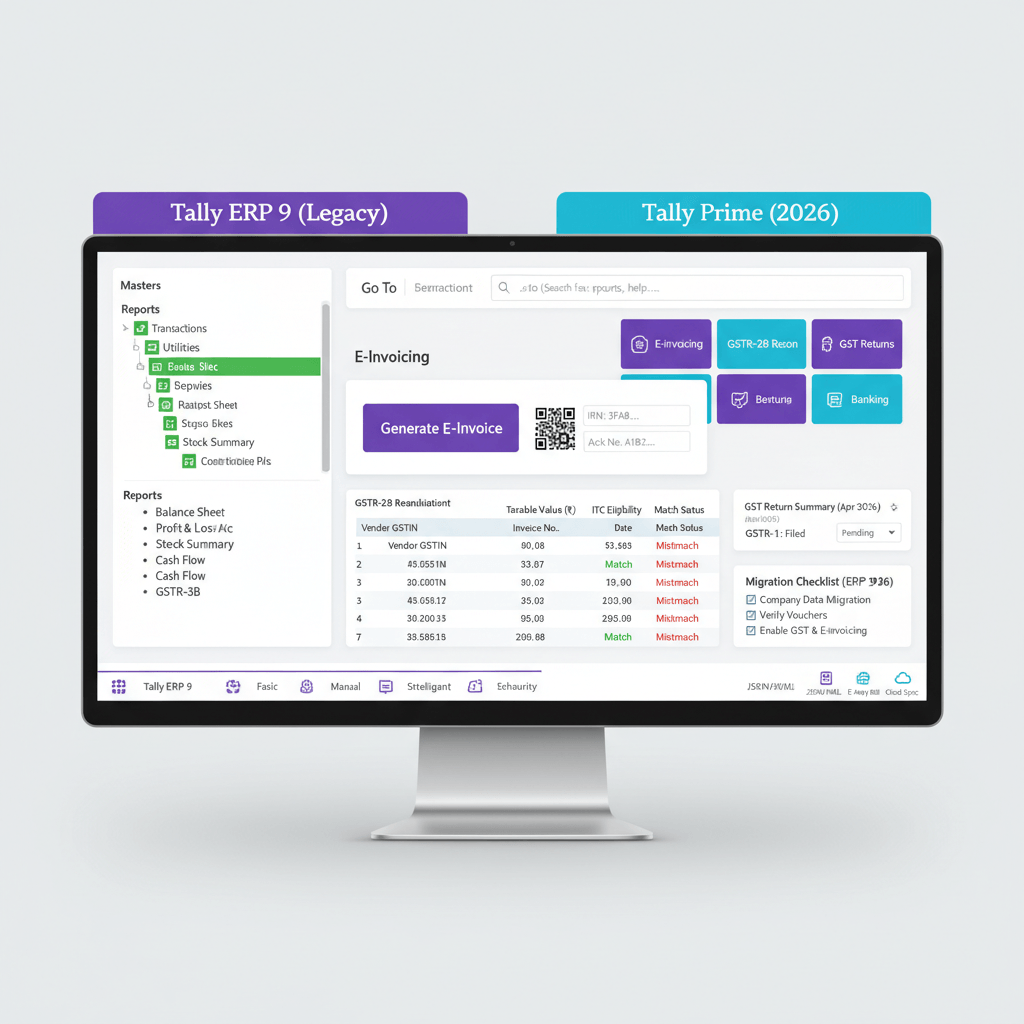
Tally Setup
Create a ledger under Sundry Creditors named “Sundry Creditors - One Time Vendors.” In narration, capture “Vendor: Name | GSTIN: Number | Inv: Number.” Consider a Voucher Class with preset GST and TDS logic. Run a period-end report to identify one-time vendors turning regular, then create proper ledgers and relink going forward.
SAP, CMiC, and Dynamics 365 Tips
Many ERPs support OTV workflows out of the box. See SAP ERP one-time vendor help, the CMiC guide to creating and using a one-time vendor, and Microsoft’s Dynamics 365 task to create a PO for a one-time supplier. For context and scenarios, review this summary on dealing with one-time vendors and these three scenarios for one-time vendors. A short YouTube walkthrough on one-time vendors can also help train new team members.
Integration with Automation Tools
Automation extracts invoice data, detects duplicates, and routes transactions to the generic vendor while storing the actual vendor identity in the background. Threshold rules then trigger vendor creation only when justified. Systems like AI Accountant read invoices, map taxes, and block redundant supplier creation automatically.
For process design inspiration beyond AP, see this perspective on how to improve the vendor payment process, then layer your one-time vendor policies on top.
How Automation Transforms One-Time Vendor Processing
Modern tools reduce manual data entry, ensure GST and TDS logic applies consistently, and keep GSTR-2B matching intact even when the accounting entry uses a generic vendor, because reconciliation runs on the actual GSTIN. They create auditable trails, shorten cycle times, and surface exceptions that truly need a human decision.
Edge Cases and Tricky Scenarios
When One-Time Vendors Become Recurring
If frequency increases or spend crosses your limit, convert to a full vendor, merge history by GSTIN where possible, and update reporting so continuity is preserved.
Foreign One-Time Suppliers
Handle IGST for imports, track LUT for exports when relevant, and store Bill of Entry numbers. Continue to use the generic vendor, but expand custom fields for cross-border data points.
Cash Purchases Without GST
Document robustly with receipts and approvals. You cannot claim ITC, but the expense and controls must still be clear.
Credit Notes from One-Time Suppliers
Reference the original bill in your narration or custom field, and ensure reversal entries hit the right ledgers for tax and expense.
Advances and Refunds
Post advances to the generic vendor with detailed notes, and apply refunds against the same record. Reconcile these during quarterly reviews to avoid lingering balances.
Sample Standard Operating Procedure
One-Time Vendor Thresholds: One-time if total spend is below ₹50,000 and frequency is once per six months. Exceeding either triggers full vendor creation.
Mandatory Fields: Actual legal name, GSTIN or PAN, invoice number and date, verified bank details.
Required Attachments: Invoice image or PDF, PO or GRN where applicable, approval email above ₹10,000.
Automatic Checks: TDS section logic, GST rate validation, RCM triggers, and GSTIN format validation.
Conversion Process: System flags repeat or high-value suppliers, accounts verifies no duplicate exists, manager approves creation, and future transactions move to the new vendor code.
Key Metrics to Monitor
- Share of one-time bills in AP volume, target a healthy mix aligned to your purchasing model.
- New vendors created plus duplicate detection rate, high numbers indicate weak thresholds or insufficient matching.
- GST ITC mismatch rate for one-time vendors, aim for near zero through proper GSTIN capture.
- Cycle time to post one-time invoices, it should beat regular vendor postings.
- Conversion rate to full vendors, use it to refine thresholds and exception lists.
Putting It All Together
Use a generic one-time vendor to book ad-hoc expenses, capture full supplier identity in the transaction, apply tax rules correctly, and set thresholds to decide when a supplier deserves a full record. Combine governance, periodic cleanup, and automation to keep your vendor master clean, your compliance strong, and your close faster. When the next review or audits arrive, clean data and clear policies will do the talking.
FAQ
How do I book a one-time supplier invoice without creating a new vendor in Tally?
Create a Sundry Creditors ledger called “Sundry Creditors - One Time Vendors,” post the bill to this ledger, and use the narration to store legal name, GSTIN or PAN, invoice number and date, and contact. Configure a Voucher Class to prefill GST and TDS logic. Automation tools like AI Accountant can push these entries to Tally with structured narration consistently.
What fields must I capture for GST compliance when using a generic vendor?
Record legal name, GSTIN, invoice number and date, HSN or SAC, tax breakup, place of supply, and whether e-invoice and IRN apply. This ensures ITC eligibility and accurate GSTR-2B matching, even though the vendor code is generic.
How should I handle TDS for a one-time vendor when PAN is not available?
Apply default rates as per the Income Tax Act when PAN is missing, for example higher TDS where required. Post TDS to the correct payable ledger and generate Form 16A as usual. AI Accountant can auto-detect sections like 194C or 194J and apply rates based on the invoice description.
When should a one-time supplier be converted into a full vendor record?
Convert when the supplier recurs within the review window, or cumulative spend crosses your monetary threshold, for example ₹50,000. Use GSTIN matching to avoid duplicates, and migrate future transactions to the new vendor code.
Can I claim ITC on one-time vendor invoices posted to a generic vendor?
Yes, as long as GSTIN, invoice data, and tax breakup are correctly captured and the supplier’s invoice appears in your GSTR-2B. Reconciliation should key off the actual GSTIN, not the vendor code.
What is the best way to prevent duplicate one-time vendor payments?
Use system checks for duplicate invoice numbers by vendor, fuzzy name matching, and mandatory attachment of invoice PDFs. Maker-checker approvals and payment run reviews add control. AI Accountant flags duplicates at ingestion by comparing vendor identity, GSTIN, amount, and invoice date.
How do I process a credit note from a one-time supplier?
Post the credit note against the same generic vendor, reference the original invoice in narration or a custom field, and ensure GST reversal or adjustment entries flow to the right ledgers. Keep the document attached for audit trails.
What is the right channel for tiny, ad-hoc spends, for example snacks or parking?
Use petty cash or corporate cards under a defined limit, with receipt capture and quick approvals. Reserve the generic vendor route for ad-hoc B2B bills that need proper invoice posting and tax treatment.
How do I handle foreign one-time vendors for imports of services?
Post through the generic vendor, apply IGST and RCM when applicable, store the invoice in foreign currency with exchange details, and capture Bill of Entry where required. AI Accountant can tag cross-border fields and post compliant entries to your ERP.
What controls should I enable to mitigate fraud risks in one-time vendor payments?
Lower approval thresholds for one-time vendors, lock down bank detail changes, monitor transactions just below limits, and inactivate generic vendor records after payment where feasible. Centralized ingestion with AI Accountant helps, since it standardizes validation and flags anomalies early.
How can I train my team quickly on one-time vendor workflows?
Create a simple SOP with screenshots, record a short demo, and reference vendor-specific guides, for example SAP one-time vendor help or Dynamics 365 one-time supplier PO. AI Accountant can reduce training needs by automating extraction and routing.
Should I keep an exception list of categories that always need full vendor creation?
Yes, define categories like legal, rent, or high-risk services that demand full KYC, TDS, and contract review. This list prevents shortcuts where compliance is non-negotiable.