-01%201.svg)
Key takeaways
- Separate business and personal money, open a dedicated account, and choose cash or accrual accounting early, then stick to it.
- Set up a clean chart of accounts, compliant invoicing with GSTIN and HSN or SAC, and digital document storage for at least seventy two months.
- Follow a simple daily, weekly, monthly, quarterly, and annual routine so reconciliations, MIS, and filings happen on time.
- Focus on GST, TDS, income tax, payroll, and ROC, small misses create interest and penalties, clean books prevent notices.
- Read your numbers with a short KPI pack, gross margin, AR days, inventory turnover, burn, and runway drive better decisions.
- Run a rolling thirteen week cash flow, improve collections, and manage vendor terms to protect liquidity.
- Avoid common mistakes, no mixing funds, no skipped reconciliations, no missing proofs, add a monthly CA review.
- Evaluate virtual accounting for accuracy, visibility, and compliance, a CA led service like AI Accountant can deliver clean books plus a live dashboard.
- Use ready templates, checklists, and a compliance calendar to cut errors and save time.
Introduction to Accounting for Small Business Owners
Accounting for small business owners is how you record cash in and out, keep proofs, and stay aligned with Indian rules like GST and TDS. Done right, it becomes a decision system, not just a compliance chore. If you are moving from spreadsheets, this guide gives you a simple, practical path to set up, build routines, stay compliant, and read your numbers with confidence.
You will also see where CA led Virtual Accounting fits. A managed service like AI Accountant pairs a dedicated CA team with a live dashboard, you get clean books, filings on time, and clear reports without chasing people over email.
Think of accounting as the daily habit that reduces risk, saves tax, and helps you scale without chaos.
What Good Accounting for Small Business Owners Looks Like
Bookkeeping versus accounting
Bookkeeping is the daily capture of sales, purchases, expenses, and bank entries. Accounting reviews, reconciles, and reports those entries into insights and filings. You need both, with maker checker review for accuracy.
Core financial statements
- Profit and Loss shows income, cost, and profit over a period, track margins and spending trends.
- Balance Sheet shows assets, liabilities, and equity on a date, know what you own and owe.
- Cash Flow Statement shows cash from operations, investing, and financing, reveals whether the business funds itself or needs support.
Cash versus accrual accounting
- Cash basis records income when you receive money and expenses when you pay, simple for many service firms without inventory or heavy credit.
- Accrual basis records income when earned and expenses when incurred, better when you scale, offer credit, or carry stock.
How to choose in India
- Cash basis can work for simple operations, service firms, and presumptive tax cases.
- Accrual is better for inventory heavy MSMEs, firms with credit sales, and when you need monthly margin accuracy.
Tip: Pick one method and stick with it, mid year changes distort profit and confuse filings. If funding or scale is near, adopt accrual early. For deeper best practices, see this overview and this guide.
Getting Started Set Up Your Accounting Foundation
First, separate business and personal money. Open a dedicated business bank account and run all sales, purchases, and expenses through it. This one step reduces tax pain and audit stress.
Bank and payments
Link your business account to UPI and payment gateways, map all bank feeds and gateway settlements into your books so timing differences are clear.
Chart of accounts
Create simple categories that match your business. Revenue can include Sales and Services. Expenses can include Rent, Salaries, Marketing, Travel, Software, Utilities, and Finance Costs. If you sell products, add Cost of Goods Sold for materials and freight. If you sell services, add Consulting Fees, Subcontractor Costs, and Training. Keep it lean at the start. For a primer on charts, see this guide.
Invoicing
Include your GSTIN, add HSN or SAC codes, show tax rate and totals, enable E invoice when turnover crosses five crore rupees.
Document retention
Save bills and receipts digitally for at least seventy two months, it simplifies GST reconciliations and TDS checks later.
Tools for the foundation
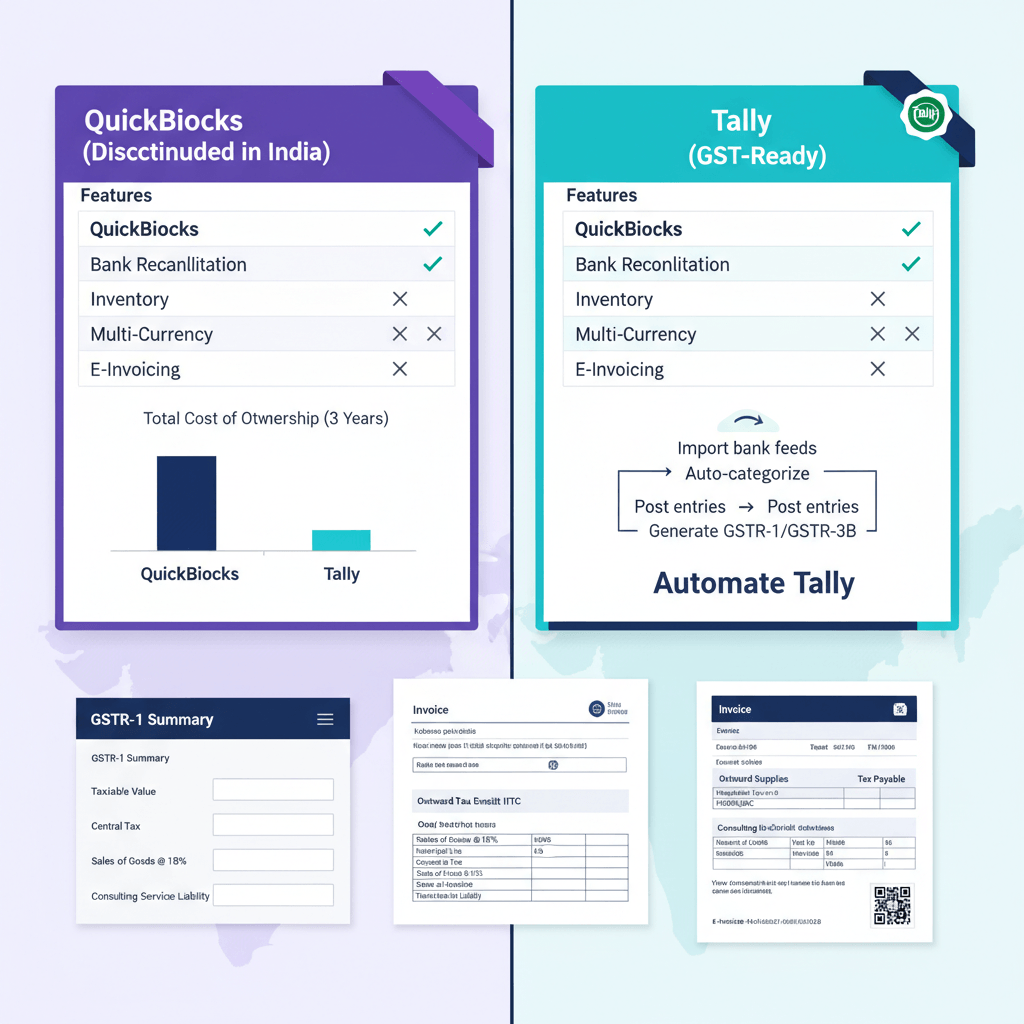
Start with what you can manage, then upgrade as you grow. Options include AI Accountant, QuickBooks Online, Xero, Zoho Books, TallyPrime, and FreshBooks. CA led Virtual Accounting gives you the team plus the system in one place.
Why this matters
A tidy foundation means fewer errors, faster closes, and smooth audits. It also makes tax filings easier because every number ties back to a clear source. For more tips, see this checklist.
Your Small Business Bookkeeping Routine Daily Weekly Monthly Quarterly Annual
Routines keep your books accurate. Think of it like brushing your teeth, short regular steps prevent big costly fixes later.
Daily and weekly
- Record sales and expenses the same day, or at least once a week.
- Track accounts receivable and accounts payable.
- Manage petty cash with simple vouchers.
- File or upload proofs for every entry.
Monthly
- Reconcile bank accounts and payment gateways.
- Review the Profit and Loss and compare to last month.
- Compute payroll TDS and keep proofs.
- Prepare a short MIS pack highlighting revenue, margins, and cash.
Quarterly
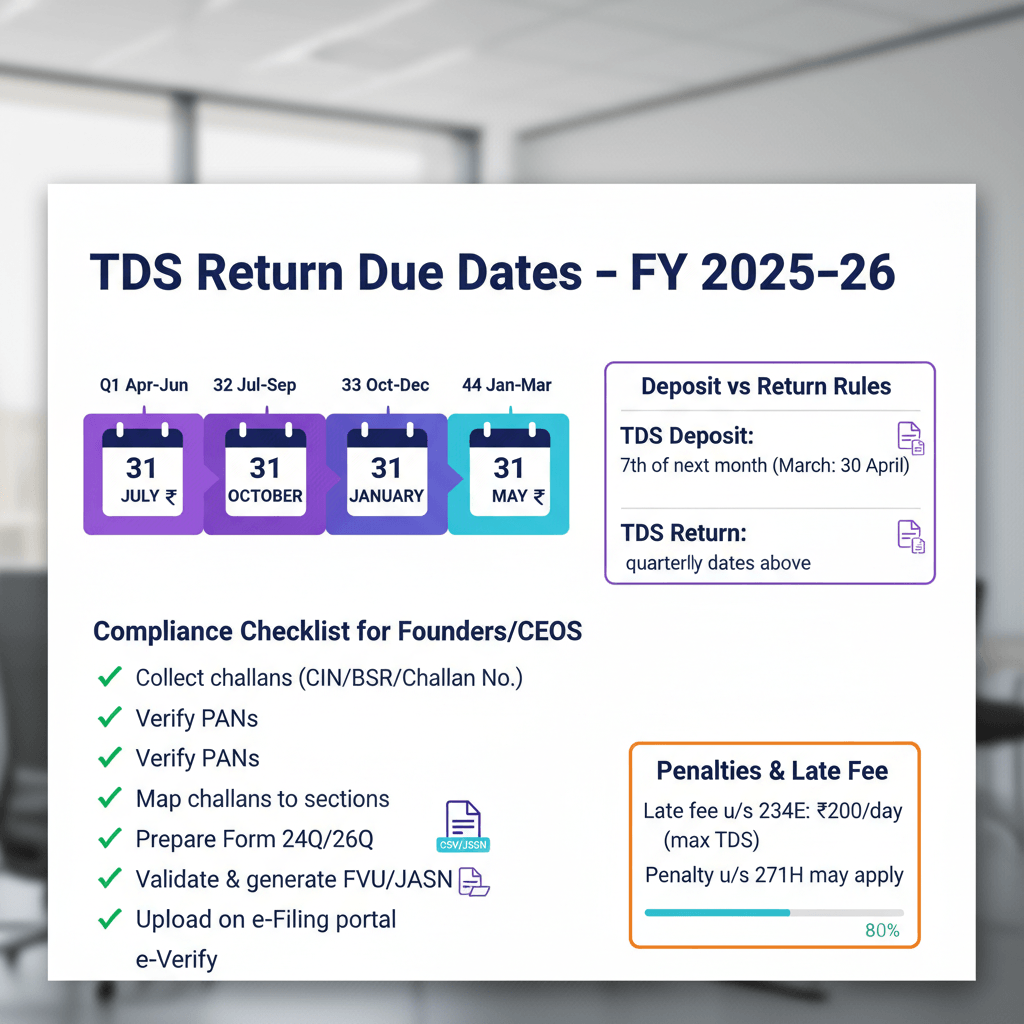
- File GSTR 1 and GSTR 3B as applicable.
- Pay advance tax if due.
- Review inventory valuation and slow moving items.
Annual
- Close the year with clean schedules for fixed assets and provisions.
- File income tax returns.
- File GSTR 9 and 9C if applicable.
- File ROC forms if you are a small company.
Tip: You can see this schedule live in the AI Accountant dashboard, it shows deadlines, status, and ownership with alerts so you never miss a due date. See best practices at MyStartupSolution and Finsmart.
India Compliance Essentials for Accounting for Small Business Owners
In India, compliance is as important as bookkeeping. A small miss can lead to interest, late fees, or notices. Focus on GST, TDS, income tax, payroll, and ROC if you are a small company. For an overview of managed services, see this explainer.
GST basics
- Register when turnover exceeds twenty lakh rupees, or when registration is mandatory by nature of supply.
- Apply place of supply rules to decide CGST plus SGST versus IGST.
- Apply reverse charge where required, for example on GTA services.
- Use correct HSN or SAC codes and tax rates.
- Reconcile sales and purchases to avoid mismatches and penalties.
- Enable E invoice if turnover exceeds five crore rupees.
TDS basics
- Deduct TDS on salaries under Form 24Q.
- Deduct TDS on professional fees and certain payments under Form 26Q.
- Pay challans on time and file returns, verify Form 26AS and AIS.
Income tax
- Consider presumptive tax if turnover is below two crore rupees and conditions fit.
- Pay advance tax quarterly to avoid interest.
- Tax audit may apply above specified thresholds, confirm current limits with your CA.
Payroll
- Deduct TDS monthly on salary, collect proofs of investment, issue Form 16 on time.
ROC for small companies
- File MGT 7 and AOC 4 annually, do MSME vendor filings if required.
- Maintain minutes and statutory registers.
Common risks and costs
- Late fees can be two hundred rupees per day for some returns.
- Interest can be up to eighteen percent on delays.
- A simple checklist and monthly reconciliations reduce these risks.
Note: GSTN and CBDT systems match data better now, clean books limit notices. CA led compliance management from AI Accountant keeps you on track without stress. See more best practices at this guide.
Read Your Numbers KPIs That Drive Better Decisions
Profit and Loss insights
- Track gross margin and operating margin, investigate dips fast.
- Review revenue quality, grow with stable margins rather than heavy discounting.
- Watch expense lines that creep up month after month.
Balance Sheet checks
- Monitor working capital, current assets minus current liabilities.
- Track accounts receivable days, receivables divided by revenue then multiplied by three hundred sixty five, aim for less than forty five days when possible.
- Check inventory turnover, slow stock ties up cash and space.
Cash Flow signals
- Separate operating, investing, and financing cash flows.
- If pre profit, track burn rate and compute runway as cash divided by monthly burn.
Make it visual
A simple weekly graph of cash in and cash out can reveal trouble early. Explore ideas for dashboards here, cash flow and runway.
AI Accountant tip: AI insights and alerts flag unusual spends, margin shifts, and runway changes so you can act early. For more on reporting, see this reporting guide.
Cash Flow Management for Small Business Owners
Cash is the fuel of your business, profit without cash can still cause a crisis. Build a rolling thirteen week cash flow plan and update it every week.
How to build a simple thirteen week forecast
- List expected inflows by week, customer collections, new sales, loan draws, other receipts.
- List expected outflows by week, salaries, rent, vendors, GST, TDS, EMIs, and taxes.
- Add opening cash and compute net cash each week.
- Create two versions, a base case and a stress case with slower collections or higher costs.
- Review every Friday and adjust next week plans.
Improve collections
- Set a clear credit policy and enforce it.
- Offer a small early payment discount.
- Send reminders three days before due and on the due date.
Manage vendors and spend
- Negotiate longer payment terms with key suppliers.
- Order inventory using reorder points and lead time.
- Cut non essential subscriptions you do not use.
Layout tip: Use columns for Week 1 to Week 13 and rows for inflows and outflows, keep it simple so you actually use it. For a broader primer, see this step by step guide.
Common Mistakes in Accounting for Small Business Owners And Easy Fixes
- Mixing personal and business money, Fix: Use separate accounts and cards, record drawings and capital clearly.
- Skipping reconciliations, Fix: Reconcile banks and gateways monthly without fail.
- GST or TDS errors, Fix: Classify supplies right, use proper rates, deduct on time, and reconcile with returns.
- No document backup, Fix: Use a cloud repository, store bills, invoices, and contracts in your accounting system.
- Doing it all yourself without review, Fix: Add a monthly CA review, a second set of eyes prevents costly issues.
For more checklists, browse this playbook and this resource.
DIY vs Hiring an Accountant vs Virtual Accounting
Do it yourself
- Effort is high, you enter data, reconcile, and learn rules.
- Accuracy is low to medium if you are new.
- Cost is low, hidden time cost is high.
- Visibility is basic with spreadsheets and simple reports.
Hire an in house accountant
- Effort becomes medium, you still manage and review.
- Accuracy is medium if you hire well and create checks.
- Cost is medium with salary and tools.
- Visibility improves with monthly reports.
Virtual accounting with a CA led team and a dashboard
- Effort is low, bookkeeping, compliance, and reporting are managed.
- Accuracy is high with workflows, maker checker, and expert review.
- Cost is optimized with a managed service.
- Visibility is live with a dashboard for financials, cash flow, and compliance status.
When to switch
- Revenue at fifty lakh rupees or more.
- Team size more than five.
- Complex GST like multi state or exports.
What to look for
- CA led service with clear service levels and timelines.
- Security practices and data controls.
- MIS dashboards with cash and KPI insights.
How AI Accountant Virtual Accounting Helps Small Business Owners
AI Accountant is a CA led managed accounting and compliance service with a central dashboard. You get a dedicated CA team that runs day to day books and filings, while the dashboard provides real time visibility of financials, documents, and statutory status. Learn more at aiaccountant.com.
What the CA team handles
Accounting and bookkeeping
Monthly books for sales, purchases, expenses, bank entries, ledger clean ups, year end closing, schedules, fixed asset registers, inventory records and reconciliation, accounts receivable and payable, bank and payment gateway reconciliations, cash flow preparation, MIS reports, and support with statutory audit coordination.
Taxation and compliance
GST registration, GSTR 1 and GSTR 3B, annual GSTR 9 and 9C, advisory on place of supply, reverse charge, HSN and tax rates, E invoice enablement, and GST health checks with reconciliations.
Income tax
ITR filing for individuals, partnerships, and companies, TDS advisory and compliance including monthly challans and Forms 26Q, 24Q, 27Q, 26QB, 26QC, and 26QD, income tax and TDS health checks, advance tax, tax audit preparation, international tax advisory, expat tax and salary structuring, and 15CA preparation.
Payroll services
Monthly TDS computation and salary structure advisory.
Annual ROC and secretarial support
MGT 7, AOC 4, MSME filings, DIN and director changes, DIR 3 KYC, share capital changes, board meetings and minutes, AGM support, statutory registers, board report, and annual report.
What the dashboard shows
- Financial overview, revenue, expenses, profit and balances.
- Income and expense breakdowns and trends.
- Cash flow trends, burn rate, and runway.
- AI insights and alerts for anomalies and deadlines.
- Recent transactions and bank statement analysis.
- Secure document repository with seven plus years archive.
- Compliance dates and filing status with nudges.
- Central chat with your CA team.
Onboarding timeline
- Data handover and health check.
- Ledger cleanup and chart setup.
- Go live in two to four weeks in most cases depending on volume.
A quick example
A services owner reduced accounts receivable days by twenty percent after setting clear credit rules and weekly follow ups by the AI Accountant team, and avoided a fifty thousand rupee GST penalty when monthly reconciliations caught a mismatch early.
Tools Templates and Checklists for Accounting for Small Business Owners
Templates
- Chart of accounts starter, Revenue has Sales and Services, Expenses include Operations, Admin, Marketing, Travel, Software, Utilities, and Finance Costs, add Cost of Goods Sold if you sell products.
- Compliance calendar, Monthly TDS, quarterly GSTR 3B and GSTR 1 for many, annual ITR by July thirty one for non audit cases, adjust for your exact category.
- Invoice template, GSTIN, HSN or SAC, item details, quantity, rate, tax, totals, customer GSTIN and place of supply if registered.
- Year end close checklist, Bank and gateway reconciliations, fixed asset register updated, provisions recorded, debtors and creditors reviewed, inventory checked.
Recommended tools
- AI Accountant, managed CA led service with a live dashboard.
- QuickBooks Online, Xero, Zoho Books, TallyPrime, FreshBooks, Wave Accounting.
How to use them together
- Record daily entries and attach proofs.
- Review the dashboard or reports every week.
- Follow the compliance calendar to avoid interest and late fees.
- Use the checklist at month end and year end so nothing slips.
Download note: Want a ready pack, reach out to request the templates and checklists used by the AI Accountant team. For more best practices, visit MyStartupSolution.
Conclusion and Next Steps Master Accounting for Small Business Owners
With the right setup, simple routines, clear compliance, and a focus on cash, accounting becomes a strength, not a headache. You make faster choices, see risks early, and build trust with banks and partners.
Your 30 60 90 day plan
- First 30 days, Open a business bank account, set up a clean chart of accounts, start monthly reconciliations.
- Next 60 days, Lock weekly and monthly routines, file GST and TDS on time, store all proofs in one place.
- By 90 days, Track KPIs like receivable days and gross margin, start a thirteen week cash forecast, review MIS monthly.
If you want support, explore a CA led Virtual Accounting service, AI Accountant brings a dedicated CA team and a live dashboard so you get end to end books, GST, TDS, income tax, payroll, ROC, and MIS in one managed service. For additional reading, see Finsmart.
Last updated, This guide reflects regulations planned for 2025, always consult your CA for changes, scope is non attest.
FAQ
We are on cash basis today, how painful is it to migrate to accrual with monthly closes
Migrations are manageable if done once with discipline. A CA led team like AI Accountant maps opening receivables, payables, and inventory, creates cut off journals, and sets a month end close checklist, bank and gateway reconciliations, revenue cutoff, GRN and consumption, and provisions, then runs a parallel close for one month to validate before switching fully.
What is a realistic monthly close timeline for a five to ten crore turnover services firm
With clean inputs, bank feeds, and maker checker, Day 3 to Day 5 is common, Day 2 is possible with stable processes. The sequence is Day 1 collections and payouts posted, Day 2 bank and gateway reconciliations, Day 3 accruals and review, Day 4 MIS pack, Day 5 founder review and sign off. AI Accountant typically targets a Day 5 MIS with variance commentary.
How does a Virtual Accounting service handle GST complexities like multi state registrations, exports, and reverse charge
The CA desk configures place of supply logic, registration wise series, and LUT for zero rated exports, sets HSN or SAC mappings, and automates 2B reconciliations. Reverse charge like GTA is flagged at booking, ITC eligibility is reviewed monthly, and GSTR 1 and 3B are tied back to ledgers before filing. AI Accountant also runs periodic GST health checks to pre empt notices.
Can I retain control over approvals while outsourcing bookkeeping
Yes, use a maker checker workflow. Your team uploads bills, the service team posts entries, and you approve payouts via your bank or ERP. Role based access to the dashboard lets founders approve payments and finance heads approve journals. AI Accountant implements document backed approvals so every entry links to proof.
What SLAs should I demand from a CA managed Virtual Accounting partner
Ask for close timelines, for example Day 5 MIS, reconciliation cadence, weekly for banks and gateways, response times, same business day for queries, compliance dates for GST and TDS filings, and issue resolution windows. Include accuracy metrics, less than one percent error rate on postings, and a monthly exception log. AI Accountant provides SLA backed delivery with monthly scorecards.
How do pricing models work, fixed retainer versus per transaction, which is better
Small firms prefer a fixed retainer that covers bookkeeping, reconciliations, MIS, and standard compliance, it simplifies budgeting. Per transaction pricing can work for highly variable volumes but needs caps. Ensure you know what is in scope, for example number of bank accounts, payment gateways, invoices, and entities. AI Accountant offers tiered retainers with clear inclusions.
Will Virtual Accounting integrate with my stack, Tally or Zoho, Razorpay or Stripe, UPI, and my bank
Most stacks integrate through direct connectors or CSV automations. Typical flows are bank feeds, gateway settlements, invoice sync, and vendor bill capture. AI Accountant routinely integrates with TallyPrime, Zoho Books, QuickBooks, Razorpay, Stripe, and major Indian banks, with reconciliation rules to match fees, refunds, and chargebacks.
How audit ready will my books be, and who coordinates with the statutory auditor
Books should be tie out ready with schedules for fixed assets, debtors, creditors, provisions, and stock. PBC, provided by client, lists are prepared before fieldwork. The CA team at AI Accountant compiles schedules, responds to auditor queries, and tracks open points, reducing audit time and rework.
What security assurances matter when sharing financial data with a Virtual Accounting provider
Look for least privilege access, encrypted document storage, audit trails, restricted data exports, and clear data retention and deletion policies. Ask about background checks, VPN use, and device controls. AI Accountant applies role based permissions, document audit trails, and controlled access to bank statements and filings.
Does the service include a 13 week cash flow and weekly collections follow up
It should. AI Accountant maintains a rolling thirteen week cash model, updates it weekly, and runs dunning workflows, soft reminders before and on due dates, and escalations on overdue accounts. The dashboard shows expected versus actual collections and slippage by customer.
Can you handle multiple entities and consolidation for board reporting
Yes, set a shared chart of accounts and monthly intercompany reconciliation. AI Accountant prepares entity level MIS and a consolidated pack with eliminations, showing revenue, margin, cash, and runway by entity and combined, with commentary on variances.
If I terminate, who owns the data and how fast can you hand over
You should always own the books, documents, and configurations. Expect a dated backup of ledgers, trial balance, reconciliations, and a document archive within seven to ten business days. AI Accountant includes structured offboarding, checklists, and a migration pack so continuity is smooth.
We are founder led finance today, what is the fastest way to get to clean books in thirty days
Start with a health check, lock the chart of accounts, reconcile banks and gateways, and clear suspense entries. Freeze simple monthly routines, then implement maker checker. AI Accountant typically gets to a clean current month close in two to four weeks depending on volume, while clearing prior period gaps in parallel.
What KPIs will I get in the standard MIS, and can I add custom metrics
Standard KPIs include revenue, gross margin, operating margin, AR days, AP days, inventory turnover, cash conversion cycle, burn, and runway. You can add custom metrics, for example cohort gross margin or project level profitability. AI Accountant supports custom MIS sections and scheduled delivery.
Do you help with notices and assessments, or only routine filings
Routine filings are standard, notices and assessments are usually a separate scope with defined timelines and fees. AI Accountant offers notice response support, reconciliations, and representations as an add on, with a clear estimate before work starts.
How do you ensure GST 2B reconciliation issues do not hit my ITC
AI Accountant runs monthly 2B reconciliations, shares vendor wise gaps, and follows up for corrections or debit notes. ITC claims are restricted to eligible credits visible in 2B, reducing future reversals, with a periodic vendor hygiene report.
Can you manage payroll TDS and investment proofs while keeping employee data confidential
Yes, segregate payroll processing from general ledger access, encrypt proof documents, and restrict visibility to designated payroll users. AI Accountant runs payroll TDS, proof validation, and Form 16 issuance with controlled access.