-01%201.svg)
Key takeaways
- Small business compliance services give Indian SMEs a steady, CA led, dashboard driven way to manage GST, TDS, income tax, payroll, and ROC filings end to end, replacing scattered workflows with a single managed system.
- AI powered automation now reduces manual accounting effort by 20 to 57%, catching GSTR 2A/2B mismatches and TDS section errors early to protect input tax credit and avoid penalties.
- Real time dashboards with reconciliation tracking, deadline alerts, and document repositories keep filings predictable and audit preparation organized year round.
- A structured compliance calendar with monthly bookkeeping, quarterly reviews, and disciplined reconciliations prevents underpayment interest, late fees, and scrutiny notices.
- SMEs that delay outsourcing compliance face compounding costs: blocked ITC, frozen bank credit lines, and stalled fundraising from incomplete ROC records.
- For teams looking to automate GST matching and vendor invoice reconciliation alongside CA led execution, AI Accountant's GST reconciliation handles the heavy lifting so your team focuses on decisions, not data entry.
Small Business Compliance Services in India: What's New in 2026
The compliance load on Indian SMEs has shifted meaningfully since 2025. The biggest change: AI driven automation is no longer optional for firms handling volume. Studies show Indian SMEs using AI bookkeeping tools save over 20 hours per week on routine tasks like invoice capture, bank reconciliations, and expense categorization. Error rates drop by up to 90% compared to manual processes. That is not a marginal gain, it changes how month end closes and quarterly filings actually work.
On the regulatory side, e invoicing thresholds continue pulling more businesses into mandatory compliance. If your turnover crossed the latest threshold, your sales ledger, invoice formats, and IRP setup need to be audit ready, not just "switched on." Firms that ignore this face blocked filings and delayed ITC claims. The CBIC portal publishes updated e invoicing notifications regularly, and staying current is non negotiable.
Cash flow forecasting accuracy has improved 30 to 40% for SMEs adopting AI powered platforms, which matters directly for advance tax projections across Q1 to Q4. This hits hardest for businesses in the ₹1 crore to ₹10 crore turnover range, where quarterly miscalculations previously triggered interest under Section 234C. Multi entity firms benefit too, with consolidated dashboards rolling up GST, TDS, and ROC status across companies in a single view.
What to do now:
- Audit your current reconciliation workflow. If vendor invoice matching or bank statement ingestion still runs on spreadsheets, you are leaving time and accuracy on the table. Platforms offering automated bookkeeping cut this cycle dramatically.
- Confirm your e invoicing status against the latest CBIC notification. If you are near the threshold, start IRP testing now, not after you cross it.
- Review advance tax projections quarterly using reconciled ledger data, not estimates. AI tools flag discrepancies between booked accruals and bank transactions before challan deadlines.
AI Accountant's Virtual Accounting model now integrates these AI capabilities into the CA led monthly workflow, so the automation and the human review run together rather than in parallel silos.
Table of contents
Introduction to small business compliance services
Small business compliance services help Indian SMEs keep up with rules from GST, TDS, income tax, ROC, and payroll. A CA led managed service with a live dashboard makes this simple and steady. It brings end to end execution, real time tracking, and clear advisory in one place.
If you run a small business, you likely face missed deadlines, scattered documents, and low visibility into filing status. A CA team with a centralized system fixes this. The work gets done on time, the dashboard shows what is due next, the service keeps you compliant year round.
India has over 60 million SMEs contributing more than 30% of GDP. Most of these businesses deal with frequent regulatory changes and heavy filing volume. Outsourcing compliance to a structured, CA managed model is how founders and finance heads stay focused on growth instead of paperwork.
AI Accountant offers Virtual Accounting as a CA led managed service with a central dashboard. It covers accounting, GST, TDS, income tax, payroll, and ROC for small companies. It gives live data, documents, and status in one view.
Compliance becomes predictable when filings, reconciliations, and advisory run on a single, CA managed workflow with live visibility.
GST compliance for small business
GST compliance touches registrations, e invoice enablement, returns, and reconciliations. Monthly or quarterly filings include GSTR 1 and GSTR 3B under your scheme. Annual filings include GSTR 9 and in some cases GSTR 9C.
Getting the basics right matters more than speed:
- Apply place of supply rules correctly. Interstate versus intrastate tax must be classified right.
- Check reverse charge mechanism (RCM) for specific services and goods.
- Keep HSN code accuracy for tax rates and reporting.
- Reconcile GSTR 2A and GSTR 2B with your purchase ledger to protect input tax credit (ITC).
A CA led managed service watches e invoice thresholds, checks vendor invoices, and keeps reconciliations tight. The dashboard shows dates and status. You see alerts for deadlines and mismatches. AI tools now flag ITC discrepancies early, so corrections happen before the filing window closes, not after a notice arrives.
The GST portal remains the primary source for return filing, registration updates, and e invoice mandates. Staying current with CBIC notifications is essential, especially as thresholds and rules shift.
Tip: Align your marketplace reconciliations with GSTR 1 and 3B cycles, then lock ledgers post filing to avoid post period edits.
Income tax compliance for small business
Income tax compliance includes ITR filing for individuals, partnerships, and companies. It also covers advance tax calculations and payments across quarters, and Form 15CA preparation when international payments apply.
For businesses crossing audit limits, tax audit preparation is required. Certification stays with the statutory auditor.
A managed service looks after ledgers, schedules, and year end closing so your ITR is clean. It plans advance tax to avoid interest under Sections 234B and 234C. It supports tax audit preparation without certification, and gives advisory for cross border rules when needed.
With AI powered cash flow forecasting now improving projection accuracy by 30 to 40%, quarterly advance tax payments can be calibrated against reconciled ledger data rather than rough estimates. This directly reduces underpayment interest. The Income Tax Department portal publishes updated ITR forms, due dates, and advance tax schedules each assessment year.
Quarterly tax projections, with booked accruals and reconciled bank data, prevent underpayment interest and smooth cash planning.
TDS compliance for small business
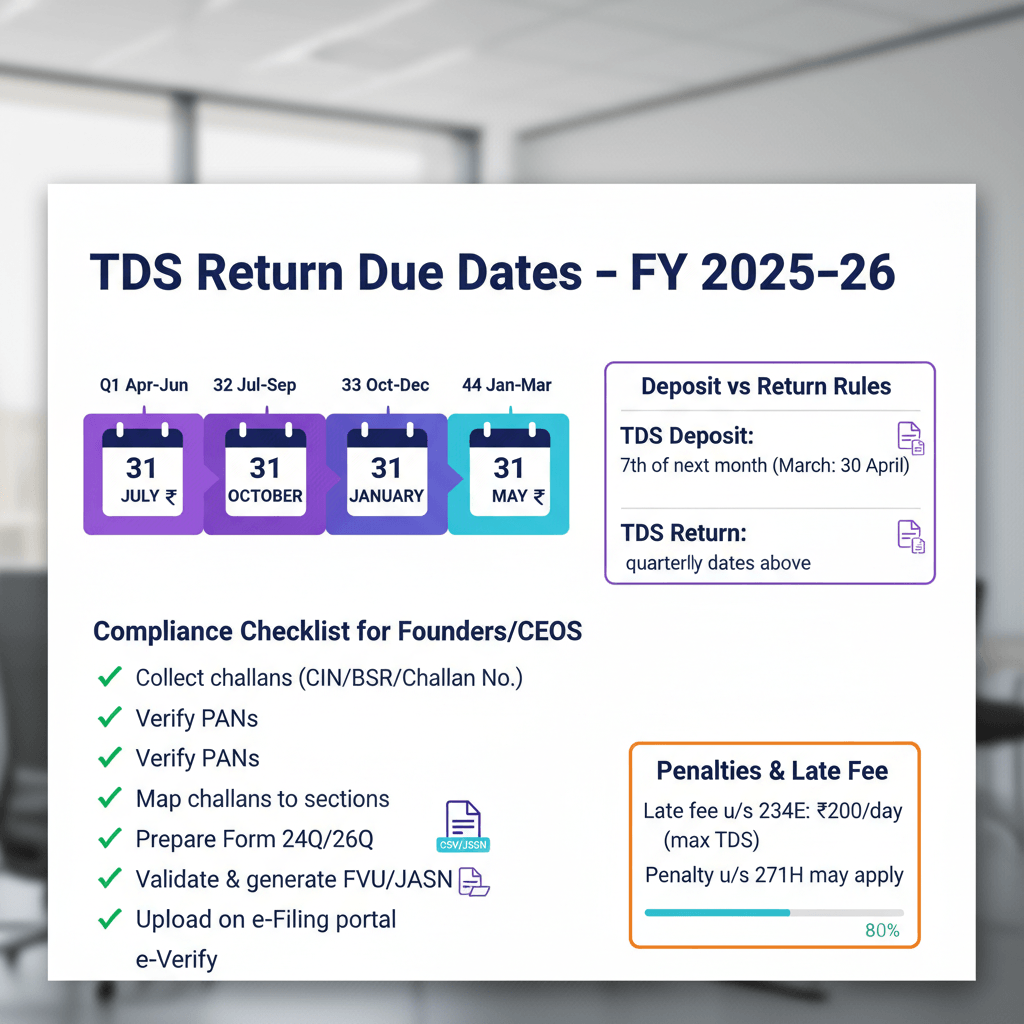
TDS compliance covers monthly challan payments and quarterly returns. Common forms include Form 26Q for non salary payments, Form 24Q for salaries, and Form 27Q for non resident payments. Property related TDS uses Forms 26QB, 26QC, and 26QD. Mismatch corrections are regular work.
A CA led service calculates TDS on time, prepares challans, and files returns. It checks classifications so you do not get late fees or notices. The team tracks Form 16 and Form 16A issuance, monitors potential mismatches, and fixes them fast.
AI now catches TDS section and rate anomalies (such as confusion between 194C and 194J, or incorrect thresholds under 194Q) before challans are generated. This means fewer revised returns and fewer demand notices.
- Review sections 194C, 194J, 194I, 194Q, and 195. Confirm rates and thresholds, then document reasoning in your compliance notes.
- Track changes to TDS provisions each Finance Act. The Income Tax Department updates section wise rates and thresholds annually.
Payroll compliance for small business
Payroll compliance focuses on monthly TDS on salaries and smart salary structuring. Good advisory helps your team save taxes through allowances, reimbursements, and sections like 80C where allowed. Clean records make filings easy.
A managed service runs monthly payroll TDS calculations, offers simple salary structures with tax saving options, and keeps your payroll records tidy and ready for quarterly returns.
Standardizing proof collection is critical. Publish cutoff dates on the dashboard so employees submit investment declarations and rent receipts on time. Lock payroll before TDS challan cycles to avoid last minute corrections.
Practical win: Standardize proof collection windows, publish cutoffs on the dashboard, then lock payroll before TDS challan cycles.
ROC compliance for small company
Under the Companies Act, a small company has relaxed compliance in some areas. The latest revision raises thresholds to paid up capital up to ₹4 crore and turnover up to ₹40 crore. Filings still include MGT 7, AOC 4, DIR 3 KYC, minutes, board reports, statutory registers, and AGM documents. MSME vendor filings, increases in authorised share capital, and share allotments are event based.
Event triggers include new directors, share changes, or change of address. Some relief applies: no internal audit, and no cash flow statement in certain cases.
A CA led managed service keeps your calendar ready and prepares documents on time. Dashboard alerts flag director changes, share allotments, and address updates so filings happen before deadlines. The MCA portal publishes updated forms, thresholds, and penalty schedules for ROC compliance.
Document discipline, with versioned minutes and statutory register updates, makes ROC reviews straightforward.
What small business compliance services include
Small business compliance services handle filings and advisory across GST, TDS, income tax, and ROC. Work includes GST registrations, monthly or quarterly GSTR 1 and GSTR 3B, annual GSTR 9 and GSTR 9C where needed, and e invoice enablement. Advisory spans place of supply, reverse charge, HSN codes, and tax rates.
Accounting services include monthly bookkeeping for sales, purchases, expenses, and bank entries. Teams handle ledger scrutiny, clean up, and year end closing with schedules. They maintain fixed asset registers, inventory records, accounts receivable and payable, and do bank and payment gateway reconciliations.
Non attest MIS reporting and cash flow preparation provide management views. Teams coordinate with your statutory auditor for audit preparation without certification. Document management and status tracking are part of the dashboard, with centralized communication.
AI Accountant delivers all of the above through its Virtual Accounting model. The combination of CA oversight with AI automation means transaction categorization, vendor bill matching, and reconciliation happen faster and with fewer errors than manual processes alone.
Compliance calendar and frequency for small business
A simple calendar helps small businesses plan. Monthly tasks include GSTR 3B filing, TDS challan payments, payroll TDS calculations, regular bookkeeping, and bank or gateway reconciliations.
- Quarterly tasks: GSTR 1 under QRMP for eligible taxpayers, TDS returns using Forms 24Q, 26Q, and 27Q, advance tax instalments, and MIS reviews.
- Annual tasks: GSTR 9 and GSTR 9C where needed, ITR filing, ROC filings like MGT 7, AOC 4, and DIR 3 KYC, board reports and statutory registers.
- Event based tasks: E invoice activation, new registrations, director changes, share updates, and MSME filings.
A dashboard that tracks dates and status reduces risk. Alerts show things due soon. CA review keeps timing and logic correct. A managed service makes this calendar stick month after month, not just in the first quarter after onboarding.
Risks and costs of non compliance
Non compliance costs money and time. Under GST, late filings bring interest and penalties. Poor reconciliations lead to input tax credit blocks. TDS delays cause late fees and notices. Income tax misses pull interest and scrutiny risks.
Operational impacts add up quickly:
- Vendor payments can be held back if TDS documents are wrong.
- Banking relationships get strained, loan approvals and working capital lines slow down.
- Fundraising stalls if ROC filings are not current. Investors check MCA records.
- Audit exposure rises when records are messy or reconciliations are incomplete.
This is why many SMEs outsource to a CA led model. With over 60 million enterprises in India and frequent regulatory changes, managing compliance in house with a small team is risky. A managed service with a dashboard gives predictability and lowers risk.
How to choose small business compliance services
Use this checklist to evaluate your options.
- CA led execution: Look for CA oversight. Avoid software only vendors or unverified consultants for critical filings.
- Dashboard visibility: Get a live view of filings, deadlines, and documents. Real time tracking reduces misses.
- Industry knowledge: Pick a team with experience in your sector. E commerce, SaaS, services, and manufacturing have unique GST and TDS flows.
- Reconciliation discipline: Ask for proof of bank, GST, and TDS matching processes. Reconciliations are the backbone of clean filings.
- Scope clarity: Understand non attest boundaries. Ensure coordination with your statutory auditor for certification when needed.
- Communication and security: Aim for fast responses and strong data controls. A secure document repository with access logs is a must. Look for ISO 27001 or SOC 2 certifications.
AI Accountant meets these standards with its Virtual Accounting service, combining CA led execution with a robust dashboard for clear visibility.
How AI Accountant delivers small business compliance services
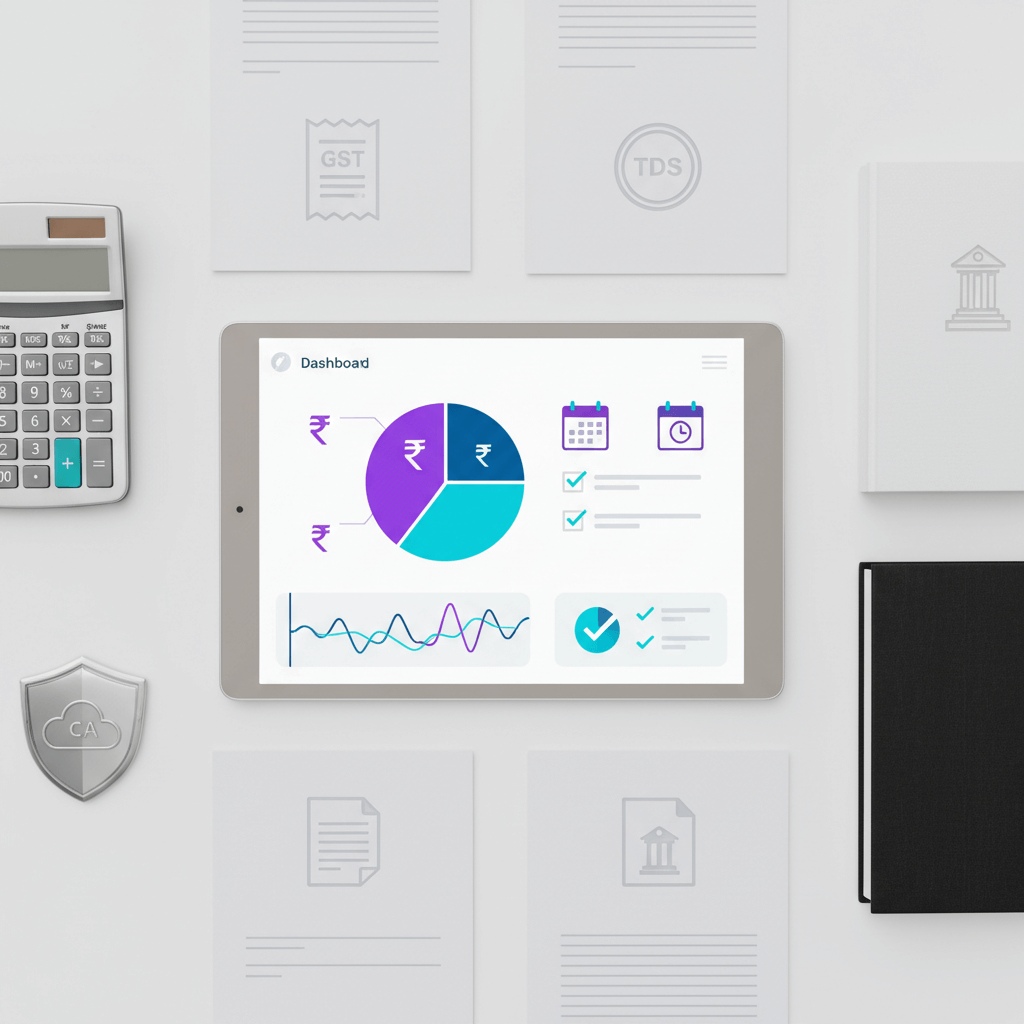
AI Accountant Virtual Accounting is a CA led managed accounting and compliance service, supported by a proprietary dashboard showing financial data, documents, and statutory status in one place. This model replaces scattered workflows like email and spreadsheets with a structured service.
Dashboard features include:
- Compliance dates and filing status for GST, TDS, income tax, and ROC.
- A document repository for invoices, challans, returns, notices, and letters.
- Bank analysis and recent transactions for live visibility.
- AI insights and alerts on deadlines, mismatches, and regulatory changes.
- Centralized communication with the CA team to keep conversations organized.
Core services cover GST filings and advisory, TDS calculation and returns, income tax planning and ITR filing, payroll TDS and salary structuring, ROC filings for small companies, monthly bookkeeping, reconciliations, and MIS. All non attest. Audit preparation and coordination with your statutory auditor are included without certification.
AI capabilities now handle invoice capture, transaction categorization, and vendor bill matching with minimal supervision. The system learns your business patterns over time, flagging anomalies in GST or TDS data before they become filing issues. This means the CA team spends time on judgment and advisory, not data entry.
Outcome: A predictable, steady compliance rhythm, execution by experts, and a clear window into status and next steps.
Onboarding and operating model for small business compliance services
The model is straightforward.
- Discovery: The CA team scopes your needs, collects data and documents from current systems and past filings.
- Setup: They design your chart of accounts, connect bank feeds and payment gateways, set the compliance calendar, and run health checks for GST, TDS, and income tax. AI tools audit your existing ledgers for misclassifications and gaps during this phase.
- Monthly workflow: Each month, bookkeeping happens first, then reconciliations, then filings. The dashboard updates status and stores documents. You see progress live.
- Ongoing communication: Use the dashboard for chats and queries. No more lost messages in email or chat apps.
AI Accountant follows this model for Virtual Accounting. It keeps handoffs clear and timelines tight. The onboarding health check now uses AI to scan ledgers, flag missing entries, and identify reconciliation backlogs before the first monthly cycle begins.
Practical scenarios for small business compliance services
These examples show how a managed service works across industries.
- Freelancer or service firm: The model handles quarterly TDS returns like 26Q and annual ITR filing. It offers GST place of supply advisory for interstate services. The dashboard shows every filing and challan in one view.
- D2C startup: The team watches e invoice thresholds and activates on time. It runs GST reconciliations with marketplaces, tracks inventory and bank reconciliations each month. Alerts flag vendor invoice mismatches before they affect ITC claims.
- SaaS company: Service exports can use LUT to avoid IGST on exports. International tax advisory includes 15CA prep where needed. ROC filings for small company thresholds are handled on time. The dashboard keeps documents organized for audits. AI flags discrepancies between booked revenue and GSTR 1 outward supply data.
These patterns remove surprises and make compliance steady and repeatable across different business models.
Scope boundaries and expectations in small business compliance services
Set clear scope from day one.
Included
- Non attest filings across GST, TDS, income tax, and ROC for small companies.
- Bookkeeping, reconciliations, ledger scrutiny, and year end closing with schedules.
- Advisory on RCM, place of supply, HSN codes, and tax rates.
- MIS reporting and cash flow preparation for management.
- Document management, status tracking, and centralized communication.
- Audit preparation and coordination with statutory auditor without certification.
Excluded
- Statutory audit certification.
- Complex ROC for non small companies unless specially scoped.
AI Accountant clarifies these boundaries during onboarding. You get a clear plan with timelines and responsibilities.
Common pitfalls and how services mitigate them
- GSTR 2A and 2B mismatches: Automated vendor follow ups and tight reconciling catch missing invoices. Alerts notify you early. This protects input tax credit.
- TDS misclassification: CA review ensures correct sections and rates. AI flags anomalies between vendor categories and TDS sections applied. This avoids late fees and revised returns.
- Advance tax errors: Planning tools and quarterly reviews keep payments on track. AI improved cash flow forecasting helps calibrate each instalment. Interest under Section 234C is avoided.
- Document chaos: A centralized repository organizes invoices, challans, returns, and notices. Role based access adds control. Audit trails track uploads, edits, and downloads.
- Untracked ROC events: Dashboard alerts flag director changes, share allotments, and address updates. Filings happen on time rather than after penalty deadlines pass.
AI Accountant sets up these guardrails from day one. The system and team work together to keep you safe.
Recommended tools for compliance and bookkeeping
These tools support compliance and bookkeeping. Pick what fits your stack. Always start with a managed service and dashboard for strong control.
- AI Accountant: Virtual Accounting with a CA led service and a live dashboard for filings, documents, and AI powered insights, aiaccountant.com.
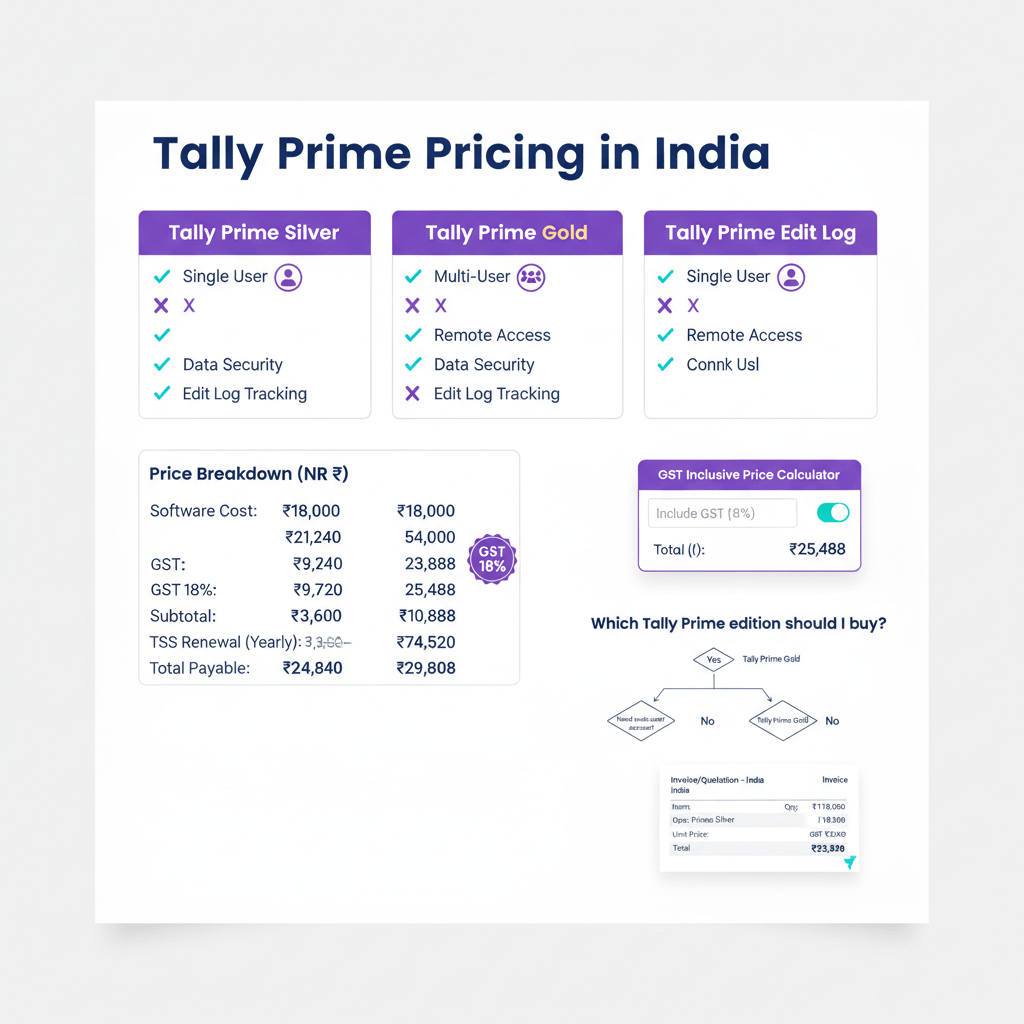
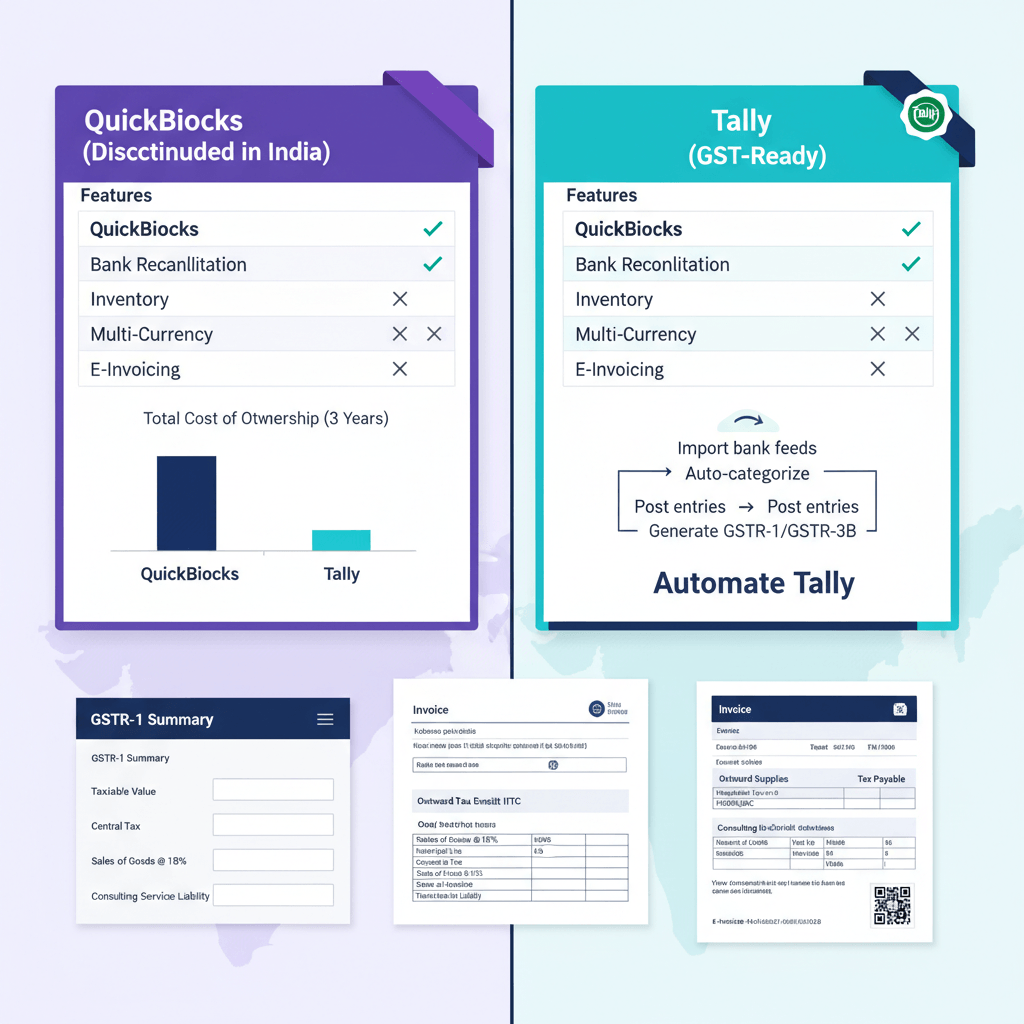
- TallyPrime: Widely used in India for inventory, accounting, and GST compliance, tallysolutions.com.
- QuickBooks Online: Cloud bookkeeping with bank feeds and basic reports, quickbooks.intuit.com.
- Xero: Cloud accounting with strong reconciliations and apps, xero.com.
- Zoho Books: Billing and GST ready features with automation, zoho.com/books.
- FreshBooks: Simple invoicing and expense tracking for service firms, freshbooks.com.
Integrate your tools with the compliance calendar and CA review. This keeps filings clean and on schedule.
FAQs
Do we need a local CA on site if we use a virtual, CA led service
No. A CA led virtual model handles nationwide filings via GSTN, MCA, and income tax portals. The team maps local requirements to remote execution and uses the dashboard for document collection and approvals. AI Accountant Virtual Accounting coordinates filings across states without on site presence.
Can a single managed service run GST filings and TDS returns together without conflicts
Yes. The monthly cadence handles GSTR 3B and TDS challans. The quarterly cadence handles GSTR 1 under QRMP and TDS returns using 24Q, 26Q, and 27Q. The dashboard orchestrates cutoffs so bookkeeping, reconciliations, and filings do not collide.
How are documents collected, verified, and secured for audit readiness
Documents are uploaded to a secure repository on the dashboard with encryption in transit and at rest. Access is permissioned, and audit trails track uploads, edits, and downloads. AI Accountant uses structured folders for invoices, challans, returns, and notices to simplify audit preparation.
What support do we get during a tax audit if the service is non attest
The CA team prepares reconciliations, schedules, and working papers, then coordinates responses with your statutory auditor. The statutory auditor issues certifications. The managed service keeps documentation complete and consistent so audit queries are resolved quickly.
How does AI reduce compliance notices and penalties in practice
AI flags deadline risks, GST input tax credit mismatches, and TDS rate or section anomalies before filings are submitted (2026 update). These early corrections reduce revised returns and demand notices. Studies show AI driven reconciliation catches up to 90% of errors that manual processes miss. The dashboard makes alerts actionable with linked documents and checklists.
How does the model adapt to sector specific GST flows, for example e commerce and SaaS
Sector playbooks guide reconciliations. E commerce needs marketplace and payment gateway matching. SaaS requires place of supply rules for services and export LUT management. The CA team tunes ledgers and GST settings to your business pattern. AI Accountant maintains templates per sector.
Can we manage multi entity compliance with consolidated visibility
Yes. Multi entity views roll up status across GST, TDS, income tax, and ROC for each company. You can switch entity contexts and see documents and filings side by side. AI Accountant supports multi entity dashboards for founders and finance heads managing more than one company.
Conclusion and next steps
Small business compliance services bring predictability to tax and filings. A CA led managed service with a dashboard keeps your business safe. You get clean books, on time GST and TDS, steady income tax planning, and ROC filings done for small companies.
With AI automation now reducing manual effort by 20 to 57% and improving reconciliation accuracy dramatically, the gap between businesses that outsource compliance and those that manage it manually is growing wider each quarter.
If you want a single place to manage compliance with clear visibility, consider a Virtual Accounting demo with AI Accountant. It shows how the dashboard works and how the CA team runs the monthly workflow. A short discovery call sets scope and timeline, then execution begins and the calendar stays on track.
Steady compliance, clear visibility, and CA led execution, all in one place.