-01%201.svg)
The reality of manufacturing accounting in India
Only 1 in 10 manufacturing founders is happy with how their books get done. We analysed 727 demos with 686 Indian manufacturers to find out why, and what they want instead.
Ask a manufacturing founder how their books are going, and you rarely hear “well.”
Only 1 in 10 manufacturing founders we spoke to is happy with how their books get done. Another 4 in 10 told us they are dissatisfied. Most of them use Tally. Most type their bills in by hand. And almost none plan to leave Tally for something else.
We analysed 727 demos with 686 manufacturers, held between 2 January and 17 September 2026, to learn how Indian manufacturers do their accounting today, how they feel about it, and how ready they are for AI. Here is what we found.
Key findings
Few are happy.
Of 374 manufacturers we could rate, 12% were satisfied, 45% neutral and 43% dissatisfied. Among founders, about 1 in 10 was happy.
Typing is the problem.
92% mentioned entering bills and entries by hand. Bank reconciliation (73%) and GST reconciliation (42%) follow.
Tally is not the problem.
59% of Tally users described a problem involving Tally, yet only 2.8% considered switching to another system.
Workarounds do not fix it.
93% of manufacturers with a workaround, such as Excel or a second system, still were not happy with how their accounting works.
They are open to AI, and they have questions.
89% reacted positively to at least one task AI Accountant could automate. 1 in 3 want to start within a month.
How happy are manufacturers with how they do their accounting?
Very few are. Of the 374 manufacturers whose demos showed how they felt, 12% were satisfied and 43% were dissatisfied.
Founders were no different. Among the 157 founders we could rate (an owner or director took part in the demo), 15 were happy. That is about 1 in 10. A further 43% were dissatisfied and 47% were neutral.
Your accountant is probably just as unhappy as you are
Dissatisfaction was 44% in demos with only an owner or director, 40% with only the accounts team, and 43% with both. The frustration is shared. It sits in the way the work gets done, not in one person.
Other industries are no happier
Among the industries we ran enough demos with to compare, manufacturing has the lowest share of dissatisfied businesses, but only just.
Healthcare and pharma looks worse still (74% dissatisfied), but only 43 businesses were rated, so we leave it out of the comparison. Satisfaction here is our AI reading of what each business said in its demo. It is not a survey answer.
What is the biggest accounting problem manufacturers face?
Typing. 92% of manufacturers described entering bills and other entries by hand as a problem.
of manufacturers type bills and entries in by hand. It is the most common problem by a wide margin.
Bank statements and reconciliation (73%) and GST and ITC reconciliation (42%) come next. About 4 in 10 (38%) also pointed to the sheer volume of bills and transactions. Founders and accountants agree on the order, and other industries look almost the same.
A manufacturer’s accounts pain mostly looks like any Indian small business’s. In other industries the rates are 89% for manual entry, 67% for bank work and 37% for GST.
Manufacturing adds one more layer
Three problems are much more common here than elsewhere. About 15% of manufacturers mention at least one of them. The shares are small, but each one means material or paperwork moves between stages before an entry can be posted.
Every percentage in this report is the share of manufacturers that mentioned a problem. It does not measure how much the problem costs.
What do founders worry about beyond typing?
Who else knows the books. The risk founders describe is not that the numbers are wrong. It is that only one or two people know how to produce them.
of founders said their books depend on a single accountant. That is about 4 times the rate in accounts-team-only demos (4%).
of founders said they lack clear visibility into their books. Accounts teams raise this just as often (26%).
mentioned an accountant leaving or going on leave. Rare, but when it happens the books stall.
The real share of founders who depend on one person is likely higher, because we only count those who said it out loud. And founders describe visibility differently from their teams.
“If I want to know how much value of stock we have … I do not have to bug my team for every small detail.”
Co-founder of a manufacturer, in a demo
“The issue is that my accountant will be quitting soon.”
Co-founder of a food manufacturer, in a demo
If the problems sit in Tally, why do manufacturers not switch?
Because the problems sit around Tally, not in it. Manufacturers are not looking to replace Tally. They are looking to make it work harder.
of Tally users even considered switching, though 59% described a problem that involves Tally.
Of the 686 manufacturers, 641 (93%) use Tally. Of those, 376 (59%) described an accounting problem that involves Tally. Only 18 (2.8%) planned or considered switching to another system.
Three reasons explain the gap
Tally is deeply embedded.
It is where the business already runs. Where we recorded team size, 81% have two or more people in the accounts team. Where we recorded companies, 62% keep the books of two or more companies in Tally. A switch changes everyone’s routine.
Switching is a project, not a quick fix.
Manufacturers describe ERP migrations as taking months or even years, and some have already tried and failed. One demo note read: “Team adoption concern (ERP took 2 years).”
The pain sits around Tally, not in it.
33% named typing into Tally as the problem. Only 0.9% said Tally itself is slow or unreliable. Typing, bank matching and GST matching are the problems, not the software.
“We don’t want to change our Tally… Can you work with our existing Tally?”
Aluminium and glass manufacturer, in a demo
When does switching make sense?
A few manufacturers did outgrow Tally. One pasta manufacturer told us Tally’s reports were no longer enough for the operations they were expanding. If you are weighing a switch, these six questions help. This is our framework, drawn from the few manufacturers who considered a move. It is not a measured rule.
If the answer to the first is “the work around it”, fix the work around Tally first. If the second is yes, plan a switch, and check the fourth and fifth before you start.
What do manufacturers do when accounting gets harder?
They add another layer. Since they will not drop Tally, manufacturers build workarounds on top of it.
of manufacturers with a workaround are still not happy with how their accounting works.
Do they work? Not for the people using them. 93% of manufacturers with a workaround still were not happy with how their accounting works. Only 7% were satisfied, against 15% of those without one.
“We are using some software for it, but we have to extract to Excel and then we download the data from the site in Excel and then we combine both the data into third software and that gives us a reconcile.”
Diamond jewellery manufacturer, in a demo
A workaround keeps the books moving. It does not remove the work.
Where does the strain show up first?
When a small team carries hundreds of bills a month.
Dissatisfaction peaks at 300 to 999 bills a month: 53% were dissatisfied, and only 3 of the 75 manufacturers in that group were satisfied. A one-person accounts team was nearly as bad at 50%.
The 300 to 999 group is a small sample, so read it as a signal, not a threshold.
Typing does not separate happy from unhappy
94% of dissatisfied manufacturers mention manual entry, and so do 94% of everyone else. What does separate them is backlog, a team that only enters data, and dependence on specific people.
Count the signs in your own books
We turned these patterns into four questions. Tick the ones that are true for your team and see how manufacturers like you described their accounting.
How ready are manufacturers to use AI for accounting?
More ready than their current tools suggest, but they want proof.
reacted positively to at least one task AI Accountant could automate in the demo.
brought up AI or automation in their own words. 46% of them linked it to people, time or manual entry.
(22 manufacturers) pushed back on using AI for accounting at all.
“I want to explore if any other features AI can provide that will streamline my processes and give me less dependency on staff to manually have data entry for each and every purchases or job work.”
Owner, job work manufacturer, in a demo
How fast do they want to start?
About 1 in 3 manufacturers want to start within a month. Among those who were not happy with their current accounting, it is 43%.
Which task do manufacturers relate to most?
Reading purchase bills. We showed seven tasks AI Accountant can automate on Tally. Dissatisfied manufacturers responded more strongly to almost every one.
Within purchase bills, dissatisfied manufacturers reacted most to reading bills automatically (68%), mapping ledgers, vendors and items (40%), uploading in bulk (38%) and catching duplicates (25%). Why bills? They are the highest-volume, most repetitive work, and every bill has a right answer, so the result is easy to check. That is our view, not a measured finding.
What holds them back?
Trust, in three forms. 53% of founders raised a trust concern (47% of all manufacturers). Most meant one of three things.
of founders asked: can I try it first?
of founders asked: is my data safe?
of founders asked: will it be accurate?
“… there were so many manual entries which had to be done after the scanning process, there were certain numbers which were being read wrong, the error rate was high.”
Printing inks manufacturer, describing an earlier scanning tool
Most manufacturers (68%) also asked what the product cannot do. Expect the same questions from your own team. Everyone in this study booked a demo of an AI product, so these figures show openness among people already looking for help, not the whole market.
Sinnova Tech Engineering handles 120 purchase bills a month in under an hour
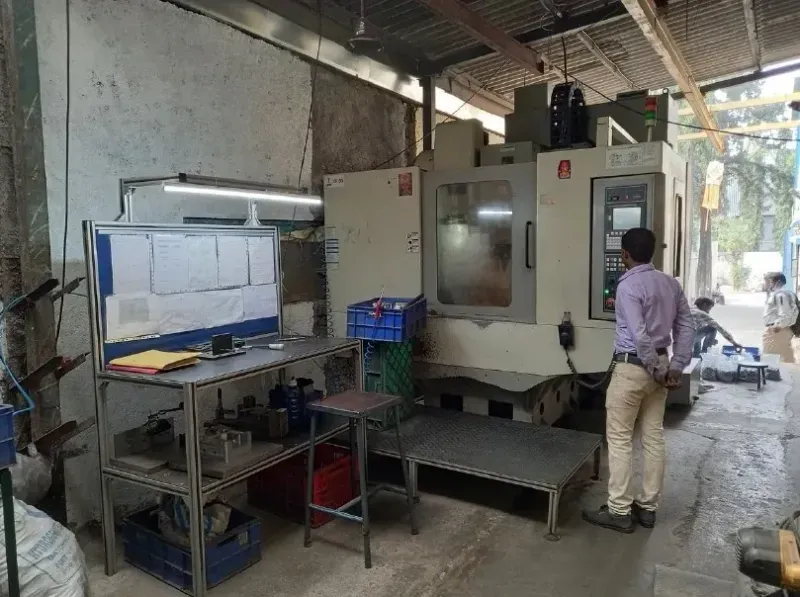
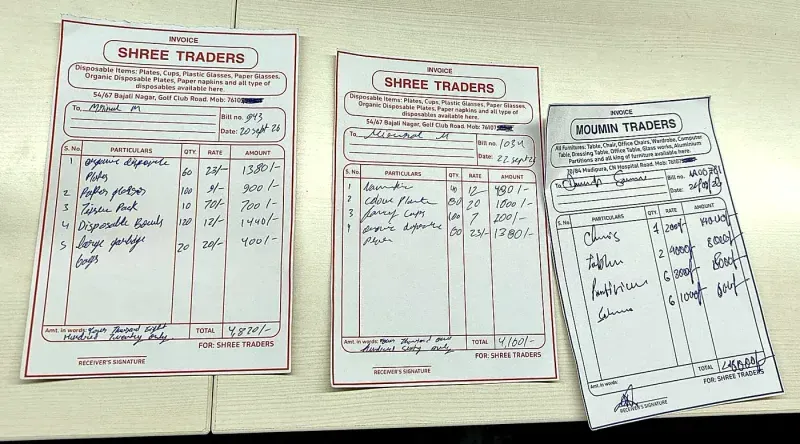
Sinnova, a Pune manufacturer of pressure die-cast and precision-machined components, runs its books in Tally with a five-member in-house finance team. Every purchase bill used to be read and typed in by hand, including handwritten bills from local suppliers. When someone was on leave, the bills piled up.
Sinnova kept Tally and added AI Accountant around it. The tool reads each bill, predicts the ledger and GST treatment, and prepares the entry. The accountant reviews it before it posts to Tally.
“We have found the purchase bill entry feature extremely useful. We are saving a lot of time with that.”
Varun Khandelwal, Director, Sinnova Tech Engineering
Read the full Sinnova storyFix the work around Tally before you think about replacing it
Bring one month of purchase bills
See the time and the accuracy on your own books, with Tally staying exactly where it is.
How we ran this research
- Everyone booked a demo, so everyone was already looking for help. This is not a survey of all manufacturers or all founders.
- Satisfaction, timing and concerns are AI readings of the demos, not survey answers. We grouped problems by keyword, so small differences between groups can be noise.
- Some groups are small. We flag them where they appear.
- Our demos lead with purchase bills, so responses to bills are probably overstated.
- This study describes what manufacturers told us. It does not measure results after adopting any product.
- Quotes come from demo transcripts or demo notes. Names are removed.
The data
Between 2 January and 17 September 2026, AI Accountant ran 727 demos with 686 manufacturers. Each manufacturer is counted once, even if it had more than one demo. We used AI to read each demo transcript and record what the manufacturer described: its accounting problems, how it felt about its current setup, when it wanted to start, and which concerns it raised.
Who counts as a founder
A manufacturer counts as having a founder when an owner or director took part in the demo. That is 236 of the 686 manufacturers, of which 157 could be rated for satisfaction.
Tally
Demos before April 2026 were not specific to Tally. Of the 686 manufacturers, 641 (93%) use Tally, so most findings describe Tally users. Figures that are about Tally only say so.
Comparisons
“Other industries” means the other industries in our demo data, including trading and distribution, consulting and services, construction and real estate, IT and software, healthcare and pharma, e-commerce and D2C, logistics and transport, education, finance and investment, and FMCG and food and beverage. We left out CA firms and businesses we could not classify.
What a percentage means
It is the share of manufacturers that mentioned something. A “workaround” means Excel beside Tally, a second system, a large manual data-entry team or outsourced help, as described in the demo notes.
Frequently asked questions
How many manufacturers are happy with how they do their accounting?
About 1 in 8. Of 374 manufacturers we could rate, 12% were satisfied. Among founders, about 1 in 10 was.
What is the biggest accounting problem for manufacturers in India?
Entering bills and entries by hand. 92% of manufacturers described it, ahead of bank reconciliation (73%) and GST reconciliation (42%).
Why do manufacturers not switch away from Tally?
Because the problems sit around Tally, not in it. 59% of Tally users described a problem involving Tally, but only 2.8% considered switching. Tally is deeply embedded, migrations take months or years, and the pain is typing, bank matching and GST matching.
Do workarounds like Excel or a second system work?
Not for most people using them. 93% of manufacturers with a workaround still were not happy with how their accounting works.
How ready are manufacturers to use AI for accounting?
89% reacted positively to at least one task AI Accountant could automate, and 1 in 3 want to start within a month. The main concerns are trying it first, keeping data safe and accuracy.
Which accounting task should a manufacturer automate first?
Purchase bills. They are the highest-volume, most repetitive work, and the task manufacturers responded to most (74% of all manufacturers, 85% of the dissatisfied).
What should a manufacturing founder do first?
Ask the four questions in this report, then test one month of real purchase bills for time and accuracy while keeping Tally as the books.
