-01%201.svg)

Key takeaways
- A virtual bookkeeping team is the right move when your month end close drags past fifteen days, GST mismatches pile up, or your cash flow picture stays blurry. These are the clearest signs you are ready.
- CA led virtual teams bring maker checker controls, a clean audit trail, and structured review, far beyond what a solo bookkeeper or task based service delivers.
- Virtual accounting solutions compress the close to five to ten days and surface live profit and loss, burn, runway, and compliance dates through a single dashboard.
- Remote accounting services connect bookkeeping with GST, TDS, income tax, payroll, and ROC, cutting notices and late filing penalties.
- Typical cost savings run forty to sixty percent versus in house teams, with fixed retainers starting at ₹15k per month that scale with volume.
- If reconciliation aging, filing delays, or investor MIS gaps are growing, acting now prevents compounding compliance risk. AI Accountant's bookkeeping automation handles the repetitive extraction and matching so your team focuses on judgment calls.
Virtual Bookkeeping Team: How Virtual Accounting Solutions and Remote Accounting Services Streamline Your Finance Ops
If your books feel messy, a virtual bookkeeping team can bring clarity. With virtual accounting solutions and remote accounting services, you get clean ledgers, on time compliance, and a real time view of your business.
You work with a CA led team and a simple dashboard. You see profit and loss, cash flow, burn rate, and runway in real time. You track GST, TDS, and income tax, you fix mismatches faster.
The result is fewer surprises, better decisions, and more time for customers and product.
Virtual Accounting Solutions: What's New in 2026
The virtual bookkeeping landscape has shifted meaningfully since 2025. Until March 2025, the GST e-invoicing threshold sat at ₹5 crore. From April 2025, it dropped to ₹1 crore under CBIC's phased rollout plan, pulling thousands of additional SMEs into mandatory e-invoicing. If your turnover crosses ₹1 crore, every B2B invoice now needs an IRN from the Invoice Registration Portal before you share it with buyers.
On the operational side, this means your virtual bookkeeping team must validate e-invoice generation as part of daily accounts payable and accounts receivable workflows. Missing or delayed IRN generation blocks ITC claims for your buyers and can trigger penalties during GST audits. Businesses on Tally or similar on premise systems need API level integration with the e-invoice portal, something many firms lacked in 2025.
The GST Council's push toward automated GSTR 2B reconciliation also tightened in 2025 and 2026. ITC mismatches flagged in the GST portal's returns comparison tool now carry stricter reversal timelines. If your books and GSTR 2B don't match within the return period, you risk auto reversal of input tax credit plus 18% interest.
Who does this hit hardest? SMEs between ₹1 crore and ₹10 crore turnover, ecommerce sellers managing hundreds of vendor bills monthly, and multi entity groups where invoice data flows through multiple systems. Ignoring these changes means blocked ITC, late fees (₹50 per day for GSTR 1 delays), and growing compliance flags.
What to do now:
- Confirm your e-invoicing setup is live and tested for every B2B sales invoice.
- Run a GSTR 2B reconciliation for the last three months and resolve open mismatches before the next return cycle.
- Review your bank and vendor bill matching workflows; platforms built for automated GST reconciliation can flag mismatches before filing, not after.
What is a Virtual Bookkeeping Team
A virtual bookkeeping team is a group of remote professionals who manage your books together. It is not one solo bookkeeper. It is a team with defined roles for data entry, review, reconciliation, and reporting.
This gives you maker checker control and a clean audit trail. It also gives you scale and backup when someone is unavailable.
Virtual bookkeeping services often mean task based work like only posting transactions or ledger entries. A virtual bookkeeping team brings structure, division of duties, and clear service levels.
Remote accounting services cover more ground like tax, payroll, and advisory. A virtual bookkeeping team focuses on the core ledger, then links to compliance inside a larger remote model. Outsourced accounting services may also include CFO level planning or attest audits. The team overlaps but usually stays non attest.
Virtual accounting solutions are the tech layer: a dashboard with live P and L, cash flow, compliance dates, AI alerts, documents, and collaboration. Cloud bookkeeping keeps this online so your team and you can work from anywhere, with twenty four by seven access and control.
The team works inside cloud systems with clear workflows. The general ledger stays clean, every change is traceable.
Sources: ICAI guidance on outsourced accounting practices, iKeep
How a Cloud Bookkeeping Team Operates Day to Day
A cloud bookkeeping team follows a steady rhythm each day. The process is simple, repeatable, and fast. Communication stays inside the virtual accounting solutions stack.
Daily operations
- Automated bank feeds and rules to catch new transactions
- Receipt capture with phone and email apps
- Accounts payable workflows for vendor invoices and payments
- Accounts receivable tracking and customer reminders
- Daily or near daily bank reconciliations
- Month end close in five to ten days instead of fifteen days or more
- Audit trail for every ledger entry and change
Tool stack that powers virtual accounting solutions
- AI Accountant
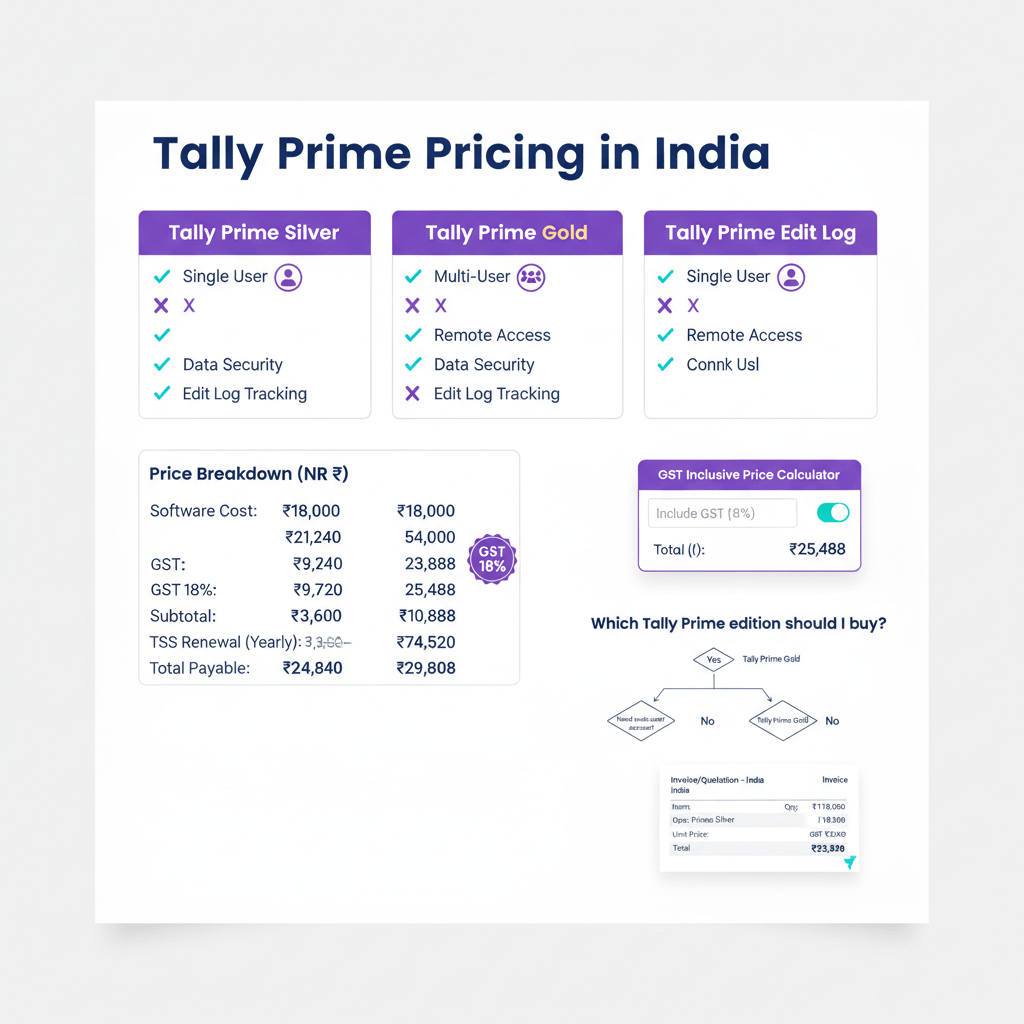
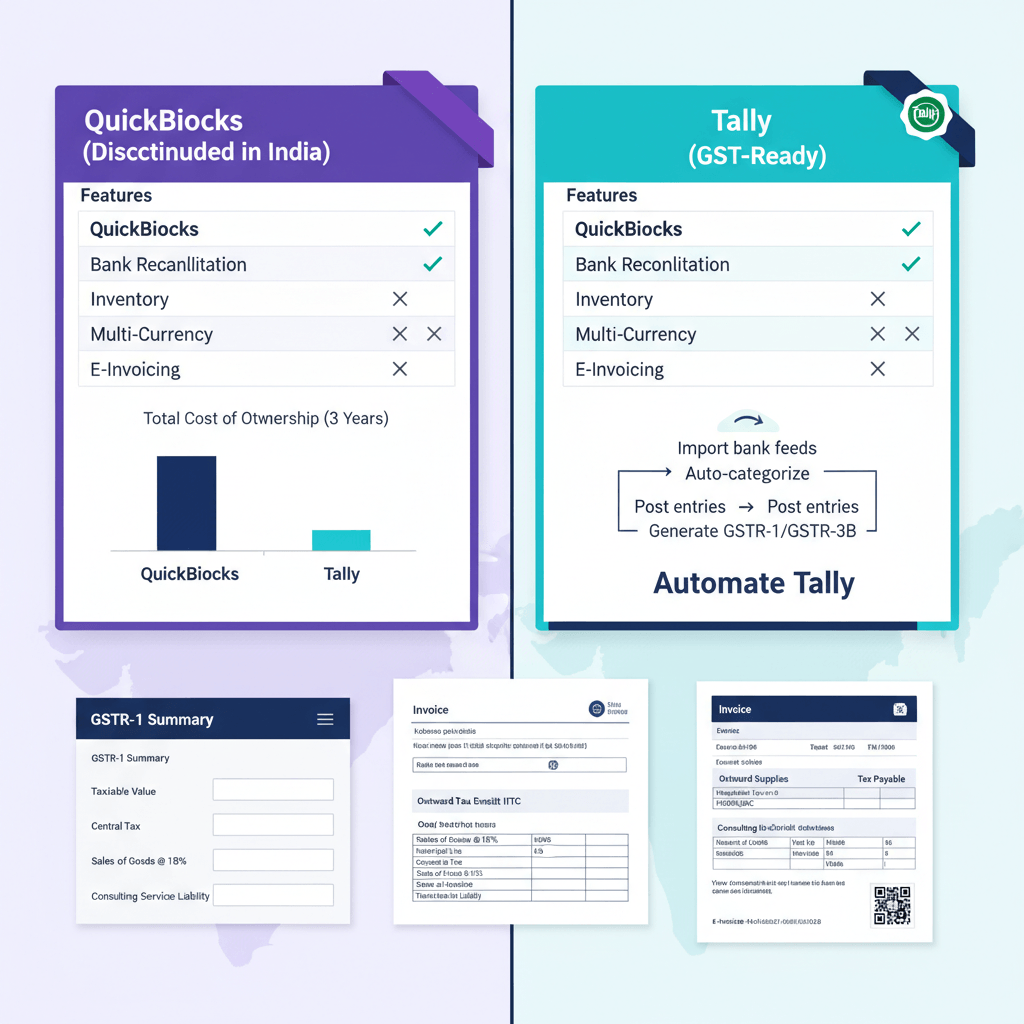
- QuickBooks Online, Xero, Tally with GST plugins, FreshBooks, Sage Business Cloud
- Bank connectors and feeds, secure document repositories
- Team chat like Slack or Microsoft Teams, workflow tools like Asana or Trello
The dashboard is the center. It shows live profit and loss, balance sheet, cash flow, burn, and runway.
It flags due dates for GSTR 1 and GSTR 3B, tracks TDS challans and returns, stores invoices and receipts, and surfaces AI insights for anomalies, spikes, or missing bills.
With cloud bookkeeping teams, role based controls and audit logs show who did what and when. This improves control, reduces errors, and supports time zone coverage. Your work moves forward even when you sleep.
Sources: GST Portal filing calendar and return utilities, Bookkeeper.law
Scope of Work You Can Expect with Virtual Accounting Solutions
A virtual bookkeeping team covers a clear scope. Virtual accounting solutions give you a window to see it all, with status, dates, documents, and owners.
Bookkeeping scope
- Monthly bookkeeping for sales, purchases, expenses, and bank entries
- Ledger scrutiny and clean up to fix old errors
- Year end closing and schedules
- Fixed asset register maintenance and depreciation
- Inventory records and reconciliation
- Accounts receivable and accounts payable with aging
- Bank and payment gateway reconciliations
- Cash flow preparation for planning
- MIS reports like profit and loss, balance sheet, and cash flow
- Support for coordination with your statutory auditor
Compliance scope
- GST registration when needed
- GSTR 1 and GSTR 3B filing on time
- Annual GST filing for GSTR 9 and GSTR 9C
- E-invoice enablement (now mandatory for businesses above ₹1 crore turnover)
- GST health checks and reconciliations to catch mismatches against GSTR 2B
- Income tax filing for individuals, firms, and companies
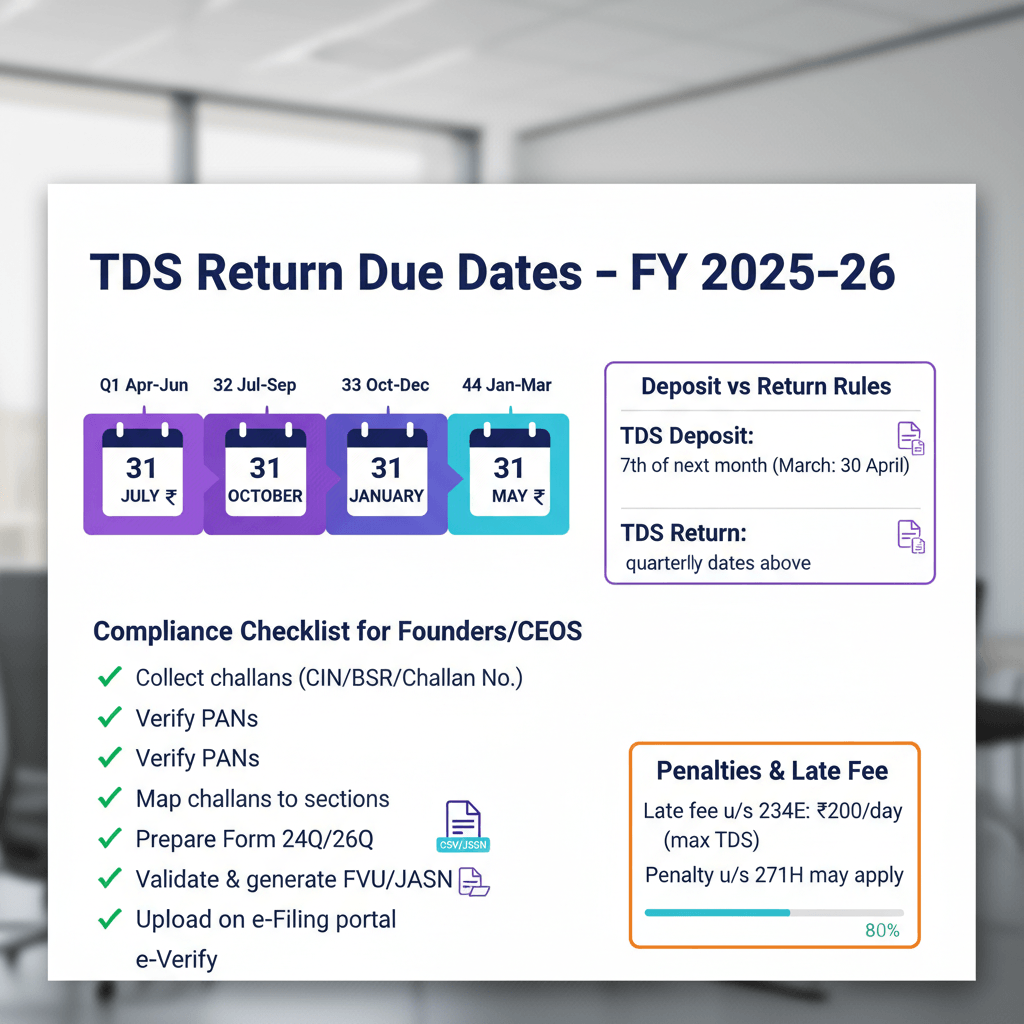
- TDS advisory and compliance including challan payments and forms like 26Q, 24Q, 27Q, 26QB, 26QC, and 26QD
- Advance tax support and tax audit preparation
- International tax advisory and expat tax support
- Fifteen CA forms preparation
Payroll and ROC
- Monthly TDS calculation for payroll, salary structure advice
- ROC and secretarial for small companies: MGT 7, AOC 4, DIR 3 KYC, board meetings, minutes, registers, MSME filings, event based MCA filings
All work stays non attest. The team prepares data and supports audit readiness. Certification remains with your auditor.
Sources: ICAI, MCA portal for ROC filing requirements
Benefits of a Virtual Bookkeeping Team
A virtual bookkeeping team brings speed, savings, and control. You get better books and fewer surprises. Investors and boards get timely MIS. You get your time back.
- Cost efficiency: Many firms report forty to sixty percent savings versus in house teams. You avoid fixed salaries, benefits, and office costs. You pay a clear retainer instead.
- Faster closes: Standard workflows and automation compress the close to a few days. Profit and loss stays fresh.
- On time filings: GST and TDS go out on time. Penalties and notices reduce.
- Real time visibility: Live P and L, cash flow, burn, runway, with AI alerts for anomalies and missing entries.
- Scalability: A team model grows with your volume and entities, no new hiring cycles. Add cash flow forecasting or reduce to basics during slow periods without recruitment costs.
- Lower compliance risk: Expert reconciliations reduce GST mismatches and TDS errors. Pre-filing checks compare books to GSTN data.
- Audit readiness: Every vendor invoice and receipt is attached. The trail is complete. Audits move faster.
- Access to specialized talent: You work with CAs and certified bookkeepers who stay current on tax law changes, not generalists learning on the job.
Cleaner books, faster closes, predictable compliance. This is the core ROI founders and finance heads seek.
Sources: Bookkeeper.law on virtual bookkeeping benefits, Bottom Line Focused
When to Choose Remote Accounting Services
Remote accounting services fit when your finance ops are slow or risky. These triggers make the case clear.
- Your month end close takes more than fifteen days
- You see frequent GST mismatches or TDS errors
- Your cash flow is unclear, you cannot see runway
- Investors ask for regular MIS, you cannot deliver on time
- You invoice across borders and need help with place of supply and tax rates
- Your transaction volume is high and rising
- You run ecommerce or SaaS with gateways, refunds, and subscription revenue recognition
- The e-invoicing threshold now covers your turnover bracket and you lack the workflow to handle it
Profiles with strong fit include freelancers with irregular income who need flexible scheduling, startups and small or mid businesses that need scale and control, and ecommerce or SaaS firms with subscriptions and returns.
You can start with virtual bookkeeping services for the basics. Then move to outsourced accounting services for tax planning, CFO insights, and board reporting as you grow.
Sources: KMK Ventures, Gow Bookkeeping
Choosing a Provider for Virtual Accounting Solutions Checklist
Choosing the right partner is about fit, control, and trust. Use this due diligence checklist.
Credentials
- Is the service CA led
- Do they have references in your industry
- Do they know sector nuances like SaaS revenue recognition or ecommerce RCM
Deliverables and SLAs
- Clear timeline for monthly close
- Filing calendar for GST, TDS, and income tax
- Reconciliation cadence for banks and gateways
- Ticket response and resolution times
Technology
- A unified dashboard that shows live data and documents
- Integrations with banks, payment gateways, and accounting software
- Data ownership and export rights
- AI insights and alerts for exceptions
Security and privacy
- Encryption in transit and at rest
- Backups and disaster recovery
- Role based access
- Compliance with GDPR and the IT Act
Collaboration
- Centralized communication and comments
- Document request workflows
- Escalation paths
Reporting
- Sample MIS including P and L, cash flow, and working capital
- Cash flow forecast and runway view
- AI powered anomaly detection
Compliance boundaries
- Clear line between non attest work and audit certification
- Support for audit readiness and documentation
Ask for a live demo of the virtual accounting solutions before you sign. Then validate with references.
Onboarding Plan and Timelines for a Virtual Bookkeeping Team
A strong start sets the tone. Here is a simple onboarding plan you can run.
Pre onboarding
- Share chart of accounts and prior trial balance
- Share GST and TDS logins
- Share bank statements and payment gateway exports
- Share accounts receivable and accounts payable aging
- Share past filings and notices
Zero to thirty days
- Set up tools and virtual accounting solutions
- Migrate data and standardize the chart of accounts
- Set bank rules and mapping for clean imports
- Start clean up of old entries and mapping issues
- The virtual bookkeeping team drives most of this work
Thirty one to sixty days
- Finish bank and gateway reconciliations
- Lock in processes for receipts and vendor bills
- Build the compliance calendar and due date alerts
- Complete the first month end close
Sixty one to ninety days
- Establish MIS rhythm with monthly P and L, balance sheet, and cash flow
- Configure dashboard KPIs like burn and runway
- Tune AI alerts for materiality and risk areas
RACI is simple. You provide data and access. The team delivers outputs on set timelines. The dashboard keeps both sides aligned.
Onboarding runs faster if bank statements, trial balances, and portal logins are readily available. Incomplete data is the single biggest cause of delays.
Pricing for Virtual Bookkeeping Services and Outsourced Accounting Services
Pricing is usually a fixed retainer. Some providers offer a tiered or hybrid model that scales with volume and add ons.
Typical models
- Fixed retainer from ₹15k to ₹50k per month based on transaction count, number of entities, and complexity
- Tiered or hybrid plans where base fees cover bookkeeping, add ons cover GST, TDS, payroll, international tax, or extra platforms
Hidden costs to plan for
- One time clean up for messy books, often ₹10k or more depending on back months
- Software licenses for accounting tools, connectors, and dashboards
Cost comparison
- An in house bookkeeper plus manager can cost ₹5 lakh to ₹8 lakh per year with overheads
- A virtual bookkeeping team gives coverage and review at a lower total cost
- Full outsourced accounting services with CFO support cost more, still less than building a full internal finance team
Match the model to your needs. Start lean if you only need bookkeeping. Expand to remote accounting services for tax and payroll when ready.
Metrics to Manage Your Virtual Bookkeeping Services
Set clear metrics and watch them inside your dashboard. AI insights make action faster.
Operational metrics
- Days to close: aim for less than ten
- Reconciliation aging: keep near zero
- Accounts receivable days and accounts payable days: align to your cash cycle goals
- Cash conversion cycle: trend down over time
Compliance metrics
- On time filings for GSTR 1 and GSTR 3B every month
- On time TDS challans and returns
- Notice resolution time: short and tracked
Visibility metrics
- Forecast accuracy for revenue and collections
- Cash flow coverage in months
- Burn rate and runway changes month over month
AI alerts turn metrics into action. A GST mismatch alert can trigger a quick fix. An expense spike alert prompts review. A customer delay alert starts a follow up.
Mini Case Snapshots with Cloud Bookkeeping Team and Remote Accounting Services
Freelancer: A cloud bookkeeping team helped a solo consultant with irregular invoices. The dashboard tracked cash in and cash out and flagged GSTR 3B due dates. This reduced stress and late fees, and kept taxes current.
SaaS startup: Remote accounting services reconciled subscription revenue from a payment gateway. The dashboard showed burn and runway for investor updates. The team set a ten day close and monthly MIS. The founder gained time for product and sales.
Ecommerce store: The team handled gateways, returns, and RCM rules for GST. Virtual accounting solutions mapped orders to ledgers and kept inventory updated. Mismatches fell and filings sped up.
How AI Accountant Delivers Virtual Accounting Solutions
AI Accountant provides a CA led virtual bookkeeping team plus platform. You get people and product. The team executes accounting and compliance. The dashboard gives control and visibility.
What you get
- Accounting and bookkeeping: monthly bookkeeping, ledger review, year end closing, fixed assets, inventory records, accounts receivable and accounts payable, bank and payment gateway reconciliations, cash flow preparation, MIS reporting, and auditor coordination
- Taxation and compliance: GST registration, GSTR 1 and GSTR 3B filings, annual GSTR 9 and GSTR 9C, e-invoice setup, GST health checks, income tax filings for all entity types, TDS advisory and compliance including challans and forms, advance tax, and tax audit preparation
- Payroll services: monthly TDS calculation and advisory on salary structure
- Annual ROC and secretarial for small companies: MGT 7, AOC 4, DIR 3 KYC, board meetings, minutes, registers, MSME filings, event based MCA filings
- Virtual accounting solutions: a centralized dashboard with live financials, income and expense breakdowns, cash flow trends, burn and runway, AI generated insights and alerts, recent transactions, bank statement analysis, document repository, compliance dates and filing status, centralized communication with the CA team
Who it is for
- Freelancers
- Startups and growth stage companies
- Founders and finance teams that want to outsource accounting operations
Explore more: Bookkeeping, GST, TDS, Payroll, ROC. Book a demo at aiaccountant.com, download the Onboarding Checklist at aiaccountant.com/chk1, and the Provider Checklist at aiaccountant.com/chk2.
Final note
A virtual bookkeeping team powered by virtual accounting solutions can change how you run finance. It brings clean books, on time compliance, and real time insight.
If you want the same, AI Accountant offers a CA led approach, a unified dashboard, and steady execution.
Book a demo at aiaccountant.com and see how your month end can move from late and chaotic to clear and calm.
FAQ
What is the difference between a virtual bookkeeping team and virtual bookkeeping services
A virtual bookkeeping team has defined roles, maker checker controls, and service levels. Virtual bookkeeping services are often task focused without structured review. A team model offers stronger oversight, better scale, and higher reliability. For example, AI Accountant runs a CA led team with workflows and an audit trail.
How do remote accounting services handle security and data privacy
Good providers use encryption in transit and at rest, backups, role based access, and detailed audit logs. They follow data privacy norms like the IT Act and GDPR, and restrict access through a dashboard. AI Accountant uses granular roles, document versioning, and download logs to maintain control.
Are outsourced accounting services a good fit for early stage startups
Yes, you get scalable bookkeeping without hiring fixed staff. Start with essentials, then add GST, TDS, payroll, and CFO insights as volume grows. This keeps costs predictable. AI Accountant offers modular add ons so founders can expand from bookkeeping to full finance ops.
What tools are part of virtual accounting solutions
Common tools include a core accounting system, bank feeds, receipt capture, payment gateway connectors, and a central dashboard. AI Accountant integrates these so you see live P and L, cash flow, burn, runway, and compliance dates in one place.
Do I still need a local CA or auditor if I use a cloud bookkeeping team
Yes, for attest work like statutory audits and certifications. The virtual bookkeeping team prepares schedules, reconciliations, and documentation. Your auditor performs the audit and signs the report. AI Accountant supports audit readiness and coordinates with your auditor to speed the process.
How fast can onboarding happen if the books need cleanup
Setup, cleanup, and the first close usually complete within sixty to ninety days. It goes faster if bank statements, trial balances, and portal logins are readily available. AI Accountant follows a phased plan: setup, reconciliations, first close, then steady state.
What changed for e-invoicing in 2026 that affects virtual bookkeeping
From April 2025, the e-invoicing threshold dropped to ₹1 crore turnover, pulling many more SMEs into mandatory IRN generation for B2B invoices (2026 update). Your virtual bookkeeping team must now validate e-invoice creation as part of daily AP and AR workflows. Missing IRNs block buyer ITC claims and invite penalties during GST audits.