-01%201.svg)

Key takeaways
- A finance health check India is preventive medicine for business finances: it validates GST, TDS, and ROC compliance, measures reconciliation hygiene, diagnoses KPIs like cash runway and DRO, and surfaces red flags before they become penalties or cash crises.
- Build your data foundation first by gathering Tally backups, twelve months of bank statements, GSTR filings, TRACES downloads, payroll registers, and MCA filings into one source of truth with clear access protocols and owners.
- Run reconciliations across bank, GST (2B triangle), TDS, AR/AP, intercompany, and suspense accounts, then summarize exceptions so aged items get closed fast, not at quarter end.
- Track KPI diagnostics for liquidity, profitability, and working capital efficiency; below three months of cash runway or DRO above 75 days requires immediate action, not a "we'll fix it next month" approach.
- Move findings into a 7, 30, 60, 90 day improvement roadmap with owners and deadlines, because a health check without follow through is just an expensive PDF.
- When reconciliation volume overwhelms manual workflows, automated GST reconciliation and bank ingestion replaces hours of matching with one click sync, freeing your team for judgment calls.
Finance Health Check India: What's New in 2026
Several regulatory shifts between 2025 and 2026 have changed how Indian SMBs and CA firms approach a finance health check. Here is what matters most for your next review cycle.
GST e-invoicing and ITC tightening. Until March 2025, e-invoicing applied to businesses above ₹5 crore turnover. From April 2025, the threshold dropped to cover entities at the ₹10 crore mark per CBIC notifications, pulling a larger pool of SMBs into mandatory e-invoice generation. Simultaneously, blocked ITC under Rule 36(4) is now capped at 5% for unmatched credits, and GSTR-2B mismatches above ₹50,000 trigger auto notices from the GST portal. The operational shift is real: your team must validate every vendor GSTIN before booking, reconcile 2B weekly instead of monthly, and resolve mismatches within 15 days to avoid blocked credits piling up.
TDS and TRACES API integration. Section 194R now covers perks and allowances above ₹20,000, and TRACES mandates API integration for real time 26AS validation. This means CA firms reconciling TDS manually against quarterly downloads are working with stale data. Firms above 50 deductees should API enable their TRACES workflow within the next 30 days to avoid over or under deduction surprises.
ROC and MSME compliance. Director KYC (DIR-3 KYC) is now annual from April 2025. MSME half yearly returns (UMS-1) are due by October 14 and April 14, with penalties up to ₹20,000 for delays. If you are registered as an MSME, add these dates to your compliance calendar immediately.
What to do now. Audit your e-invoicing eligibility, tighten GSTR-2B reconciliation cycles to weekly, API enable TRACES, and confirm UMS-1 filing dates are on your calendar. For practices managing multiple clients, platforms with automated bookkeeping and bank ingestion reduce the manual overhead these new requirements create.
Why Finance Health Checks Matter More Than Ever in India
A finance health check India keeps compliance on track, books clean, and cash flow visible. GST rules change often, TDS provisions multiply, bankers and investors demand timely numbers.
A structured health check validates filings and payments, measures reconciliation hygiene, diagnoses KPIs that reflect liquidity and profitability, and clearly marks red flags requiring immediate action.
Think of it as preventive medicine. You would not wait for a notice or overdraft to check financial fitness. You run periodic diagnostics and act early.
For Chartered Accountants managing multiple portfolios, this becomes a repeatable service. For SMB founders preparing for fundraise or audit, it removes last minute surprises. For finance teams drowning in reconciliations, it brings order to chaos.
With the GST Council introducing changes nearly every quarter and the Income Tax Department tightening digital verification, periodic health checks are no longer optional. They are how you stay ahead of compliance risk and cash flow surprises.
Scope and Preparation: Building Your Data Foundation
The preparation phase determines speed and quality. Gather core financial records: trial balance, ledgers, and master data from Tally with prior year comparatives. Pull twelve months of bank statements across all operating accounts. Download GSTR-1 and GSTR-3B filings, GSTR-2B records, e-invoice logs, and e-way bill data.
Pull compliance artifacts: Form 26AS, TRACES downloads, advance tax schedules, TDS ledgers, payroll records, PF challan registers, Form 12BA, and attendance data. Add vendor and customer aging, loan agreements with interest schedules, and board approvals for related party transactions.
Include MCA filings: AOC-4, director KYC (now annual from April 2025), MGT-7, and MSME returns (UMS-1) if applicable. Add all licenses: Shops and Establishments, pollution certificates, and sector permits. Create clear access protocols. Decide who pulls data, designate one source of truth, and distribute a checklist with dates and owners.
Stand up tracking from day one:
- A status board monitoring compliance health, reconciliation progress, KPI trends, and red flag severity.
- A findings log that captures issues with impact and owners.
- An improvement roadmap with 7, 30, 60, 90 day milestones.
Compliance Status: India Specific Checklist
Your financial compliance checklist answers one question: are filings on time, accurate, and free of notices?
GST Compliance Health
- Confirm GSTR-1 was filed by the 11th. Reconcile filing dates to invoices.
- Verify GSTR-3B was filed by the 20th. Ensure liabilities were paid.
- Reconcile purchases to GSTR-2B. Watch credit notes, rejections, and amendments.
- Check e-invoicing for eligible B2B supplies (threshold now covers ₹10 crore turnover businesses). Validate e-way bills for movement of goods.
- Track blocked ITC under Rule 36(4), now capped at 5% for unmatched credits.
- Log and prioritize GST notices, demands, and replies. Auto notices now trigger for 2B mismatches above ₹50,000.
TDS and TCS Compliance
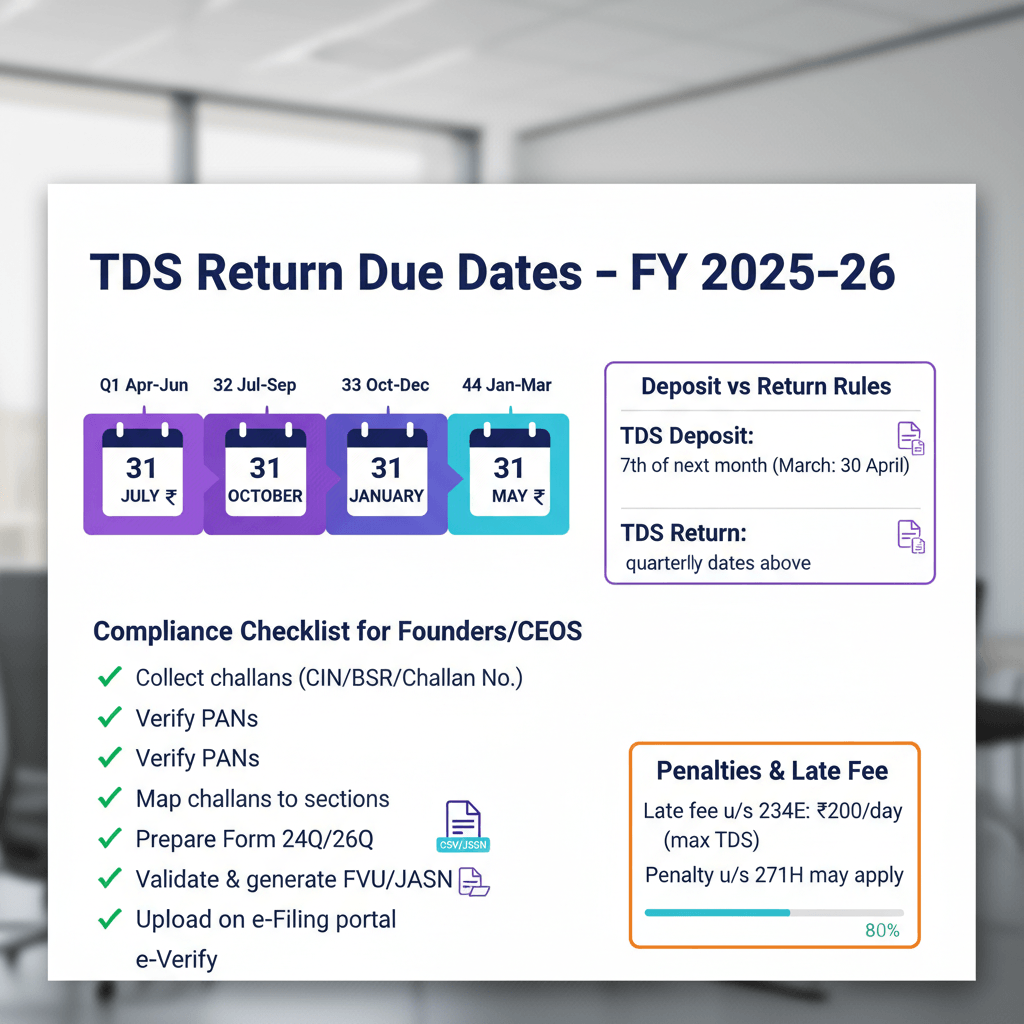
- Verify TDS deduction against thresholds for vendors, professionals, and contractors. Confirm challans by the 7th. Cross check with TRACES.
- Review Section 194R applicability for perks and allowances above ₹20,000.
- Review Form 24Q quarterly returns, and TCS if applicable (20% on foreign remittances).
- Ensure Form 16 for employees and Form 16A for vendors. Reconcile 26AS to internal ledgers, preferably via TRACES API for real time validation.
Payroll Compliance Verification
- Check PF deduction and deposit with monthly challans reconciled to membership via the EPFO portal.
- Verify ESIC where applicable. Confirm professional tax per state deadlines.
- Review Labour Welfare Fund, Form 12BA (quarterly under new labor codes), bonus and gratuity accruals, and any TDS recovery defaults or wage disputes.
- Confirm Shops Act renewals, now digitized with Aadhaar linkage in 15+ states.
Income Tax and ROC Compliance
- Verify advance tax on June 15th, September 15th, December 15th, March 15th. Note the 12.5% concessional rate for new manufacturing entities in FY 2025-26.
- Confirm return filings before deadlines and reconcile acknowledgments to 26AS.
- Check ROC: AOC-4 within 30 days of AGM, MGT-7, director KYC (DIR-3 KYC, annual from April 2025).
- File MSME half yearly returns (UMS-1) by October 14 and April 14. Penalties up to ₹20,000 for delays.
- Log penalties or delays.
License and Permit Status
- Review Shops and Establishments renewal dates per state. Validate pollution, ISO, and safety certificates.
- Confirm professional registrations and sector permits remain current.
Pro tip: maintain a Green, Amber, Red compliance scorecard. Green for on time, Amber for minor delays or discrepancies, Red for unfiled items, notices, or missing data.
Reconciliations Status: What to Reconcile and How
Reconciliation in accounting is your hygiene layer. It catches fraud, reduces audit adjustments, and accelerates monthly close.
Bank Reconciliation Excellence
- Match each bank line item to the corresponding ledger entry monthly. Flag items beyond 15 days.
- Identify stale cheques older than 6 months. Consider reversal. Book unposted bank charges and interest.
- Ensure UPI and digital receipts are captured with transaction IDs. Investigate round number cash deposits.
- Escalate items unreconciled beyond 30 days. RBI's 2026 MSME lending guidelines now look for less than 10% unreconciled bank items in working capital appraisals.
GST Reconciliation Framework
Master the 2B triangle by reconciling GSTR-2B auto populated records to vendor GSTR-1 filings and your books. Resolve mismatches from delayed vendor filings, wrong GSTINs, duplicates, credit notes as negative lines, and prior period amendments.
Reconcile GSTR-3B totals to GSTR-1 and 2B combined. Investigate variances immediately. Watch credits blocked under Rule 36(4), especially where 2B mismatches persist beyond two filing periods. With the 5% cap on unmatched ITC, even small vendor delays can block meaningful credit amounts.
TDS Reconciliation Process
- Match your TDS ledger to Form 24Q and TRACES downloads. Identify over or under deductions.
- Reconcile by vendor where split payments create double deductions. Compare 24Q to vendor 26AS receipts.
- Use TRACES API integration where available for real time validation instead of quarterly manual downloads.
Working Capital Reconciliation
- Build AR aging buckets: 0 to 30, 31 to 60, 61 to 90, beyond 90 days. Trigger collections or write off review beyond 90 days.
- Create AP aging. Flag beyond 120 days for payment or disputes.
- Confirm balances with customer and vendor statements. Document write off approvals with tax impact.
- Per RBI's 2026 guidelines, bankers now look for AR concentration below 40% in your top 5 customers.
Special Account Reconciliation
- Confirm intercompany balances with agreements, board approvals, interest accruals, and adherence to terms.
- Review employee advances. Flag beyond 3 months for recovery or write off.
- Clear suspense using materiality thresholds like 5,000 or 10,000 rupees. Target suspense below 0.5% of balance sheet total.
Summarize exceptions and owners in a reconciliation status summary. Spotlight priority items exceeding 15 days or materiality thresholds.
KPI Diagnostics: Metrics to Assess Business Health
KPI analysis reveals whether the business is cash healthy, profitable, and growing. This is especially relevant before audits, fundraising, or banking interactions.
Liquidity and Runway Metrics
- Calculate cash in bank across operating accounts. Track twelve month trend.
- Measure operating cash flow as receipts minus expenses. Exclude financing and non cash items. Review month over month and year over year changes.
- Determine months of runway as cash divided by monthly operating outflow. Below three months requires immediate mitigation. Services firms should target above 6 months; distribution businesses above 4 months.
Profitability Indicators
- Monitor gross margin. Benchmark at 30 to 50 percent for services, 20 to 40 percent for retail or distribution. Below 20 percent trending downward is a red flag.
- Track net margin. Healthy SMBs maintain 5 to 15 percent for services, 3 to 10 percent for distribution. Below 5 percent for two consecutive quarters warrants investigation.
- Watch EBITDA trends for operational signals.
Working Capital Efficiency
- Compute Days Receivable Outstanding. Indian B2B services typically average 45 to 60 days. Beyond 75 days signals collection risk. A quarter over quarter increase above 15% is a warning sign.
- Measure Days Payable Outstanding. 30 to 60 day benchmark is healthy for services, 45 to 75 days for distribution. Beyond 90 days hurts vendor relationships. Below 30 days may indicate cash pressure.
- For inventory businesses, track inventory days, and cash conversion cycle as DRO plus inventory days minus DPO. Target below 45 days for services and below 60 days for distribution. Above 90 days is a red flag.
Collection and Payment Discipline, Cost Leakage Detection
- Aim for over 80 percent of AR in 0 to 30 days. More than 20 percent beyond 90 days needs urgent action. Track AP aging similarly.
- Watch write off rate. Stable businesses target 0.5 to 1 percent.
- Monitor bank charges, FX losses, duplicates, penalties, and late fees. Bankers now look for below 5% leakage metrics in working capital appraisals.
Growth and Concentration Analysis
- Compare revenue growth year over year and month over month.
- Assess customer and vendor concentration. When top 5 exceed 50 percent (or 40 percent per RBI's 2026 lending guidelines), it flags dependency risk.
- Track new versus repeat revenue.
Make it visual: a KPI snapshot with Green, Amber, Red indicators helps leadership act quickly.
Red Flags: Patterns That Need Immediate Attention
Red flags are financial warning signs that, if ignored, compound into audit adjustments, cash crises, or penalties.
- High unreconciled bank items beyond 15 days, exceeding 10 percent of monthly transactions.
- Persistent GSTR-2B mismatches or blocked credits lasting over two months. With the 5% Rule 36(4) cap, even moderate mismatches now block real cash.
- DRO rising for three consecutive months or exceeding 60 to 75 days in B2B services.
- DPO outside agreed terms, either falling too low or rising beyond 90 days.
- Backdated entries near filing dates. Excessive round number journal entries.
- Frequent GST interest or TDS penalties indicating systemic failure.
- Duplicate vendor payments, unapproved debit notes, stale advances.
- Rapidly increasing bank charges or FX losses without business justification.
- Director or related party loans without agreements, interest provisioning at SBI PLR or higher.
- Missing MSME UMS-1 filings (penalties up to ₹20,000 per instance).
Create a Red, Medium, Low severity list. Assign owners and due dates. Escalate high severity items daily. For CA practices, color coded boards (Green for compliant, Red for notices or penalties above ₹1 lakh) on the MCA V3 portal help track ROC status in real time.
Improvement Roadmap: 7/30/60/90 Day Plan
7 Day Quick Wins
- Auto import bank statements and GST data via API where possible. Clear exceptions above ₹10,000.
- Fix 80% of GSTR-2B mismatches. Lock prior periods. Tag unknown transactions.
- Fix obvious TDS mismatches.
30 Day Process Standardization
- Standardize vendor and customer masters with GSTIN validation.
- API enable TRACES for real time 26AS reconciliation.
- Automate bank ingestion. Implement weekly AR collection calls beyond 45 days.
- Define materiality and write off policies with approvals.
60 Day Data Cleanliness
- Close old suspense. Keep it below 0.5 percent of balance sheet total.
- Cleanse ledgers and document credit note and discount policies.
- Implement quarterly UMS-1/MSME compliance if registered.
- Run a compliance calendar with advance alerts. Test controls.
90 Day Strategic Initiatives
- Institute monthly KPI reviews. Develop concentration strategies (target top 5 customer share below 40%).
- Build rolling 13 week cash forecasts.
- Implement quarterly controls testing.
- Automate annual health check workflows for repeatable execution.
Outcome: a living dashboard, a prioritized plan, and the confidence that numbers are real and compliance is bulletproof.
Compliance and Reconciliations Integration: The Real Time Status Board
Combine compliance status, reconciliations health, KPI diagnostics, red flags, and roadmap progress into one refreshable status board. Update monthly in steady state, weekly in growth or stress phases. Share with stakeholders for accountability.
- Compliance: filings and deadlines, including new UMS-1 and annual DIR-3 KYC dates.
- Reconciliations: unmatched item counts by category.
- KPIs: trends and benchmarks.
- Red flags: severity and owners.
- Roadmap: completion percentages and blockers.
Run quarterly amid 2026's digital first audit environment. Bankers now prioritize packs with API verified compliance scorecards, so your status board doubles as loan documentation.
Recommended Tools for Finance Health Checks
When evaluating accounting automation tools, prioritize ingestion speed, reconciliation automation, and dashboarding.
- AI Accountant: purpose built for Indian SMBs and CAs. Automated bank statement ingestion, one click Tally sync, GST reconciliation with GSTN API pulls, AI anomaly detection for round trip entries and duplicates, predictive runway forecasts, and real time KPI dashboards. SOC 2 Type II and ISO 27001 certified. Multi client CA dashboards included.
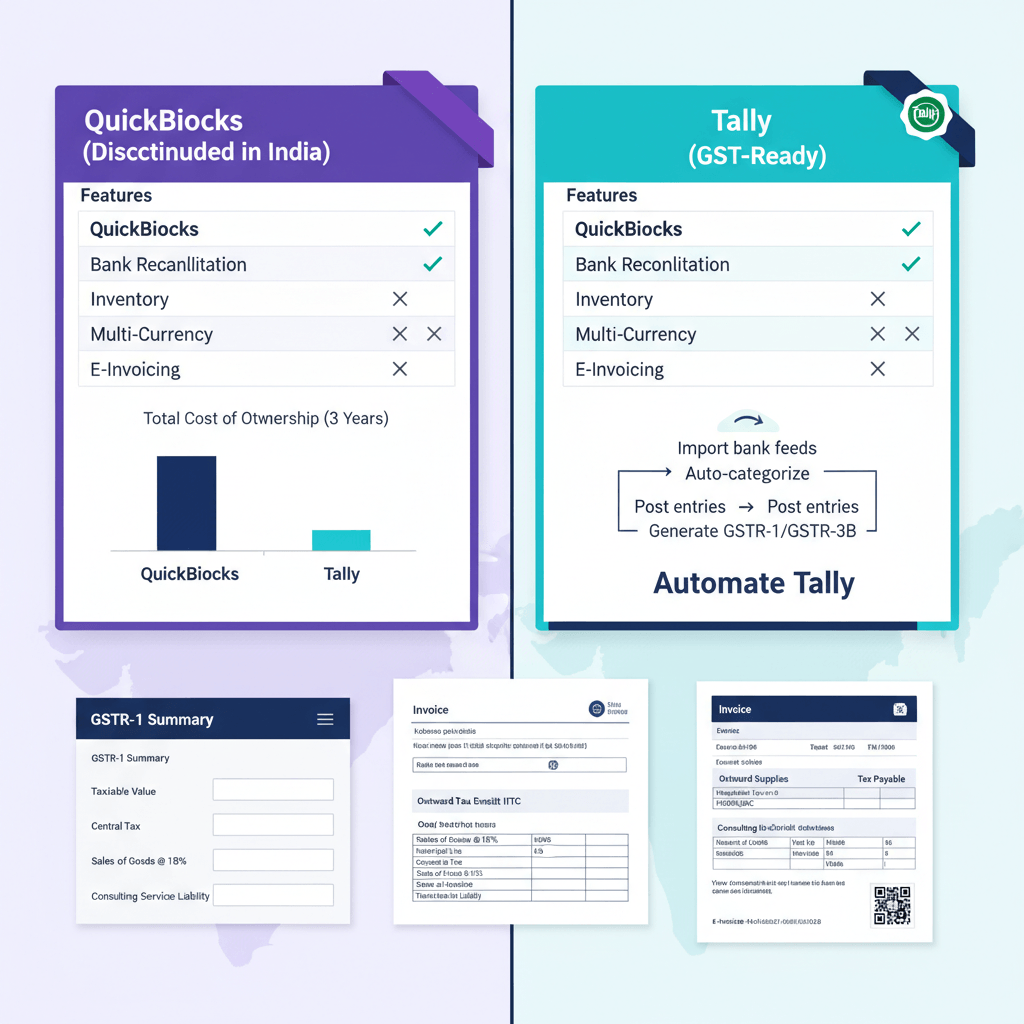
- QuickBooks: comprehensive reporting with multi user access and updated TDS e-filing support.
- Xero: cloud platform with strong bank reconciliation. UPI auto match now runs at 95% accuracy.
- FreshBooks: user friendly for service businesses.
- Zoho Books: India focused GST features including Rule 36(4) ITC trackers and affordable pricing.
Look for compliance calendars with GST and TDS reminders, filing status tracking, anomaly detection for duplicates and round numbers, and ISO 27001 or SOC 2 certifications.
Templates and Checklists
- Compliance checklist: 20 to 25 items across GST, TDS and TCS, payroll, income tax and ROC, licenses. Mark Yes, No, In Progress.
- Reconciliation checklist: 8 to 10 areas including bank, GST, TDS, AR and AP, intercompany, and suspense.
- KPI template: 12 to 15 metrics with sector benchmarks and trends.
- Red flag register: severity ratings, owners, resolution paths.
- Status board structure: entity details, review period, owners, schedule, exceptions, and escalations.
- Findings log: issue ID, description, source, impact, remediation, owner, target date, and status.
Case Study: Finance Health Check for an Indian Services SMB
XYZ Tech Services, a custom software firm at 5.2 crore revenue and 25 employees, needed a health check before a 2 crore working capital facility. The CA found mostly green compliance with one amber flag for late advance tax, 45 unmatched bank items, 12 lakh input credit blocked due to vendor delays, and 80 lakh in AR beyond 90 days concentrated in one customer.
KPI diagnostics showed DRO at 72 days against an industry median of 45 to 60 days, net margin at 8.5 percent, cash runway at 4.2 months. Red flags included rising DRO, concentration risk, duplicate vendor payments of 2.5 lakh, and spiking bank charges.
The roadmap cleared bank items in 7 days, standardized masters and collections in 30 days, completed GST reconciliation in 60 days, and instituted monthly KPI reviews and cash forecasting by 90 days. Results: bank reconciliation below 5 pending items, DRO down to 58 days, runway up to 5.1 months, and a clean narrative that secured the 2 crore facility at 8.5 percent interest.
2025 Mumbai Services SMB: A More Recent Example
A Mumbai based services firm at ₹8 crore revenue ran a health check in 2025. It revealed ₹15 lakh blocked ITC from vendor filing delays, DRO at 82 days (well above the 75 day red flag threshold), and runway at just 2.8 months. After implementing a structured 90 day roadmap with automated reconciliation and weekly AR calls, DRO dropped to 52 days and the firm secured a ₹3 crore working capital facility at 9% interest. Bankers specifically cited the API verified compliance scorecard and below 5% leakage metrics as factors in the approval.
Conclusion
A finance health check India converts chaos into clarity when run systematically. Gather compliance records, reconcile bank and tax data, calculate KPIs, and act on red flags. Assign owners with deadlines, track progress against a 7, 30, 60, 90 day plan, and use automation where volume overwhelms manual workflows.
For CAs, it scales trust and readiness across clients. For SMBs, it prepares you for growth and audits. For finance teams, it replaces fire fighting with disciplined execution.
With 2026's tighter ITC caps, expanded e-invoicing requirements, and API first compliance expectations, the cost of skipping a health check has never been higher. Make the health check your recurring advantage. Run it quarterly, act promptly, and watch financial confidence grow.
FAQ
Finance health check India checklist for GST, TDS, payroll: what is the exact scope and artifacts a CA should request?
Request twelve months of bank statements, GSTR-1 and GSTR-3B filings, GSTR-2B for purchases, Form 26AS and TRACES downloads (preferably via API for real time data), trial balance and ledgers from Tally, AR and AP aging, payroll registers including PF challans and Form 12BA (now quarterly under new labor codes), ROC filings like AOC-4 and MGT-7, annual DIR-3 KYC, MSME UMS-1 returns if registered, and licenses or sector permits. A status board tracks owners, due dates, and exceptions across all these artifacts.
Best reconciliation workflow in Tally to close bank, GSTR-2B, and vendor ledgers inside 7 days: what steps should a CA follow?
Day 1: lock prior periods, import bank statements via API, auto match receipts and payments, tag unknowns. Day 2 to 3: reconcile purchases to GSTR-2B and vendor GSTR-1, fix GSTIN errors and duplicates, clear 80% of mismatches. Day 4 to 5: complete vendor statement confirmations. Day 6: clear aged items beyond 15 days or materiality thresholds. Day 7: publish exception summary and owner actions. API based bank ingestion and auto matching tools reduce this timeline significantly for high volume practices.
How do I compute months of runway for an Indian SMB: formula and example for board reporting?
Runway equals cash in bank divided by average monthly operating outflow. Example: cash of 1.5 crore, monthly outflow 30 lakh, runway is 5 months. Services firms should target above 6 months; distribution businesses above 4 months (2026 update). If outflow trends upward, recalculate weekly. For board packs, attach your workbook with a 12 month trend and flag any month where runway dips below 3 months.
What DRO, DPO, and CCC benchmarks should a CA use for Indian services and distribution, and how do I present them to a banker?
Services: DRO at 45 to 60 days, DPO at 30 to 60 days, CCC below 45 days. Distribution: DRO at 30 to 45 days, DPO at 45 to 75 days, CCC below 60 days. Red flags: DRO above 75 days or rising 15%+ quarter over quarter, DPO below 30 or above 90 days, CCC above 90 days. Present a 12 month trend with industry benchmarks and a remediation plan for outliers. Per RBI's 2026 MSME lending guidelines, bankers now look for AR concentration below 40% in top 5 customers and under 10% unreconciled bank items (2026 update).
Fastest way to clear GSTR-2B mismatches, vendor follow up template, and Rule 36 credit impact?
Classify mismatches by cause: missing vendor filings, wrong GSTIN, duplicate invoice, credit note mapping, amendment lag. Send a standardized request to vendors with invoice details, GSTIN, and due date for correction. Escalate to management for high value delays. Blocked credits under Rule 36(4) are now capped at 5% for unmatched ITC, and mismatches above ₹50,000 trigger auto notices from the GST portal (2026 update). Prioritize vendors by credit value and resolve within 15 days to avoid accumulating blocked credits.
What dates belong on a compliance calendar for Indian SMBs: GST, TDS, advance tax, ROC, and MSME filings?
GST: GSTR-1 by the 11th, GSTR-3B by the 20th. TDS: challans by the 7th of the following month, quarterly returns per statutory schedule. Advance tax: June 15th, September 15th, December 15th, March 15th. ROC: AOC-4 within 30 days of AGM, MGT-7 annually, DIR-3 KYC annually from April 2025. MSME: UMS-1 by October 14 and April 14, penalties up to ₹20,000 for delays (2026 update). Automate reminders and owners through your practice management suite or compliance calendar tool.
How should intercompany or related party loans be handled: agreements, interest provisioning, and SBI PLR compliance?
Execute written loan agreements with board approval, set interest at or above SBI PLR, accrue monthly, and reconcile balances routinely. Disclose related party transactions as required under the Companies Act provisions on the MCA portal. Use exception alerts to flag missing accruals or terms deviations, and review balances quarterly during your finance health check cycle.