-01%201.svg)

Key takeaways
- Clean, timely books power compliance, cash flow, and decisions, not just filings.
- Automated bookkeeping services speed up data capture, CA review still matters for accuracy and risk.
- Cloud bookkeeping solutions give real time access and collaboration for founders and finance teams.
- CA led SMB accounting services add oversight for GST, TDS, income tax, and ROC, reducing notices and penalties.
- A practical ROI view blends time saved, penalty avoidance, and cash gains, minus the fee.
- AI Accountant blends automation, cloud dashboards, and a CA team into one managed service.
Introduction to business bookkeeping services
If your books live in scattered spreadsheets, month end is always late, GST and TDS dates sneak up on you, and cash flow feels like guesswork, you are not alone. Business bookkeeping services fix this. They record every sale, bill, receipt, and payment. They bring order, speed, and control. They also set you up for better tax compliance and stronger decisions.
In this guide we explain automated bookkeeping services, cloud bookkeeping solutions, and CA led SMB accounting services. We show how clean books power financial management services like runway and burn rate, we share checklists, pricing math, pitfalls, and a simple onboarding plan. We also show how AI Accountant brings it all together with a CA team and a live dashboard. See cash and runway examples here, Cash Flow Dashboard, Liquidity, Runway.
Sources: ATIDIV guide, Employment Hero overview
What are business bookkeeping services
Business bookkeeping services mean the careful recording, sorting, and upkeep of a company’s money data. Every transaction is captured, including income, expenses, payments, and receipts. The work covers daily entries, month end closes, and tidy ledgers you can trust.
Typical scope for SMBs
- Transaction capture for sales, purchases, expenses, and journals
- Accounts receivable and accounts payable tracking with aging
- Bank and payment gateway reconciliations against books
- Payroll TDS calculations and basic payroll entries
- GST and TDS support for returns and challans
- Month end close, schedules, and review
- MIS reports like profit and loss, balance sheet, cash flow
The outcomes matter. You get accurate ledgers and audit ready books. You file on time. You avoid notices and penalties. You also see your real performance, which improves calls on pricing, hiring, and growth.
AI Accountant offers this as a managed service. A CA team runs your books and filings. The dashboard gives you a live view of money, documents, and due dates. You get both the people and the system in one place.
Sources: ATIDIV guide, Employment Hero overview
Models of delivery for bookkeeping services for businesses
There are three common ways to run bookkeeping services for businesses. You can keep it in house, you can outsource, or you can mix both. A helpful breakdown of styles is below, and a deeper overview is here, Monthly Bookkeeping Services Guide.
Automated bookkeeping services
These use bank feeds, OCR, and rules to post entries. Many tools add machine learning for smart coding. They suggest matches for receipts and invoices and flag exceptions for review. This speeds up data entry and lowers cost, but it still needs human review. A CA or trained accountant must check anomalies and handle edge cases like refunds, foreign currency, credits, or complex GST place of supply rules.
Cloud bookkeeping solutions
These run on the web for anytime access from laptop or phone. Your team and your accountant can work together in real time, with version control and a single source of truth. Dashboards show live numbers, like in this Cloud Accounting Services Guide. You do need to review security, backups, data ownership, audit trails, and role based access.
CA led managed SMB accounting services
This model is run by a Chartered Accountant team, ideal when you have GST and TDS complexity, income tax planning, or ROC filings. You get compliance oversight and advisory, not just data entry, plus clarity on laws like reverse charge, HSN codes, and e invoice rules. Costs are higher than basic data entry, but risk falls a lot.
Quick take on fit
- Automated is great for low volume startups and simple books, set rules and review exceptions.
- Cloud is great for teams that need live access and scale.
- CA led is best for regulated SMBs or anyone with GST, TDS, income tax, and ROC needs.
AI Accountant blends these, you get automation for speed, cloud dashboards for access, and a CA team for oversight and deep compliance.
Sources: Employment Hero overview, Salesforce SMB explainer, ATIDIV guide
How bookkeeping connects to broader financial management services
Clean books are the base for financial management services. When your data is right and timely, you can do more than report last month, you can plan.
- Cash flow trends that show seasonality
- Burn rate and runway for startups and SMBs
- Budget versus actuals by cost center or project
- Unit economics and margin analysis by product or SKU
- AR and AP insights that cut DSO and optimize DPO
- Forecasts that support hiring, pricing, and purchasing
- Compliance calendars that reduce filing risk
This turns books into a daily guide. You time vendor payments better, chase debtors sooner, pick the right moment to raise funds, and spot profit leaks like fee overcharges or failed refunds. See examples in the cash flow dashboard article.
Sources: ATIDIV guide, Intuit SMB economy report
Features and capabilities checklist for bookkeeping services for businesses
Use this checklist to compare providers. It covers accuracy, controls, and insights.
Bookkeeping accuracy
- Frequent bank and gateway reconciliations
- Ledger hygiene and clean COA design
- Clear review notes and low error rates
Compliance depth
- GST registrations and filings for GSTR 1, 3B, 9, 9C
- TDS advisory and returns like 24Q, 26Q, 27Q, 26QB series
- Income tax returns and advance tax math
- ROC support for small companies if needed
Integrations
- Direct bank feeds
- Payment gateways and UPI apps
- E commerce platforms and ERPs
- Invoicing and payroll systems
Cloud bookkeeping solutions
- Real time dashboards with P and L, balance sheet, cash flow
- Central document repository with search
- Audit trails for edits and approvals
- Role based access and user management
- Central chat or ticketing with your CA team
Automated bookkeeping services
- AI categorization with confidence scores
- OCR for bills and receipts
- Exception workflows for review and approval
- Alerts and nudges for anomalies and due dates
Reporting and MIS
- Monthly MIS pack with KPIs
- AR and AP aging with expected dates
- Cash flow direct and indirect formats
- Inventory, fixed asset, and cost center views
Security and controls
- Encryption in transit and at rest
- Backups and disaster recovery
- Data residency and compliance with local laws
- Access logs and session controls
- SLAs for uptime and response
Service quality
- CA oversight and sign off
- Onboarding playbook with timelines
- Response time and escalation paths
- Sample MIS and references
Tool recommendations for automation and reporting
- AI Accountant
- QuickBooks Online
- Xero
- Zoho Books
- Tally Prime
- FreshBooks
- Sage Business Cloud Accounting
Sources: ATIDIV guide, Employment Hero overview, Salesforce SMB explainer
Pricing and ROI for SMB accounting services
SMB accounting services are often priced as a monthly retainer. Tiers depend on transaction volume, number of entities, and add ons like GST annuals or tax audits. Some providers charge extra for cleanup or historical migration.
How to think about ROI
- Time saved: Faster closes and fewer manual steps
- Penalty avoidance: Fewer late fees and notices
- Cash gains: Lower DSO, better DPO, less refund leakage
A simple calculator
Monthly ROI equals
Hours saved times your blended hourly rate, plus avoided penalties, plus cash flow gains, minus the monthly fee.
Example
Saved 20 hours a month at 1500 each equals 30000
Avoided penalties 5000
Cash flow gains 15000
Monthly fee 25000
ROI equals 30000 plus 5000 plus 15000 minus 25000 equals 25000 net value, that is a 100 percent plus return
Many SMBs see up to 60 percent cost savings when they outsource, because automation and process scale reduce unit costs. AI Accountant can share a clear price with a scope map and right size the plan to your entity count, integrations, and compliance load.
Sources: ATIDIV guide, Intuit SMB economy report
Evaluation framework and provider comparison for automated bookkeeping services
Map your requirements
- Data volume by month and peak seasons
- Compliance stack like GST, TDS, income tax, ROC
- Needed integrations and data sources
- Reporting needs like MIS, cost centers, segments
Ask due diligence questions
- What is the reconciliation SLA for banks and gateways
- What is the monthly close timeline
- Is there CA sign off before filings
- What security audits and controls are in place
- What is the escalation path for urgent issues
- Can we see a sample MIS pack
- Can we speak to two current clients
Run a pilot with an onboarding checklist
- Share a clean COA and sample data
- Test accuracy and speed on two months of books
- Validate reporting and dashboards
- Confirm response times and meeting cadence
Compare two or three providers side by side. Score them on compliance depth, automation strength, and service quality. Pick the one that fits your risks and goals, not just the lowest price. AI Accountant supports a short pilot with dashboard access, live reconciliations, and a CA review.
Sources: ATIDIV guide
Implementation and onboarding roadmap for business bookkeeping services
A clear onboarding plan reduces noise and keeps your team and the provider in sync.
Design the chart of accounts
- Agree on the COA structure
- Map revenue and expense categories
- Set up cost centers, projects, and tax ledgers
Data migration and cleanup
- Import historical data for at least the current year
- Clean open AR and AP and credit notes
- Set opening balances for banks, loans, and assets
Connect systems
- Link bank feeds and payment gateways
- Enable e invoice if you need it
- Connect payroll and invoicing apps
First 90 days
- Run a baseline month end close to set the standard
- Set the GST and TDS calendar with owners and cut offs
- Define AR and AP workflows and approval rules
- Lock the reporting cadence and MIS format
Track KPIs
- Days to close per month
- Reconciliation age and unreconciled count
- Error rate and review notes cleared
- On time filing rate for GST, TDS, and income tax
- DSO and DPO trends
- Cash runway accuracy versus actual
Communicate often
- Weekly check in for the first six weeks
- Monthly review with the CA for tax and process
- Quarterly plan for improvements and automation
AI Accountant provides an onboarding playbook, the CA team drives the setup, and the dashboard shows progress on every step.
Sources: ATIDIV guide, Intuit SMB economy report
Common pitfalls with automated bookkeeping services and how to avoid them
- Over reliance on automation without CA review
Fix: Mandate CA oversight, set review SLAs for exceptions and month end. - Poor COA design that hides key drivers
Fix: Involve a CA early, align COA to how you manage the business. - Missed compliance dates and weak document control
Fix: Use a clear compliance calendar and a central document repository. - Fuzzy roles and handoffs between client and provider
Fix: Write a responsibility matrix, define inputs, cut offs, and approvals.
AI Accountant bakes in these controls, CA review is part of the service, and the dashboard shows upcoming due dates and all documents in one place.
Sources: Employment Hero overview, ATIDIV guide
Short case snapshots for SMB accounting services
Startup SaaS
A young SaaS team moved to automated bookkeeping services with cloud bookkeeping solutions. Bank feeds posted daily and rules auto coded routine expenses. The month end close fell from 20 days to 7 days. The founders checked runway each week on a live dashboard and made faster hiring calls.
D2C and e commerce SMB
A brand selling online had leaks in refunds and fees. With automated gateway reconciliations and CA led GST advisory, leakages dropped. AR and AP got clearer, GSTRs went in on time each month, chargebacks were tracked better, and disputes were raised in time.
Freelancer to small company
A sole founder grew into a small company. With SMB accounting services they added payroll TDS and ROC filings. They moved from scattered files to audit ready books and kept focus on sales.
AI Accountant sees these patterns often, speed from automation, clarity from the cloud, safety from CA oversight.
Sources: Intuit SMB economy report, ATIDIV guide
How AI Accountant Virtual Accounting delivers business bookkeeping services
AI Accountant’s Virtual Accounting is a CA led managed service with a live dashboard. You get end to end accounting and compliance, plus real time visibility into money, documents, and due dates.
What you get each month
- Accounting and bookkeeping services
Sales, purchases, expenses, and bank entries
Ledger review and cleanup
Year end closing and schedules
Fixed asset register and depreciation
Inventory records and reconciliations
AR and AP management
Bank and payment gateway reconciliations
Cash flow prep and MIS packs
Support with statutory audit coordination - Taxation and compliance
GST registration and monthly or quarterly filings for GSTR 1 and 3B
Annual GST filing for GSTR 9 and 9C
E invoice enablement and advisory on place of supply, HSN, rates, and RCM
TDS advisory and monthly challan payments and returns like Form 24Q, 26Q, 27Q, 26QB, 26QC, 26QD
Income tax return filing for individuals, firms, and companies
Advance tax math and payments and tax audit prep
International tax and 15CA prep
Expat tax and salary structuring - Payroll services
Monthly TDS calculation for payroll
Advisory on salary structure to save taxes - ROC and secretarial for small companies
MGT 7 and AOC 4
MSME filings for vendors to MCA
DIR 3KYC
DIN application and director changes
Authorised share capital increase and allotments
Board and AGM support and minutes
Statutory registers and reports
What the dashboard adds
- Financial overview with revenue, expenses, profit or loss, and balances
- Income and expense breakdowns
- Cash flow trends, burn rate, and runway
- AI generated insights and alerts with suggestions
- Recent transactions and bank statement analysis
- Document repository with search
- Compliance dates and filing status
- Central chat with your CA team
Why this model works
- Continuous visibility cuts follow ups on email and spreadsheets
- CA oversight keeps you safe on GST, TDS, income tax, and ROC
- Automation reduces manual work and mistakes
- A single place for data, docs, and messages saves time
Who it is for
- Freelancers who need simple books and on time filings
- Startups that want speed, burn, and runway
- Growth stage SMBs that need strong AR or AP and monthly MIS
- Lean finance teams that want to outsource operations
AI Accountant replaces messy workflows with a structured service and a central system. You get people plus platform, which is the core idea of business bookkeeping services done right.
Sources: ATIDIV guide, Employment Hero overview, Intuit SMB economy report, AI Accountant
Closing thoughts and next steps
Modern business bookkeeping services save time, improve compliance, and make decisions easier. Automated bookkeeping services bring speed, cloud bookkeeping solutions bring access, CA led SMB accounting services bring safety and advice. Together, they give you clean, real time books and better cash control.
If you want to see this in action, book a short demo of AI Accountant’s Virtual Accounting. You will see live dashboards, compliance timelines, and how a CA team runs your books each month. Then decide what is right for your business.
Explore more: GST Guides, TDS Checklists, Cash Flow Articles
Sources: ATIDIV guide, Employment Hero overview, Intuit SMB economy report, AI Accountant
FAQ
What is the clean books baseline a CA expects before taking over monthly accounting, and how fast can a CA led team stabilize GST and TDS filings
A practical baseline is a clear COA, reconciled cash and bank through the last month, an AR and AP aging that matches ledgers, and access to GST, income tax, and MCA portals. A CA led team like AI Accountant typically stabilizes in two to four weeks, week one focuses on data access and COA review, week two tackles reconciliations and open items, week three finalizes a baseline close, week four locks the GST and TDS calendar and starts standard MIS cadence.
How do automated bookkeeping services bring the month end close from 15 days to under 7 without losing audit readiness
They automate capture through bank feeds and OCR, apply rules for recurring vendors and revenue recognition, and push exceptions into review queues. Audit readiness is kept by enforcing maker checker reviews, preserving audit trails, and running scheduled reconciliations for banks, gateways, GST returns versus books, and TDS challans versus ledgers. AI Accountant combines these controls with CA sign off before filings.
What controls should I mandate when using AI categorization so the CA can safely sign off on filings
Require confidence thresholds for auto posting, anything below threshold routes to review, maintain vendor and item level mapping master data, run daily bank reconciliations, and enforce a monthly close checklist that includes GST liability tie outs, TDS proof checks, and revenue cut off testing. The CA then reviews exception logs and signs off on filings.
How should we structure the COA for multiple GST registrations and marketplace sales
Use location segments for each GSTIN, mirror tax ledgers for CGST, SGST, IGST per registration, and split revenue and fees by channel, for example own store, Amazon, Flipkart, Shopify. Add clearing accounts for each payment gateway and marketplace settlement to simplify reconciliation. AI Accountant implements this pattern often for D2C and marketplace mixes.
What is a good reconciliation SLA for Indian banks and gateways, including UPI, Razorpay, and Stripe
Daily cash and bank reconciliation with next business day completion, daily gateway reconciliation of totals with a weekly full line item match, and monthly settlement fee validation against contracts. Exceptions older than three business days should escalate to the CA. AI Accountant’s standard SLA targets same day for banks and next day for gateways.
How does an AI enabled Virtual Accounting service compute burn and runway, and what integrations are needed
It reads categorized actuals from the books, normalizes one offs, and calculates net cash burn over a rolling period, runway equals available cash divided by average monthly burn. Integrations usually include bank feeds, payment gateways, payroll, and invoicing. AI Accountant’s dashboard shows burn and runway alongside cash inflows and outflows with drill downs to transactions.
Which TDS forms apply to startups that pay contractors, rent, foreign vendors, and salaries, and how do 15CA or 15CB fit
Common forms include 26Q for contractor and professional fees, 24Q for salaries, 26QB for property, 27Q for certain non resident payments. For foreign remittances, 15CA and sometimes 15CB are needed depending on thresholds and treaty positions. A CA led service like AI Accountant maps sections, computes rates, prepares challans, files returns, and coordinates Form 15CA preparation with banks.
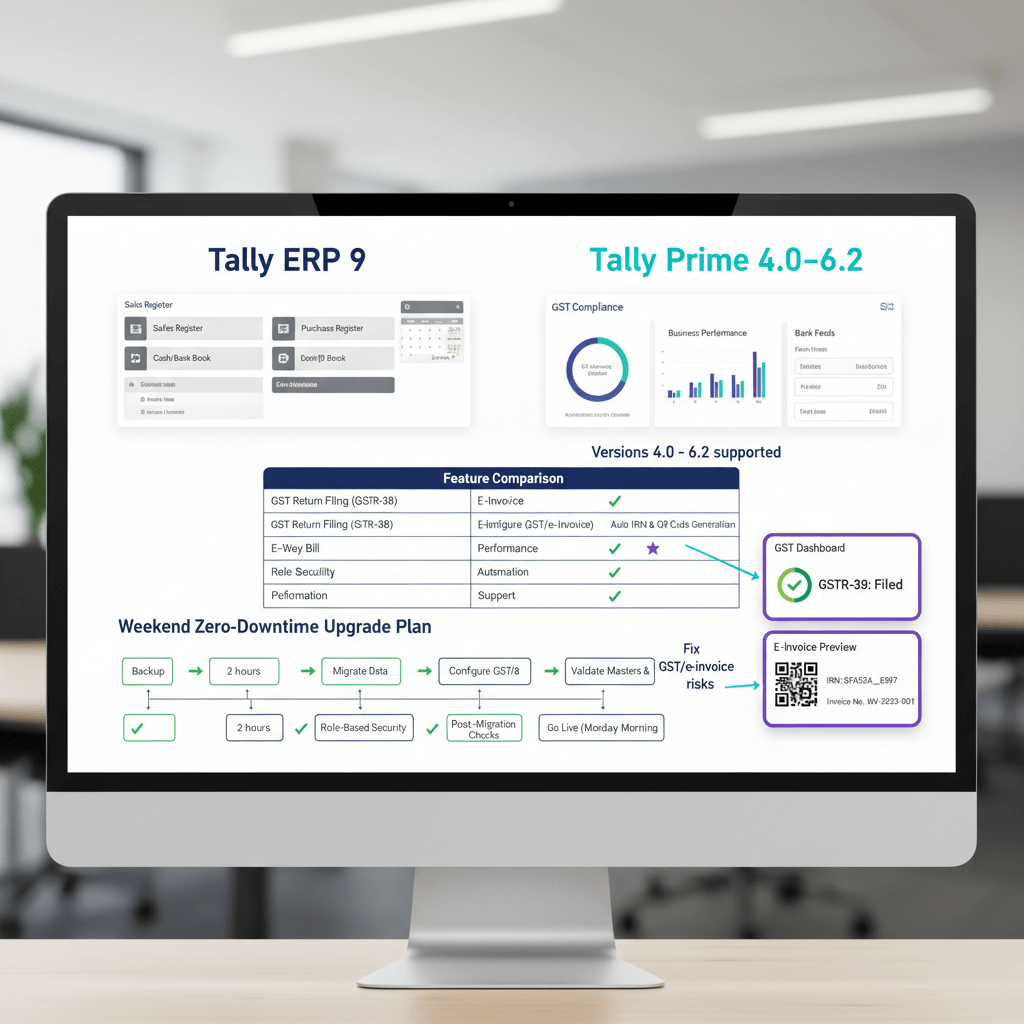
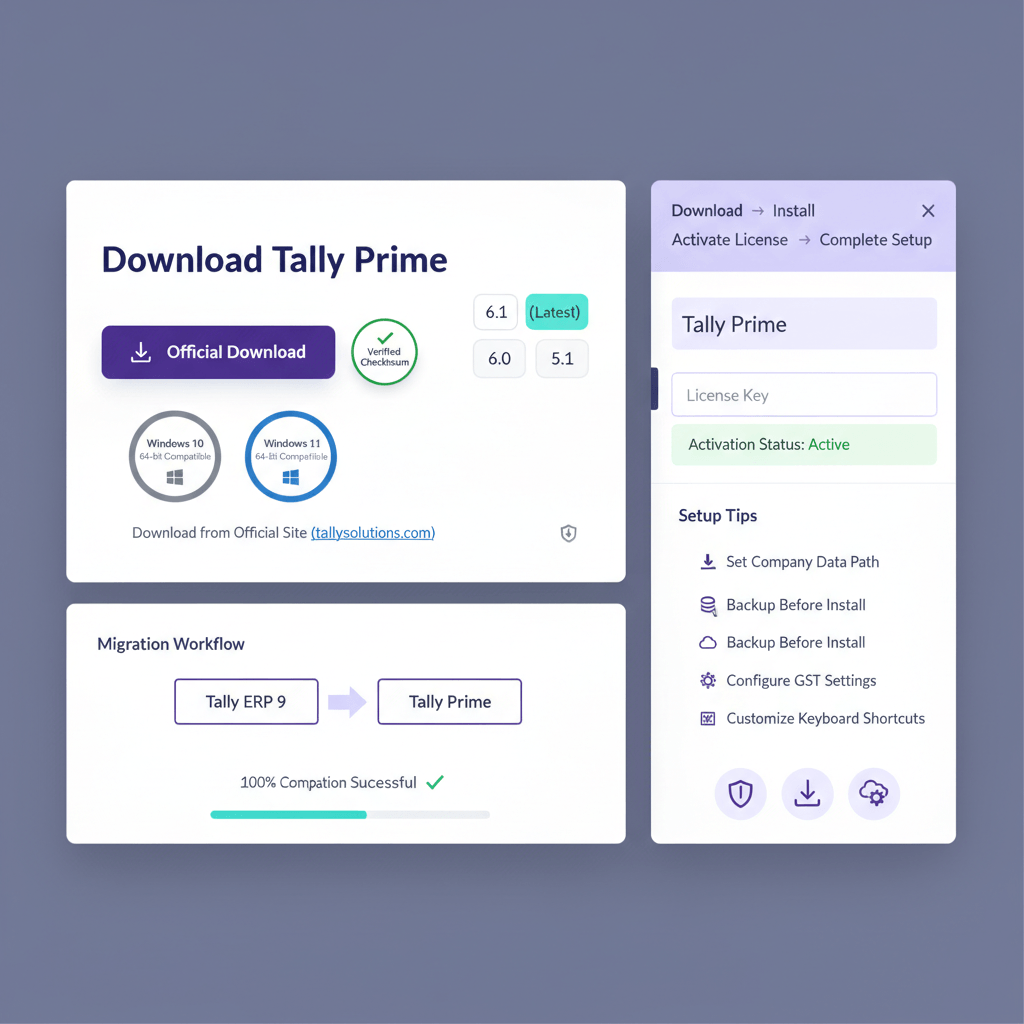
When should we switch from Tally to a cloud system like Zoho Books, Xero, or QuickBooks Online
Switch when you need multi user remote access, automated feeds, role based controls, and real time dashboards. A trigger is when month end depends on email attachments and USB exports. AI Accountant runs a two month parallel pilot, validates reconciliations and MIS, then migrates opening balances and masters before cutover.
What is a sensible pricing benchmark for SMB accounting, and how do I model ROI for the board
Benchmarks vary by volume and scope, for a small entity expect a monthly retainer that scales with transactions, number of GSTINs, and add ons like annual GST or tax audits. Model ROI as hours saved times a blended finance rate plus avoided penalties plus cash gains from lower DSO and better DPO minus the monthly fee. For example, 20 hours at 1500 equals 30000, avoided penalties 5000, cash gains 15000, fee 25000, net value 25000, which is a strong return.
During statutory or tax audit, what schedules and reconciliations must be ready, and who owns what
Be ready with bank and gateway reconciliations, GST liability and credit reconciliations including GSTR 2B to books, TDS challans and returns to ledgers, fixed asset register and depreciation, inventory valuation, revenue recognition schedules, and related party listings. The provider prepares schedules, the CA reviews and signs off, management approves disclosures and provides confirmations.
How do we handle foreign currency, exports of services for GST, and e invoice thresholds without tripping compliance
Use separate ledgers for FX gains or losses, capture place of supply correctly for exports of services, maintain LUT or pay IGST as applicable, and monitor turnover against e invoice thresholds. AI Accountant configures these rules in the COA, sets alerts on threshold approaches, and reviews sample invoices each month.
What red flags should I look for in a provider contract, and what service levels should be non negotiable
Red flags include vague scope, no reconciliation SLA, no CA sign off, unclear data ownership, and weak exit terms. Non negotiables include defined close timelines, daily bank reconciliation, CA review before filings, security commitments, response and escalation SLAs, and access to your data and audit trails at all times. AI Accountant contracts codify these items with sample MIS and onboarding timelines.
Does automation remove the need for monthly reviews with a CA if the dashboard looks fine
No, dashboards surface signals, but nuanced items like revenue cut off, GST place of supply, RCM, and TDS section applicability still need professional judgment. A monthly CA review closes the loop on exceptions and validates compliance before filings. AI Accountant keeps the review short by pre clearing exceptions through the month.