-01%201.svg)

Key takeaways
- Automated business tax reports deliver accuracy, speed, and real time visibility for GST, TDS, income tax, and ROC filings in India.
- End to end automation covers ingestion, mapping, reconciliation, computation, document generation, filing, and monitoring, with clear audit trails.
- Strong setups include maker checker controls, compliance calendars, dashboards, multi entity support, and robust reconciliation engines.
- Implementation is an SOP driven exercise, start small, pilot one cycle, train teams, and iterate rules to reduce notices and penalties.
- Track KPIs like filing time, error reduction, on time rates, and variance drops in GSTR 2B and 26AS to prove ROI.
- AI Accountant blends CA led managed service with an AI enabled dashboard, giving founders and finance heads control and expert execution.
Introduction to Automated Business Tax Reports
Automated business tax reports use software to pull data from ledgers and systems, then compute, prepare, and submit tax documents. Think GST returns, TDS statements, income tax workpapers, and even ROC forms for small companies. Set up well, they cut errors, speed up filings, and give you continuous visibility into liabilities.
For founders, freelancers, finance leads, and startup operators, the win is simple, fewer missed deadlines, predictable cash needs, and a smoother workflow. With AI Accountant, you also get a CA led team plus a central dashboard that keeps the full process on track. For broader perspectives on automation, see this guide by Stripe and these Oracle notes.
What Are Automated Business Tax Reports
These reports cover core Indian filings and produce structured outputs that match portal rules. For a deeper explainer, review AI Accountant’s overview and external primers like Bloomberg Tax and Stripe.
Scope
- GST returns, GSTR 1 and GSTR 3B for monthly or quarterly filings, and GSTR 9 and GSTR 9C for annual filings.
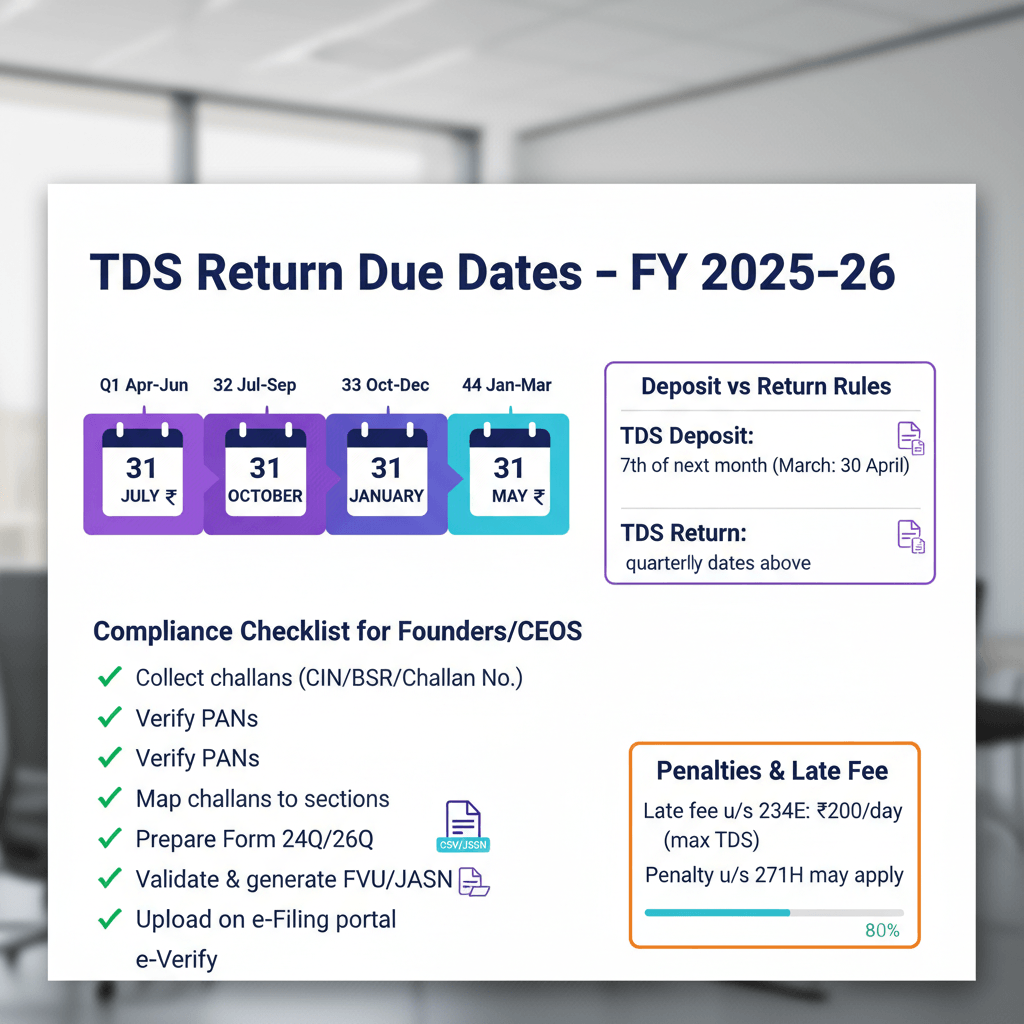
- TDS statements like Form 24Q and Form 26Q, plus challans and acknowledgements.
- Income tax computations, ITRs, and advance tax support.
- ROC annual compliance for small companies like MGT 7 and AOC 4.
Types of automated outputs
- Monthly or quarterly returns, GSTR 1 and GSTR 3B, and TDS Forms 24Q and 26Q.
- Annual returns, GSTR 9 and GSTR 9C and company ITRs.
- Reconciliations, GSTR 2B matching and 26AS or TRACES checks.
- Payment proofs, tax challans and portal acknowledgements.
Automation does the heavy lifting, while your CA team reviews, approves, and files with confidence.
Why Automated Business Tax Reports Matter
Automation reduces manual error, lowers penalty risk from wrong or late filings, and shortens your close cycle from weeks to days. You get a constant view of tax liabilities and cash needs, which sharpens working capital planning. Audit trails make reviews faster and less stressful.
See industry perspectives via Stripe, Grant Thornton, Thomson Reuters, and Oracle.
How Automation Works End to End
Here is the full flow, mapped to a repeatable and auditable tax workflow.
Data ingestion
- Pulls from accounting ledgers, e invoice systems, bank feeds, payment gateways, payroll files, and marketplaces.
- RPA and connectors reduce copy paste.
Mapping and classification
- Applies HSN and SAC codes, place of supply, and reverse charge logic for GST.
- Maps TDS sections, thresholds, and rates based on vendor type and nature of payment.
Reconciliation
- Matches GSTR 2B with purchase ledgers, learn more in this guide.
- Checks bank to books tie ups and payment gateway settlement variances.
- Aligns TRACES or 26AS with TDS ledgers.
Computation
- Calculates tax liabilities, interest, and late fees when needed.
- Computes advance tax estimates on time.
Document generation
- Produces returns, challans, workpapers, and schedules.
- Keeps version control and maker checker trails.
Filing orchestration
- Submits via portal or API, tracks status and acknowledgements.
Monitoring and alerts
- Runs compliance calendars, uses AI variance detection, and flags risks early.
Further reading, Bloomberg Tax, Grant Thornton, Thomson Reuters, and Savant Labs.
Key Features to Look For in Tax Automation
- Accuracy controls, maker checker workflows and version control, with audit trails for every change and submit.
- Compliance calendar, built in statutory due dates and tracker views, alerts for cutoffs and escalations.
- Dashboards and insights, profit and loss, expense trends, cash flow, burn rate, runway, and tax liability trend lines, with drill downs.
- Multi entity support, multiple states and GSTINs, role based access, and CA workspaces.
- Document repository, central store for invoices, returns, challans, notices, with search and retention.
- Reconciliation engines, bank and gateway tie outs, settlement checks, GSTR 2B matching, TRACES checks.
- Security and governance, encryption, backups, and data retention standards.
Explore additional checklists from NetSuite and Grant Thornton.
India Focused Compliance Coverage
GST
- Returns, GSTR 1, GSTR 3B, GSTR 9, and GSTR 9C.
- E invoice readiness and validations.
- Place of supply logic for inter state and exports.
- Reverse charge checks for RCM.
- HSN code mapping and rate checks.
TDS
- Challan support and statements, 24Q, 26Q, 27Q, and property linked 26QB or 26QC or 26QD.
- Section rates and thresholds across payments.
- TRACES alignment and Form 26AS checks.
Income Tax
- ITR filings for individuals, partnerships, and companies.
- Advance tax computations and reminders.
- Tax audit preparation workpapers and schedules.
ROC for Small Companies
- MGT 7 annual return and AOC 4 financial statements.
- DIR 3 KYC and event based filings for director changes.
Step by Step Implementation Plan
Use this SOP to set up automated business tax reports, iterate after the first pilot for stable results.
- Assess processes and gaps, map current filing steps and pain points, list notices and errors from the past three cycles.
- Catalog data sources, ledgers, banks, gateways, payroll, marketplaces, confirm e invoice and GST portal pulls.
- Clean ledgers and standardize accounts, fix naming and coding, align vendor master fields like GSTIN and PAN, set standard account groups.
- Configure rules, HSN and SAC codes, place of supply logic and RCM controls, map TDS sections and thresholds to vendor categories.
- Set reconciliations, enable GSTR 2B matching, align TRACES or 26AS vs TDS ledgers, run bank and gateway tie outs.
- Build calendars and alerts, load due dates, create reminders and escalations by role.
- Pilot one cycle and validate, test one month or one quarter, review variances and trails.
- Train teams and define RACI with your CA, assign who prepares, reviews, approves, and files.
- Iterate SOPs, improve rules and checks based on findings.
Common Pitfalls and How to Avoid Them
- Misclassification, fix with rule engines for HSN and TDS section mapping.
- Missing GSTIN, HSN, or e invoice, automate validations at data entry and upload.
- Place of supply and RCM errors, embed logic for inter state vs intra state and reverse charge.
- Wrong TDS rates or PAN issues, use threshold checks and section mapping to catch mistakes.
- Portal mismatches, run timing reconciliations between books and portal data.
- Marketplace TCS variances, check settlements and fee deductions thoroughly.
Pro tip, run a weekly reconciliation cadence, small gaps are easiest to fix early.
KPIs to Track for Automated Tax Reports
- Time savings per close and per filing.
- Reduction in errors, notices, and penalties.
- Variance drops in GSTR 2B and 26AS matching.
- On time filing rate across all entities.
- Cash leakage prevented and interest avoided.
Use Cases for Automated Business Tax Reports
Freelancer setup
- Quarterly advance tax reminders and computations.
- TDS under section 194J for professional fees.
- Auto categorization of expenses for clean ledgers.
SaaS startup setup
- Place of supply for subscription sales across states and exports with LUT.
- Payment gateway reconciliations and settlement tie outs.
- Multi state support for GST registrations and filings.
E commerce setup
- TCS and TDS handling from marketplaces.
- HSN mapping across SKUs and rate checks.
- Settlement wise reconciliation for returns and refunds.
Automation vs Outsourcing in Tax Compliance
In house automation works when your setup is simple and your data is clean, you move faster and retain control. As you scale across entities and states, a CA led managed service adds expert reviews, advisory, and execution support, which reduces risk and keeps SOPs consistent. See a managed model in this AI Accountant explainer and industry takes from Thomson Reuters and Grant Thornton.
How AI Accountant Delivers Automated Business Tax Reports
AI Accountant’s Virtual Accounting service is CA led and dashboard driven. You get continuous visibility into financial data, documents, and statutory status, with reconciliations and trails built in.
- Bookkeeping and monthly ledgers maintained and cleaned by a CA team.
- Full GST advisory and compliance, registrations, GSTR 1 and 3B filings, annual GSTR 9 and 9C, e invoice enablement, place of supply, RCM applicability, HSN, and rate checks.
- TDS advisory and compliance including monthly challan payments and filing of Forms 26Q, 24Q, 27Q, and property linked 26QB or 26QC or 26QD.
- Income tax filings for individuals, partnerships, and companies, advance tax computations, and tax audit preparation workpapers.
- Annual ROC compliance for small companies, MGT 7, AOC 4, DIR 3 KYC, board minutes, AGM minutes, and registers.
- A real time dashboard with profit and loss, cash flow, burn rate, runway, AI insights, recent transactions, bank analysis, document repository, compliance timelines, filing status, and central chat with your CA team.
- Auto reconciliations for banks and payment gateways and a clear audit trail for every submission.
This replaces fragmented email and spreadsheet workflows with a structured, review first operating model, practical for freelancers, startups, and growth stage companies.
Top Tools for Automated Business Tax Reports
- AI Accountant
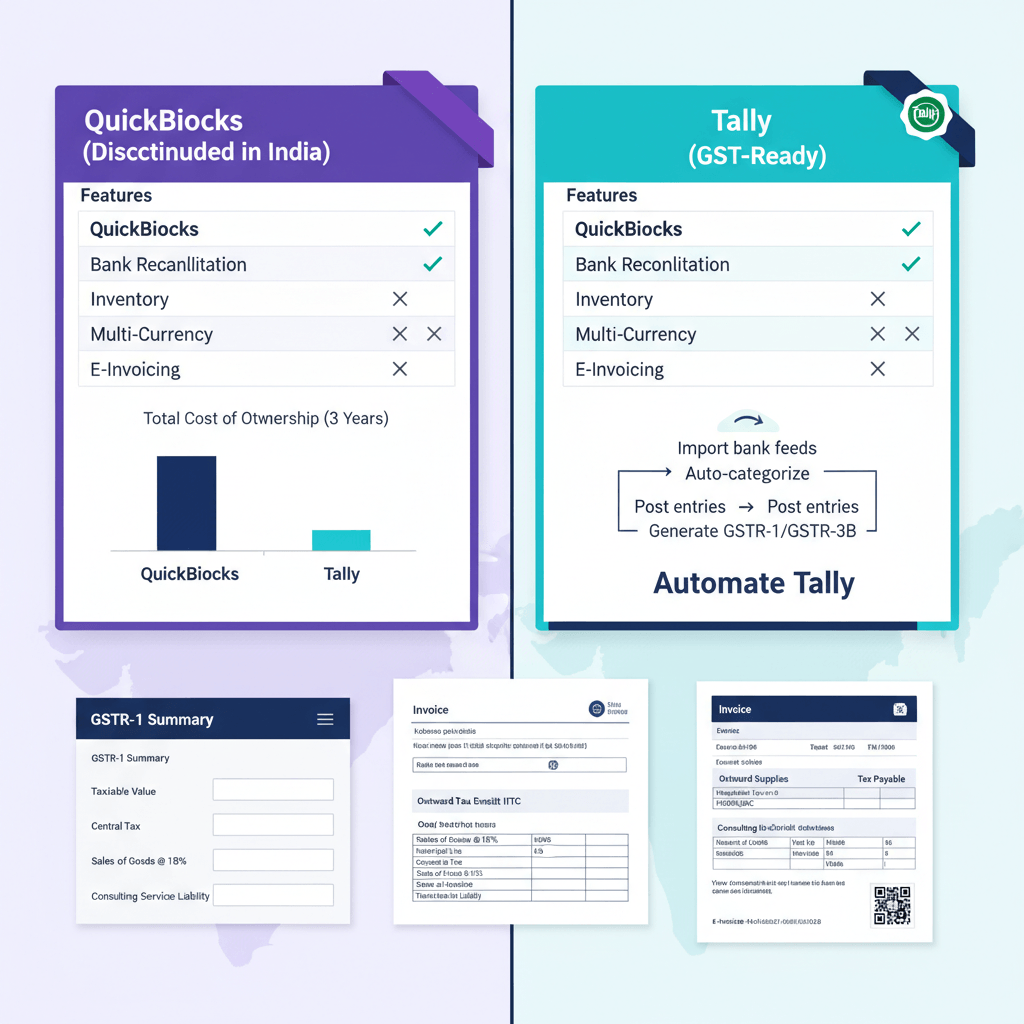
- QuickBooks Online
- Xero
- Zoho Books
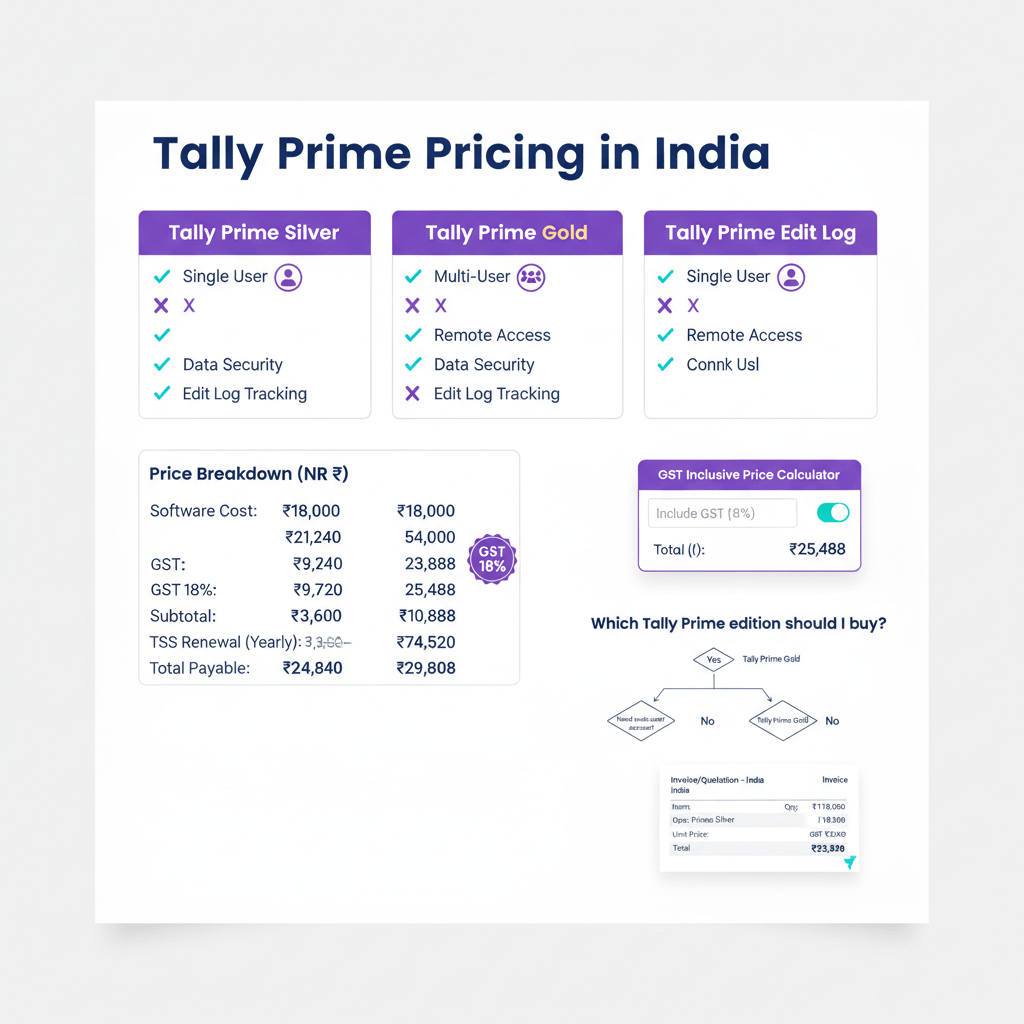
- TallyPrime
- FreshBooks
- Sage Intacct
- NetSuite
Choose a core ledger, then add connectors for e invoice, GST portal data, TRACES checks, and reconciliation. AI Accountant can handle the full setup with the CA team and dashboard. For corporate tax reporting insights, see NetSuite’s overview.
Data Security and Governance for Tax Automation
- Role controls, limit who can view, edit, approve, and file.
- Encryption, protect data at rest and in transit.
- Backups and retention, keep safe copies with clear retention rules.
- Audit readiness, preserve trails, versions, and documents for reviews.
Learn more in this Bloomberg Tax primer.
Practical Tips to Start This Week
- Pick one return to automate first, GSTR 3B is a strong start since it summarises liability.
- Align vendor master fields now, GSTIN, PAN, section, and rate reduce TDS errors.
- Set a clear rule for place of supply, use billing details for intra state vs inter state logic.
- Turn on bank and gateway reconciliation, even one daily sync cuts errors fast.
- Set a monthly review day, maker checker with a CA reviewer keeps quality high.
Closing Thoughts on Automated Business Tax Reports
Automated business tax reports bring accuracy, speed, and visibility to Indian tax compliance. They make GST, TDS, income tax, and ROC work predictable and review friendly. If you want a partner who sets this up end to end, consider AI Accountant’s Virtual Accounting, you get a CA team and a central dashboard. For broad primers on automation, visit Stripe and Oracle.
FAQ
How do automated business tax reports hold up during statutory audits, will auditors accept them as evidence
Yes, when your system maintains version control, maker checker logs, and portal matched numbers, auditors accept the outputs and supporting workpapers. AI Accountant preserves challans, acknowledgements, and computation trails, which simplifies sample testing and query resolution.
We operate multiple GSTINs and states, how does a centralized system avoid duplication and preserve maker checker
Multi entity setups create separate workspaces with role based access, entity tags on documents, and a common calendar. The maker prepares at the GSTIN level, the checker reviews variance logs, and final filing rights remain restricted, avoiding duplication while maintaining control.
What is the best way to standardize vendor masters for clean TDS and GST rule application
Standardize vendor legal name, PAN, GSTIN, section, and applicable rate, and capture nature of payment. Enforce validations at entry, then auto map TDS sections and GST place of supply. This reduces short deduction risk and avoids GSTR 1 or 3B classification errors.
How does the system manage GSTR 2B reconciliation, especially when suppliers file late
It matches purchase ledgers with 2B, flags missing or mismatched invoices, and provides supplier wise breakouts. Late filings show up as timing differences, so you can defer ITC or follow up with suppliers. AI Accountant’s reconciliation views help you clear variances before 3B.
Can we run a parallel pilot for one quarter before full rollout, what does that look like
Yes, run a shadow month or quarter, ingest data, run rules, and compare outputs with filed returns. Review deltas, interest impacts, and exception logs, then refine mappings. After two clean cycles, switch to production with maker checker enforced.
How are TDS mismatches on TRACES and 26AS handled without manual chasing
The system aligns challans with returns and 26AS, surfaces short deduction or wrong section mapping, and suggests corrections. Where supplier PAN issues exist, it recommends gross up or rate adjustment. AI Accountant also prepares correction statements when required.
What happens when GST or income tax portals change schemas or validations close to due dates
Rule engines update templates and validations quickly, using fallbacks like manual upload packs if APIs lag. Pre filing checks catch new required fields, reducing last minute rejections and avoiding interest due to missed cutoffs.
How do we treat reverse charge on import of services and inter state supplies without misclassifications
Embed place of supply logic and RCM applicability by transaction type. The engine marks RCM eligible entries for 3B, books liability, and accounts for ITC where eligible. Consistent tagging avoids misreporting in outward and inward summaries.
What are the prerequisites in Tally or QuickBooks for clean ingestion into an automation layer
Ensure consistent chart of accounts, tax ledgers mapped to GST and TDS, clean vendor masters with PAN and GSTIN, and invoice level HSN or SAC. Turn on bank feeds or export bank statements in standard formats for reliable reconciliation.
What is the implementation timeline and internal effort expected from our finance team
For a single entity with clean ledgers, expect one to two weeks for setup and a pilot cycle. For multi entity setups, plan three to six weeks with weekly reviews. Your team provides master data, confirms rules, and participates in maker checker dry runs.
How does an AI enabled Virtual Accounting service like AI Accountant differ from a traditional outsourced bookkeeping shop
AI Accountant combines CA led governance with an automation stack, so reconciliations, alerts, and filings run on a predictable cadence. You get real time dashboards, variance detection, and document control, not just spreadsheet ledgers and email threads.
What ROI should a founder or finance head expect in the first two quarters
Typical gains include faster monthly close by three to seven days, reduction in notices, and on time filing rate above ninety nine percent. Cash interest avoided on corrected advance tax and TDS can offset fees, while audit readiness reduces year end effort significantly.