-01%201.svg)
Key takeaways
- Automated accounts payable streamlines invoice to pay, from OCR capture and approvals to payments and reconciliations, giving startups and SMBs speed, control, and audit ready records.
- Modern systems handle two way and three way matching, vendor management, analytics, and India specific GST and TDS rules, reducing errors and fraud risk.
- Teams often see up to eighty percent lower processing cost, faster cycles, and better cash flow through timely payments and early discount capture.
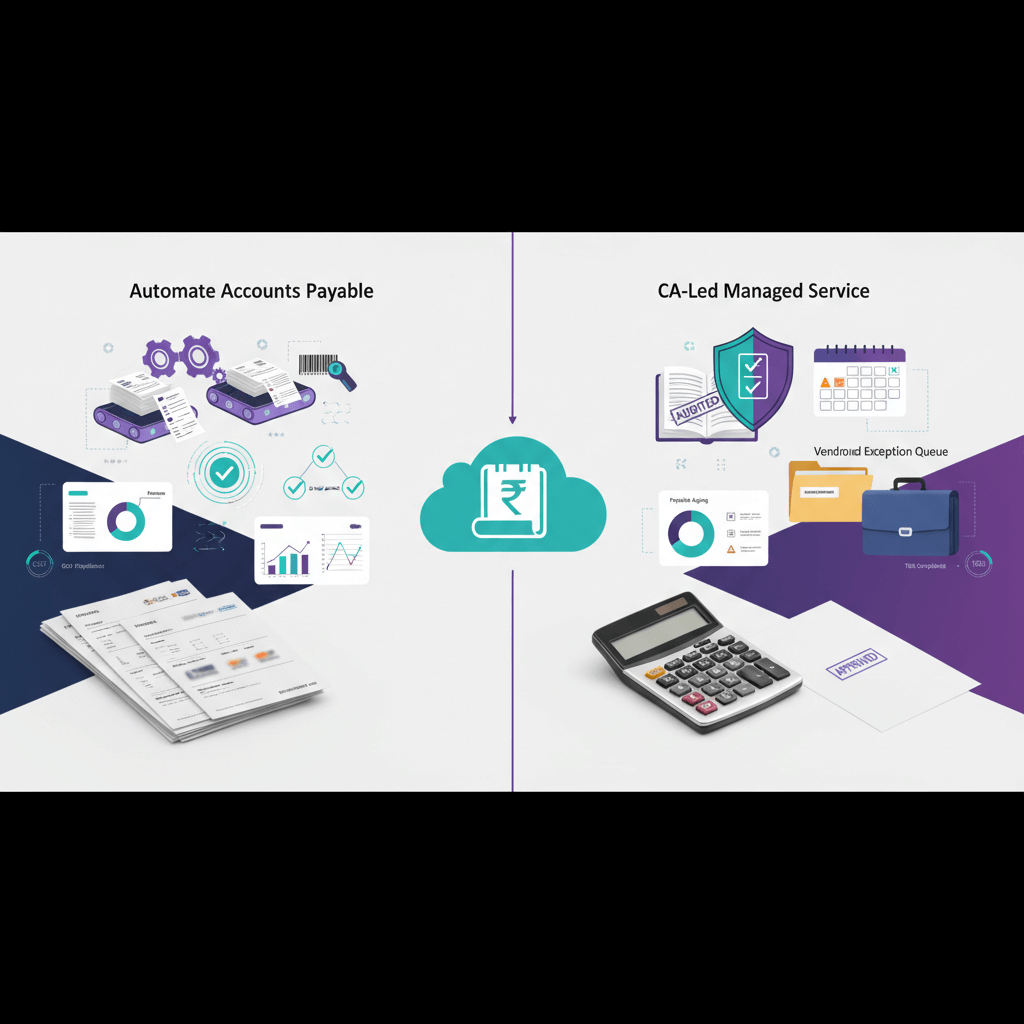
- Choose between pure software and a CA led managed service by weighing invoice volume, GST and TDS complexity, team capacity, total cost, and support needs.
- A practical four to eight week roadmap, with vendor master cleanup, policy definition, configuration, pilot, and phased go live, drives adoption with fewer surprises.
- Track KPIs like cost per invoice, cycle time, first pass yield, on time payment rate, GST and TDS mismatches, and exception rate to sustain gains.
- AI Accountant offers a CA led virtual accounting option that blends automation, reconciliations, GST and TDS filings, and a live dashboard for outcomes without extra hires.
Automated Accounts Payable Solutions for Startups and SMBs
Automated accounts payable solutions move teams from spreadsheets and emails to a smooth digital workflow. You capture invoices, route approvals, match documents, check tax rules, and make payments with far fewer errors. Startups and small businesses gain speed, control, and clean books, with clearer cash flow and stronger compliance that avoids late fees and messy audits. See perspectives from Yooz, MineralTree, and Brex.
What are automated accounts payable solutions
Automated accounts payable solutions are software platforms that handle the full invoice to pay cycle, a smart pipeline from intake to payment and reconciliation. Bills arrive by email or a portal, the system reads them with OCR and machine learning, checks accuracy, flags duplicates, tags to the right ledger, routes approvals, runs two way or three way matching with POs and GRNs, executes payments, posts to the general ledger, reconciles, and gives dashboards with a complete audit trail. For a practical walkthrough, see invoice automation in practice, plus broader primers from Yooz, MineralTree, Brex, and NetSuite.
Core building blocks
- Invoice intake and data capture. Email, portal, or upload, with OCR reading vendor, invoice number, dates, line items, tax amounts, and totals.
- Validation and duplicate checks. Rules and AI catch errors and fraud risks before approval.
- Approval workflows. Route by role, amount, cost center, and department, with mobile approvals.
- Vendor management. One source of truth for supplier details, bank info, TDS status, GST registration, and communication.
- Matching. Two way and three way matching aligns invoice lines to POs and goods received notes.
- Payment execution and GL posting. Schedule payments, push entries to the accounting system, keep a clear audit trail.
- Analytics and control. Track cycle time, liabilities, due dates, exceptions, and cash impact.
For India focused teams, rules should cover GST and TDS, including RCM flags, HSN and SAC validation, e invoice readiness, and TDS deductibility and reporting.
Why automate AP now
Manual AP is slow, error prone, and costly, every touch point adds risk. Good automation can cut invoice processing cost by up to eighty percent, reduce late payments, and avoid penalties as vendor count and locations grow. See research from Yooz, Medius, Brex, NetSuite, and MineralTree.
Key drivers to act now
- Scale without extra hires. Process three to four times more invoices per person with automation.
- Better compliance. Stay accurate on GST, TDS, and e invoicing, with audit trails that satisfy statutory checks.
- Savings and cash gains. Capture early payment discounts, control DPO with clarity.
In a startup or SMB, time is money, a lean AP process frees your team to focus on growth, not data entry.
How automated accounts payable solutions work step by step
The target flow is simple, capture, validate, code, approve, match, comply, pay, reconcile and post, analyze and audit.
1. Capture
Set up a vendor inbox or portal, the system reads invoices with OCR, lifting vendor details, invoice number, dates, line items, taxes, and totals, removing manual typing at the start.
2. Validate
The system checks for duplicates, compares vendor names, amounts, dates, and PO references, flags wrong tax rates or missing details with smart rules and AI.
3. Code
Auto code bills to GL accounts and cost centers, learning from history so subscriptions, utilities, and common spend route correctly.
4. Approve
Define sign off by role, amount, or department, nudge approvers with reminders, enable mobile approvals to prevent stalls.
5. Match
For PO based buys, match invoice lines to POs and GRNs, two way or three way matching catches price or quantity gaps early.
6. Comply
Apply GST flags like RCM and HSN or SAC, set TDS codes and rates, a key step for India teams that need precise tax handling.
7. Pay
Schedule and run payments through bank integrations, plan pay runs by due date, discount window, or cash position.
8. Reconcile and post
Post to the GL, link invoice to payment record, maintain a solid audit trail, and update dashboards with live status and liabilities.
Further reading, Yooz, MineralTree, NetSuite, Brex.
Key features to look for in automated accounts payable solutions
Must have capabilities
- Accurate data capture. Strong OCR and machine learning that read line items, taxes, and totals correctly, with field validations to boost first pass yield.
- Configurable approvals. Role based routing, clear segregation of duties, simple mobile approvals.
- PO and GRN matching. Two way and three way match, handling partial receipts, returns, and price variances.
- GST and TDS controls. RCM flags, HSN and SAC validation, e invoice readiness, TDS deductibility and reporting.
- Bank integrations and reconciliations. Direct connections reduce file swaps, auto reconciliation removes month end pain, see example notes on automated reconciliations.
- Dashboards and alerts. KPIs, due date alerts, smart exceptions, anomaly and fraud checks.
- Security and audit trails. Least privilege access, approvals by role, full activity logs, vendor bank protection.
- Vendor portals. Status visibility for suppliers and cleaner document exchange.
Optional and helpful
Spend analytics, robotic process automation for routine steps, and AI insights add lift as volume grows.
Popular AP and finance tools to evaluate
- AI Accountant
- QuickBooks Online
- Xero
- FreshBooks
- Zoho Books
- Sage Intacct
- Bill.com
- MineralTree
- Tipalti
- Medius
- Yooz
Explore comparisons from Yooz, MineralTree, Brex, Medius.
Benefits and ROI from automated accounts payable solutions
Clear gains you can expect
- Cost and time savings. Per invoice cost can drop by about eighty percent, with shorter cycles and less rework.
- Cash flow gains. More on time payments and early discount capture, better DPO planning, fewer late fees.
- Accuracy and fraud prevention. Higher first pass yield, stronger validations, tighter approvals.
- Compliance and visibility. Better GST and TDS readiness, real time view of liabilities and vendor health.
Sample ROI model to adapt
- Cost per invoice. Manual near rupees fifty, automated near rupees ten.
- Cycle time. Manual around ten days, automated near three days.
- Exception rate. Manual near fifteen percent, automated near two percent.
Measure before and after, then communicate wins with simple charts, finance and founders align faster when ROI is visible.
Useful references, Medius, Brex, NetSuite, Yooz.
Selection checklist, software versus managed service
Decision points
- Invoice volume and complexity. High volume with strong internal ops suits software, mixed PO and non PO, international vendors, or complex flows often suit managed service with expert oversight.
- GST and TDS intensity. Simple tax rules suit software rules engines, heavy GST and TDS needs, reverse charge, or e invoice readiness often benefit from a CA led service.
- Team capacity. Software needs owners and discipline, a managed model offloads daily work and exceptions.
- Total cost of ownership. Software includes licenses, FTE time, and IT effort, managed service is a fixed fee that skips heavy setup and upkeep.
- Support model. Software comes with help desk support, managed service adds CA oversight and an execution team.
Extra tips, if you process more than five hundred invoices a month, check scalability and throughput, if compliance is heavy, prioritize deep GST and e invoice integration. See guidance from Yooz, MineralTree, and Brex.
Implementation roadmap and timeline, four to eight weeks
A simple plan makes go live smooth, here is a realistic path many teams follow.
Week one and two
- Map your current process, note every step and pain point.
- Clean your vendor master, standardize names, GSTIN, PAN, bank details, and TDS status.
- Define policies, set coding rules, approval matrix, and exception paths.
Week three and four
- Configure the system, migrate master data, set tax rules, connect your accounting tool and bank.
- Pilot the top twenty percent of vendors, this often covers most invoices.
Week five and six
- Train users, keep the flow simple, focus on approvers and AP operators.
- Go live in phases, move the next vendor set as pilot success crosses ninety percent.
Week seven and eight
- Monitor KPIs, fix exceptions, tune auto coding and matching.
Quick checklist
- Vendor cleanup complete
- Policy docs signed off
- Pilot hit more than ninety percent success
- Training done with sign off
Implementation notes from Brex, Medius, Yooz, MineralTree.
Common pitfalls in AP automation and how to avoid them
- Poor vendor and GL data. Bad masters break matching, coding, and payments, validate GSTIN, PAN, and bank details before go live.
- Over customization. Too many special cases slow users, start with must have rules, add only what delivers value.
- Gaps in GST and TDS logic. Edge cases like reverse charge or mixed supplies need testing across scenarios.
- Unclear ownership of exceptions. Assign owners and SLAs for price mismatches, missing GRNs, and tax gaps.
- Weak reconciliations. Connect bank feeds and payment files, automate reconciliation to avoid month end pain.
Further reading, Medius, Yooz, MineralTree.
KPIs to track AP performance
Operational speed
- Cost per invoice, target below rupees fifteen as you scale.
- Cycle time, aim for less than five days from receipt to approval.
- First pass yield, over ninety five percent shows stable capture and coding.
Payment health
- On time payment rate, keep above ninety eight percent.
- Early discount capture, try for more than eighty percent of eligible cases.
- DPO accuracy, stay within plus or minus two days of plan.
Compliance and quality
- GST and TDS mismatches, target zero percent in reconciliations.
- Exception rate, keep below five percent of invoices.
- Audit trail completeness, one hundred percent of invoices with full trace.
You can also add supplier experience metrics like dispute cycle time and vendor response time.
Helpful timeline reminders for India teams
- GSTR 3B is due on the twentieth, twenty second, or twenty fourth based on state and scheme.
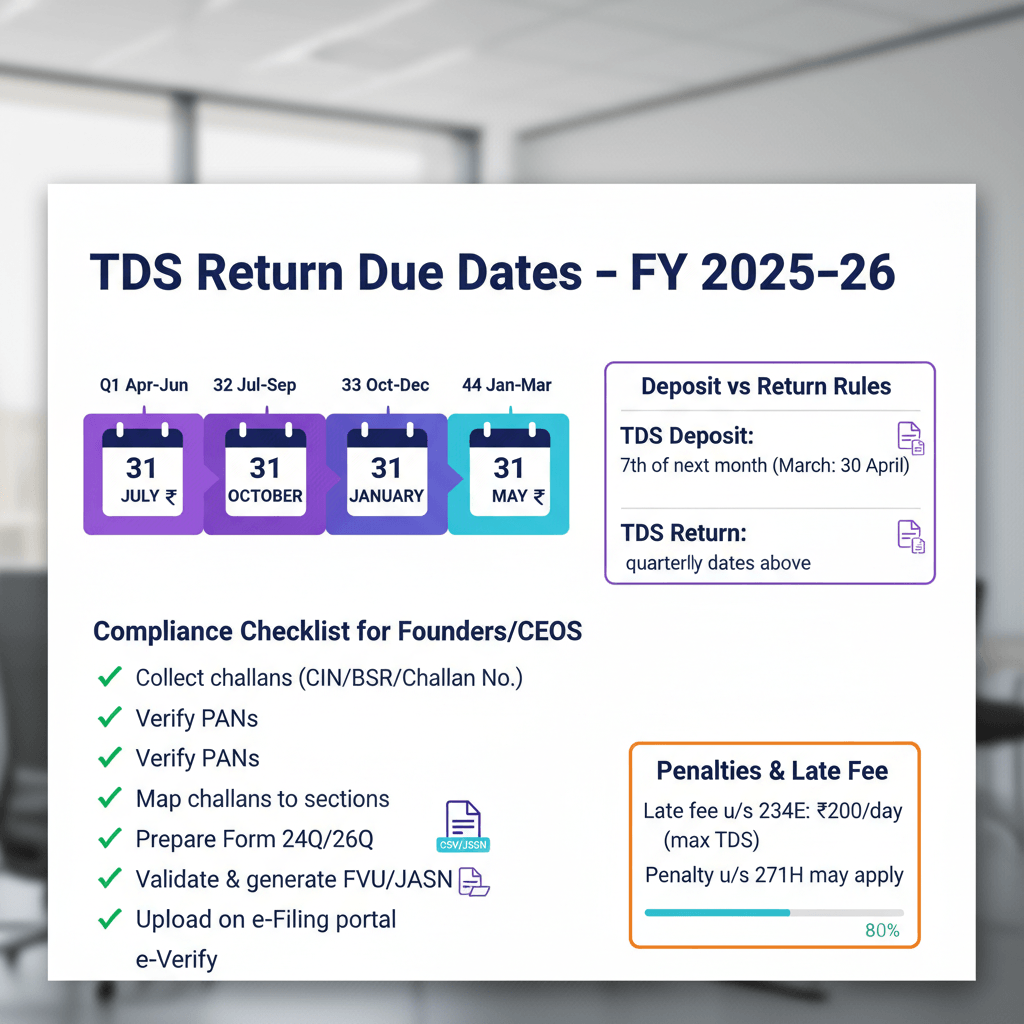
- TDS payments for 26Q and 27Q are due monthly by the seventh, with quarterly returns on schedule.
- Use alerts on your dashboard to avoid misses.
Learn more from Yooz, MineralTree, and NetSuite.
Short use cases for automated accounts payable solutions
SaaS startup with subscriptions and contractors
Repeat SaaS bills and contractor invoices are auto coded to the right GL and cost center, TDS checks apply for contractor payments, approvals run on mobile, month end closes cleaner and faster.
Ecommerce SME with high volume
Marketplace charges and supplier invoices are matched to POs and GRNs, GST place of supply and rates are validated, volume spikes no longer break the process.
Freelancer or solo founder
Receipts are snapped, vendor bills uploaded, the tool aligns TDS with the right section, simple approvals and a clear ledger make tax time easy.
See examples across industries from MineralTree, Yooz, Brex.
Where AI Accountant virtual accounting fits as a managed alternative
Sometimes you want the outcomes of automation, but not the overhead of running the system. AI Accountant’s Virtual Accounting is a CA led managed accounting and compliance service with a live dashboard.
What you get
- AP management and bookkeeping. A dedicated CA team handles invoice processing, vendor scrutiny, coding, and monthly books.
- Bank and gateway reconciliations. Reconciliations link outflows to bills across bank accounts and gateways.
- GST compliance built in. RCM, HSN and SAC validation, e invoicing, filings like GSTR 1, 3B, and annual forms, plus GST health checks.
- TDS and income tax support. Monthly challans, 26Q, 24Q, 27Q, advance tax help, returns, and tax audit prep.
- Dashboard visibility. Transactions, compliance dates, filing status, documents, and AI insights, with chat access to the CA team.
Why it helps, you get automation plus expert judgment for India specific rules, edge cases like reverse charge are handled by specialists, freelancers get light touch support, startups and SMEs get scale without extra hires.
How engagement works, onboard, set your approval matrix, then let the team run monthly processing, filings, and MIS, you keep visibility and control through the dashboard while the CA team executes.
Learn more at AI Accountant.
Cost and ROI framing for AP automation and managed service
Start with your current cost per invoice, cycle time, and exception rate, then add late fees and missed discounts to quantify the baseline.
Model two paths
- Software plus internal team. Pay license fees, assign people, handle setup and upkeep, still engage a CA for filings and advisory.
- Managed service such as AI Accountant. Pay a fixed fee, skip hiring that can be five to ten lakh per year per role, avoid GST late fees that can cross ten thousand rupees, still gain faster cycles and lower errors.
Across both paths, many teams see sixty to eighty percent savings in processing cost, a faster close, and cleaner audits, validate with a three month pilot and measure before and after. References, Medius and Brex.
Security and data privacy in automated accounts payable solutions
Checklist for strong control
- Role based access. Grant least privilege, use maker checker for payments, segregate capture, approve, and pay.
- Audit trails. Log every change and approval, critical for audits and internal control.
- Vendor bank data protection. Secure bank details, use change controls and alerts for edits.
- Data retention and compliance. Retain GST and TDS data per laws, encrypt data at rest and in transit.
- External integrations. Use secured bank connections, review keys and permissions on a set cycle.
Security notes from Yooz and Medius.
Next steps
If you want to see managed AP plus compliance in one place, book a quick walkthrough of AI Accountant’s dashboard, we can show how invoice capture, approvals, GST and TDS, and reconciliations come together for your business, visit AI Accountant.
FAQ
What is the practical difference between AP automation software and a CA led managed AP service
Software handles workflow, capture, matching, and rules, a managed service adds a CA led team that runs processing, manages exceptions, and completes GST and TDS filings for you, AI Accountant is a clear example of this model with automation plus expert oversight.
How does AP automation handle GST reverse charge and TDS deductions end to end
Good platforms store vendor tax profiles, flag RCM on eligible services, validate HSN or SAC, and auto apply TDS sections and rates during coding and payment, a managed service like AI Accountant also reconciles GSTR filings and 26Q or 27Q to books.
Do we still need a CA if we deploy AP automation in house
Yes in most cases, you still need statutory filings, tax planning, and advisory, software reduces manual work but a CA validates interpretations, edge cases, and audit readiness.
What integration points should founders demand before signing an AP automation contract
Insist on native connectors to your accounting system, secured bank integrations for payments and statements, vendor onboarding workflows, GST and TDS engines for India, and exportable audit logs, test these in a pilot with real invoices.
How long does it typically take to implement AP automation for an SMB with mixed PO and non PO invoices
Four to eight weeks is realistic, two weeks for vendor master cleanup and policies, two weeks for configuration and a pilot, then phased go live over two to four weeks, this aligns with playbooks from leading vendors.
What KPI targets should a finance head set for the first quarter after go live
Cost per invoice below rupees twenty, cycle time under five days, first pass yield above ninety five percent, on time payment rate above ninety eight percent, exception rate under five percent, and zero GST or TDS mismatches in reconciliation.
How do early payment discounts and DPO control coexist without hurting supplier relationships
Use real time visibility to segment suppliers, capture discounts where terms exist, hold standard terms elsewhere to meet DPO goals, communicate through a vendor portal so suppliers see status and payment dates.
Can AP automation reduce fraud risk in a small finance team with shared duties
Yes, by enforcing maker checker for payments, segregating capture, approve, and pay, and alerting on vendor bank master edits, you add strong control, AI Accountant’s model also adds human oversight on vendor changes and unusual invoices.
What does a good exception handling workflow look like for price mismatches and missing GRNs
Auto route exceptions to buyers with SLA timers, include PO, invoice, and receipt context, allow partial resolution, and re match on updates, keep an audit trail so reviewers and auditors can trace actions quickly.
Is AP automation still worth it for startups with fewer than two hundred invoices a month
Yes, you still save time, reduce late fees, and keep clean records, a managed model like AI Accountant scales down well, delivering automation outcomes without adding headcount.
How should a CA led virtual accounting partner be evaluated during vendor selection
Ask for India tax credentials, sample GST and TDS reconciliations, live dashboard demos, data security practices, escalation paths, and references in your industry, evaluate a one month pilot with measurable KPI targets.
What is the best way to quantify ROI before board approval for an AP automation project
Baseline your current cost per invoice, cycle time, late fees, and discount capture rate, model target metrics from vendor benchmarks, run a limited pilot, then extrapolate savings and cash flow impact, include reduced audit effort and fewer compliance penalties in the case.