-01%201.svg)
Key takeaways
- AI powered bookkeeping pairs automation with a CA led managed service, delivering a continuous close and real time visibility.
- OCR, NLP, learned rules, and anomaly detection handle data entry, coding, and reconciliation, while CAs review exceptions and ensure compliance.
- Expect faster month closes, fewer errors, stronger GST and TDS control, and dashboards for cash, burn, and runway.
- Mitigate risks with maker checker review, exception queues, audit logs, and SLAs for close timelines.
- Use a provider checklist covering integrations, dashboards, AI depth, compliance coverage, security, and service model.
- ROI comes from time saved, penalties avoided, better cash decisions, and scaling without headcount.
- AI Accountant exemplifies the model with a central dashboard and a dedicated CA team for bookkeeping, compliance, and MIS.
AI powered bookkeeping services explained
Bookkeeping gets hard as you grow, bank feeds multiply, invoices arrive from many gateways, GST and TDS dates come fast. Small mistakes can snowball into penalties and poor cash flow. AI powered bookkeeping services blend smart software with a CA led managed service. The software reads documents, tags transactions, and spots odd entries, while the CA team reviews, fixes edge cases, and keeps your books ready for tax and audit. Together, this delivers a continuous close and real time dashboards, so you always know cash, burn, and runway.
Think of it as automation for the boring parts, and expert judgment for the tricky parts, wrapped into one accountable service.
In this guide, we unpack how these services work, what to check before you buy, how to get return on your spend, and how to roll them out without stress. We also show how AI Accountant delivers the model with a dedicated CA team and a central dashboard. For further reading, explore perspectives on benefits and best practices from The Fino Partners, UHY UK, and Digits.
What are AI powered bookkeeping services
An AI powered bookkeeping service combines artificial intelligence with professional accounting, automation plus human judgment in one managed service.
Core components
- AI does the heavy lifting, handling data entry, coding, and reconciliation. It uses optical character recognition to scan receipts, machine learning to auto categorize, and anomaly detection to flag surprises.
- Accountants do the checks and advice, a CA reviews exceptions, guides tax treatment, and helps you plan. The team prepares MIS, supports your statutory auditor, and keeps you compliance ready.
Common techniques in the stack
- Optical character recognition for bills and receipts
- Bank feed auto tagging with learned rules
- Natural language processing to read invoices and purchase orders
- Rules engines for tax logic like place of supply or reverse charge
- Predictive models for cash flow, burn, and runway
- Outlier detection to catch duplicates and fraud signals
How this differs from other options
- Versus traditional bookkeeping, you replace periodic and manual closes with continuous processing, errors fall, and you get live P and L and cash flow instead of waiting till month end.
- Versus do it yourself software, you get a managed service with CA oversight rather than self management, no more juggling email threads and spreadsheets. See examples in this overview and a managed service explainer here.
- Versus outsourced CA without systems, you get a central dashboard with live data, a document vault, and a clear compliance calendar, no more hunting across WhatsApp, email, and Excel.
For industry context, review trends from Baldwin CPAs and Digits.
How AI powered bookkeeping services work end to end
The best providers run a clean end to end pipeline. Data flows in, the system classifies and reconciles, the CA team reviews, dashboards update in real time.
Data ingestion
- Secure bank connections for all accounts and cards
- Payment gateways like Razorpay and Stripe, see a practical primer here
- Accounting systems like Tally, Zoho Books, and QuickBooks
- E commerce stores and marketplaces
- Payroll and HR systems
- UPI and wallets where relevant
Categorization and reconciliation
- Auto mapping to your chart of accounts
- Learned rules that improve with feedback
- Split and merge logic for tricky cases like gateway settlements
- Three way matching for POs, GRNs, and invoices
- Exception queues for human review
Document matching and extraction
- OCR and NLP read invoices, receipts, and credit notes
- The system extracts supplier GSTIN, HSN, quantities, tax rates, and totals
- It pairs documents with ledger entries and bank lines
Compliance mapping
- GST tagging for GSTR 1 and GSTR 3B and annual GSTR 9
- E invoicing where required
- Reverse charge checks
- TDS computations and challan mapping for forms like 26Q and 24Q
- Advance tax reminders
Human review and close
- Maker checker workflows
- Monthly close with schedules and ledgers cleaned up
- MIS packs and variance analysis for management
Dashboards and alerts
- Real time cash flow graphs and runway
- Revenue and expense trends by category
- AR and AP aging with DSO and payment terms
- Alerts for anomalies or missing documents
- Compliance calendar with filing status and due dates
Example in practice. Your dashboard shows a live profit and loss and cash position, the CA team works the exceptions list, resolves bank mismatches, and finalizes each month, your books stay tax and audit ready. For more examples of value, see insights from UHY UK, Digits, and Tyms.
Benefits of AI bookkeeping services and business impact
When automation and humans work together, you get measurable gains. Here are the big levers and why they matter.
Accuracy uplift
- Less manual entry means fewer typos and misposts
- The system flags duplicates and outliers fast
- Vendor and customer records stay consistent
Speed and visibility
- Continuous close replaces month end crunch
- Real time dashboards help you spot cash gaps sooner
- You can model burn and runway any time
Cost efficiency
- Pay a retainer that scales with activity
- Avoid extra headcount for routine posting and reconciliation
- Free your in house team to focus on planning and growth
Compliance confidence
- GST data is mapped as you go with e invoice checks
- TDS is computed with the right sections and rates
- Returns are ready on time, which reduces penalties
Fraud detection
- The AI catches odd patterns, new merchants, or strange amounts
- You get alerts for duplicate invoices or round tripping risks
Scalability
- Handle more transactions, more gateways, and more entities without chaos
- Multi GSTIN and branch wise views stay tidy
Deep dives on benefits are available from The Fino Partners, UHY UK, Baldwin CPAs, and Digits.
Risks and limitations of AI bookkeeping and how to mitigate
No system is perfect. The key is to know the edge cases and build guardrails.
Known limitations
- Messy historical data slows onboarding
- Very unusual transactions can confuse auto categorization
- Incomplete vendor GST details can block mapping
Operational risks
- Misclassification in new categories
- Integration breaks if bank connectors change
- Model drift if rules are not refreshed over time
Practical mitigations
- CA oversight with maker checker review
- Clear exception workflows with age tracking
- Full audit logs for every change
- Service level agreements for close timelines and response
- Data hygiene sprints during the first month
See concise risk benefit guides from UHY UK and Digits.
Key features checklist to evaluate AI bookkeeping providers
Use this checklist to compare vendors. Score each item as must have, nice to have, or not needed for your stage.
Integrations
- Direct bank feeds for all major banks
- Payment gateways like Razorpay and Stripe
- Accounting systems like Tally, Zoho Books, and QuickBooks
- E commerce platforms and marketplaces
Dashboard and reporting
- Profit and loss, balance sheet, cash flow in real time
- Burn rate and runway views for founders
- Compliance calendar and filing status
- Management reports and variance analysis
AI capabilities
- Auto categorization that learns from edits
- Bank and gateway reconciliations with split logic
- Anomaly detection and duplicate checks
- Predictive cash flow and AR predictions
Compliance coverage
- GST returns for GSTR 1, GSTR 3B, and annual GSTR 9
- E invoicing where applicable
- TDS advisory and filings like 26Q and 24Q
- Income tax return preparation and advance tax tracking
Security and governance
- Encryption at rest and in transit
- Role based access and least privilege
- Backups and disaster recovery
- Detailed audit logs
Service model
- Dedicated CA and accounting team
- Clear SLAs and ticketing
- Scalability for multi GSTIN and multi entity
- Support for auditor coordination
Optional example tools and platforms
- AI Accountant
- QuickBooks Online
- Xero
- Zoho Books
- FreshBooks
Cross reference with checklists and tips from UHY UK, The Fino Partners, and Tyms.
Pricing models and ROI for AI bookkeeping services
How providers price
- Monthly retainers based on transaction volume and entity count
- Tiers by complexity, such as number of bank accounts or gateways
- Add ons for GST filings, TDS filings, and payroll support
- One time setup for historical cleanup or custom integrations
Hidden costs to watch
- Data cleanup for backlogs or messy charts of accounts
- Custom connectors for uncommon banks or ERPs
- Staff time to gather documents during onboarding
A simple ROI frame
- Time saved, convert days of manual reconciliation into hours or minutes, multiply by internal blended rates.
- Penalties avoided, count late fees and interest avoided for GST, TDS, and income tax.
- Better decisions, faster cash visibility can reduce stockouts and overdrafts, which lowers financing costs.
- Scale without headcount, model what an extra in house bookkeeper would cost as you grow.
ROI narratives and examples are discussed by The Fino Partners and Digits.
Implementation and migration plan that actually works
Pre boarding checklist
- Finalize your chart of accounts and naming standards
- Collect bank login methods or statements for connection
- Gather GST, TAN, PAN, and ROC details for mapping
- List all gateways, ERPs, and e commerce channels
- Compile vendor and customer master data
Thirty day plan
- Clean up historical months and open items
- Reconcile banks and gateways to close gaps
- Set up GST and TDS mapping rules
- Train on dashboard basics and ticketing
Sixty day plan
- Shift to continuous processing
- Stabilize auto categorization with feedback loops
- Start monthly MIS with variance analysis
- Tighten vendor and customer hygiene
Ninety day plan
- Add predictive cash flow and AR risk scoring
- Review policies and improve internal controls
- Formalize close calendar and SLAs
- Hand off a playbook to stakeholders
Guardrails to keep things clean
- Use standard names for vendors, customers, and items
- Enforce document attachment for all bills and expenses
- Keep maker checker approval for edits after close
- Run a monthly data quality scan for uncategorized items
A concise implementation lens appears in Digits.
Use cases and scenarios across business types
Freelancers and solo founders
- Track expenses and receipts on the go
- Get TDS reminders and challan support
- Keep books ready for income tax and loan applications
Startups and SaaS
- Monitor burn and runway every week
- Handle deferred revenue and revenue recognition
- Share clean MIS with investors and the board
Direct to consumer brands
- Reconcile many gateways and COD refunds
- Manage GST e invoicing and HSN accuracy
- Track channel wise performance and returns
SMEs and project firms
- Manage TDS on contracts and professional fees
- Track work in progress and project margins
- Keep AR and AP tight with aging and follow ups
See more scenarios in research from Tyms, Baldwin CPAs, UHY UK, and The Fino Partners.
India compliance spotlight for AI bookkeeping
India adds extra demands, a good AI enabled service bakes these into daily bookkeeping so filings are smooth.
GST specifics
- Map place of supply and reverse charge correctly
- Ensure e invoicing where the law requires it
- Prepare GSTR 1 and GSTR 3B with accurate tax heads
- Reconcile GSTR 2B and input tax credit
- File GSTR 9 annual return on time
TDS and income tax
- Compute TDS on salaries, contracts, and rent
- Prepare returns like 26Q and 24Q
- Track advance tax and estimate payments
- Prepare income tax returns for companies and individuals
ROC for small companies
- Keep MGT 7 and AOC 4 filings ready
- Maintain registers, board minutes, and annual reports
- Handle director KYC and event based filings
Helpful primers are listed by UHY UK and Tyms.
Security privacy and governance in AI bookkeeping
Your financial data is sensitive, expect enterprise grade controls even as a small business.
Security must haves
- Encryption for data in transit and at rest
- Least privilege access with roles
- Multi factor access where supported
- Backups with tested restore
Governance and audit
- Full audit trails for every change
- Maker checker for sensitive steps
- Data retention policies that meet law
- Vendor security reviews and questionnaires
Security expectations are outlined by sources like UHY UK.
KPIs and dashboards to track in AI bookkeeping
When your service is live, watch these metrics, they tell you if books are clean and if cash is safe.
Cash and runway
- Burn rate this month and trend
- Cash runway in months at current burn
- Net cash from operations
Receivables and payables
- AR aging and days sales outstanding
- AP aging and payment run plans
- Disputes and credit notes pending
Compliance and health
- Filing status for GST, TDS, and income tax
- Count of uncategorized or unmatched items
- Bank recon status and aging of exceptions
Mini case vignettes
- Freelancer, a graphic designer receives auto reminders for TDS challans and avoids late fees this quarter.
- D2C brand, a beauty label cuts the monthly close time by more than half using bank and gateway reconciliations and now shares MIS by day five.
- SaaS startup, the team sees a twelve month runway clearly and plans hiring with confidence.
Additional KPI ideas appear in studies from The Fino Partners, Baldwin CPAs, UHY UK, Tyms, and Digits.
How AI Accountant delivers AI powered bookkeeping services
AI Accountant combines a CA led managed service with a central dashboard. You get real time financials, compliance status, and a place to talk to your CA team. This replaces scattered email, Excel, and chat with one system and one accountable team.
What the dashboard shows
- Live financial overview with revenue, expenses, profit or loss, and balances
- Cash flow trends, burn rate, and runway
- AI generated insights and alerts
- Recent transactions and bank analysis
- A document repository and audit trail
- Compliance dates and filing status
- Central chat with your CA team
What the CA team handles
- Monthly bookkeeping for sales, purchases, expenses, and bank entries
- Ledger scrutiny and clean up, year end closing, fixed assets, and inventory
- AR and AP management, bank and payment gateway reconciliations
- MIS and management reports and support with the statutory auditor
- GST registration, monthly or quarterly filings, and annual returns
- E invoice enablement, GST advice, and health checks
- TDS advisory, challan support, and filings for forms like 26Q and 24Q
- Income tax returns, advance tax, and tax audit preparation
- Payroll TDS and salary structuring advice
- Annual ROC compliance for small companies and secretarial support
How onboarding works
- Structured pre boarding for accounts, banks, GST, and TAN
- Thirty sixty ninety day plan for cleanup, continuous close, and analytics
- Clear SLAs and a named CA team you can reach inside the dashboard
Who it suits
- Freelancers and consultants
- Startups and growth stage companies
- Founders and small finance teams that want to outsource operations and keep real time visibility
Soft call to action. Want to see your books and compliance status in one place, book a quick demo with AI Accountant to explore the dashboard and service fit. For background on benefits, see this summary.
Conclusion on AI powered bookkeeping services
If manual posting and month end crunch slow you down, AI powered bookkeeping services can help. You get cleaner books, faster reporting, and stronger compliance. Use the checklist above to evaluate fit, plan your onboarding with a simple thirty sixty ninety approach. Start with a demo to see your data live and to validate dashboards and workflows.
AI Accountant offers a CA led managed service with a central dashboard, so you keep real time visibility while experts handle the heavy lifting. That mix of automation and human review turns bookkeeping into a steady system rather than a monthly fire drill. Explore more at AI Accountant and benefits summaries from The Fino Partners.
FAQ
Are AI powered bookkeeping services replacing accountants
No, they augment accountants. The system handles repetitive work like data entry, coding, and matching, while the CA focuses on review, advice, and planning. A good example is AI Accountant, where AI flags anomalies and the CA team resolves edge cases. See research on role shifts in accounting from Stanford GSB.
What is the difference between accounting software and a CA managed virtual accounting service
Software is self serve, you configure rules and chase exceptions. A managed service adds a CA led team that operates the process end to end, from reconciliations to filings, with SLAs and accountability. AI Accountant is an example of a CA managed, AI enabled service. Context on benefits appears in Digits.
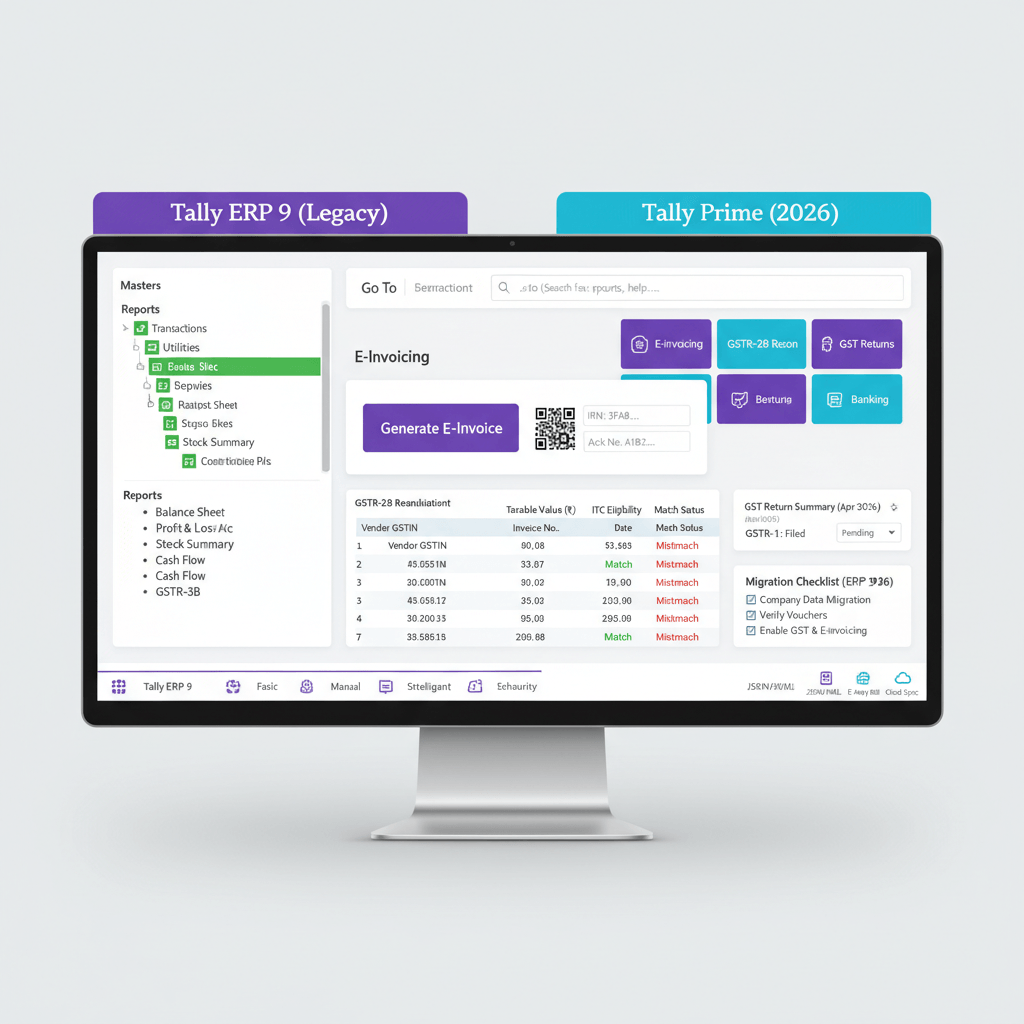
Can I continue with Tally or Zoho Books and still adopt AI bookkeeping
Yes, leading services integrate with Tally, Zoho Books, and QuickBooks, they sync masters, transactions, and reconciliations. AI Accountant routinely connects to such systems while preserving your chart of accounts structure. See integration tips from UHY UK.
How do providers ensure GST and TDS compliance inside daily bookkeeping
AI maps tax codes, place of supply, and TDS sections using rules and learned patterns, then queues exceptions for CA review. The managed team files GSTR 1 and 3B, supports annual GSTR 9, and handles TDS forms like 26Q and 24Q on time. AI Accountant follows this model with maker checker controls. See primers from Tyms and UHY UK.
What security controls should a virtual accounting provider have before I share bank feeds
Expect encryption in transit and at rest, least privilege access, MFA, backups with tested restore, and full audit logs. Ask for security documentation and third party reviews. AI Accountant provides audit trails and access controls to safeguard financial data.
We have messy historical data and unreconciled statements, can AI bookkeeping still onboard us smoothly
Yes, backlog cleanup is part of onboarding. The CA team reconciles bank and gateway data, fixes ledgers, attaches missing documents, and aligns masters. AI speeds document extraction and duplicate detection, while humans close gaps. Providers like AI Accountant detail this in a 30 60 90 day plan. See onboarding notes in Digits.
How do these services handle multiple entities, branches, or GSTINs under one group
Modern stacks support multi entity and multi GSTIN structures with consolidated and entity wise views, role based access, and entity scoped approvals. AI Accountant’s dashboard gives group snapshots alongside entity level drill downs.
Will the provider support our statutory audit and year end schedules
Yes, preparation and coordination are typically included, the team compiles ledgers, schedules, and confirmations for your auditor. Certification remains with your auditor. AI Accountant provides MIS packs, audit trails, and evidence repositories to streamline fieldwork.
How is pricing structured and what should a finance head model for ROI
Pricing is usually a retainer or tier based on transaction volume and complexity, with add ons for GST, TDS, and payroll. ROI comes from time saved on reconciliations, penalties avoided, improved cash decisions, and scaling without hiring. AI Accountant aligns pricing to activity and SLAs for predictable spend. See benefit modeling examples at The Fino Partners.
What are the common failure modes in AI categorization and how do you mitigate them
New or unusual transactions can be misclassified, connectors may break, and models can drift. Mitigate with exception queues, maker checker review, periodic rule refresh, and data hygiene sprints. AI Accountant pairs anomaly detection with human review and audit logs to keep error rates low.
Can AI bookkeeping improve cash visibility enough to change working capital outcomes
Yes, continuous reconciliation, AR aging, and predictive cash flow surface gaps earlier. Finance can prioritize collections, adjust payment runs, and cut overdraft interest. AI Accountant highlights DSO trends, large overdue invoices, and upcoming tax outflows so you can act in time.
What internal changes should founders or controllers plan during migration
Standardize master data, enforce document attachment, agree on a close calendar, and route approvals through maker checker. Assign a single point of contact for queries. AI Accountant provides templates, naming standards, and a migration playbook to reduce friction.