-01%201.svg)
Real time financial reporting for Indian founders and finance teams
Key takeaways
- Real time reporting means your numbers update as work happens, bank feeds, invoices, and payments flow continuously into a single source of truth.
- Continuous accounting turns the close into a daily habit, with rules, reconciliations, and alerts running all month.
- Dashboards show cash, revenue, spend, AR, AP, GST, TDS, and ROC status now, so founders can act with live facts.
- For Indian teams, GST 2B matching, TDS by section, and ROC timelines become routine when tracked daily.
- Clean masters, tight cadences, and strong controls make automation accurate, while exceptions shrink over time.
- A CA led managed service like AI Accountant blends execution with a live dashboard, so you see filings, trends, and tasks in one place.
Introduction to real time financial reporting
Real time financial reporting means your numbers update while the work happens. Bank feeds pull in new entries. Invoices flow from your billing app. Payments match in minutes. Your dashboard shows cash, revenue, spend, tax, and filings now, not weeks later.
This is not just a faster month close, it is a new way to run finance. Data moves from systems to a single source of truth. Rules and checks run all day. Alerts fire when something looks off. Founders and finance leaders can act early with live facts.
If you want this in a managed way, AI Accountant offers a CA led virtual accounting service with a live dashboard. The CA team handles bookkeeping, GST, TDS, income tax, payroll, and ROC. The dashboard shows your books, filings, and key trends. You see what is due, what is paid, and what needs your nudge.
Why real time financial reporting matters
Fast decisions win. Markets shift. Costs move. Cash burns. When reports lag, you fly blind. With real time reporting you see the story as it unfolds.
- Speed: You spot changes in revenue and spend this week, not next month.
- Cash clarity: You track inflows and outflows day by day. You see burn and runway move.
- Risk control: You catch odd entries, failed matches, or tax gaps early.
- Compliance readiness: You arrive at GST and TDS due dates with clean ledgers and matched data.
- Forecast precision: Live actuals feed your forecast so plans stay true.
For many teams in India, GST, TDS, and ROC timelines add pressure. Real time finance gives continuous prep. It reduces the spike of work before due dates. That lowers error risk and late fees. It also keeps leadership calm because there are no big surprises.
Read more: AI Accountant on real time tracking
Sources: McKinsey, Gartner, Oracle
Core concept and scope of real time financial reporting
Real time reporting brings three ideas together.
- Live data integration: Bank feeds, payment gateways, billing, payroll, and ERP all connect. New entries sync often. Integration guide
- Continuous accounting: Matching, rules, and checks run all through the month. The close becomes a daily habit.
- On demand insights: Dashboards and alerts give instant views for core KPIs and filings.
This covers the full stack. Sales, purchases, expenses, payroll, assets, receivables, payables, and tax. It also covers the close steps like reconciliations, schedules, and variance checks. Done well, it becomes your finance nerve center.
“Close becomes a daily habit, not a month end scramble.”
AI Accountant’s Virtual Accounting mirrors this model. A CA led team runs the engine. The dashboard gives live visibility into revenue, expenses, cash flow trends, bank analysis, compliance dates, and filing status. That way you get both execution and insight in one place.
Key benefits of real time dashboards and insights
A good dashboard is simple and deep at the same time. It tells your story in a few cards, and lets you drill when needed.
- Cash now: Bank balances, cash in transit, burn, and runway.
- Today’s sales: Revenue by product or service, top customers, and invoices raised.
- Spend view: Vendor spend, category trends, and open POs if you use them.
- Collections status: AR aging, expected receipts this week, promises to pay, and follow ups due.
- Payables control: AP aging, early pay discounts, due this week, and holds.
- Tax view: GST liability, input credit as per GSTR 2B, TDS payable, and challans filed.
- Health checks: Bank rec status, unmatched entries, stale items, and exceptions.
Sources: Microsoft Power BI, Xero guide, QuickBooks help
What to track, real time KPIs and metrics
Revenue and gross margin
- Daily revenue and weekly trend
- Gross margin by product or service
- Monthly run rate and year to date
Cash flow and runway
- Cash balances by bank
- Burn rate and months of runway
- Expected inflows and outflows this week
Receivables and collections
- DSO days sales outstanding
- AR aging buckets current, 30, 60, 90 plus
- Collection calls and promises to pay
Payables and vendor spend
- DPO days payables outstanding
- AP aging and due this week
- Top vendor exposure
Accounting health
- Bank and gateway reconciliation status
- Unmatched receipts and payments count and value
- Suspense and rounding entries flagged for review
Compliance status
- GST GSTR 1 sales filed or pending with variance to books
- GST GSTR 3B liability and input credit as per 2B
- TDS liability by section and challans paid
- ROC events due for small companies if relevant
Sources: CFI on DSO, CFI on DPO, GSTR 3B guide, GST returns, TRACES
How real time reporting works end to end
- Data capture: Pull bank feeds, sync invoices and bills, import payroll, and record expenses. Use OCR for receipts and vendor invoices.
- Rules and matching: Auto match bank lines to invoices and bills. Apply coding rules for vendors and items. Flag anomalies.
- Continuous reconciliation: Reconcile banks and gateways daily. Clear suspense. Review unmatched items in short sprints.
- Live dashboards and alerts: Push updated KPIs and filing status as entries post. Send alerts for overdue tasks or odd spikes.
When this loop runs all month, the month end close becomes a small step. You already did most of the work.
AI Accountant’s CA team follows this loop. The dashboard reflects the live books, reconciliations, and filings. You see what the team sees, so there are no hidden piles of work.
Sources: BlackLine, Xero, QuickBooks
GST in a real time reporting process
- Sales sync to GSTR 1: Invoices raised in your billing or ERP sync to your books. Your returns show the same values with correct HSN or SAC.
- Liability in GSTR 3B: Your books compute output tax less input credit. You review variance to GSTR 2B and pay on time.
- Input credit tied to 2B: You claim credit that appears in GSTR 2B and is eligible. You track blocked credit and reversals.
- E invoice where needed: If you cross the threshold, invoices are registered with the IRP before issue. Data flows back to books.
- Health checks: You watch mismatches in GSTIN, HSN, place of supply, and rate. You correct early, well before filing.
A real time dashboard should show pending invoices for GSTR 1, 2B credit by vendor, ineligible credit, and unbooked invoices seen in 2B. It should flag RCM where due.
AI Accountant’s CA team keeps GST data clean through the month, and the dashboard shows compliance dates and filing status so you are never in doubt.
Sources: GST portal, GST tutorials, GSTR 3B, e invoice
TDS and income tax in a real time reporting process
- Compute TDS at source when you book bills or pay vendors.
- Track by section and rate, for example 194C, 194J, 194Q and so on.
- Pay challans on time each month.
- File quarterly returns like 24Q for salary and 26Q for domestic payments.
- Reconcile 26AS and AIS with your books before income tax filing.
Your dashboard should show TDS payable this month, challans paid, returns filed, and any PAN or rate gaps. It should also track advance tax for the year. For foreign remittance, you may need Form 15CA. Prepare early to avoid delays.
AI Accountant supports TDS advisory and compliance, advance tax, and income tax returns for individuals, partnerships, and companies. The CA team keeps tax flow linked to your entries so returns line up with the books.
Sources: TDS help, TRACES, Advance tax, Form 15CA CB
ROC and MCA filings in a real time reporting process
- Prepare financial statements and board reports in time.
- File AOC 4 and MGT 7 on schedule.
- Keep director KYC in place.
- Update statutory registers.
A dashboard reminder for these events avoids last week rush. When books and schedules are current, these filings are much easier.
AI Accountant offers annual ROC compliance for small companies, including AOC 4 and MGT 7, board meetings, minutes, and related support.
Sources: MCA annual filing
How to implement real time financial reporting
Step 1, Define outcomes and KPIs
Pick the two or three decisions you want to improve now. For example, collections, vendor control, and GST readiness. Select KPIs that show progress. Keep it lean to start.
Step 2, Map systems and data
List where sales, purchases, bank, payroll, expenses, and tax live. Capture data owners. Note gaps like missing HSN or GSTIN in masters. Plan fixes.
Step 3, Set the chart of accounts and coding rules
Make the chart simple. Use clear account names. Set item codes, HSN or SAC, tax rates, cost centers, and project tags as needed. Lock rules to reduce free text.
Step 4, Connect feeds and automate
Connect bank feeds. Sync billing and expense tools. Enable OCR for invoices and receipts. Set matching and coding rules. Try to touch each entry once.
Step 5, Build daily and weekly cadences
Do a light daily sweep, bank rec, new invoices, and quick checks. Do a deeper weekly review, AR follow ups, AP review, GST and TDS checks. Keep cycles short.
Step 6, Monitor, alert, and refine
Set alerts for overdue matches, large entries, new vendors, and tax gaps. Review KPIs weekly. Tune rules so exceptions shrink each month.
If you want this with expert guidance, a CA led managed service like AI Accountant can set up, run, and improve the loop while you grow.
Data architecture for real time reporting
- Source systems: Accounting, billing, payroll, expense, POS or ERP, banks, gateways.
- Integration layer: Native connectors, APIs, or files on a schedule.
- Processing: Matching, rules, reconciliations, and checks.
- Storage: Your accounting ledger is the source of truth. A small data store can hold snapshots if needed.
- Analytics: Dashboards and reports with role based access.
- Controls: Audit trails, maker checker, and approvals.
If your scale grows, you can add a warehouse and streaming for more advanced analytics. For many small and mid size teams, the accounting system plus smart connectors and a strong dashboard is enough.
Sources: Power BI real time, Oracle
Daily and weekly playbook for continuous accounting
Daily
- Import bank and gateway transactions.
- Match to invoices and bills.
- Review new exceptions.
- Post small fixes and notes.
Twice a week
- Run AR follow ups. Log promises and update dates.
- Review AP due this week. Plan payments and holds.
- Scan GST and TDS trackers. Resolve small gaps.
Weekly
- Reconcile banks and gateways to zero open items if possible.
- Review cash, burn, runway, and key variances.
- Approve changes to masters, vendors, items, HSN or SAC, GSTIN.
Month end light
- Close with confidence. Most work is already done.
- File or prepare filings on time with clean support.
Sources: BlackLine
Tools for real time financial reporting
- AI Accountant https://aiaccountant.com CA led virtual accounting with a live dashboard for accounting, GST, TDS, income tax, payroll, and ROC compliance.
- QuickBooks Online strong bank feeds, invoicing, AR and AP, and many integrations.
- Xero clean bank reconciliation, flexible reporting, and a large app network.
- Zoho Books GST support in India, e invoicing, and strong automation.
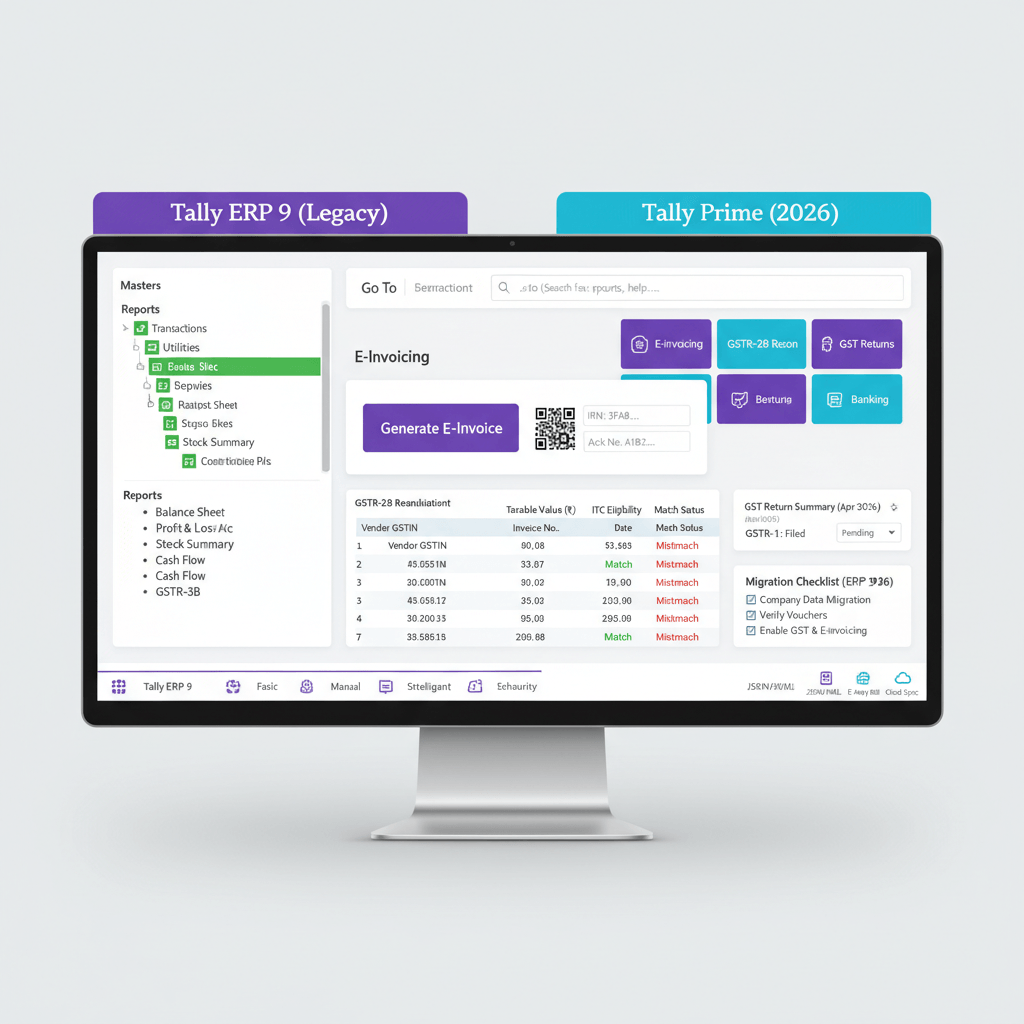
- TallyPrime common in India with GST modules and strong offline features.
- FreshBooks easy invoicing and simple expense tracking for freelancers.
- NetSuite ERP suite for larger firms with deep reporting and workflows.
- Sage Intacct mid market financials with strong reporting and approvals.
- Odoo modular ERP including accounting with open source options.
You can mix and match. For example, run billing in your product, send invoices to accounting, connect banks and gateways, and let the dashboard pull KPIs and tax status. If you prefer managed help, AI Accountant brings both the CA team and the dashboard in one service.
Sources: QuickBooks, Xero, Zoho Books, TallyPrime, FreshBooks, NetSuite, Sage Intacct, Odoo
Data quality and controls for clean real time reporting
Master data
- Clean vendor and customer masters. Correct GSTIN, PAN, address, HSN or SAC codes.
- Lock tax rate rules to items and services.
- Avoid duplicate vendors and customers.
Processing
- Use maker checker for large entries or changes.
- Set approval flows for bills and payments.
- Keep a suspense account small, and clear it fast.
Reconciliations
- Reconcile banks and gateways often.
- Match GSTR 2B credits to purchase entries.
- Reconcile TDS challans to ledger each month.
Audit and logs
- Keep logs of uploads, edits, and approvals.
- Export exception lists and track closure dates.
Sources: GSTR 3B, GST tutorials, TRACES
Security and access in real time reporting
- Role based access so users see only what they need.
- Strong passwords and multi factor sign in.
- Encryption in transit and at rest for sensitive data.
- Timely user offboarding.
- Regular backups and restore tests.
- Vendor due diligence for cloud tools and service partners.
If your partner is a managed service like AI Accountant, ask about data handling, storage, access, and logs. Good practice matters as much as features.
Source: ISO 27001
Common pitfalls and how to avoid them
- Dirty masters: Wrong GSTIN, HSN, or PAN breaks tax flows. Clean and lock masters before scaling automation.
- Partial bank feeds: When a bank feed breaks, rebuild fast. Keep a checklist to verify feeds each morning.
- Backdated entries: Heavy backdating hides issues. Keep entries current and use closing dates to prevent old period edits.
- Unmatched gateways: Payment gateways often have timing gaps. Reconcile daily and track settlement timelines.
- GST input credit errors: Claiming credit not in 2B can cause notices. Match to 2B and track ineligible credit clearly.
- TDS rate mistakes: Use correct sections and rates. Validate PAN and apply surcharge and cess where due.
- Too many KPIs: Start lean, then add. A crowded dashboard hides risk.
A CA led service like AI Accountant can help set guardrails. Templates, SOPs, and reviews reduce these risks from day one.
Sources: GST portal, GST tutorials
Real time forecasting and scenario planning
- Cash forecast: Roll a 13 week cash view. Update it weekly from live AR and AP.
- Revenue forecast: Blend pipeline, seasonality, and product trends.
- Expense forecast: Tie to headcount, vendor plans, and contracts.
- Scenario tests: Ask what if sales drop 15 percent or costs rise 10 percent. Plan moves now.
Real time actuals make forecasts honest and nimble. You can change course in days, not quarters.
Source: McKinsey
How AI Accountant supports real time financial reporting
AI Accountant’s Virtual Accounting brings two parts together for you.
- CA services: A qualified team runs bookkeeping, reconciliations, GST, TDS, income tax, payroll support, and annual ROC for small companies. They also advise on tax matters like place of supply, reverse charge, HSN, and rates.
- Dashboard: A single view of revenue, expenses, profit and loss, cash flow trends, burn and runway, bank analysis, documents, compliance dates, and filing status. You also get AI insights and alerts.
You work in the dashboard and talk to the CA team in one place. They handle execution. You get live visibility and simple control. It replaces scattered email, files, and chat with a clear system.
If your team already has tools, the service adapts. If you need a fresh setup, the team can set chart of accounts, masters, and flows. Either way, the goal is the same. Clean books, on time compliance, and a live view that helps you decide faster.
Learn more: AI Accountant
Practical example to make it real
Here is a simple example you can picture. It is not a case study, it just shows how the flow feels in practice.
A founder opens the dashboard on Monday morning.
Cash shows 42 days of runway. A card shows a big customer is five days late. AR follow up is due today.
GST tracker shows three invoices in draft missing HSN. The team fixes them in minutes.
Bank rec shows six unmatched lines from a payment gateway. Settlement references arrive by noon and matches run.
The weekly plan calls for vendor payments on Wednesday. AP due this week is 12 lakh. One vendor offers a two percent discount for early pay. The founder approves it because the cash forecast shows a safe buffer.
By Friday, GSTR 1 is ready to file with zero variance to books. TDS challan is paid and posted.
Checklist to get started this month
- Pick your top three KPIs, cash runway, AR aging, and GST readiness.
- Clean masters for top 50 customers and vendors, add GSTIN, HSN or SAC, and email.
- Turn on bank feeds and gateway exports.
- Set daily and weekly cadences and owners.
- Reconcile one bank to zero open items this week.
- File the next GST and TDS with zero variance to books.
- Review what worked and what broke. Improve one rule each week.
Sources: BlackLine, GST tutorials, TRACES
Closing thoughts on real time financial reporting
Real time financial reporting is not a fad. It is a calmer, cleaner way to run finance. You make small moves every day. You see risk early. You file on time. You choose with live facts. And you get time back.
You can build this with your own team and tools, or you can use a managed service like AI Accountant that blends a CA team with a strong dashboard. Either path works if you commit to clean data, steady cadences, and clear KPIs.
If you want to explore the managed route, you can learn more at AI Accountant. The goal is simple. Right numbers, right time, right move.
Sources: Oracle, AI Accountant
FAQ
How do I define real time financial reporting in the Indian context with GST and TDS in scope?
It means your ledger, sub ledgers, and compliance trackers update continuously from bank feeds, billing, payroll, and expense tools. GST data aligns daily to GSTR 1 and 3B with 2B matching, while TDS is computed at the time of booking or payment by section, and challans and returns progress on a live dashboard. A service like AI Accountant automates the flow and shows status in one place.
What is the typical implementation timeline for a CA managed setup like AI Accountant, from kickoff to first live dashboard?
For a small to mid size company, two to four weeks is common. Week one focuses on masters, chart of accounts, and bank feeds. Week two connects billing, gateways, and OCR. By week three, core KPIs like cash, AR, AP, GST, and TDS update daily. Complexity, data quality, and tool choices can extend or compress this.
How should I split roles between my in house finance team and a virtual accounting provider?
Keep ownership of business decisions, approvals, and collections. Let the provider, for example AI Accountant, run bookkeeping, reconciliations, GST and TDS workflows, and routine reporting. Use maker checker for sensitive actions like vendor creation and payment runs, and align on a weekly cadence review to keep everyone on the same page.
How does continuous GST 2B reconciliation actually work day to day?
The system imports GSTR 2B periodically, maps vendors by GSTIN, and compares input tax credit lines to purchase entries, flags ineligible credit, rate or place of supply mismatches, and missing invoices. Exceptions are cleared in short sprints, so your 3B liability and credit stay accurate. AI Accountant’s dashboard surfaces open mismatches and due dates.
What controls do I need to prevent errors with TDS sections like 194C, 194J, and 194Q?
Lock vendor masters with PAN and default sections, set rate rules with thresholds, enable validation on booking or payment, and reconcile challans monthly. A review queue for rate overrides and PAN exceptions helps. Providers like AI Accountant maintain these rules and produce section wise ledgers for audits.
How secure are bank feeds and payment gateway integrations in a live setup?
Use role based access, MFA, and token based connectors from reputable platforms. Store secrets in secure vaults, encrypt in transit and at rest, and log all access. Rotate credentials on staff changes. Ask your provider for their security posture, audit trails, and backup practices. ISO 27001 aligned processes are a good sign.
What latency should I expect on the dashboard, can it be truly real time?
Most teams run updates every few minutes to hourly, depending on data sources and API limits. Bank feeds may post in near real time or in batches. A well tuned setup, for example AI Accountant, targets sub hour latency for core KPIs, with alerts pushing faster for critical spikes.
Can AI Accountant work with Tally, Zoho Books, or my existing ERP without a full migration?
Yes, the service adapts to common Indian stacks like TallyPrime and Zoho Books, and to cloud ERPs. You can integrate via native connectors, APIs, or scheduled files. The goal is to centralize truth in your ledger, then layer continuous checks and dashboards without forcing a risky rip and replace.
How do we handle backdated corrections without breaking prior filings and reports?
Set closing dates with passwords, post adjustments through controlled periods, and document reasons with attachments and notes. Reconcile changes to GST and TDS filings, and maintain a change log. AI Accountant enforces maker checker on sensitive backdated entries and keeps reconciliations clean.
What does a 13 week cash model look like when powered by live actuals?
It rolls forward opening cash, expected AR receipts by promise dates, scheduled AP, payroll, taxes, and planned capex. It refreshes weekly from the ledger and CRM or billing. Scenario toggles let you test slow collections or vendor timing shifts. This turns runway talks into crisp decisions.
How audit ready are working papers in a continuous accounting approach?
Very ready if you keep daily discipline. Each reconciliation has a dated export, open item list, and closure notes. GST 1, 3B, and 2B tie outs, TDS section ledgers, and challan mappings live alongside your books. AI Accountant provides these artifacts continuously, not just at year end.
What are the most common data quality issues that stall automation, and how do we fix them quickly?
Missing GSTIN, wrong HSN or SAC, duplicate vendors, and uncategorized bank lines block smooth flows. Fix with a master data cleanup sprint, lock rules at the item level, and add validation on vendor and customer creation. A weekly controls review keeps the gains intact.
How do pricing and effort scale as transaction volume grows month over month?
Effort shifts from manual entry to exception handling as automation ramps. Pricing for managed services often follows a tiered structure based on volume, complexity, and scope, for example number of entities, payroll, international payments. Ask for clear SLAs on latency, reconciliation frequency, and filing timelines.
Can AI actually flag anomalies that a human might miss in books and filings?
Yes. Pattern based checks can spot outlier rates, unusual vendor spikes, duplicate invoice numbers, or GST place of supply mismatches. AI Accountant combines rule based and AI driven alerts, then the CA team reviews and resolves items so false positives do not distract your leaders.
How do I ensure ROC events do not slip, given our lean team?
Add ROC deadlines to the same live calendar that tracks GST and TDS, surface AOC 4 and MGT 7 milestones on the dashboard, and assign owners with reminders. With books reconciled continuously, assembling financials and board reports becomes a scheduled, calm exercise rather than a rush.