-01%201.svg)
Key takeaways
- Financial forecasting services turn past data and market signals into clear views of revenue, expenses, cash flow, burn, and runway, so you can act early and avoid cash crunches.
- Rolling forecasts, not one time budgets, drive monthly decisions, variance reviews, and course corrections.
- Compliance belongs inside the forecast, with GST, TDS, and advance tax mapped alongside collections and payments to keep you penalty free.
- Top providers deliver scenarios, KPI tracking, and a living assumption log, so founders and finance heads can test moves with confidence.
- Integrated systems beat scattered spreadsheets as you scale, a live dashboard plus a CA led team reduces errors and extends runway.
- AI Accountant provides CA led Virtual Accounting with a live forecasting and compliance dashboard, unifying books, models, and filings in one place.
Introduction to financial forecasting services
Financial forecasting services help you see the money road ahead. They pull in your historicals, market context, and business rules to project revenue, expenses, profits, cash flow, burn, and runway. You also get scenarios to answer what if questions, so choices on pricing, hiring, and marketing become deliberate, not reactive. Startups, freelancers, and small businesses use these forecasts to make smart calls and stay on top of GST, TDS, and income tax.
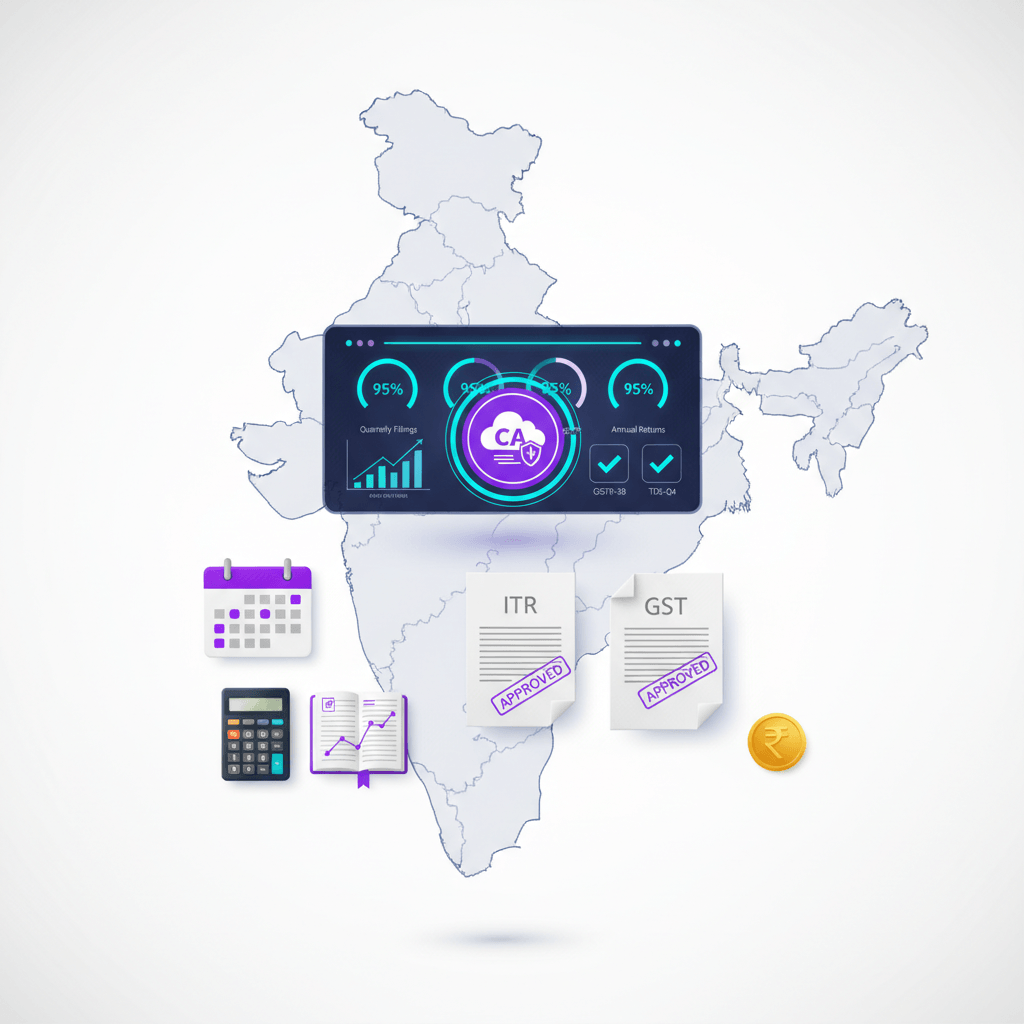
At AI Accountant, our CA led Virtual Accounting service builds and maintains these forecasts, then keeps them live through month end closes. A real time dashboard shows cash trends, burn rate, runway, and compliance dates, you can explore an example here cash flow dashboard. Our CA team keeps your books clean and your model current, giving you one place to look and one team to trust.
Good forecasting pairs numbers with cadence, close your books monthly, roll forward the model, and turn insights into actions.
Sources: Milestone, 365 Financial Analyst
Definition and scope of financial forecasting services
Financial forecasting services estimate future financial outcomes across profit and loss, cash, and balance sheet drivers. They use historical data, seasonality, and explicit assumptions to create a timely view, then update as new actuals arrive.
- A 12 to 18 month profit and loss forecast linked to core drivers
- Balance sheet drivers, such as receivable days and payable days
- Cash flow timing tied to collections, disbursements, and financing
- Burn rate and runway tracking
- Hiring plans and payroll impact
- Tax outflows, including GST, TDS, and advance tax
You also get an assumption log, a short list of the key levers, such as price, volume, churn, discount rates, credit terms, and tax rates. Change an input, see downstream effects, and document the rationale.
Sources: Milestone, 365 Financial Analyst, Precoro, J.T. Shulman
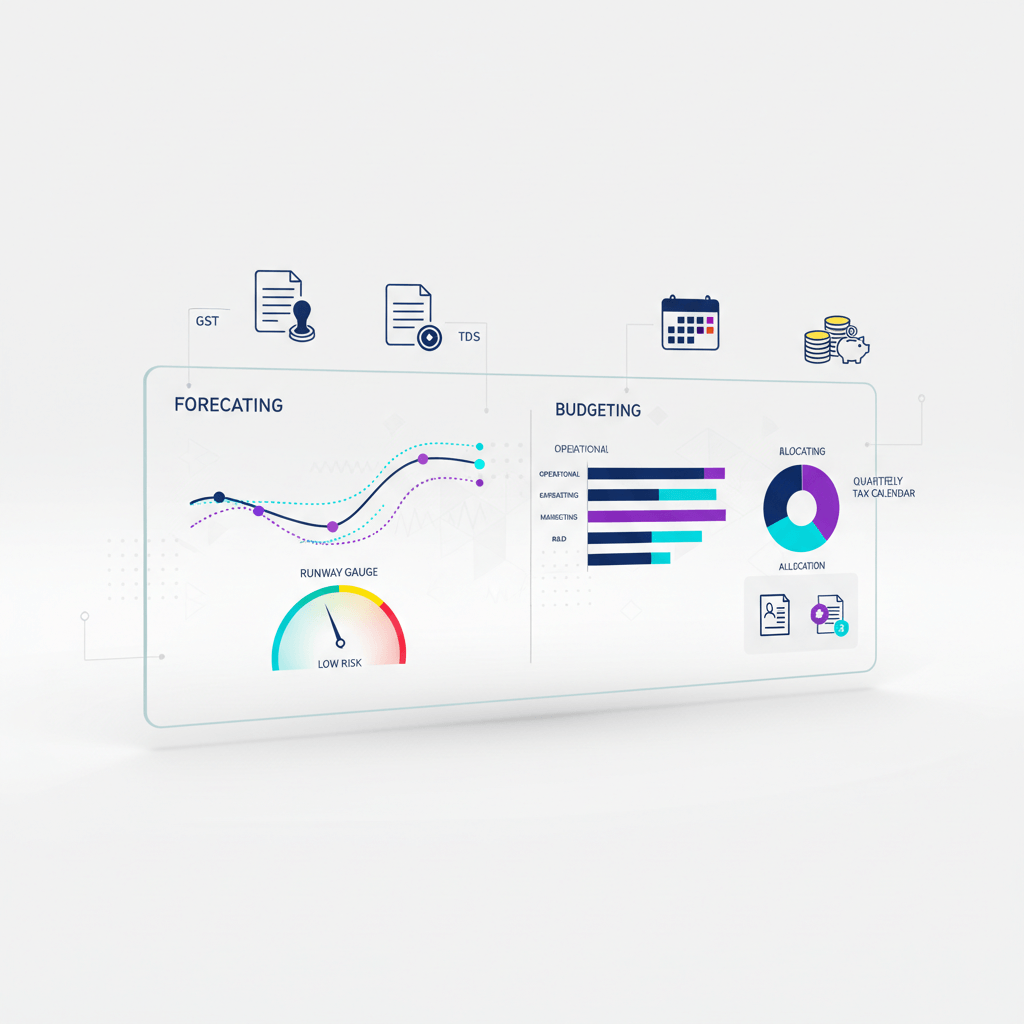
Forecasting vs budgeting vs projections within financial forecasting services
Forecasting
Forecasting is a rolling prediction, it changes as you learn. Use it for monthly operations, cash management, and scenario planning. Update after each book close.
Budgeting
Budgeting is a fixed annual plan. It sets targets, allocates resources, and anchors spend control. Use it to align teams and track accountability across the year.
Sources: J.T. Shulman, NetSuite
Projections
Projections are static snapshots built for a purpose, such as investor decks or debt funding. They present a case based on declared assumptions, not a promise.
Source: 365 Financial Analyst
Why financial forecasting services matter
When you can see the future shape of your numbers, you can change pricing with intent, pace hiring against KPIs, shift marketing spend to efficient channels, plan inventory against demand, and time a fundraise. You avoid a cash crunch and reduce decision lag.
Cash survival is central, a live cash flow forecast clarifies when receivables land and when payables go out, so you can accelerate collections, negotiate terms, and extend runway by months.
- Investor readiness, base, best, and worst cases with documented assumptions build trust
- Compliance planning, GST, TDS, and advance tax are mapped inside the cash plan to avoid penalties
- Monthly learning loop, compare actuals to forecast, explain gaps, and adjust quickly
Sources: Milestone, Vectra Bank, J.T. Shulman, OneStream, 365 Financial Analyst, Precoro, Order.co
Who needs financial forecasting services and when
Freelancers
Income can swing each month, a forecast smooths cash use, maps invoice timing, and plans taxes so there are no bad surprises.
Source: Vectra Bank
Startups from pre seed to Series A
Runway and unit economics matter most, track MRR or ARR, churn, ARPU, CAC, and payback, then gate hiring to growth. Explore related context in our Virtual CFO services guide.
Source: OneStream
Small and mid businesses
Seasonality, stock swings, and payment gateway delays require a working forecast for inventory and working capital planning.
Source: Precoro
Common triggers
- New product launches and pricing changes
- Funding rounds and lender discussions
- Geographic or channel expansion
- Hiring ramps and capex decisions
Sources: NetSuite, Vectra Bank, OneStream, Precoro
What good financial forecasting services include
Revenue models
Build top down and bottom up, from market size to share, and from funnel to conversion. Model price, ARPU, churn, channel growth, and discounts, then link to unit economics.
Source: Milestone
Expense models
Split fixed and variable costs, capture payroll with hiring dates, track COGS, CAC, and payback, and reflect vendor terms and discounts.
Source: J.T. Shulman
Cash flow forecasting
Tie receivables and payables to real timing, include DSO and DPO, gateway holdbacks, refund rates, interest, and loan schedules.
Sources: Vectra Bank, OneStream
Scenario planning
Build base, best, and worst cases, test sensitivities to price, volume, churn, discounts, and credit terms. See our primer on tools here business forecasting tools.
Source: Precoro
KPI stack
Track MRR or ARR, gross margin, CAC to LTV, payback, and contribution margin, then link actions to metric shifts.
Source: Paddle
Tax and compliance planning
Map GST liability and input credits, TDS on payroll and vendors, and advance tax quarters. Reserve cash to avoid penalties.
Source: J.T. Shulman
Reporting and roll forward
Update monthly with actuals, do variance analysis, explain gaps, and adjust the plan for the next period.
Source: Milestone
Methods and models in financial forecasting services
Qualitative methods
Use market intel, sales pipeline notes, founder insights, and customer feedback. These shape near term assumptions that raw numbers cannot capture.
Source: 365 Financial Analyst
Quantitative methods
Use time series for seasonality, regression for driver linkages, and cohort analysis for churn and retention, then cross check results across methods.
Short term at 13 week
Focus on cash survival, map collections and payments week by week, and spotlight timing gaps.
Source: OneStream
Long term at 12 to 24 months
Focus on growth, build full profit and loss, cash, and runway scenarios, and tie hiring and marketing to KPI gates.
Source: NetSuite
Data sources and controls
Pull ledgers, bank statements, payment gateways, CRM, and payroll. Maintain an assumption log, version control, and an audit trail for investors and boards.
Sources: OneStream, 365 Financial Analyst, Milestone, Precoro, NetSuite
Tooling for financial forecasting services, spreadsheets vs integrated systems
Spreadsheets are flexible and fast at the start, yet as teams grow, errors creep in, manual updates drag, and versions diverge. Integrated systems link books and forecasts, provide live profit and loss and cash views, and add alerts, collaboration, and audit trails. A compliance overlay shows GST and TDS dates in the same screen, so cash planning and filings stay aligned.
Recommended tools for forecasting and bookkeeping
AI Accountant brings both service and system, the dashboard centralizes data, shows cash flow trends, burn, runway, and compliance timelines, while the CA team reconciles banks and gateways and updates the model each month.
Source: OneStream
Delivery process for financial forecasting services
- Discovery, map the model, confirm drivers, seasonality, cohorts, tax profile, and payment patterns.
- Data hygiene, clean ledgers, reconcile banks and gateways, tie ledgers to statements, and fix coding errors.
- Model build, structure revenue, expense, and cash flow, build base, best, and worst cases, and create an assumption log.
- Review, a CA layers in GST, TDS, and income tax, confirms compliance dates, and agrees reserve plans.
- Monthly cadence, close books, roll in actuals, run variance analysis, update assumptions, and share a one page summary with actions.
- Governance, set owner sign offs, run short review meetings, keep notes and decisions in one place, and maintain an audit trail.
Common pitfalls in financial forecasting services and how to avoid them
- Cash timing misses, ignoring timing kills plans, track DSO and DPO, model gateway delays and refunds, and build a 13 week cash plan. Source: Vectra Bank
- Over optimistic revenue, stress test churn and collections, add haircuts to pipeline until win rates improve. Source: Precoro
- Static models, update monthly, compare actuals to forecast, and learn. Source: Order.co
- Unlinked hiring, gate roles to KPI triggers, for example open headcount when MRR and payback thresholds are met.
- Missing taxes, embed GST, TDS, and advance tax in cash plans with reserves. Source: J.T. Shulman
- Poor documentation, keep an assumption log and version control to speed diligence and build trust. Source: 365 Financial Analyst
Sources: Vectra Bank, Precoro, Order.co, J.T. Shulman, 365 Financial Analyst
Forecasting for compliance and tax planning inside financial forecasting services
- GST, estimate output GST monthly, model input credits by timing and usage, and track filing and payment dates to avoid fees and interest.
- TDS, plan monthly challans and quarterly returns for payroll and vendors, and map due dates inside the cash plan.
- Advance tax, estimate quarterly payments on expected income, reserve cash, and transfer on time to avoid interest.
- ROC and MCA filings, plan annual events, budget fees, and keep documents handy for smooth execution.
Embed these items in base and worst cases, keep buffers for tax, and your runway becomes real, not wishful. Source: J.T. Shulman
How AI Accountant delivers financial forecasting services via Virtual Accounting
AI Accountant Virtual Accounting is a CA led managed service with a live dashboard. Our team handles bookkeeping, reconciliations, GST, TDS, income tax, payroll support, and ROC for small companies. The dashboard shows live accounting data, cash flow trends, burn, runway, compliance timelines, filing status, bank analysis, and recent transactions, plus a document vault and a single chat to reach the CA team.
- You connect banks, payment gateways, and ledgers.
- We clean ledgers and reconcile all accounts.
- We build base, best, and worst case models.
- Each month we close books and sync the dashboard.
- We update forecasts, run variance analysis, and review with you.
- You get actionable recommendations on pricing, hiring, ad spend, and tax buffers.
- We maintain audit trails and keep your model investor ready.
Mini cases to show impact
- SaaS startup, collections were slow and hiring was front loaded, we tightened follow ups and delayed two roles by two months, runway rose from nine to fourteen months.
- D2C brand, demand forecasting paired with inventory planning reduced stockouts, freed cash from overstock, and timed ads to in stock SKUs.
- Freelancer, a 13 week cash plan plus quarterly advance tax mapping set aside savings each month, no nasty surprises at quarter end.
Source: AI Accountant
Quick start checklist for financial forecasting services
- Gather 12 to 18 months of data, ledgers, bank statements, gateway reports, CRM pipeline, and payroll files.
- Define your top five drivers, price, conversion, churn, ARPU, and DSO often top the list.
- Build two horizons, a 13 week cash view for survival and a 12 month plan for growth.
- Set a monthly CA review, close books, run variance analysis, and update assumptions.
- Create three scenarios, base, best, and worst, with KPI tied hiring gates.
- Document assumptions in a short shared log, update every month.
- Add tax and compliance, insert GST, TDS, and advance tax outflows, put dates on the calendar, and reserve cash.
Evaluating providers of financial forecasting services
- CA led credentials, prefer a CA led team over software only, you need judgment and compliance depth.
- Strong data integration and reconciliation, clean inputs beat fancy models, ask about bank and gateway reconciliation.
- Scenario and KPI focus, ensure base, best, and worst, and KPIs such as CAC, LTV, and payback.
- Embedded compliance, GST, TDS, and income tax planning must sit inside the cash plan.
- Review cadence and insight, monthly variance analysis with clear action steps.
- Security, audit trails, and scale, protect data and support growth.
Helpful links
- AI Accountant Virtual Accounting
- GST guide
- TDS compliance
- Bookkeeping best practices
- Income Tax Department
- GST Portal
Final thought and next step
Financial forecasting services turn noise into clarity, protect cash, time your bets, and keep filings on schedule. In India, this blend of forecasting and compliance is vital, and it works best when your books are clean and your dashboard is live.
If you want this done right, consider AI Accountant Virtual Accounting. Our CA led team handles the work, our dashboard shows what matters, and we keep your model fresh and your filings smooth. Book a walkthrough to see how we can operationalize forecasting for your business. Forecasting and tax advisory are non attest, we coordinate with your statutory auditor when needed. Visit AI Accountant.
FAQ
What deliverables should I expect from a forecasting engagement for a VC backed startup?
You should receive a 12 to 18 month profit and loss model tied to drivers, a cash flow with collections and disbursement timing, burn and runway views, three scenarios with sensitivities, a KPI pack covering MRR, churn, ARPU, CAC, LTV, payback, a living assumption log, and monthly variance analysis that rolls actuals into the next forecast. AI Accountant, as an AI enabled Virtual Accounting service, delivers these as a single dashboard plus CA curated reports.
How do you embed GST, TDS, and advance tax into the 13 week cash model without choking operations?
We map statutory due dates, estimate liabilities from recent actuals and forecasted revenue or payroll, place them as dated outflows, and maintain a weekly reserve buffer. We then sequence vendor payments and collections around those anchors, so compliance stays intact while working capital remains fluid. AI Accountant automates reminders and flags shortfalls early.
What level of data hygiene do you require before building the model?
At minimum, bank and gateway reconciliations current to the last close, clean customer and vendor masters, consistent chart of accounts, and recent tax filings posted. If gaps exist, AI Accountant’s CA team performs cleanup first, because clean inputs beat clever models and drive forecast credibility with boards and investors.
How is a rolling forecast different from a budget in board reporting terms?
The budget sets annual targets and spending lanes, while the rolling forecast updates monthly to reflect actual performance and new signals. Boards use the budget for accountability, they use the rolling forecast for decision timing, such as when to slow hiring or when to raise. AI Accountant presents both views side by side, with variances and implied runway.
What accuracy thresholds should finance heads set, and how are variances managed?
Target eighty to ninety percent monthly accuracy on revenue and cash, with variance bands defined per line item. More volatile lines, such as new channel revenue, can carry wider bands. Variances are explained by driver, for example price, volume, churn, timing, then corrective actions are logged and tracked. AI Accountant’s variance module highlights repeat variance patterns and recommends adjustments.
Can you integrate QuickBooks, Xero, Zoho Books, and payment gateways into the forecast workflow?
Yes, we connect to major ledgers and gateways to pull actuals, invoices, payouts, fees, refunds, and settlement timing. This feeds both the 13 week cash and the 12 to 24 month plan. AI Accountant supports direct feeds where available and secure file imports where not, ensuring audit trails remain intact.
How do you manage assumption logs, version control, and audit trails for diligence?
We maintain a dated assumption registry with owner, rationale, and linkage to model cells. Each monthly refresh creates a new version with changelogs. Commentary explains major moves, such as churn shift or DSO improvement. AI Accountant stores artifacts, workpapers, and approvals in a document vault, simplifying investor or lender diligence.
How do you model SaaS metrics like MRR, cohorts, and churn rigorously?
We start with cohort based MRR, break down new, expansion, contraction, and churn by cohort age, then connect pricing and discount logic to ARPU. Churn is stress tested under different retention programs. Collection timing reflects billing cadence and gateway behavior. AI Accountant visualizes MRR bridges and cohort curves so founders see cause and effect quickly.
How frequently should scenarios be refreshed, and who signs off?
Refresh base monthly after close, refresh best and worst at least quarterly or upon material events, such as price changes, launches, or fundraises. The CFO or founder signs off on assumptions, while the CA validates tax and compliance layers. AI Accountant routes reviews, captures approvals, and preserves the decision trail.
How do you forecast collections and DSO credibly in markets with mixed payment terms?
We segment customers by term and behavior, apply weighted DSO, incorporate gateway settlement lags, refunds, and chargebacks, and then reconcile expected to actual weekly. Collections programs, such as dunning or early pay discounts, are modeled as levers with measurable impact. AI Accountant compares promised versus realized timing to recalibrate DSO automatically.
What runway extension levers typically move the needle within 30 days?
Top quick wins include tightened collections, vendor term extensions, pausing low ROI campaigns, deferring non critical hires until KPI gates are met, and trimming non essential SaaS spend. AI Accountant flags levers with quantified impact on burn and runway, then tracks execution.
How do you turn an operational forecast into a fundraising projection pack?
We convert the rolling forecast into clear base and investor cases, document assumptions, simplify the KPI story, add cohort or unit economics exhibits, and ensure statements tie out. A cash runway chart, use of funds plan, and sensitivity table round out the pack. AI Accountant exports ready to share slides and model summaries.
What engagement models and pricing can a founder expect for Virtual Accounting with forecasting?
Pricing depends on transaction volume, number of entities, integrations, and scope, such as bookkeeping plus GST and TDS, payroll, ROC, and forecasting cadence. Typical models include a monthly retainer for managed accounting and forecasting, with an initial cleanup and model build fee. AI Accountant scopes transparently after discovery and data review.
Is forecasting and compliance support non attest, and how do you coordinate with statutory auditors?
Yes, forecasting and tax advisory are non attest services. We prepare reconciliations, schedules, and workpapers that auditors can rely on, respond to queries, and maintain independence boundaries. AI Accountant coordinates timelines so audit, tax filings, and board reviews stay in sync.