-01%201.svg)
Key takeaways
- Burn rate analysis services help you measure monthly cash burn, forecast runway, and adjust spend before trouble hits.
- A CA led model blends bookkeeping, reconciliations, GST and TDS compliance, dashboards, and advice into one workflow.
- In India, GST credits, TDS cycles, e invoicing, and gateway settlements change true cash flow, so they must be baked into burn and runway.
- Use cash based metrics like gross burn, net burn, and burn multiple, and keep formulas visible on a live dashboard.
- Scenarios, variance analysis, and AI alerts turn numbers into action, giving founders more runway and cleaner board packs.
- AI Accountant offers Virtual Accounting with a dedicated CA team, real time burn and runway tracking, and India specific compliance integrated end to end.
- Well run services commonly add three to six months of runway, cut avoidable spend by ten to twenty percent, and reduce compliance penalties.
Introduction to burn rate analysis services
Burn rate is how fast you use cash each month. Cash runway is how many months you can operate before cash runs out, calculated as closing cash divided by net burn. A CA led burn rate analysis service gives you a clean, repeatable way to measure burn, forecast runway, and tune your spending with confidence. A live dashboard shows your numbers, trends, and alerts, so you act early, not late.
In India, the details matter. GST input credits and filings change true inflows, TDS schedules lock cash on fixed dates, and e invoicing can speed up collections. A good service bakes all this in, so your net burn is real and your runway is honest. Explore a sample cash flow dashboard and runway view here, cash flow dashboard and runway explainer.
Burn is a signal, not a verdict. With steady tracking, clean reconciliations, and timely compliance, you win back months of runway.
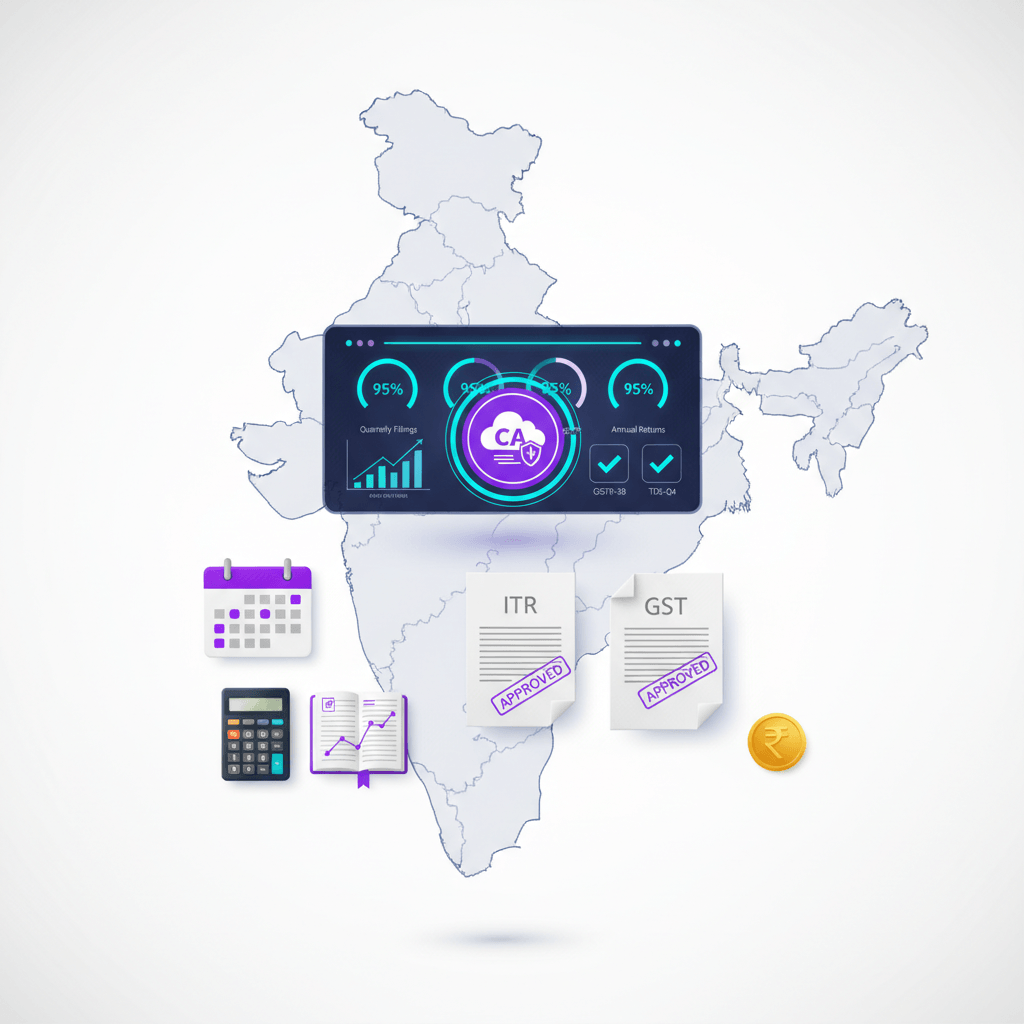
AI Accountant delivers burn rate analysis as part of Virtual Accounting, combining bookkeeping, reconciliations, GST and TDS compliance, MIS, and AI insights. You see cash burn and runway in real time, and you get practical advice to stretch every rupee.
Why burn rate analysis services matter for Indian startups and SMBs
Watching burn is about survival and control. If burn is high, runway shrinks, which can force rushed choices on hiring, marketing, or fundraising. With a CA led burn service you can:
- Target a twelve month runway as a floor, more when markets are slow.
- Build a budget that mirrors cash reality, tying headcount, ad spend, and vendor terms to inflows and outflows.
- Win investor trust with board ready metrics such as gross burn, net burn, burn multiple, and CAC payback.
- Spot risks early, like seasonality, slow payments, GST refund lags, and gateway delays, before they crunch cash.
- Improve growth efficiency by tracking burn multiple and unit economics, blending LTV to CAC, payback, and working capital levers.
Compliance is cash. On time GST and TDS filings avoid penalties and interest, which protects runway. Clean reconciliations protect every rupee, and good governance helps in board meetings, diligence, and credit lines.
Useful references include the regulator and institute portals, RBI, MCA, and Income Tax, and for GST, GST portal.
What are burn rate analysis services, scope and deliverables
Burn rate analysis services are delivered by CAs as an ongoing, structured process. You get a consistent monthly close, clear metrics, and timely advice. Typical scope includes:
- Data consolidation, monthly bookkeeping close, and end to end reconciliations across banks, wallets, and payment gateways such as Razorpay and Paytm.
- Core calculations, gross burn and net burn by month, with rolling twelve month trends.
- Cash flow modeling, three to twelve month driver based forecasts covering headcount, pay, rent, ads, vendor terms, and collections.
- Scenario planning, best, base, and worst cases for hiring, pricing, discounts, and downturns.
- Variance analysis, actuals against budget and forecast with clear reasons and actions.
- AI alerts, flags when runway drops below six months, or on burn spikes and aged receivables.
- Governance cadence, weekly snapshots, monthly closes, quarterly reviews.
- Compliance view, GST, TDS, and Income Tax events woven into net burn and runway.
When this cadence runs well, late filings and leaks do not sneak up on you, fees and penalties stop eating cash, and your runway view stays real.
Key metrics and definitions in burn rate analysis services
- Gross burn, total cash out each month, including salaries, rent, tools, vendors, ads, interest, and taxes paid. Formula is the sum of cash outflows for the period.
- Net burn, gross burn minus cash inflows such as sales receipts, other income, and refunds. Formula is cash outflows minus cash inflows.
- Cash runway, closing cash divided by net burn. Twelve months is a common comfort guardrail, under twelve months deserves top focus.
- Burn multiple, for SaaS, net burn divided by net new ARR. Lower is better, under one point five in growth mode is a solid target.
- Operating cash flow versus P and L loss, burn uses cash in and out, not accrual based P and L.
- Unit economics, watch contribution margin, CAC payback, LTV to CAC, and working capital days. Receivable days, payable days, and inventory days drive cash needs.
Keep formulas simple and visible on your dashboard, and make sure they are cash based for clear action. For foundational reading, see ICAI, RBI, and the primer on cash flow basics at Investopedia.
Methodology, how professionals deliver burn rate analysis services
A strong CA led method makes burn tracking reliable and repeatable:
- Create a clean source of truth, standardize the chart of accounts, tag spend by function such as product and R and D, sales and marketing, and general and admin, map GST and TDS accounts.
- Close the month on time, lock cut off dates, post accruals and reversals, match GST input credits against GSTR two B, push unreconciled items to a task list.
- Reconcile end to end, banks, cards, wallets, and gateways, check fee slabs, spot overcharges and chargebacks, fix leaks fast. Learn how automation helps here, automated reconciliation services.
- Build a direct method cash flow, using AS three sections for operating, investing, and financing, then derive gross and net burn from operating cash flows.
- Create a forecast engine, use drivers such as headcount ramps, salary bands, ad budgets, sales cycles, receivable days, payable days, and GST or TDS timing. A simple, clear model wins. More on forecasting here, forecasting services overview.
- Run scenarios and sensitivities, what if ad spend rises ten percent, receivable days slip by fifteen days, or a new plan lifts conversion by two points.
- Report with clarity, a one page executive view with trend charts, a cash waterfall, and a short action list, and keep board packs consistent each month.
Rigor plus speed beats heroic spreadsheets. Standardize inputs, reconcile weekly, and keep one version of the truth, then iterate quickly with scenarios.
Standards and portals to anchor your method include ICAI, GST, and MCA.
India specific considerations impacting burn and runway
- GST input credits and refunds, credits can take two to three months to settle into cash, reconcile GSTR three B with GSTR two A and two B to avoid surprise gaps.
- TDS and TCS, monthly challans and quarterly returns need cash on fixed dates, plan buffers so salaries and vendors are safe.
- E invoicing, mandatory above five crore turnover, speeds collections since buyers process invoices faster with a valid IRN. Portal reference, e invoice.
- Payment gateway settlements, typical settlement lags of two to seven days, reconcile weekly, confirm fees match slabs.
- Cross border remittances, Form fifteen CA and fifteen CB, banking checks, and FX swings require time buffers.
- Payroll and statutory dues, PF and ESIC on fixed dates, automate reminders to avoid penalties. Reference, EPFO.
If you ignore these, your runway can shrink by ten to twenty percent without any new spend. If you manage them, you can win back months.
Signals you need burn rate analysis services now
- Your runway is under twelve months.
- You plan to scale hiring or ad spend and want guardrails.
- You use more than one gateway and receivable days are above forty five.
- You have a board meeting or a fund raise in six months.
- Your model is changing, for example from D two C to SaaS, or from services to product.
- You are getting hit with late fees for GST or TDS.
These are clear triggers to bring in a CA led, dashboard backed service. Learn more at AI Accountant and policy timings at GST portal.
How to evaluate burn rate analysis service providers
- CA led team, India compliance is core, ask who signs off on GST and TDS processes.
- Hard reconciliations, request sample bank, wallet, and gateway recs.
- Real time dashboard, burn, runway, cash waterfall, and alerts without waiting.
- Deep scenarios and advice, not just models, but what ifs and clear next steps.
- Service levels, weekly snapshots, monthly closes, secure access, and response times.
- Sector fit, case studies that match your space.
- Integrated bookkeeping and GST, burn tracking sits on clean books and clean compliance.
Explore AI Accountant and verify GST workflows referenced at GST.
Recommended tools for burn rate analysis services and tracking
Pick tools that blend bookkeeping, cash flow, and compliance, then anchor them with a CA led service.
- AI Accountant, CA led Virtual Accounting with live burn and runway, GST and TDS status, MIS, and AI alerts, visit site.
- QuickBooks Online, cloud accounting with cash flow and reporting, QuickBooks.
- Xero, bank feeds and simple cash flow tools, Xero.
- FreshBooks, invoicing and simple accounting for small teams, FreshBooks.
- Zoho Books, GST friendly accounting with e invoicing support in India, Zoho Books.
- TallyPrime, popular in India with GST features, Tally.
Choose what fits your stack and scale, then let your CA team convert data into action.
How AI Accountant delivers burn rate analysis services
AI Accountant brings people and platform in one managed service:
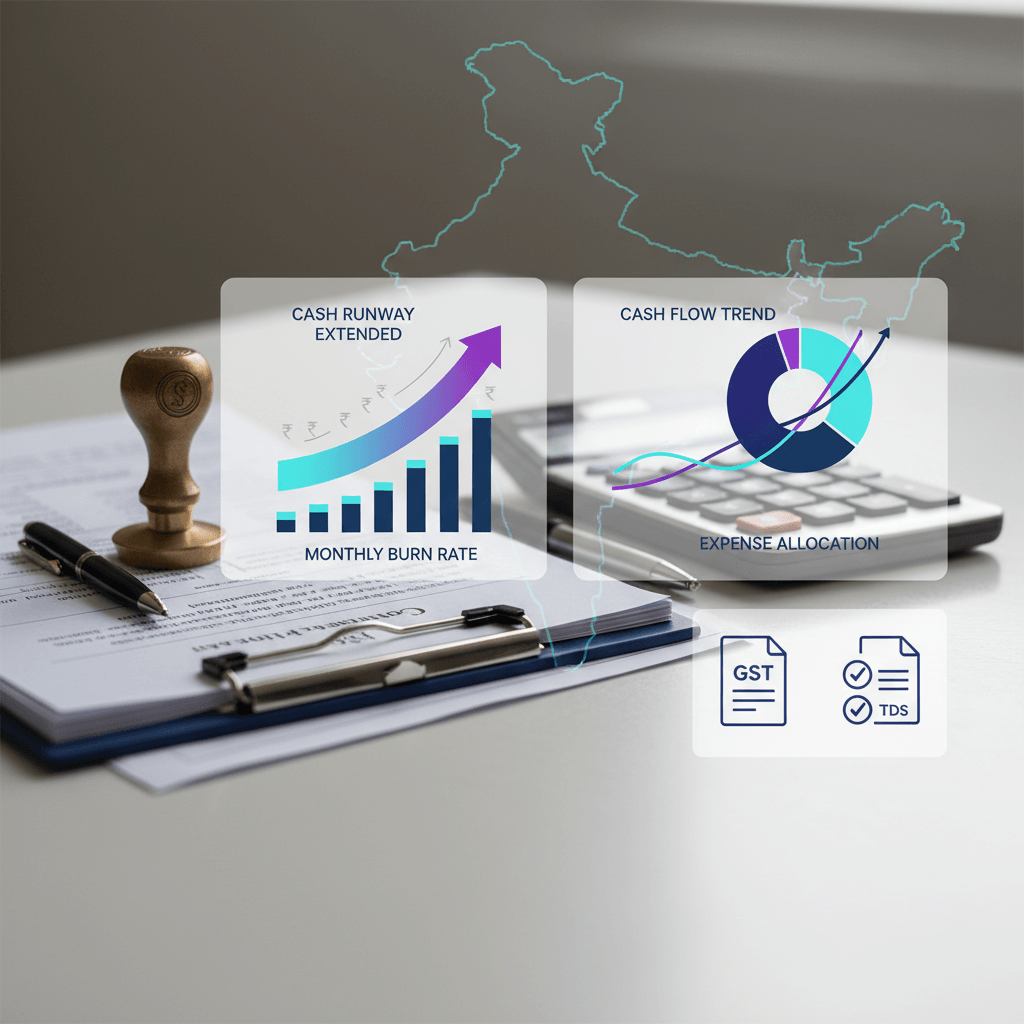
- Dashboard with live burn and runway, monthly burn, runway, and a cash waterfall with seasonality and trends.
- AI insights and alerts, clear triggers when burn speeds up or runway drops below six months, with likely drivers to check.
- Bookkeeping and reconciliations, monthly close, bank, card, wallet, and gateway reconciliations, clean data as the base.
- MIS and variances, founder and board packs with concise visuals and an action list.
- Forecasting and scenarios, driver based models in the dashboard for best, base, and worst cases.
- Compliance hub, GST, TDS, and Income Tax filings and their cash impact woven into net burn.
- Dedicated CA team, a named CA and execution pod, steady calls over Slack or Zoom, clear tickets for tasks and docs.
- Non attest note, insights guide decisions, not audit opinions.
This plugs into Virtual Accounting, so you get end to end accounting, taxes, payroll advisory, and ROC support in one place.
Example mini case studies on burn rate analysis services
SaaS seed stage
The team had a burn multiple of two point five, and receivable days at sixty due to slow invoicing and follow up. We set up e invoicing, simplified plans, and pushed collections with weekly reminders. AR days dropped to thirty five, burn multiple fell to one point six, runway increased by five months. Reference for e invoicing, e invoice portal.
D two C brand
Gateway fee checks found fee slabs were off by three percent on a large channel. We negotiated new slabs, fixed product mapping, and tuned inventory buys to fast movers. Gross burn fell by eighteen percent in three months, and TDS late fees were avoided with a simple calendar and auto reminders. Gateways, Razorpay and Paytm. Guidance on TDS, Income Tax portal.
These are normal, not rare wins, the playbook is repeatable.
Implementation roadmap for burn rate analysis services
- Weeks one to two, onboarding, map chart of accounts, connect banks and gateways, run a hygiene audit, set tags for R and D, sales and marketing, and general and admin.
- Weeks three to four, first monthly close, baseline burn and runway, a cash waterfall, agree on the first fixes.
- Month two and beyond, add scenarios, weekly snapshots, monthly MIS packs, and a thirty minute review call.
This rhythm keeps everyone aligned and reduces surprises. It is light on time for your team, heavy on results.
Pricing and ROI of burn rate analysis services
Pricing scales with volume and complexity. A typical monthly retainer in India ranges from fifty thousand to two lakh for a growing startup, and the return often shows up fast.
- Extra runway, three to six more months is common after basic fixes.
- Fees saved, clean compliance reduces late fees and interest on GST and TDS.
- Spend cuts, ten to twenty percent reduction in avoidable costs is realistic when you tackle fees, unused tools, and slow processes.
- Faster raises, better packs and clean data speed due diligence.
Value shows in both money saved and stress reduced. Learn more at AI Accountant, and policy pages at GST and Income Tax.
Common pitfalls and how burn rate analysis services prevent them
- Mixing accrual with cash, always use direct cash flow for burn, keep P and L separate for performance.
- Ignoring GST and TDS cycles, reconcile monthly and set cash buffers for payment dates.
- Confusing OpEx and CapEx, tag assets and expenses correctly, this changes true burn and taxes.
- No sensitivities, always run what ifs on receivable days, ad spend, and hiring plans.
- Gateway leaks, reconcile fee slabs and settlements weekly to stop silent losses.
Anchor your process with steady reconciliations, a live dashboard, and a CA led cadence. References, ICAI, GST, and Income Tax.
Ready to extend your runway
If you want longer runway and fewer cash surprises, book a free thirty minute burn health check with AI Accountant. See the dashboard in action, get clear next steps tailored to your stage and sector.
Small changes in cash discipline compound into quarters of extra time to win.
FAQ
How do I compute gross burn and net burn with an example
Gross burn is the total cash outflows for a period, for example salaries, rent, vendors, ads, interest, and taxes paid. If cash out is one crore and inflows from customers and refunds are forty lakh, then net burn equals one crore minus forty lakh, which is sixty lakh. Use these numbers to compute runway, closing cash divided by net burn.
What review cadence should a founder adopt for burn and runway
Use weekly snapshots to catch spikes early, and a full monthly close for reconciliations, GST and TDS checks, and a refreshed forecast. A quarterly scenario review helps align the board and investors. AI Accountant automates weekly alerts and packages the month end view for speed.
How is burn multiple used for SaaS board reporting
Burn multiple equals net burn divided by net new ARR. Under one point five in growth mode signals efficient spend. For example, if net burn is sixty lakh and net new ARR is fifty lakh, burn multiple is one point two, which is strong. AI Accountant can show this alongside CAC payback and LTV to CAC for context.
How do CA managed services differ from simple cash flow tracking in spreadsheets
CA managed services deliver reconciled data, India compliance integrated into cash, driver based forecasts, and scenario analysis with alerts. Spreadsheets show history, while a CA led service such as AI Accountant turns data into decisions, for example tightening receivable days or rescheduling vendor terms.
What India specific items most often distort true burn
Delayed GST refunds, mismatched GSTR three B versus two B, TDS outflows on fixed dates, gateway settlement lags, and PF or ESIC penalties. A Virtual Accounting partner builds these into burn and runway so your view reflects real cash. You can review GST timing at the GST portal.
What data access is required to run a robust burn analysis
Bank statements, payment gateway reports, accounting ledgers, GST portal access, payroll registers, and major vendor contracts for fee slabs. AI Accountant sets up secure document flows and read only portal access to automate this pipeline.
How do scenarios help founders decide on hiring and ad budgets
Scenarios translate choices into runway impact. For example, plus ten percent ad spend, slip receivable days by fifteen, or hire a sales pod in month three. The dashboard shows burn, runway, and payback shifts side by side, so you choose based on evidence.
Can a bootstrapped SMB benefit without raising funds
Yes, by accelerating collections with e invoicing, right sizing tools, renegotiating gateway fees, and aligning vendor terms, you can free cash and add months of runway. AI Accountant prioritizes the highest cash return actions first to preserve optionality.
How are GST and TDS woven into burn forecasts
Forecasts carry GST net payable or refundable by month, align payment due dates, and apply TDS outflows to the exact schedule to avoid cash crunches. References include GST and Income Tax. This makes runway honest, not optimistic.
What governance artifacts should I expect each month from a provider
A one page executive summary, reconciled bank and gateway recs, a direct method cash flow, burn and runway trends, variance analysis, and a short action list. AI Accountant follows a weekly snapshot and monthly pack rhythm with defined SLAs.
How quickly can a CA led team stabilize burn tracking after onboarding
Most teams stabilize within four weeks, which covers mapping the chart of accounts, connecting banks and gateways, the first monthly close, and a baseline forecast. From month two, scenarios and weekly snapshots add proactive control.
What ROI can finance heads expect from AI enabled Virtual Accounting
Common outcomes include three to six months of added runway, ten to twenty percent spend reduction on leaks and unused tools, lower GST and TDS penalties, and faster diligence for raises. AI Accountant’s alerts and reconciliations compound these gains over time.