-01%201.svg)
Key takeaways
- A clear bill categorization system, paired with India specific ledger mapping, turns messy bills into accurate ledgers, clean GST and TDS, and actionable insights.
- Use layered rules, start with vendor based logic, add keyword, GST rate, HSN or SAC, amount thresholds, and payment mode for consistency and scale.
- Map each expense group to exact ledgers plus GST type, ITC eligibility, TDS sections, RCM requirements, and cost centers, then sync to Tally or Zoho.
- Adopt a maker, checker, approver workflow with an exception queue, this delivers faster closes and strong audit trails.
- Track rule hit rate, manual overrides, ITC and TDS accuracy, exception ageing, and posting accuracy to keep improving.
Understanding the Basics: Key Definitions
Bill Categorization System vs General Ledger Classification
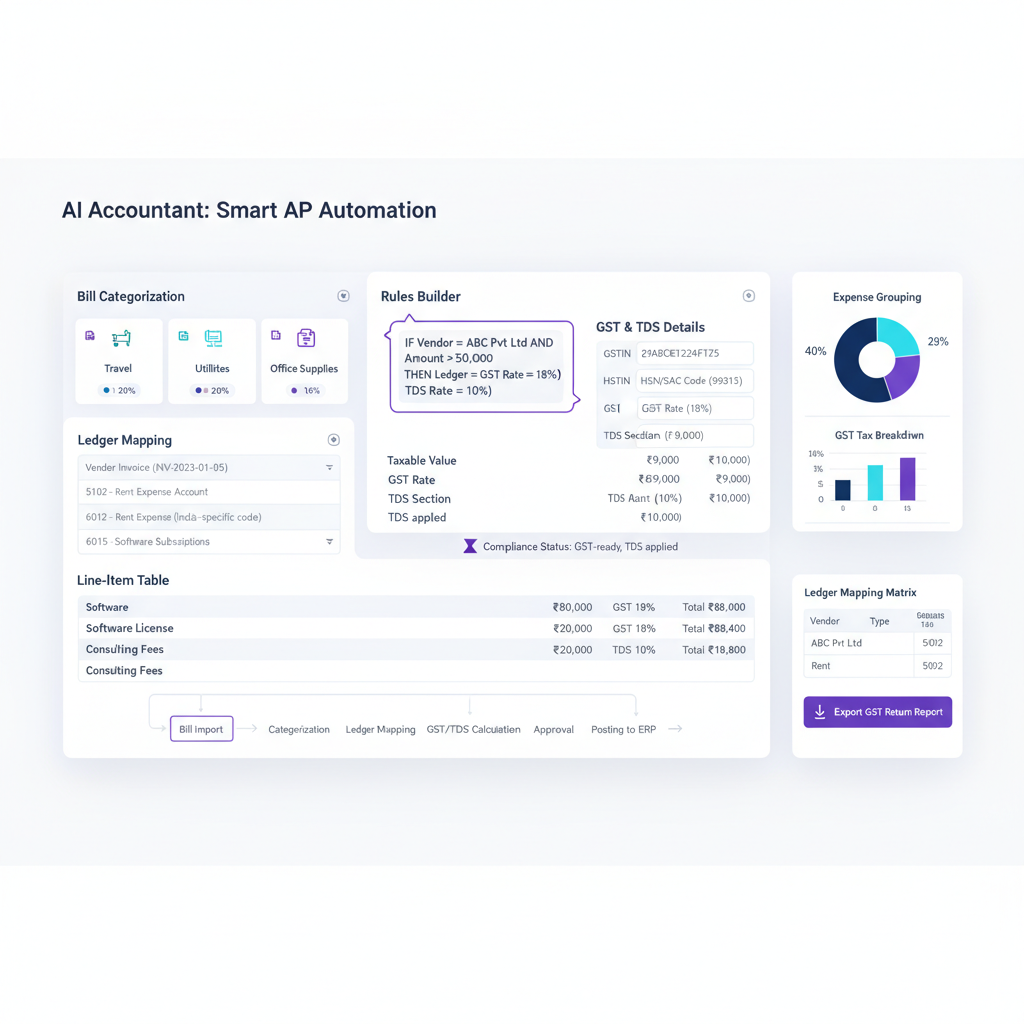
Think of categorization as a repeatable decision engine, it assigns each bill to an expense group, picks the ledger, and applies GST, TDS, or RCM tags based on vendor name, description, GST rate, and amount. General ledger classification is where entries post in Tally or Zoho Books, examples include Electricity Expenses, Advertisement Online, or Courier and Freight Outward. In short, categorization makes the decision, the general ledger records the result.
What is Expense Grouping and Why It Matters
Expense grouping organizes spend into logical buckets such as Sales and Marketing, Operations, Administrative, Finance Costs, and Capex. This enhances P and L clarity, simplifies budgets and variance analysis, and improves decision making, for example, a quick view of total online ad spend versus logistics costs.
Ledger Mapping India: What Makes It Special
India oriented mapping must handle GST types and rates, HSN or SAC codes, ITC eligibility, TDS sections and thresholds, and cost or profit centers. Your system should infer tax logic, select IGST versus CGST plus SGST correctly, and track RCM when relevant, all while aligning with Tally or Zoho Books structures.
Bill Categorization Rules: Why Rules Beat Memory
Bill categorization rules are layered if then logic that route bills consistently, for example, Tata Power invoices go to Utilities and Electricity Expenses, Facebook Ads descriptions go to Sales and Marketing and Advertisement Online at 18 percent. Rules remove subjectivity, ensure consistent classification across staff and locations, and unlock automation.
Why This Matters for Indian SMBs
Faster month end close becomes normal, fewer corrections and reclassifications occur. Cleaner GST and TDS compliance follows, ITC is captured accurately, RCM is handled properly, and TDS sections and rates align with filings. Stronger cash flow visibility emerges, payables are clear, DPO and DRO tracking improves, and spend leakages or cost saving opportunities surface early.
Prerequisites for Success
Agree on a Chart of Accounts
Tailor the Chart of Accounts to your business model, avoid extremes, not everything goes to Miscellaneous, and do not create hundreds of sub ledgers nobody can use. Aim for clarity that supports reporting, founders, accountants, and CAs.
Build a Vendor Master
Maintain legal names and aliases, GSTIN and state, PAN, typical TDS section and rate, usual expense category, payment terms, and mode. Name normalization prevents duplicate vendors and misclassifications.
Identify Data Sources
List PDFs, images, email attachments, portal exports, bank and card statements, and marketplace dashboards for fees and commissions. Know where your bills originate, this drives ingestion and reconciliation.
Choose Your Tools
Use Tally or Zoho Books as the accounting engine. For automation, consider AI Accountant for India specific GST and TDS handling with direct Tally or Zoho integration, and explore QuickBooks, Xero, FreshBooks, and Zoho Expense for capture and categorization. Pair OCR or AI extraction with a rules engine and connectors or APIs for sync.
Step by Step Guide: Creating Your Bill Categorization System
Step 1: Design Your Expense Grouping Taxonomy
Create top level groups such as COGS, Operating Expenses, Administrative Expenses, Sales and Marketing, Finance Costs, and Capex. Under COGS include raw materials, packaging, freight inward, job work. Under Operating and Administrative include utilities, rent and maintenance, staff welfare, office supplies, IT and cloud, logistics and delivery, repairs and maintenance. Under Sales and Marketing include online ads from Meta, Google, and Amazon, offline marketing, events, sales commissions, trade discounts. Finance Costs include bank charges, interest, payment gateway charges. Capex includes machinery, computers, furniture and fixtures. Map these to reporting views, function or nature, and organize cost centers by branch, team, or project.
Step 2: Establish Bill Categorization Rules
Vendor based rules: Blue Dart Express goes to Logistics and Courier and Freight Outward, Mahanagar Gas Limited goes to Utilities and Gas Charges, vendor master drives consistent outcomes.
Keyword based rules: Google Ads or Google Ireland go to Sales and Marketing and Advertisement Online, AMC or Annual maintenance from an IT vendor goes to Repairs and Maintenance IT.
GST rate and HSN or SAC based rules: Use tax codes for routing, and consider Automated GST code prediction in India for robust classification. HSN for raw materials routes to Raw Materials, SAC 9983 routes to advertising, GST at 5 percent from transport requires GTA and RCM checks.
Payment mode rules: Corporate cards may route to specific ledgers or cost centers such as Travel Card or Online Subscriptions Card.
Amount thresholds and recurrence: High value utility like descriptions may be prepaid or capex, recurring monthly charges with similar amounts are likely subscriptions.
Priority and conflict resolution: Set a hierarchy, vendor rules first, then HSN or SAC, then keyword rules, unmatched items go to manual review. Use the most specific rule when multiple triggers fire, log which rule fired for auditability.
Step 3: Master Ledger Mapping for India
Map each expense group to an exact Tally or Zoho ledger, define GST type, mark ITC eligibility, and set default cost centers. For structure and scale, explore ledger mapping automation for Tally and Zoho.
TDS logic: Section 194C for contracts, transport, courier and routine services, Section 194J for professional and technical services and certain SaaS, Section 194I for rent. Infer section from vendor master and bill description, check thresholds and rates, and flag anomalies.
RCM configuration: Identify RCM applicable services such as GTA, legal, or import of services, when vendor is unregistered and SAC is in the RCM list, flag RCM and post output tax liability and corresponding ITC if eligible.
IGST versus CGST plus SGST split: Compare supplier state from GSTIN to your registration state, same state uses CGST plus SGST, different state uses IGST, auto select to prevent common posting errors.
Prepaid, accrual, capex, and opex: Post twelve month insurance upfront to Prepaid Expenses and amortize monthly, create month end provisions for accruals such as utilities, reverse when bills arrive, send long life high value assets to capex with depreciation, keep small consumables and repairs in opex, and document thresholds clearly.
Step 4: Build the Workflow
Upload, collect bills from email, WhatsApp, portals, and physical copies, scan and upload. Review, preparers validate suggested group, ledger, GST or TDS tags. Approve, senior accountants or CAs clear high value or exception items. Sync, post to Tally or Zoho with correct ledgers, taxes, cost centers, and narrations. Define roles and cutoff dates, and maintain an exception queue for duplicates, invalid GSTINs, mismatches, suspected RCM, and TDS anomalies.
Step 5: Test and Iterate
Pilot with two months of bills, measure rule hit rate, track rework or manual overrides, refine rules, add vendor patterns, document edge cases, and maintain a rule change log with date, change, reason, and owner.
Step 6: Operationalize and Document
Create a living playbook, list taxonomy and rules with priority, provide ledger mapping with GST, TDS, and RCM logic, document SOPs for exceptions, train the team with business specific examples, set a monthly review cadence, and update rules for new regulations or business changes.
Practical Examples and Templates
D2C Brand Example
Meta Platforms, Google India, and Amazon Advertising route to Sales and Marketing Online Ads and Advertisement Online with IGST or CGST plus SGST at 18 percent, ITC eligible. Shiprocket, Delhivery, and Bluedart route to COGS Logistics and Courier and Freight Outward. Break marketplace invoices into components, channel fees to Sales and Marketing, shipping to Logistics, returns or penalties to separate ledgers when material. Packaging vendors go to COGS Packaging and Packing Material Consumed using HSN rules.
Services Startup Example
Freelancer invoices go to Operating Contracted Services and Professional Fees Contractors with TDS under Section 194J or 194C as applicable. Overseas SaaS without GSTIN may trigger import of services and RCM, route to Software Subscription SaaS with RCM logic. Rent goes to Rent Office Premises with TDS Section 194I. Travel reimbursements use Employee Reimbursements Travel, map line items for reporting, and handle ITC carefully.
Manufacturing MSME Example
Use HSN based rules to route raw materials to Raw Materials Consumed with correct GST and inventory linkages. Separate inward and outward logistics vendors, or reference POs. For machinery maintenance, capitalize items above threshold that extend asset life to Plant and Machinery with depreciation, routine small repairs stay in Repairs and Maintenance Plant. Apply IGST for interstate suppliers and assign cost center to the relevant plant.
Sample Mapping Table
Expense GroupingLedgerGST TagTDS SectionCost Center ExampleOnline Ad SpendAdvertisement – OnlineInput IGST or CGST plus SGST194C or 194JDigital MarketingCourier and Freight OutwardCourier and Freight – OutwardInput GST at 5 or 18 percent194CE com Dispatch NCRElectricity OfficeElectricity Expenses – OfficeInput CGST plus SGSTN AHead Office MumbaiRent OfficeRent – Office PremisesInput CGST plus SGST194IBangalore OfficeSoftware Subscription SaaSSoftware Subscription – SaaSInput IGST or CGST plus SGST or RCM194JIT Product TeamRaw Materials PlasticsRaw Material – PlasticsInput GST at 18 percentN APlant GujaratBank ChargesBank ChargesExempt Non GSTN AFinanceMachinery CapexPlant and Machinery Fixed AssetInput IGST or CGST plus SGSTN APlant Maharashtra
Automation Options for Scaling
Adopt OCR or AI for data extraction, vendor names, invoice numbers, dates, GSTINs, line items, and taxes. Use auto prediction of categorization that learns ledger, GST type, cost center, and TDS section from history, users confirm or correct. Enable bi directional sync with Tally and Zoho to pull masters and push approved vouchers, preserve voucher numbers and narrations. Build dashboards for expense grouping trends, cash burn, DPO and DRO, ITC utilization, vendor concentration, and anomaly detection.
Governance, Compliance, and Audit Readiness
Audit trails: Log rule changes with who and why, track approvers and timestamps per bill, this creates accountability and supports audits.
Align with GSTN: Match your purchase register to GSTR 2B regularly, monitor ITC eligibility, reversals, and vendor mismatches, prevent surprises during audits.
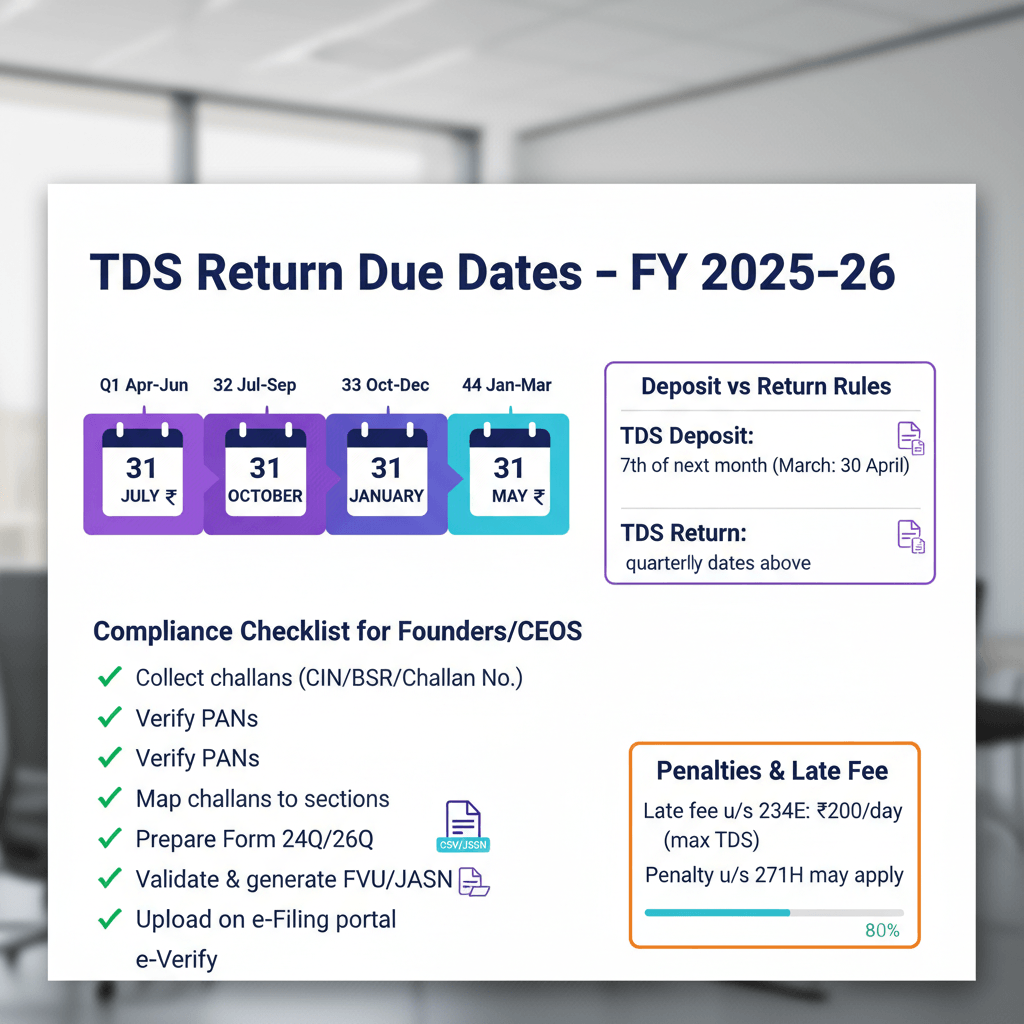
Reconcile TDS: Match TDS ledgers with Form 26Q and 26AS or Traces, manage lower deduction certificates, and thresholds, avoid notices and penalties.
Year end clean up: Review prepaid schedules and amortizations, reverse accruals not needed, ensure capex is capitalized with correct depreciation.
Metrics to Monitor
Track rule hit rate, manual override rate, time to close, ITC utilization percentage and mismatches, TDS accuracy and corrections, exception count and ageing, payables ageing accuracy, and posting accuracy to identify rework.
Common Pitfalls and Fixes
Over granular grouping: Too many ledgers reduce usability, start focused and expand only when needed.
Vendor name variations: Normalize names and use aliases, map variants of HDFC Bank to one vendor record.
Ignoring RCM or TDS: Hard code RCM and TDS checks, flag high risk vendors for review.
Mixed tax bills misclassified: Split line items with different rates, enforce training for detection and handling.
Advances and credit notes treated as expenses: Use advance and clearing ledgers, route credit notes to returns or adjustments accounts.
Quick Checklists
Kickoff Checklist
- CoA finalized and approved
- Vendor master ready with GSTIN, PAN, TDS sections
- Initial expense grouping taxonomy agreed
- Starter rule set for top vendors and common categories
- Mapping table linking groups to ledgers, GST, TDS, cost centers
Month End Checklist
- All bills uploaded, exception queue cleared
- GST validations complete, tax type and rate checks, RCM flagged and processed, purchase register versus GSTR 2B sanity checked
- TDS validations done, section wise review, exceptions above threshold flagged
- Sync audit confirms approved bills posted to Tally or Zoho, spot check large entries
- Dashboard sanity, no unexplained spikes, key ratios look reasonable
Scaling Checklist for CA Firms
- Multi entity templates for D2C, services, manufacturing
- Reusable standardized rule libraries
- Maker, checker, approver controls and hierarchies
- Central rule change log, client specific deviations documented
Closing Thoughts
A robust system replaces late night error prone work with repeatable, auditable processes. Start simple, adopt the taxonomy, build rules for top vendors, finalize India specific ledger mapping, then layer automation and integrations. Your team will classify faster, and spend more time using numbers to run the business. The best time to build this system was day one, the second best time is now.
Clean books at reasonable hours are absolutely possible.
FAQ
How should a CA structure expense grouping versus ledger mapping for an India entity using Tally or Zoho?
Use expense grouping as the analytic view, Sales and Marketing, Operations, Admin, Finance Costs, Capex, then map each group to precise ledgers with GST type, ITC eligibility, TDS sections, RCM logic, and cost centers. For scale, tools like AI Accountant help standardize mapping and sync entries cleanly.
What rule hierarchy should I implement to minimize misclassification, vendor rules, HSN or SAC, or keywords?
Prioritize vendor rules first, then HSN or SAC or GST rate, then keyword rules, unmatched items go to manual review. Capture the firing rule for audit trails. AI Accountant supports layered rules and provides an exception queue for edge cases.
How do I handle RCM for transport GTA services, and what checks prevent wrong postings?
Check vendor registration status and SAC classification, GTA at 5 percent often falls under RCM, post output tax liability and the corresponding ITC when eligible, and block non compliant postings. Automate checks in your rule engine, AI Accountant can flag suspected RCM and route them for approvals.
What is the best way to split IGST versus CGST plus SGST automatically, and avoid common Tally errors?
Compare supplier state from GSTIN to your registration state, same state uses CGST plus SGST, different state uses IGST. Implement this as a deterministic rule so it never relies on memory. AI Accountant applies this logic consistently during categorization and sync.
How do I set up TDS sections 194C, 194J, 194I within categorization, and prevent missed or wrong deductions?
Infer section from vendor master and bill description, set thresholds and rates, and run anomaly checks for zero TDS where required or wrong section selection. Use maker, checker reviews for heavy TDS transactions. AI Accountant can auto suggest sections and flag exceptions in real time.
How should I treat mixed GST rate bills, and ensure ITC accuracy line item wise?
Enforce line item level classification, do not post the entire bill under a single rate, split items, apply correct GST tags, and ITC eligibility per item. The review stage should highlight rate mismatches, AI Accountant reads line items and helps route each part correctly.
What approach should I take for prepaid expenses and accruals, and how do I automate amortization and reversals?
Post upfront payments to Prepaid Expenses and amortize monthly, accrue month end provisions for utilities or services where bills have not arrived, reverse when actual bills post. Set schedules linked to ledgers, and automate journals via your workflow tool, AI Accountant can generate monthly entries for amortization and reversals.
How do I reconcile TDS ledgers against Form 26Q and 26AS or Traces with minimal manual work?
Maintain section wise ledgers, run periodic reconciliations to 26Q and 26AS, track lower deduction certificates, and thresholds. Exception reporting should flag mismatches quickly, AI Accountant provides reconciliation views and alerts for discrepancies.
What governance should I enforce, audit trails for rule changes, approvals, and voucher syncs?
Log rule changes with who and why, capture approver identity and timestamps, and retain sync acknowledgements with voucher numbers. This satisfies audit expectations and creates accountability. AI Accountant maintains audit trails across categorization, approval, and posting.
How can a CA firm standardize across multiple clients, templates, rule libraries, and maker checker controls?
Create multi entity templates by industry, standard rule libraries for common vendors and patterns, and enforce maker, checker, approver roles with monthly cutoffs. Keep a centralized rule change log with client specific deviations. AI Accountant supports multi client governance with reusable templates.
What metrics should I track for process health, rule hit rate, manual override rate, ITC or TDS accuracy, and exception ageing?
Monitor monthly rule hit rate, manual overrides, time to close, ITC utilization and mismatches, TDS accuracy and corrections, exception counts and ageing, and posting accuracy. These reveal bottlenecks and drive improvements. AI Accountant surfaces these metrics in dashboards for continuous optimization.
How do I integrate categorization with Tally or Zoho while preserving voucher numbers and narrations?
Use bi directional sync that pulls ledgers, cost centers, and vendors, then pushes approved vouchers back, preserving voucher numbers and narrations. The workflow should minimize rework and prevent duplicates, AI Accountant handles this seamlessly for India specific setups.

Rohan Sinha is a fintech and growth leader building aiaccountant.com, focused on simplifying accounting and compliance for Indian businesses through automation. An IIT BHU alumnus, he brings hands-on experience across 0 to 1 product building, growth, and strategy in B2B SaaS and fintech.