-01%201.svg)
Key takeaways
- Automated cash flow management connects banks, gateways, billing, and expense apps, so you see inflows and outflows in one live place, with fewer surprises and faster decisions.
- A direct, 13 week forecast with alerts, categorization rules, and daily reconciliation keeps you cash positive and compliance ready in India.
- AI Accountant blends a CA led team with a live dashboard for burn rate, runway, tax dates, and bank analysis, so you get execution plus visibility without hiring a large in house team. See how the dashboard works.
- Link your cash plan to GST, TDS, advance tax, and ROC, so statutory outflows are planned, not a shock.
- Measure forecast accuracy weekly, if variance crosses 10 percent, fix tags, reconciliation gaps, and rules before scale amplifies errors.
Introduction to automated cash flow management
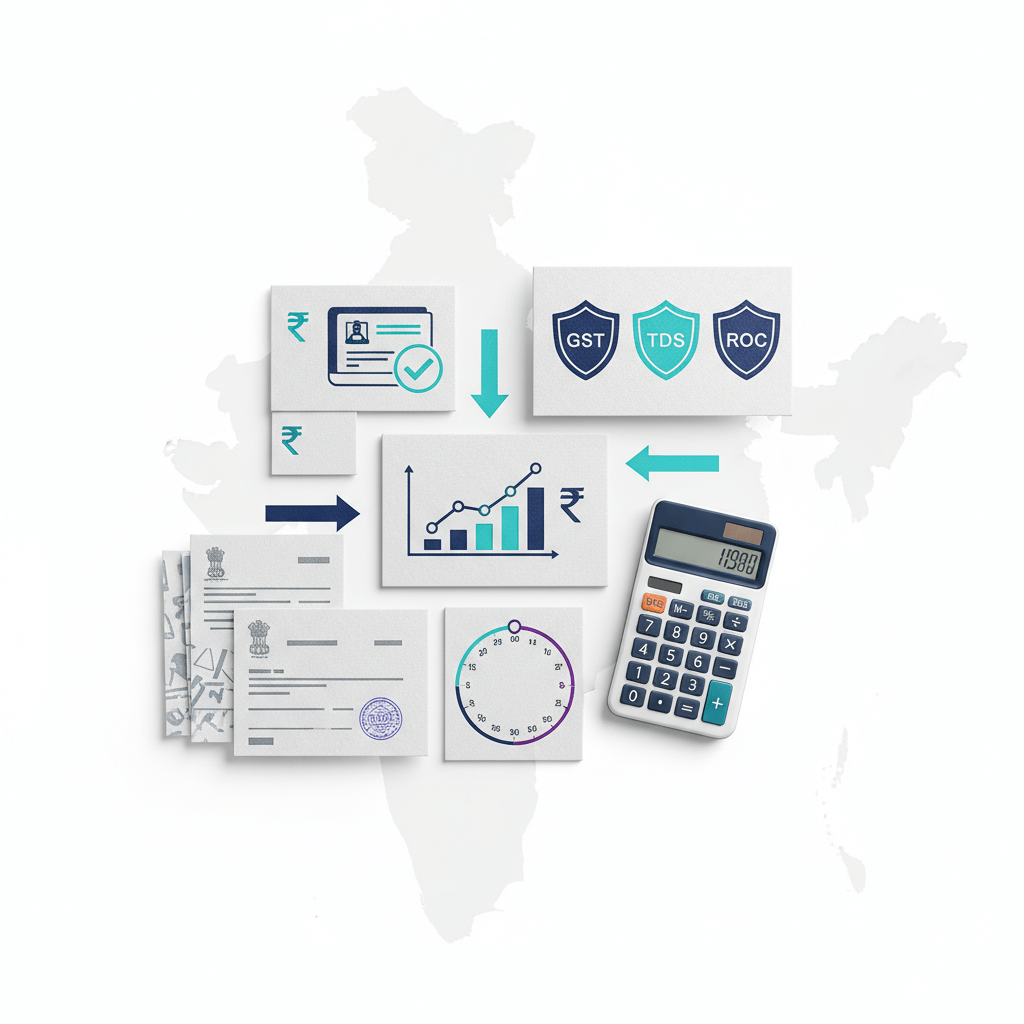
Automated cash flow management gives you one live view of money in and money out. It watches inflows, it watches outflows, it matches bank lines to invoices, it sorts every entry into the right bucket, it forecasts the next few weeks, and it pings you when something needs action. You get fewer surprises, you avoid last minute scrambles, you stay cash positive more often.
This is where AI Accountant can help. Our CA led team runs the work, our dashboard gives a clear view of cash trends, burn rate, runway, and tax dates. Explore the cash dashboard. You see the full picture while we keep the engine running.
Bottom line: real time visibility plus disciplined workflows equal fewer cash fires and better sleep.
What is automated cash flow management
Automated cash flow management uses connected systems to plan, track, and improve the flow of cash. It connects banks, payment gateways, billing, and expense apps so data moves without manual effort. It runs rules to tag every transaction, performs daily reconciliation, forecasts your 13 week cash position, sends alerts when risk shows up, and maintains a clean audit trail of who did what.
Manual spreadsheets are slow and error prone, they hide risks until they become large. Automation brings near real time visibility, lets you decide early, act with confidence, and link cash planning with GST, TDS, and advance tax, so your plan is real and timely.
References: Taulia, IntelliChief, Billtrust, Corcentric
Manual vs automated cash flow management that difference matters
Speed
Manual reconciliation can take days or weeks. Automated cash application runs in real time or near real time, so your cash view is current when you make decisions.
Accuracy and controls
Spreadsheets can break, formulas fail, duplicates creep in. Automated systems enforce rules, reduce errors, and lower fraud risk, while keeping a full audit trail for governance.
Decision timing
Old data means choices that lag reality. Automation delivers fresh data, so you throttle spend or push collections before cash gets tight.
Compliance and audit
Manual files scatter across email and drives. Automation centralizes records, tracks changes, and links your compliance calendar with your cash plan, which reduces missed filings and late fees.
Scale
Manual processes scale headcount with volume. Automated order to cash and procure to pay flows handle more invoices and receipts without adding people at the same ratio.
Further reading: Billtrust, IntelliChief, Corcentric
Why automated cash flow management matters now
Payment velocity in India
UPI and instant transfers move cash quickly, so your reaction window is short. You need a dashboard that shows position by the hour, not just at month end.
Compliance complexity
GSTR 1, GSTR 3B, GSTR 9 and 9C, TDS challans, quarterly advance tax, and ROC filings hit cash at set times. Automation links dates to cash, so you pay on time and hold reserves in advance.
Economic uncertainty
Startups, freelancers, and small businesses must watch burn and runway often. Scenario planning answers what if questions, for example, if collections slip 20 percent, how many weeks of cash remain.
More context: Corcentric, Trovata
The five pillars of automated cash flow management
Pillar 1 data ingestion
Connect bank feeds, payment gateways, invoicing tools, and expense apps into one system. Examples include ICICI, HDFC, Axis bank feeds, gateways like Razorpay, PayU, and Instamojo, and billing from your accounting software. See gateway integration notes. This base layer powers everything else.
Pillar 2 categorization and rules
Tag every transaction to the right customer, vendor, ledger, GST classification, and tax bucket such as TDS or advance tax. Use rules for scale. Clean tags equal clean forecasts.
Pillar 3 reconciliation
Run daily reconciliation of bank and gateway statements, match inflows to invoices and outflows to vendor bills, and cut bank suspense. Learn about automated reconciliation.
Pillar 4 forecasting engine
Use a direct cash method, start weekly, roll forward to a 13 week outlook. List expected collections, scheduled payables, payroll, GST, TDS, and advance tax, then layer scenarios, base, optimistic, and conservative.
Pillar 5 alerts and workflows
Set triggers, for example, alert when cash drops below 15 days of burn, when GST liability crosses a threshold, or when invoices age past 30 days, then nudge teams to act.
Pillar 6 reporting and governance
Publish dashboards with trends, burn, runway, DSO, DPO, cash conversion cycle, and tax dates. Maintain audit trails and role based access for control strength.
Evidence base: Billtrust, NetSuite, IntelliChief, Corcentric, Trovata
Key metrics to track in automated cash flow management
- Operating cash flow versus net income: reconcile monthly to see if profits convert to cash or sit in working capital.
- Burn rate and runway: update weekly, the operating heartbeat for startups and solo teams.
- DSO, DPO, inventory days: measure the cash conversion cycle, shorten DSO, balance DPO, and right size inventory days.
- Collections effectiveness index: a leading signal for AR quality and cash application success.
- Tax provisions: watch GST, TDS, and advance tax as planned outflows in the model.
- Forecast accuracy: compare actual versus predicted weekly, investigate variance beyond 10 percent.
Useful reads: Billtrust, IntelliChief, Corcentric
Quick wins to automate first for cash flow
Accounts receivable automation
- Auto create GST compliant invoices with clear due and expected receipt dates.
- Send reminders at 15, 30, and 45 days overdue.
- Apply interest or late fees if policy allows.
- Use robotic steps to fetch payment status from portals when needed.
Accounts payable automation
- Schedule batch payments by due date, align outflows with collections.
- Flag early payment discounts, for example, two percent within ten days.
- Use approvals to prevent unallowed spend.
Reconciliation automation
- Reconcile bank and gateway activity daily with auto match rules.
- Do a weekly cash close to catch gaps early.
Compliance driven cash holds
- Auto compute GST from GSTR 1 and set funds aside 20 days before due date.
- Flag TDS challan dates and expected outflows.
- Set aside advance tax quarterly based on year to date profit.
- Include ROC fees in the 13 week forecast.
Payroll and TDS
- Auto compute payroll TDS and sync pay runs to the cash calendar.
Recurring expenses
- Schedule rent, software, and insurance so nothing surprises the forecast.
Background: IntelliChief, Billtrust, Corcentric
Forecasting inside automated cash flow management for clarity
Direct method with weekly and 13 week outlook
List expected collections by customer and week, list payables by vendor and due date, add payroll, TDS, GST, and advance tax, then capex or one time spend. Sum by week to see runway and when to pull levers, bring forward collections, delay non critical spend, or arrange short term funds.
Scenario planning
Create three models, base as planned, optimistic with faster collections and better discounts, conservative with 20 percent slip and unplanned capex. If conservative runway falls below eight weeks, cut spend, push collections, and explore bridge funding.
Seasonality and events
Adjust for peaks and troughs, for example, GST annual filings often raise outflows, year end settlements spike AP, and big campaigns lift AR while delaying cash timing. Bake this into the plan.
Further reading: Trovata, Corcentric
Implementation roadmap to go from manual to automated in 6 weeks
Week 1 baseline audit
- Map inflows, invoices, advances, loans, refunds.
- Map outflows, vendor bills, payroll, GST, TDS, advance tax, ROC, capex.
- Note reconciliation delays and pain points.
- Build a compliance calendar with all due dates.
Week 2 data hygiene
- Clean vendor and customer masters, bank accounts, GST, PAN, addresses.
- Define spend categories tied to GST HSN and tax buckets.
- List all bank accounts and gateways, include foreign currency accounts.
Week 3 integrations
- Connect all bank feeds.
- Link invoicing and accounting tools for AR and AP.
- Integrate gateways like Razorpay, PayU, Instamojo to auto tag receipts and fees.
- Set up payroll integration or import templates for TDS and net pay.
Week 4 rules and reconciliation
- Build categorization rules for customers, vendors, and tax treatment.
- Turn on daily reconciliation.
- Run a weekly cash close and refine rules.
Week 5 forecast and alerts
- Build a 13 week direct model with weekly buckets.
- Set alerts for low cash, rising GST, and AP aging beyond 45 days.
- Place the compliance calendar on the dashboard next to cash.
- Test a 10 percent collection shortfall scenario.
Week 6 pilot and improve
- Pilot with one entity or account.
- Track forecast versus actual weekly, refine if variance exceeds 10 percent.
- Document changes and reasons.
- Roll out once accuracy passes 85 percent.
Common pitfalls in automated cash flow management to avoid
- Garbage in, garbage out: enforce mandatory fields and review categories weekly.
- Over reliance on automation: keep CA or finance leader reviews for anomalies and large variances.
- Ignoring statutory dates: never leave out GST, TDS, advance tax, and ROC timing.
- Fragmented communication: centralize documents and notes, tie them to transactions.
- Not measuring success: track forecast accuracy, DSO and DPO trends, alert response time, recalibrate if accuracy dips below 80 percent.
Guides: IntelliChief, Corcentric
How AI Accountant Virtual Accounting operationalizes automated cash flow management
Dashboard and real time visibility
- Financial overview shows income, expense, and cash balance at a glance.
- Cash flow trends, burn, and runway update weekly and monthly.
- AI insights flag forecast gaps, unusual drains, and tax deadlines.
- Recent transactions and bank analysis are auto categorized and flagged for review.
- Compliance dates sit next to your cash plan, GSTR 1, 3B, GST annual, TDS, advance tax, and ROC are visible.
- Central document hub for invoices, receipts, bank statements, and tax papers.
- Built in chat and task stream keeps teams aligned on next steps.
CA led services that power automation
- Monthly bookkeeping and ledger scrutiny to keep masters and tags clean.
- AR and AP management, reminders, discounts, approvals.
- Daily bank and gateway reconciliation with weekly exception review.
- Cash flow preparation, 13 week forecasts, scenarios, and MIS.
- GST compliance, GSTR 1, 3B, 9, 9C, and e invoice guidance.
- TDS advisory and compliance, challans, returns.
- Payroll TDS with salary structuring for tax efficiency and cash clarity.
- Income tax filing and international advisory when needed.
- ROC and MCA compliance with fee planning inside the cash model.
Value you can feel
One managed service replaces email, Excel, and scattered chats. AI Accountant brings real time visibility plus expert execution, audits the forecast, flags risks early, and times GST, TDS, and advance tax with AR and AP, which reduces errors and late fees, and builds trust in your numbers.
Use cases and mini examples for automated cash flow management
SaaS startup
Annual plans on quarterly terms, automated reminders and a clear dunning ladder reduce DSO from 45 to 30 days. The 13 week model includes known prepayments, so no false cash alarms. Burn and runway are visible daily.
E commerce brand
Daily gateway reconciliation auto tags orders and fees. SKUs with varied GST rates are grouped, GST outflows are exact and on time. Inventory buys follow the 13 week plan, which tightens working capital and avoids stockouts.
Freelancer or creative agency
Milestone billing with auto reminders smooths inflows. A simple set aside for GST and advance tax sits in the model, so quarter end brings no shock. The forecast guides hiring and tool purchases with confidence.
Small company private limited
ROC fees and GST annual reconciliation sit inside the plan. AP batches align with likely collections, so supplier payments do not run ahead of receipts. The board gets a clear MIS with runway and scenarios.
Checklist of tools and features for automated cash flow management
- Bank and payment gateway integrations for real time feeds.
- Rule based categorization with vendor mapping, GST HSN, and tax buckets.
- AR and AP automation, invoices, reminders, discounts, batch payments.
- A 13 week direct cash forecast with weekly buckets.
- Scenario planning, base, optimistic, conservative, with stress tests.
- Compliance calendar sync, GST, TDS, advance tax, ROC.
- Alert thresholds for low cash, aging AR or AP, upcoming compliance.
- AI insights for anomalies and forecast variances.
- Document repository for invoices, receipts, statements, filings.
- Collaboration hub with comments and approvals tied to transactions.
- Audit trails logging every change with user and time.
- Role based access controls with least privilege.
- Exportable MIS for boards and lenders.
Tools to consider for automated cash flow management
Privacy security and controls in automated cash flow management
Data access controls
Use role based permissions, finance lead sees and edits all, accountants categorize and reconcile, founders see dashboards, vendors only see their invoices if portal access is granted.
Audit trails
Log every change, approval, and forecast update, which supports internal control, audits, and investor diligence.
Secure bank connections
Connect via OAuth or secure API tokens, avoid storing online banking passwords in spreadsheets, encrypt data in transit and at rest.
Document security
Use a central, encrypted repository with backups and access logs, rather than email and drives that leak and lose context.
Conclusion on automated cash flow management
Automated cash flow management turns cash planning from a monthly scramble into a calm, daily habit. By connecting inflows, outflows, and compliance in one place, you gain visibility, speed, and control, you cut errors, avoid penalties, and make better calls. Start with data hygiene and a clear compliance calendar, set up a 13 week direct forecast with alerts, automate AR, AP, and reconciliation, then link GST, TDS, advance tax, and ROC to the cash plan, measure forecast accuracy and improve rules weekly.
For a simple path, AI Accountant Virtual Accounting brings a CA led team plus a live dashboard, with cash trends, bank analysis, burn and runway, and compliance calendars in one view, while experts run the engine behind the scenes.
References: IntelliChief, Billtrust, Corcentric
Ready to see automated cash flow management in action
Book a demo of AI Accountant Virtual Accounting. See how your cash, compliance, and daily work can live in one clear system that your team will actually use.
Get started with AI Accountant
FAQ
How is automated cash flow management different from budgeting for an Indian SME or startup
Budgeting sets planned spend and revenue targets, while automated cash flow management predicts actual cash position using live collections, payables, payroll, and statutory events like GST and TDS. Budgets are intentions, forecasts are data driven predictions, updated weekly and audited against bank reality.
What forecast accuracy should a finance head expect and how often should we refresh the model
With clean masters and strict rules, 13 week direct forecasts can reach 80 to 90 percent accuracy on operating cash. Refresh weekly with new bank and gateway data, reforecast monthly to fold in actuals and revise assumptions, track variance by driver, tags, timing, or non recurring items.
Do we need to replace our accounting software to automate cash flow
Not necessarily, many automation layers sit on top of your ledger. AI Accountant integrates with QuickBooks, Xero, Zoho Books, Tally, and FreshBooks, your ledger remains the source of truth, automation adds forecasting, alerts, reconciliation, and governance.
Can automation handle multiple bank accounts, gateways, and entities with intercompany flows
Yes, connect operating, escrow, and forex accounts, map gateways, and build entity level forecasts with a group roll up. Use elimination rules for intercompany so group cash is not overstated.
How should GST, TDS, and advance tax be modeled to avoid last minute cash crunches
Treat each as dated line items, estimate GST from GSTR 1 net of ITC with payment about 20 days after month end, model TDS challans based on accruals and due windows, and plan advance tax across June, September, December, and March, include ROC fees annually inside the 13 week view.
What controls does a CA expect to see for reconciliation and audit readiness
Daily bank and gateway reconciliation, exception queues cleared weekly, maker checker on vendor creation and payment batches, audit trails for changes, and a document link for every payment, invoice, contract, or PO. AI Accountant operationalizes these controls with CA oversight.
How do founders use alerts without alert fatigue
Set thresholds that tie to business reality, for example 15 days of burn, GST liability above a set amount, AR aging beyond 30 days for top customers. Review thresholds quarterly, silence non critical alerts for small tickets, and route actionable items to the right owner.
What is the fastest path to reduce DSO in a services or SaaS business
Send GST compliant invoices promptly, include clear due dates, automate reminders at 15, 30, 45 days, offer small discounts where justified by cost of capital, and escalate with a gentle dunning ladder. AI Accountant deploys these steps and tracks collections effectiveness index weekly.
How do we treat refunds, chargebacks, and gateway fees in the forecast
Create categorization rules to tag refunds and chargebacks to the right product and tax treatment, reconcile daily, and forecast net receipts by subtracting typical fees and refund rates by channel, so AR and GST numbers stay accurate.
What governance should boards and lenders expect in a cash flow process
Monthly MIS with cash trend, burn, runway, DSO, DPO, forecast versus actual variance with commentary, role based access, and complete audit trails. AI Accountant provides exportable MIS and maintains change logs that support diligence.
Can scenario planning genuinely change outcomes or is it just a report
Scenarios drive earlier action, if the conservative case shows less than eight weeks of runway, you can cut discretionary spend, bring collections forward, reorder inventory timing, or arrange bridge funding, which materially changes outcomes.
How do we measure success of automation beyond time saved
Track forecast accuracy trend, DSO and DPO movement, variance resolution time, reduction in late fees and penalties, and cycle time from invoice to cash. AI Accountant benchmarks these metrics and flags regressions with AI insights.
What data hygiene tasks should our CA firm or virtual accounting partner own versus our team
Your team should confirm masters, legal names, GST, PAN, bank details, approval matrices. The partner should enforce category discipline, build and maintain rules, monitor exceptions, and run reconciliation. AI Accountant handles rules, reconciliation, and reviews, while you approve exceptions and policy changes.
How do we incorporate seasonality, for example festive peaks, and annual GST events
Model season peaks with uplift factors on AR and planned inventory, schedule GST annual reconciliation and ROC fees inside the 13 week calendar, and increase buffers for working capital during peaks. Revisit assumptions after each season for continuous improvement.
Is a CA managed virtual service like AI Accountant suitable for venture backed companies with board reporting needs
Yes, the service combines CA oversight with systemized workflows, builds board ready MIS, maintains audit trails, and integrates with your ledger stack, which meets investor expectations for control, accuracy, and cadence.