-01%201.svg)

Key takeaways
- AI financial document management gives you one clean home for invoices, bank statements, GST and TDS returns, payroll, and contracts, with a clear audit trail and version history.
- OCR, NLP, and machine learning capture fields from complex tables, validate GST and TDS rules, reconcile bank lines, and route approvals with maker, checker controls.
- You get faster month closes, fewer penalties, and real time visibility through dashboards, alerts, and audit ready packs that your CA and founders can trust.
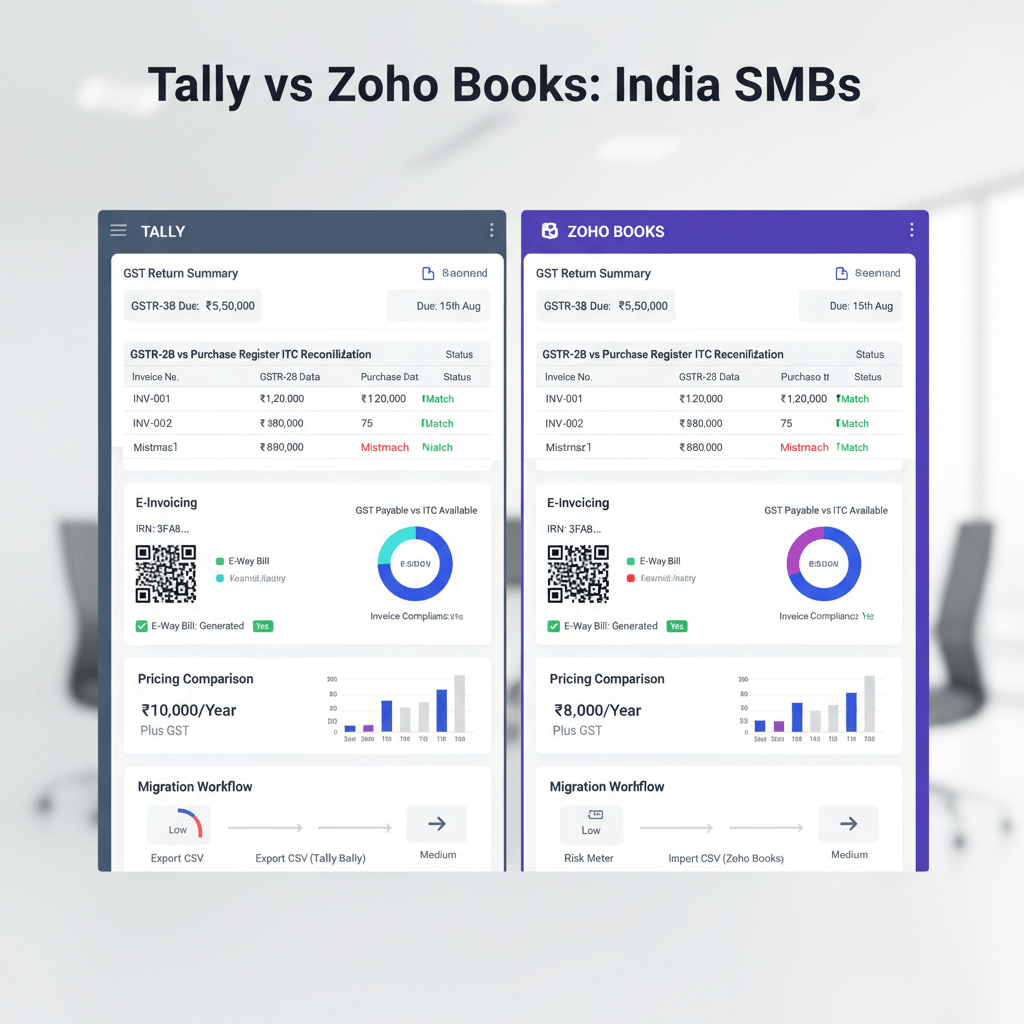
- Integrations with Tally, GST portal, banks, and payment gateways enable straight through processing from ingestion to ledger and filings.
- ROI shows up as reduced processing time per document, higher accuracy, shorter approval cycles, faster audits, and fewer misses on compliance dates.
- AI Accountant delivers the technology plus a CA led managed service, so you get an AI system, a qualified team, and a live dashboard in one place.
Introduction to AI financial document management
Your finance files live everywhere, invoices hide in email threads, bank statements sit in chats and drives, GST filings are buried in folders, payroll sits in Excel, contracts scatter across desktops. It is messy and risky. AI financial document management fixes this by capturing, reading, sorting, checking, and securing every finance document end to end. You get one source of truth, faster closes, fewer misses on GST and TDS, and a clear audit trail that your CA team and leadership can see in real time.
Discover how AI capture, classification, validation, and workflows remove manual work and reduce risk, while improving audit readiness and decision speed.
What is AI financial document management
AI financial document management is a system that uses OCR, NLP, and machine learning to read and manage finance documents. It goes beyond storage or keyword search, it performs intelligent capture and intelligent document processing, extracts the right fields, understands tables, flags issues, routes work, and keeps complete logs.
Document types it handles
- Invoices, bills, receipts, purchase orders, credit notes
- Bank statements and payment gateway reports
- GST and TDS returns, GSTR 1, GSTR 3B, 24Q, 26Q
- ROC filings such as MGT 7 and AOC 4
- Payroll files, vendor and customer contracts
Key fields it pulls
- Invoices and bills, vendor name, GSTIN, HSN or SAC, line items, quantities and unit prices, tax rates and totals, invoice and due dates
- Bank statements, transaction dates, narrations and references, amounts, running balances
- GST returns, outward supplies, input tax credit claims, tax liabilities and payments
- TDS returns, deductee PAN, amounts deducted, challan details and dates
- ROC filings, shareholder data, financial summaries, attachments and certifications
These fields flow to ledgers, reconciliations, compliance packs, and MIS without manual typing, with version control across the lifecycle.
Sources, LeewayHertz, ShareFile, Weaver
Why now for AI financial document management
Finance teams struggle because documents are spread across email, drives, and chats, manual entry is slow and error prone, reconciliations take too long, versions drift, closes slip, and founders and CFOs lack real time visibility. Missed GST or TDS deadlines create penalties and notices. AI financial document management centralizes files, automates capture, enforces validations, and maintains audit logs, so teams work in one place with the right controls and clear accountability.
Sources, ShareFile, LeewayHertz, Weaver
How AI financial document management works end to end
- Ingestion, pull from email, mobile uploads, scanner apps, fetch via APIs and webhooks from GST and MCA portals and payment gateways, ingest bank feeds and statement PDFs.
- AI OCR and NLP, read text and tables, identify entities like vendor, GSTIN, PAN, HSN or SAC, suggest GL codes from patterns and history.
- Classification and tagging, sort by vendor, document type, period, GSTIN, cost center, project, and status, auto tag drafts, posted, approved, reversed.
- Validation, check duplicates and sequence gaps, perform PO, invoice, receipt three way match, validate GST rates, reverse charge, and place of supply rules, verify PAN and GSTIN formats, flag amounts that do not add up.
- Reconciliation, tie bank lines to ledger entries, reconcile payment gateway settlements, update AR and AP aging, link receipts to invoices.
- Workflows, route by rules for maker and checker, send exceptions to queues, nudge for missing documents.
- Storage and retrieval, keep version history, apply retention rules, enable fast search by vendor, amount, period, or tag, maintain immutable audit logs.
- Insights and alerts, show compliance calendars with upcoming GST, TDS, and ROC dates, detect anomalies, track filing status.
- Exports and syncs, push clean data to Tally, Zoho Books, or QuickBooks, prepare packs for GST filings, support GST portal and MCA ROC exports.
This enables straight through processing, people step in only for exceptions or approvals.
Sources, LeewayHertz, ShareFile, Weaver
Key features to look for in AI financial document management
Accuracy
- Advanced OCR for complex tables and multi page bills
- Multilingual invoice support for India and beyond
- Smart field extraction with confidence scores
Controls
- Role based access control
- Maker checker approvals with clear steps
- Immutable logs for every view, edit, and export
Compliance
- Support for e invoice, GST, and TDS flows
- Retention policies aligned to statutory needs
- Ready packs for audits
Integrations
- Connectors for Tally, QuickBooks, Razorpay, and the GST portal
- Open APIs for banks and ERPs
Usability
- Simple dashboard with KPIs and a compliance calendar
- Fast search and filters
- Comment threads for collaboration with your CA team
AI extras
- Anomaly detection for odd patterns or outliers
- Auto coding of expenses with machine learning
- LLM search that answers questions and returns the right documents
Security
- Encryption at rest and in transit
- PII masking in views and exports
- Data residency choices
Sources, LeewayHertz, ShareFile, MetaViewer, Weaver
Practical use cases for AI financial document management
Accounts payable automation
- Capture bills from email or portal, invoice automation for accounting
- Three way match with PO and GRN
- GST rate checks and reverse charge validation
- Approval routing, posting, and payment scheduling
Accounts receivable
- Validate e invoice details
- Match collections to invoices
- Alerts on short pay or deductions
Banking and reconciliation
- Auto reconcile bank statements to the ledger, automated reconciliation services in India
- Tie payment gateway settlements to orders and refunds
- Flag unknown transactions for review
Compliance packs
- Prepare and track GSTR 3B and GSTR 9 with linked workings
- Support TDS 24Q and 26Q filings with challan mapping
- Build ROC AOC 4 and MGT 7 document sets
Month end close
- Capture accruals from vendor statements
- Post asset invoices to the fixed asset register
- Match inventory documents for valuation
Audit readiness
- Indexed workpapers linked to source documents
- Variance logs with notes and approvals
- Read only auditor access with time bound control
Sources, LeewayHertz, ShareFile, DFIN Solutions
Security, compliance, and governance in AI financial document management
Strong controls matter in finance. An effective AI document system enforces role based access and segregation of duties, locks down approvals, and maintains immutable audit trails with time stamps. In India, look for GSTN and e invoice support, MCA and ROC coverage for annual filings, TDS returns and challan mapping, and retention rules aligned to the IT Act and tax regulations. On security, expect encryption, backups, anomaly monitoring, alerting, PII masking for shared packs, and data residency options to meet policy needs.
Sources, ShareFile, MetaViewer, LeewayHertz, Weaver
Measuring ROI and success metrics for AI financial document management
Core KPIs
- Processing time per document, target an eighty percent reduction
- Days to close the month, shrink the close calendar
- OCR accuracy above ninety five percent on clean scans
- Duplicate detection and exception rates
- Turnaround time for approvals
Cost savings and quality of life
- Lower manual entry time and rework
- Fewer penalties from missed GST or TDS
- Faster audits with less team effort
- Real time visibility, no more document hunts across email and drives
Track these each month, compare before and after, and tie the gains to headcount savings, avoided penalties, and faster decisions.
Sources, LeewayHertz, ShareFile
Implementation roadmap and best practices for AI financial document management
- Baseline current flows, map how invoices, bank statements, and returns move today, note touch points and delays, define a simple taxonomy and metadata like vendor, period, GSTIN, cost center.
- Standardize naming and retention, agree on file naming rules, set retention timelines, for example eight years for GST records, financial records management in India
- Configure validations and integrations, set duplicate and sequence checks, configure GST rate and reverse charge checks, integrate Tally or your ERP, connect bank feeds and gateways.
- Pilot with one vendor or one entity, onboard one large vendor first, track KPIs, fix gaps, then expand.
- Train people and set SOPs, teach submission via portal or email, update RACI for maker and checker, clean master data like GSTIN and PAN.
- Expand to compliance packs, build GSTR 3B, GSTR 1, and TDS packs with linked workpapers, share status on the dashboard.
- Review and improve, publish a monthly scorecard, tweak rules and thresholds.
Sources, LeewayHertz, ShareFile
Common pitfalls in AI financial document management and how to avoid them
- Over automation, not all exceptions should be auto resolved, keep an exception queue and review patterns monthly.
- Poor document quality, low resolution scans reduce accuracy, use a submission portal with required fields to enforce clean inputs at the source.
- Integration gaps, a capture that does not reconcile end to end is half a solution, test the flow from ingestion to bank recon and ledger posting.
- Access issues, roles drift over time, perform an annual governance review, remove stale access and update approval limits.
Sources, LeewayHertz, ShareFile, MetaViewer
Tool and vendor selection checklist for AI financial document management
Must haves
- High OCR and NLP accuracy on Indian invoice formats
- Full audit trails with immutable logs
- Indian tax workflows for e invoice, GST, TDS, and ROC
- Open APIs and ready connectors for your stack
Nice to haves
- LLM based search across documents and chats
- Anomaly detection and spend analytics
- Auto coding of GL and cost centers
What to evaluate
- Benchmarks on accuracy and throughput
- Security posture and certifications
- SLAs for uptime and support
- Data residency options
Tools to consider
- AI Accountant
- QuickBooks
- Xero
- Zoho Books
- Tally
- FreshBooks
Sources, LeewayHertz, ShareFile, Weaver
How AI Accountant delivers AI financial document management
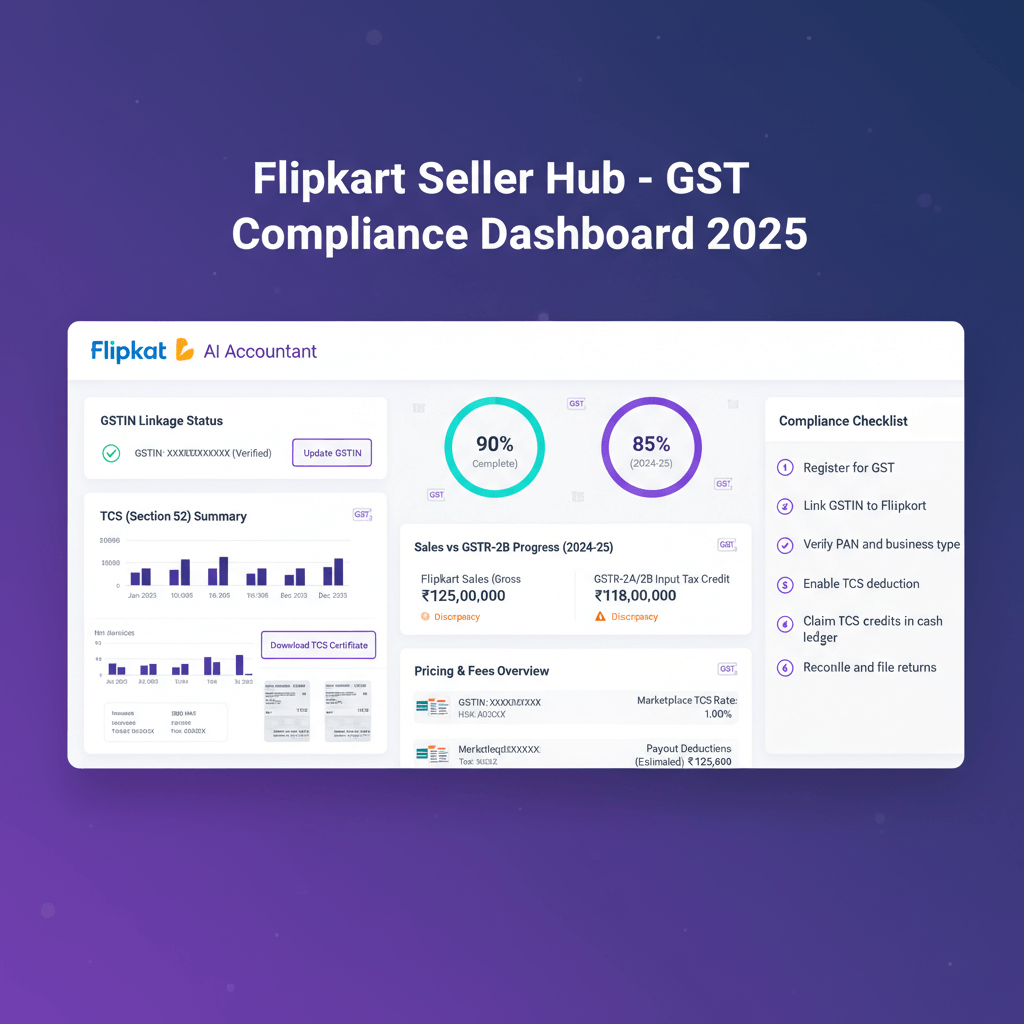
AI Accountant provides AI financial document management as a CA led managed service. You get the expert team and the live system. The dashboard shows your financial overview, income and expense breakdowns, cash flow trends, burn rate, and runway. It displays recent transactions and bank statement analysis, houses a secure document repository, shows compliance dates and filing status, and hosts a central chat with your CA team.
Services covered by the CA team
- Accounting and bookkeeping, monthly bookkeeping for sales, purchases, expenses, and bank entries, ledger review and clean up, year end closing and schedules, fixed asset register maintenance, inventory records and reconciliation, AR and AP management, bank and payment gateway reconciliations, cash flow preparation, MIS and management reporting, support with coordination with the statutory auditor.
- Taxation and compliance, GST registration, monthly and quarterly filings like GSTR 1 and 3B, annual GST filings GSTR 9 and GSTR 9C, advisory on place of supply, reverse charge, HSN, and tax rates, e invoice enablement, GST health checks and reconciliations.
- Income tax, individual, partnership, and company returns, TDS advisory and compliance including challan payments and forms 26Q, 24Q, 27Q, 26QB or 26QC or 26QD, advance tax, tax audit preparation, international tax and 15CA preparation.
- Payroll services, monthly TDS for payroll, salary structuring advice.
- Annual ROC and secretarial for small companies, MGT 7 and AOC 4, MSME filings to MCA, DIN and DIR 3 KYC, director changes, share capital increase and allotment, board and AGM support, statutory registers, board report, and the annual report, event based MCA filings.
How the workflow feels with AI Accountant
A bill arrives by email, the system ingests it and extracts vendor, GSTIN, HSN, line items, and tax, checks duplicates, matches to a PO, validates GST rate and reverse charge, routes for approval, posts to the ledger, and readies payment. The amounts flow into GSTR 3B and GSTR 1 working sets automatically. When the bank statement later shows the payment, the system matches it and closes the loop. The dashboard shows status, alerts for filings, and any exceptions your CA team is handling.
This replaces messy email chains, Excel trackers, and chat uploads, giving freelancers, startups, and growth companies a managed service with real time visibility and control.
Sources, LeewayHertz, ShareFile, AI Accountant
Future trends in AI financial document management
- Autonomous agents for a continuous close, reconciliations and accruals run daily
- Real time risk scoring on vendors and spend with machine learning
- Deeper e invoicing and e way bill integrations with live status and alerts
- LLM search that links documents, chats, and ledger entries like a knowledge graph
- More plug and play connectors for banks, ERPs, and portals
Source, LeewayHertz
Closing next steps for AI financial document management
If you are ready to stop document sprawl, start with a short pilot, pick one entity and one large vendor, baseline cycle time, then run intake, extraction, validation, and reconciliation in an AI flow, measure the drop in time to post and time to approve, and share results with your team.
Want to see this live, explore AI Accountant, it combines the AI document system with a dedicated CA team, so you get clean books, on time GST and TDS, audit ready packs, and a single source of truth. Try a pilot or book a quick demo, and get a free checklist with taxonomy templates and a KPI tracker to measure wins from day one.
Sources, LeewayHertz, AI Accountant
FAQ
How will AI financial document management reduce my month close timeline without breaking controls
By centralizing intake, automating OCR and field extraction, enforcing maker, checker approvals, and reconciling bank lines continuously, you remove idle time between steps while keeping approvals and immutable logs. Teams move from typing to review, so closes compress while controls stay tight.
What accuracy can I expect on Indian invoices and GSTR data, and how are exceptions handled
Well tuned OCR and NLP models routinely exceed ninety five percent accuracy on clean invoices and returns. The system assigns confidence scores, routes low confidence or rule breaks to an exception queue, and your CA team or reviewer resolves them with comments, giving you a full trail.
Can this integrate with Tally and still support GST portal workflows
Yes, a mature setup syncs masters and transactions with Tally through connectors, then prepares and exports GST packs for portal filing. The same repository holds GSTR 1, GSTR 3B workings and reconciles against GSTR 2B to flag mismatches before filing.
How does AI Accountant compare to a pure software tool for document capture
AI Accountant combines the AI platform with a CA led managed service, so you get configuration, exception handling, reconciliations, and filings done by experts, along with a live dashboard. This reduces change management and speeds up value realization compared to software only approaches.
What governance controls are available for auditors and board oversight
You can enforce role based access, approval matrices, and segregation of duties, provide read only auditor windows with time bounds, and export immutable logs of every view, edit, and export. This creates clear evidence for audits and board reviews.
How are GST, TDS, and ROC compliance packs organized for quick audit retrieval
Packs are foldered by period, entity, and return type, each with linked source documents, challans, workings, and variance notes. Search by vendor, GSTIN, PAN, amount, or period returns the exact document in seconds, with version history for each file.
What ROI metrics should a CFO track in the first quarter after rollout
Track processing time per document, approval turnaround, OCR accuracy, duplicate detection rate, exceptions per one thousand documents, days to close, and audit query resolution time. Translate savings into headcount hours, avoided penalties, and earlier management reporting.
Will this work if many documents come via WhatsApp, email, and scanned images
Yes, ingestion endpoints accept email, mobile uploads, and scanner feeds, then OCR handles images and PDFs. A submission portal with required fields improves quality, and low quality scans get flagged with confidence scores for review.
How does bank reconciliation stay in sync with payment gateways and refunds
The system ties bank statement lines to ledger entries and links gateway settlements to orders and refunds. Unmatched items are queued with suggested matches, so your reviewer clears them quickly and preserves a clean audit trail.
What happens to data residency and PII when we share packs with external auditors
You can choose data residency in your region, enable encryption at rest and in transit, and apply PII masking for shared views and exports. Temporary auditor access ensures least privilege and time bound visibility.
How quickly can we implement, and what change management is required for our finance team
A focused rollout typically completes in four to six weeks. You standardize naming and retention, connect Tally and bank feeds, set validation rules, and train users to submit and approve. Teams shift from creation to review, which is a lighter change than a full ERP swap.
Can AI Accountant handle multi entity setups with separate GSTINs and approval chains
Yes, entities are segregated with role based access, separate GSTINs, and tailored approval matrices. Cross entity reports roll up to a group view, while each entity maintains its own ledger sync, compliance packs, and audit logs.
How do we ensure vendor master data quality for GSTIN, PAN, and HSN or SAC
The system validates formats at capture, auto suggests corrections, and blocks posting on critical failures. During onboarding, AI Accountant helps clean masters, then keeps them current through periodic checks and exception reports.
What is the fallback when OCR cannot read a complex multi page bill with tables
Low confidence fields trigger human in the loop review. Reviewers see side by side panels, correct the fields, and the model learns from edits over time, improving future accuracy without delaying today’s posting.
How do you protect against duplicate invoices and fraudulent entries
Duplicate checks compare vendor, invoice number, date, amount, and hash of the file. Anomaly detection flags unusual patterns like round amounts or new bank accounts. Maker, checker approvals and immutable logs deter and detect fraud.